Woodrow Barfield - Böcker
Visar alla böcker från författaren Woodrow Barfield. Handla med fri frakt och snabb leverans.
17 produkter
17 produkter
1 158 kr
Skickas inom 3-6 vardagar
Virtual Environments and Advanced Interface Design is a volume of original chapters to introduce the reader to the technology of virtual reality. The research presented in this book examines the impact of the new technology of virtual reality on the field of human factors.The first editor, Barfield, is head of the Human Factor Laboratory at the University of Washington in the USA, and he has assembled contributions from experts in key laboratories around the US to discuss their basic approaches to this new field.Some of the topics discussed are computer graphics, eye tracking, tactile and kinesthetic input, interface design, and applications in medicine and aerospace.
1 685 kr
Skickas inom 10-15 vardagar
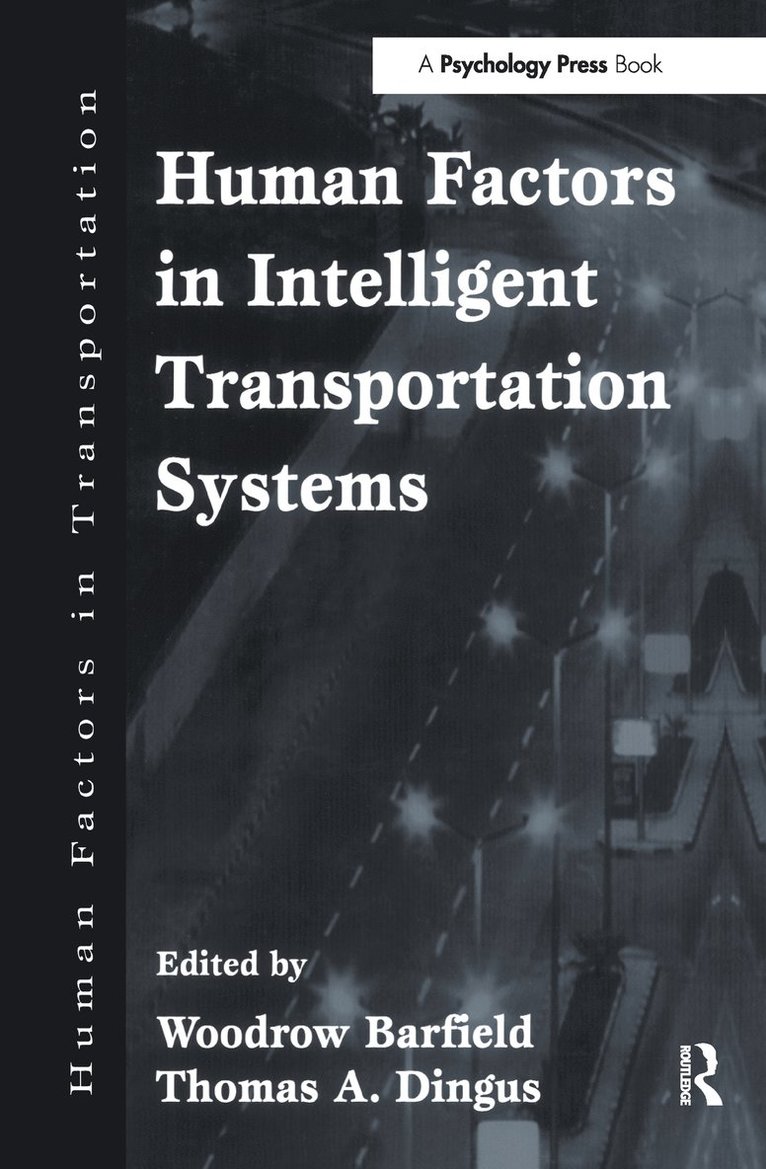
The Intelligent Transportation System (ITS) Program is a cooperative effort by government, private industry, and academia to apply advanced technology to the task of resolving the problems of surface transportation. The objective is to improve travel efficiency and mobility, enhance safety, conserve energy, provide economic benefits, and protect the environment. The current demand for mobility has exceeded the available capacity of the roadway system. Because the highway system cannot be expanded, except in minor ways, the available capacity must be used more efficiently to handle the increased demand. ITS applies advanced information processing, communication, sensing, and computer control technologies to the problems of surface transportation. Considerable research and development efforts will be required to produce these new technologies and to convert technologies developed in the defense and space programs to solve surface transportation problems. ITS has been subdivided into six interlocking technology areas. This book addresses human factors concerns for four of these areas: * Advanced Traveler Information Systems are a variety of systems that provide real time, in-vehicle information to drivers regarding navigation and route guidance, motorist services, roadway signing, and hazard warnings. * Advanced Vehicle Control Systems refer to systems that aid drivers in controlling their vehicle particularly in emergency situations and ultimately taking over some or all of the driving tasks. * Commercial Vehicle Operations address the application of ITS technologies to the special needs of commercial roadway vehicles including automated vehicle identification, location, weigh-in-motion, clearance sensing, and record keeping. * Advanced Traffic Management Systems monitor, control and manage traffic on streets and highways to reduce congestion using vehicle route diversion, automated signal timing, changeable message signs, and priority control systems. Two technical areas are not specifically addressed in individual chapters, but many aspects of them are covered in associated chapters: * Advanced Rural Transportation Systems include systems that apply ITS technologies to the special needs of rural systems and include emergency notification and response, vehicle location, and traveler information. * Advanced Public Transportation Systems enhance the effectiveness, attractiveness and economics of public transportation and include fleet management, automated fare collection, and real-time information systems.
644 kr
Skickas inom 10-15 vardagar
The Intelligent Transportation System (ITS) Program is a cooperative effort by government, private industry, and academia to apply advanced technology to the task of resolving the problems of surface transportation. The objective is to improve travel efficiency and mobility, enhance safety, conserve energy, provide economic benefits, and protect the environment. The current demand for mobility has exceeded the available capacity of the roadway system. Because the highway system cannot be expanded, except in minor ways, the available capacity must be used more efficiently to handle the increased demand. ITS applies advanced information processing, communication, sensing, and computer control technologies to the problems of surface transportation. Considerable research and development efforts will be required to produce these new technologies and to convert technologies developed in the defense and space programs to solve surface transportation problems. ITS has been subdivided into six interlocking technology areas. This book addresses human factors concerns for four of these areas: * Advanced Traveler Information Systems are a variety of systems that provide real time, in-vehicle information to drivers regarding navigation and route guidance, motorist services, roadway signing, and hazard warnings. * Advanced Vehicle Control Systems refer to systems that aid drivers in controlling their vehicle particularly in emergency situations and ultimately taking over some or all of the driving tasks. * Commercial Vehicle Operations address the application of ITS technologies to the special needs of commercial roadway vehicles including automated vehicle identification, location, weigh-in-motion, clearance sensing, and record keeping. * Advanced Traffic Management Systems monitor, control and manage traffic on streets and highways to reduce congestion using vehicle route diversion, automated signal timing, changeable message signs, and priority control systems. Two technical areas are not specifically addressed in individual chapters, but many aspects of them are covered in associated chapters: * Advanced Rural Transportation Systems include systems that apply ITS technologies to the special needs of rural systems and include emergency notification and response, vehicle location, and traveler information. * Advanced Public Transportation Systems enhance the effectiveness, attractiveness and economics of public transportation and include fleet management, automated fare collection, and real-time information systems.
1 473 kr
Skickas inom 10-15 vardagar
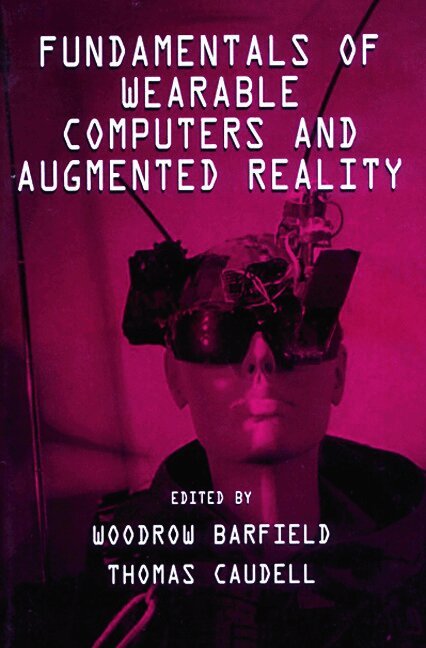
Fundamentals of Wearable Computers and Augmented Reality presents a broad coverage of the technologies and interface design issues associated with wearable computers and augmented reality displays both rapidly developing fields in computer science, engineering, and human interface design. This book presents concepts related to the use and underlying technologies of augmented reality and wearable computer systems. There are many application areas for this technology, such as medicine, manufacturing, training, and recreation. Wearable computers will allow a much closer association of information with the user than is possible with traditional desktop computers.This book addresses an important aspect of wearable computers and augmented reality, either from the conceptual or from an application framework. Given the wide coverage of topics on issues related to the display of computer-generated images in the environment, this book can be used as a text for computer science, computer engineering, and interface design courses.
456 kr
Skickas inom 7-10 vardagar
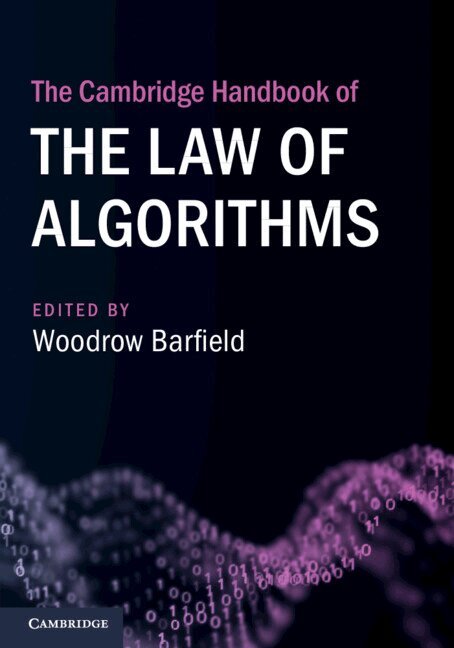
Algorithms are a fundamental building block of artificial intelligence - and, increasingly, society - but our legal institutions have largely failed to recognize or respond to this reality. The Cambridge Handbook of the Law of Algorithms, which features contributions from US, EU, and Asian legal scholars, discusses the specific challenges algorithms pose not only to current law, but also - as algorithms replace people as decision makers - to the foundations of society itself. The work includes wide coverage of the law as it relates to algorithms, with chapters analyzing how human biases have crept into algorithmic decision-making about who receives housing or credit, the length of sentences for defendants convicted of crimes, and many other decisions that impact constitutionally protected groups. Other issues covered in the work include the impact of algorithms on the law of free speech, intellectual property, and commercial and human rights law.
Cambridge Handbook of the Law, Policy, and Regulation for Human–Robot Interaction
Inbunden, Engelska, 2024
2 500 kr
Skickas inom 7-10 vardagar
This volume provides a unique perspective on an emerging area of scholarship and legislative concern: the law, policy, and regulation of human-robot interaction (HRI). The increasing intelligence and human-likeness of social robots points to a challenging future for determining appropriate laws, policies, and regulations related to the design and use of AI robots. Japan, China, South Korea, and the US, along with the European Union, Australia and other countries are beginning to determine how to regulate AI-enabled robots, which concerns not only the law, but also issues of public policy and dilemmas of applied ethics affected by our personal interactions with social robots. The volume's interdisciplinary approach dissects both the specificities of multiple jurisdictions and the moral and legal challenges posed by human-like robots. As robots become more like us, so too will HRI raise issues triggered by human interactions with other people.
736 kr
Skickas inom 7-10 vardagar
The field of artificial intelligence has made tremendous advances in the last few decades, but as smart as AI is now, it is getting exponentially smarter and becoming more autonomous in its actions. This raises a host of challenges to current legal doctrine, including whether the output of AI entities should count as 'speech', the extent to which AI should be regulated under antitrust and criminal law statutes, and whether AI should be considered an independent agent and responsible for its actions under the law of tort or agency. Containing chapters written by leading U.S., EU, and International law scholars, the Research Handbook presents current law, statutes, and regulations on the role of law in an age of increasingly smart AI, addressing issues of law that are critical to the evolution of AI and its role in society. To provide a broad coverage of the topic, the Research Handbook draws upon free speech doctrine, criminal law, issues of data protection and privacy, legal rights for increasingly smart AI systems, and a discussion of jurisdiction for AI entities that will not be 'content' to stay within the geographical boundaries of any nation state or be tied to a particular physical location. Using numerous examples and case studies, the chapter authors discuss the political and jurisdictional decisions that will have to be made as AI proliferates into society and transforms our government and social institutions. The Research Handbook will also introduce designers of artificially intelligent systems to the legal issues that apply to the make-up and use of AI from the technologies, algorithms, and analytical techniques. This essential guide to the U.S., EU, and other International law, regulations, and statutes which apply to the emerging field of 'law and AI' will be a valuable reference for scholars and students interested in information and intellectual property law, privacy, and data protection as well as to legal theorists and social scientists who write about the future direction and implications of AI. The Research Handbook will also serve as an important reference for legal practitioners in different jurisdictions who may litigate disputes involving AI, and to computer scientists and engineers actively involved in the design and use of the next generation of AI systems.Contributors include: W. Barfield, S. Bayern, S.J. Blodgett-Ford, R.G.A. Bone, T. Burri, A. Chin, J.A. Cubert, M. de Cock Buning, S. De Conca, S-.A. Elvy, A. Ezrachi, R. Leenes, Y. Lev-Aretz, A.R. Lodder, R.P. Loui, T.M. Massaro, L.T. McCarty, J.O. McGinnis, F. Moslein, H. Norton, N. Packin, U. Pagallo, S. Quattrocolo, W. Samore, F. Shimpo, M.E. Stucke, R. van den Hoven van Genderen, L. Vertinsky, A. von Ungern-Sternberg, J.F. Weaver, Y-.H. Weng, I. Wildhaber
Research Handbook on the Law of Artificial Intelligence
Current and Future Directions: Second Edition
Inbunden, Engelska, 2025
4 830 kr
Skickas inom 7-10 vardagar
This second edition provides a broad range of perspectives on the legal implications of artificial intelligence (AI) across different global jurisdictions. Contributors identify the potential threats that AI poses to the protection of fundamental rights and human wellbeing, anticipating future developments in technological and legal infrastructures.Providing critical insights into risk-based regulations and governance, leading experts discuss the rapid growth in AI’s computational ability and the implications of its usage in consumer finance, law enforcement, business law and taxation. Chapters examine the rise of artificial creativity, the impact of AI on evidence inspection and criminal accountability, as well as the importance of responsible usage in the ever-changing AI landscape. Covering authorship, patents and copyright law as potential sites for misuse, this Research Handbook challenges notions of consumer autonomy and civil liability relating to damage caused by AI.This Research Handbook will be an essential reference source for students and scholars interested in AI law and regulation and will greatly benefit practising attorneys and regulators of technology.
2 899 kr
Skickas inom 7-10 vardagar
Algorithms are a fundamental building block of artificial intelligence - and, increasingly, society - but our legal institutions have largely failed to recognize or respond to this reality. The Cambridge Handbook of the Law of Algorithms, which features contributions from US, EU, and Asian legal scholars, discusses the specific challenges algorithms pose not only to current law, but also - as algorithms replace people as decision makers - to the foundations of society itself. The work includes wide coverage of the law as it relates to algorithms, with chapters analyzing how human biases have crept into algorithmic decision-making about who receives housing or credit, the length of sentences for defendants convicted of crimes, and many other decisions that impact constitutionally protected groups. Other issues covered in the work include the impact of algorithms on the law of free speech, intellectual property, and commercial and human rights law.
1 138 kr
Skickas inom 10-15 vardagar
Data will not help you if you can’t see it where you need it. Or can’t collect it where you need it. Upon these principles, wearable technology was born. And although smart watches and fitness trackers have become almost ubiquitous, with in-body sensors on the horizon, the future applications of wearable computers hold so much more. A trusted reference for almost 15 years, Fundamentals of Wearable Computers and Augmented Reality goes beyond smart clothing to explore user interface design issues specific to wearable tech and areas in which it can be applied.Upon its initial publication, the first edition almost instantly became a trusted reference, setting the stage for the coming decade, in which the explosion in research and applications of wearable computers and augmented reality occurred. Written by expert researchers and teachers, each chapter in the second edition has been revised and updated to reflect advances in the field and provide fundamental knowledge on each topic, solidifying the book’s reputation as a valuable technical resource as well as a textbook for augmented reality and ubiquitous computing courses. New Chapters in the Second Edition Explore: HapticsVisual displaysUse of augmented reality for surgery and manufacturingTechnical issues of image registration and trackingAugmenting the environment with wearable audio interfacesUse of augmented reality in preserving cultural heritageHuman-computer interaction and augmented reality technologySpatialized sound and augmented realityAugmented reality and roboticsComputational clothingFrom a technology perspective, much of what is happening now with wearables and augmented reality would not have been possible even five years ago. In the fourteen years since the first edition burst on the scene, the capabilities and applications of both technologies are orders of magnitude faster, smaller, and cheaper. Yet the book’s overarching mission remains the same: to supply the fundamental information and basic knowledge about the design and use of wearable computers and augmented reality with the goal of enhancing people’s lives.
3 161 kr
Skickas inom 10-15 vardagar
Data will not help you if you can’t see it where you need it. Or can’t collect it where you need it. Upon these principles, wearable technology was born. And although smart watches and fitness trackers have become almost ubiquitous, with in-body sensors on the horizon, the future applications of wearable computers hold so much more. A trusted reference for almost 15 years, Fundamentals of Wearable Computers and Augmented Reality goes beyond smart clothing to explore user interface design issues specific to wearable tech and areas in which it can be applied.Upon its initial publication, the first edition almost instantly became a trusted reference, setting the stage for the coming decade, in which the explosion in research and applications of wearable computers and augmented reality occurred. Written by expert researchers and teachers, each chapter in the second edition has been revised and updated to reflect advances in the field and provide fundamental knowledge on each topic, solidifying the book’s reputation as a valuable technical resource as well as a textbook for augmented reality and ubiquitous computing courses. New Chapters in the Second Edition Explore: HapticsVisual displaysUse of augmented reality for surgery and manufacturingTechnical issues of image registration and trackingAugmenting the environment with wearable audio interfacesUse of augmented reality in preserving cultural heritageHuman-computer interaction and augmented reality technologySpatialized sound and augmented realityAugmented reality and roboticsComputational clothingFrom a technology perspective, much of what is happening now with wearables and augmented reality would not have been possible even five years ago. In the fourteen years since the first edition burst on the scene, the capabilities and applications of both technologies are orders of magnitude faster, smaller, and cheaper. Yet the book’s overarching mission remains the same: to supply the fundamental information and basic knowledge about the design and use of wearable computers and augmented reality with the goal of enhancing people’s lives.
4 154 kr
Skickas inom 7-10 vardagar
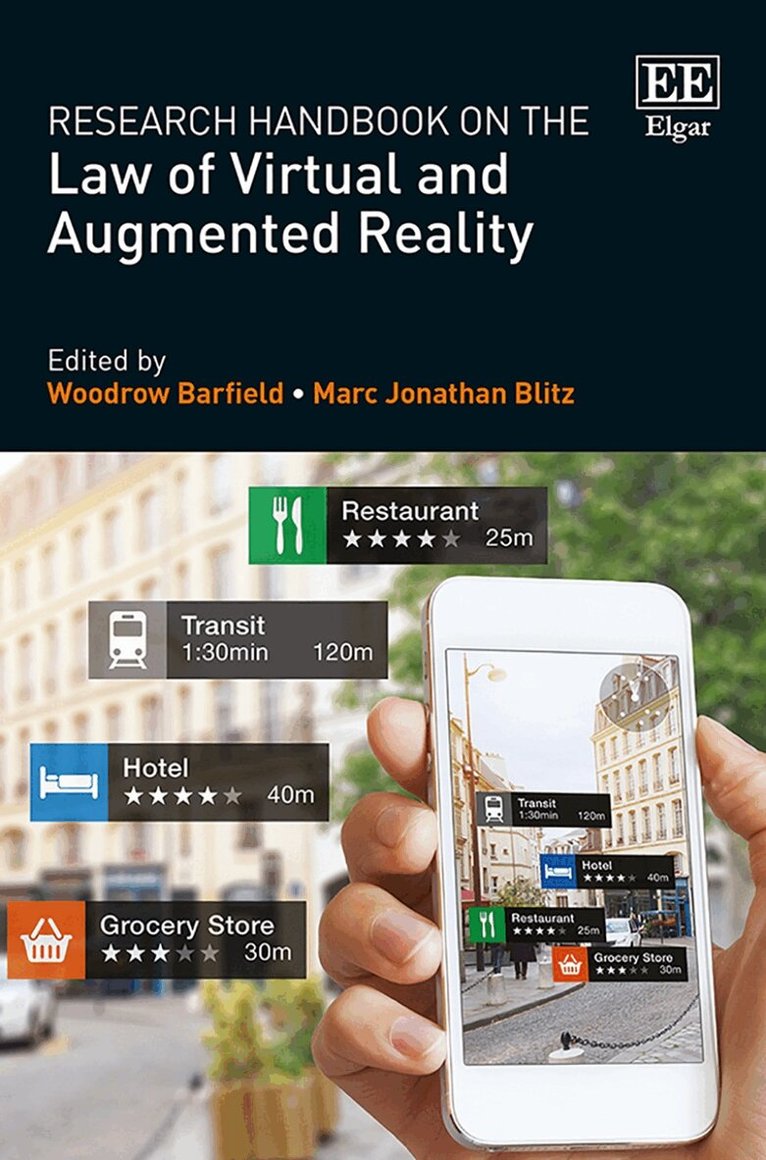
The proliferation of virtual and augmented reality technologies into society raise significant questions for judges, legal institutions, and policy makers. For example, when should activities that occur in virtual worlds, or virtual images that are projected into real space (that is, augmented reality), count as protected First Amendment 'speech'? When should they instead count as a nuisance or trespass? Under what circumstances would the copying of virtual images infringe intellectual property laws, or the output of intelligent virtual avatars be patentable inventions or works of authorship eligible for copyright? And when should a person (or computer) face legal consequences for allegedly harmful virtual acts?The Research Handbook on the Law of Virtual and Augmented Reality addresses these questions and others, drawing upon free speech doctrine, criminal law, the law of data protection and privacy, and of jurisdiction, as well as upon potential legal rights for increasingly intelligent virtual avatars in VR worlds. The Handbook offers a comprehensive look at challenges to various legal doctrines raised by the emergence - and increasing use of - virtual and augmented reality worlds, and at how existing law in the USA, Europe, and other jurisdictions might apply to these emerging technologies, or evolve to address them. It also considers what legal questions about virtual and augmented reality are likely to be important, not just for judges and legal scholars, but also for the established businesses and start-ups that wish to make use of, and help shape, these important new technologies.This comprehensive Research Handbook will be an invaluable reference to those looking to keep pace with the dynamic field of virtual and augmented reality, including students and researchers studying intellectual property law as well as legal practitioners, computer scientists, engineers, game designers, and business owners.Contributors include: W. Barfield, P.S. Berman, M.J. Blitz, S.J. Blodgett-Ford, J. Danaher, W. Erlank, J.A.T. Fairfield, J. Garon, G. Hallevy, B. Lewis, H.Y.F. Lim, C. Nwaneri, S.R. Peppet, M. Risch, A.L. Rossow, J. Russo, M. Supponen, A.M. Underhill, B.D. Wassom, A. Williams, G. Yadin
4 227 kr
Skickas inom 7-10 vardagar
The field of artificial intelligence has made tremendous advances in the last few decades, but as smart as AI is now, it is getting exponentially smarter and becoming more autonomous in its actions. This raises a host of challenges to current legal doctrine, including whether the output of AI entities should count as 'speech', the extent to which AI should be regulated under antitrust and criminal law statutes, and whether AI should be considered an independent agent and responsible for its actions under the law of tort or agency. Containing chapters written by leading U.S., EU, and International law scholars, the Research Handbook presents current law, statutes, and regulations on the role of law in an age of increasingly smart AI, addressing issues of law that are critical to the evolution of AI and its role in society. To provide a broad coverage of the topic, the Research Handbook draws upon free speech doctrine, criminal law, issues of data protection and privacy, legal rights for increasingly smart AI systems, and a discussion of jurisdiction for AI entities that will not be 'content' to stay within the geographical boundaries of any nation state or be tied to a particular physical location. Using numerous examples and case studies, the chapter authors discuss the political and jurisdictional decisions that will have to be made as AI proliferates into society and transforms our government and social institutions. The Research Handbook will also introduce designers of artificially intelligent systems to the legal issues that apply to the make-up and use of AI from the technologies, algorithms, and analytical techniques. This essential guide to the U.S., EU, and other International law, regulations, and statutes which apply to the emerging field of 'law and AI' will be a valuable reference for scholars and students interested in information and intellectual property law, privacy, and data protection as well as to legal theorists and social scientists who write about the future direction and implications of AI. The Research Handbook will also serve as an important reference for legal practitioners in different jurisdictions who may litigate disputes involving AI, and to computer scientists and engineers actively involved in the design and use of the next generation of AI systems.Contributors include: W. Barfield, S. Bayern, S.J. Blodgett-Ford, R.G.A. Bone, T. Burri, A. Chin, J.A. Cubert, M. de Cock Buning, S. De Conca, S-.A. Elvy, A. Ezrachi, R. Leenes, Y. Lev-Aretz, A.R. Lodder, R.P. Loui, T.M. Massaro, L.T. McCarty, J.O. McGinnis, F. Moslein, H. Norton, N. Packin, U. Pagallo, S. Quattrocolo, W. Samore, F. Shimpo, M.E. Stucke, R. van den Hoven van Genderen, L. Vertinsky, A. von Ungern-Sternberg, J.F. Weaver, Y-.H. Weng, I. Wildhaber
1 592 kr
Skickas inom 7-10 vardagar
Elgar Advanced Introductions are stimulating and thoughtful introductions to major fields in the social sciences and law, expertly written by the world's leading scholars. Designed to be accessible yet rigorous, they offer concise and lucid surveys of the substantive and policy issues associated with discrete subject areas.Woodrow Barfield and Ugo Pagallo present a succinct introduction to the legal issues related to the design and use of artificial intelligence (AI). Exploring human rights, constitutional law, data protection, criminal law, tort law, and intellectual property law, they consider the laws of a number of jurisdictions including the US, the European Union, Japan, and China, making reference to case law and statutes.Key features include:a critical insight into human rights and constitutional law issues which may be affected by the use of AIdiscussion of the concept of legal personhood and how the law might respond as AI evolves in intelligencean introduction to current laws and statutes which apply to AI and an identification of the areas where future challenges to the law may arise.This Advanced Introduction is ideal for law and social science students with an interest in how the law applies to AI. It also provides a useful entry point for legal practitioners seeking an understanding of this emerging field.
313 kr
Skickas inom 7-10 vardagar
Elgar Advanced Introductions are stimulating and thoughtful introductions to major fields in the social sciences and law, expertly written by the world's leading scholars. Designed to be accessible yet rigorous, they offer concise and lucid surveys of the substantive and policy issues associated with discrete subject areas.Woodrow Barfield and Ugo Pagallo present a succinct introduction to the legal issues related to the design and use of artificial intelligence (AI). Exploring human rights, constitutional law, data protection, criminal law, tort law, and intellectual property law, they consider the laws of a number of jurisdictions including the US, the European Union, Japan, and China, making reference to case law and statutes.Key features include:a critical insight into human rights and constitutional law issues which may be affected by the use of AIdiscussion of the concept of legal personhood and how the law might respond as AI evolves in intelligencean introduction to current laws and statutes which apply to AI and an identification of the areas where future challenges to the law may arise.This Advanced Introduction is ideal for law and social science students with an interest in how the law applies to AI. It also provides a useful entry point for legal practitioners seeking an understanding of this emerging field.
735 kr
Skickas inom 7-10 vardagar
The proliferation of virtual and augmented reality technologies into society raise significant questions for judges, legal institutions, and policy makers. For example, when should activities that occur in virtual worlds, or virtual images that are projected into real space (that is, augmented reality), count as protected First Amendment 'speech'? When should they instead count as a nuisance or trespass? Under what circumstances would the copying of virtual images infringe intellectual property laws, or the output of intelligent virtual avatars be patentable inventions or works of authorship eligible for copyright? And when should a person (or computer) face legal consequences for allegedly harmful virtual acts?The Research Handbook on the Law of Virtual and Augmented Reality addresses these questions and others, drawing upon free speech doctrine, criminal law, the law of data protection and privacy, and of jurisdiction, as well as upon potential legal rights for increasingly intelligent virtual avatars in VR worlds. The Handbook offers a comprehensive look at challenges to various legal doctrines raised by the emergence - and increasing use of - virtual and augmented reality worlds, and at how existing law in the USA, Europe, and other jurisdictions might apply to these emerging technologies, or evolve to address them. It also considers what legal questions about virtual and augmented reality are likely to be important, not just for judges and legal scholars, but also for the established businesses and start-ups that wish to make use of, and help shape, these important new technologies.This comprehensive Research Handbook will be an invaluable reference to those looking to keep pace with the dynamic field of virtual and augmented reality, including students and researchers studying intellectual property law as well as legal practitioners, computer scientists, engineers, game designers, and business owners.Contributors include: W. Barfield, P.S. Berman, M.J. Blitz, S.J. Blodgett-Ford, J. Danaher, W. Erlank, J.A.T. Fairfield, J. Garon, G. Hallevy, B. Lewis, H.Y.F. Lim, C. Nwaneri, S.R. Peppet, M. Risch, A.L. Rossow, J. Russo, M. Supponen, A.M. Underhill, B.D. Wassom, A. Williams, G. Yadin
287 kr
Skickas inom 10-15 vardagar
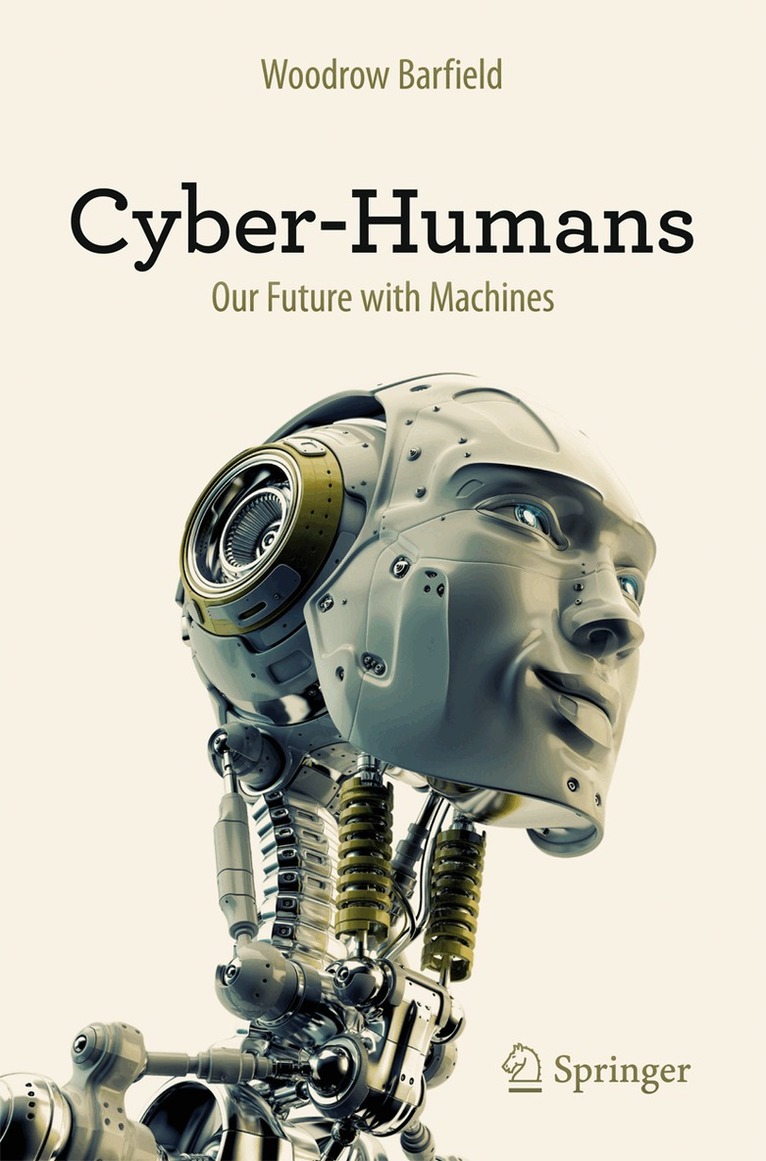
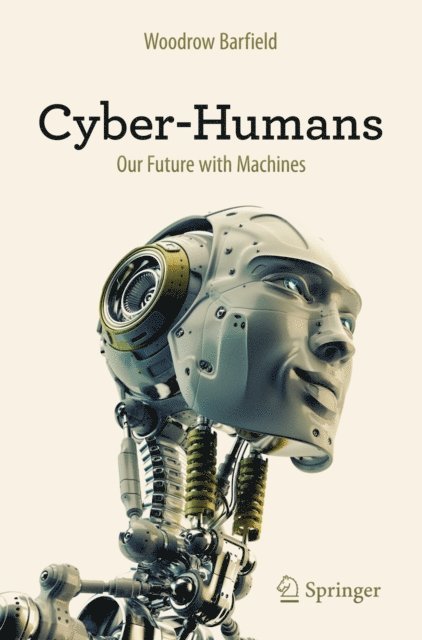
It is predicted that robots will surpass human intelligence within the next fifty years.The ever increasing speed of advances in technology and neuroscience, coupled with the creation of super computers and enhanced body parts and artificial limbs, is paving the way for a merger of both human and machine.Devices which were once worn on the body are now being implanted into the body, and as a result, a class of true cyborgs, who are displaying a range of skills beyond those of normal humans-beings, are being created. There are cyborgs which can see colour by hearing sound, others have the ability to detect magnetic fields, some are equipped with telephoto lenses to aid their vision or implanted computers to monitor their heart, and some use thought to communicate with a computer or to manipulate a robotic arm. This is not science-fiction, these are developments that are really happening now, and will continue to develop in the future. However, a range of legal and policy questions has arisen alongside this rise of artificial intelligence.Cyber-Humans provides a deep and unique perspective on the technological future of humanity, and describes how law and policy will be particularly relevant in creating a fair and equal society and protecting the liberties of different life forms which will emerge in the 21st century.Dr Woodrow (Woody) Barfield previously headed up the Sensory Engineering Laboratory, holding the position of Industrial and Systems Engineering Professor at the University of Washington. His research revolves around the design and use of wearable computers and augmented reality systems and holds both JD and LLM degrees in intellectual property law and policy. He has published over 350 articles and major presentations in the areas of computer science, engineering and law. He currently lives in Chapel Hill, NC, USA.