Xiaoe Yang – författare
Visar alla böcker från författaren Xiaoe Yang. Handla med fri frakt och snabb leverans.
4 produkter
4 produkter
Häftad, Engelska, 2027
1 726 kr
Kommande
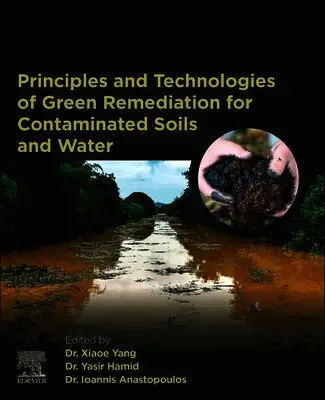
Principles and Technologies of Green Remediation for Contaminated Soils and Water is a comprehensive resource delving into pollution sources, remediation techniques, and sustainable practices for soil and water decontamination. This edited book, with a specialized focus on managing hydrocarbon and petroleum-contaminated sites, features contributions from global experts, offering the latest insights and ongoing research in environmental remediation. Ideal for students and researchers in environmental science, this publication provides integrated research to support the implementation of sustainable green remediation methods for addressing soil and water pollution.Covers essential information about green technologies for the remediation of certain type of contaminants in soil and waterProvides up-to-date solutions about the management of contaminated matrices to produce safe food and sustainable environmentOffers case studies in every chapter with resources to green management strategies against increasing pollution in soil and water
Inbunden, Engelska, 2004
1 616 kr
Skickas inom 10-15 vardagar
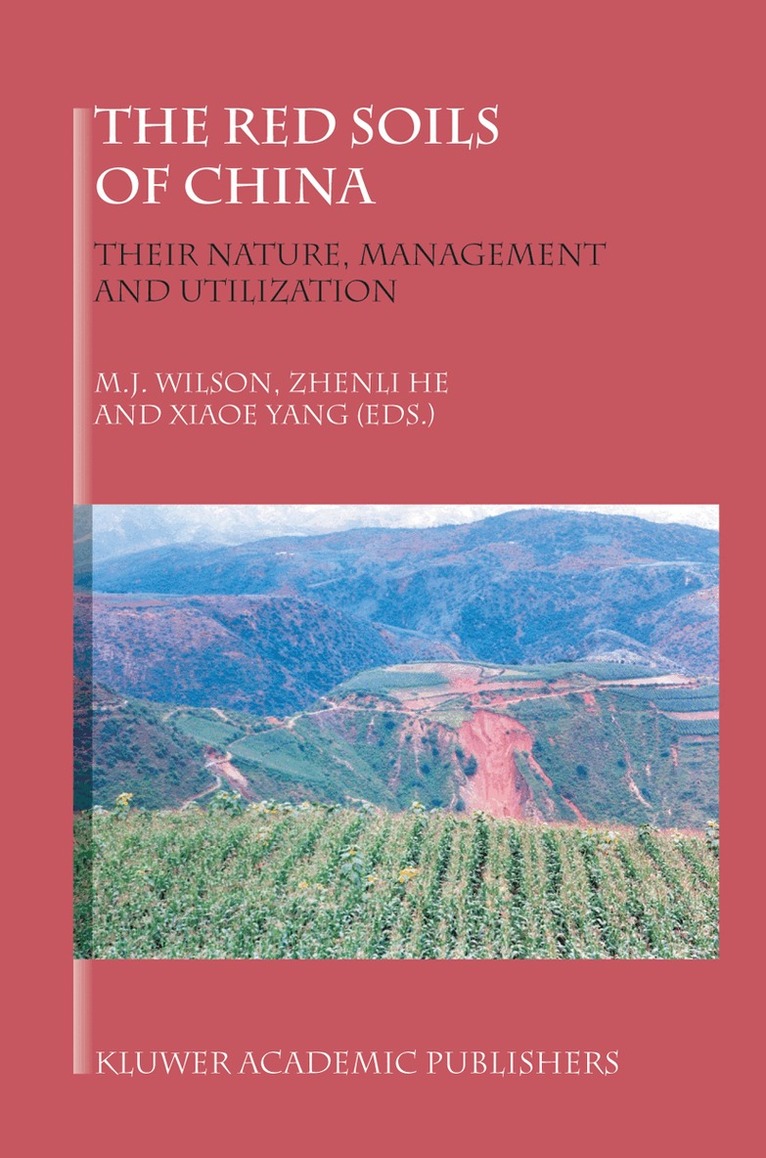
The red soils of China are typical in their chemical, physical and mineralogical characteristics of red soils in other tropical and sub-tropical areas of the world, particularly in South America, Africa and south-east Asia. For the most part, these soils are highly weathered and inherently infertile. They are acidic, nutrient deficient, poor in organic matter and have a low water-holding and supplying capacity. They cannot sustain arable cropping systems without the most careful management and are highly susceptible to soil erosion, particularly on sloping land. It is the purpose of this book to present recent research showing how the problems associated with using the red soils in China for sustainable agricultural production can be overcome, using a variety of traditional and novel approaches. In principle, these approaches should be useful in other tropical and sub-tropical countries faced with the problem of making the best use of their fragile red soil resources. The term "in principle" is used deliberately because, of course, the different red soil countries invariably operate within dissimilar socio-economic frameworks. At the present time, China may be considered to be in the process of an "industrial revolution", rather like that that took place in Britain in the late eighteenth and early nineteenth centuries.
E-bok
PDF, Engelska, 20042 049 kr
Läs direkt efter köp
The red soils of China are typical in their chemical, physical and mineralogical characteristics of red soils in other tropical and sub-tropical areas of the world, particularly in South America, Africa and south-east Asia. For the most part, these soils are highly weathered and inherently infertile. They are acidic, nutrient deficient, poor in organic matter and have a low water-holding and supplying capacity. They cannot sustain arable cropping systems without the most careful management and are highly susceptible to soil erosion, particularly on sloping land. It is the purpose of this book to present recent research showing how the problems associated with using the red soils in China for sustainable agricultural production can be overcome, using a variety of traditional and novel approaches. In principle, these approaches should be useful in other tropical and sub-tropical countries faced with the problem of making the best use of their fragile red soil resources. The term "in principle" is used deliberately because, of course, the different red soil countries invariably operate within dissimilar socio-economic frameworks. At the present time, China may be considered to be in the process of an "industrial revolution", rather like that that took place in Britain in the late eighteenth and early nineteenth centuries.
Häftad, Engelska, 2010
1 616 kr
Skickas inom 10-15 vardagar
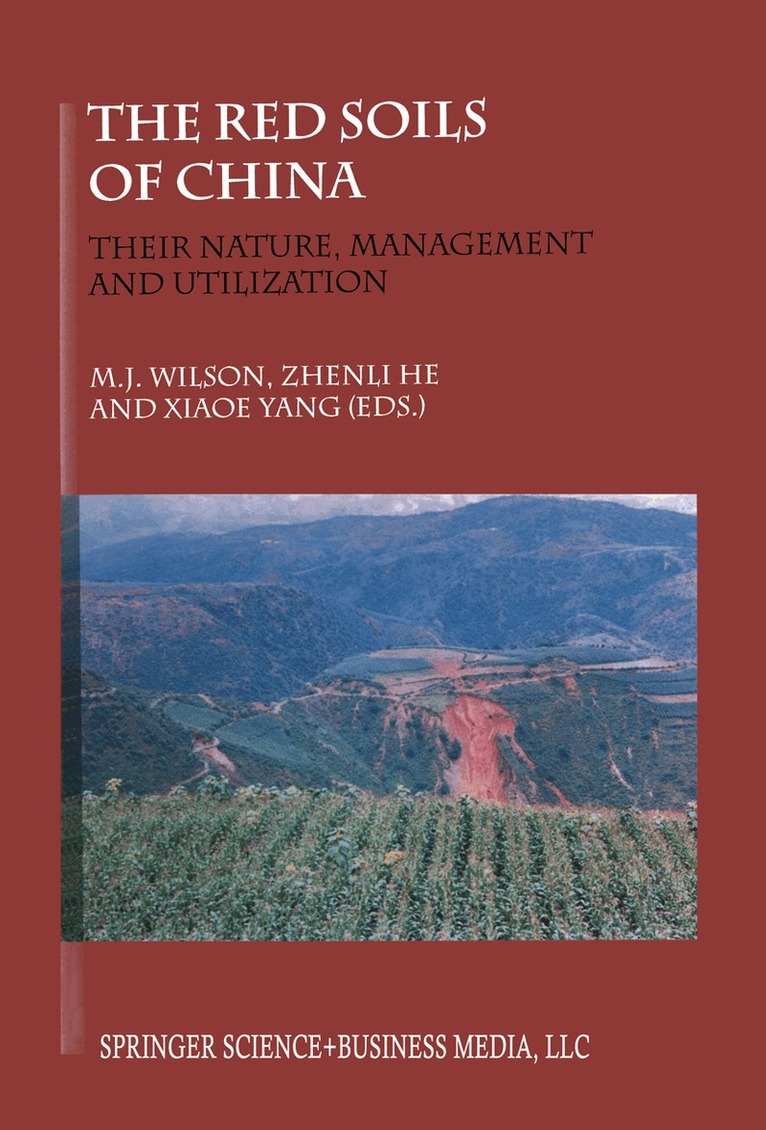
The red soils of China are typical in their chemical, physical and mineralogical characteristics of red soils in other tropical and sub-tropical areas of the world, particularly in South America, Africa and south-east Asia. For the most part, these soils are highly weathered and inherently infertile. They are acidic, nutrient deficient, poor in organic matter and have a low water-holding and supplying capacity. They cannot sustain arable cropping systems without the most careful management and are highly susceptible to soil erosion, particularly on sloping land. It is the purpose of this book to present recent research showing how the problems associated with using the red soils in China for sustainable agricultural production can be overcome, using a variety of traditional and novel approaches. In principle, these approaches should be useful in other tropical and sub-tropical countries faced with the problem of making the best use of their fragile red soil resources. The term "in principle" is used deliberately because, of course, the different red soil countries invariably operate within dissimilar socio-economic frameworks. At the present time, China may be considered to be in the process of an "industrial revolution", rather like that that took place in Britain in the late eighteenth and early nineteenth centuries.