Xinying Liu - Böcker
Visar alla böcker från författaren Xinying Liu. Handla med fri frakt och snabb leverans.
2 produkter
2 produkter
2 264 kr
Kommande
Methanol Synthesis from CO2: Towards Achieving Carbon Neutrality explores the conversion of CO2 into methanol, a vital step towards carbon neutrality, and delves into the intricate chemical reactions, catalytic mechanisms, and engineering strategies that underpin this transformative process. By addressing the global carbon challenge, the book emphasizes the urgent need to repurpose CO2 from a harmful pollutant into a valuable feedstock, paving the way for a sustainable future powered by methanol. The book covers a wide array of topics, including the historical evolution of methanol synthesis, sustainable feedstocks, and advanced catalytic methods. Readers will gain insights into reaction mechanisms, process technologies, and the role of artificial intelligence in optimizing production. Additionally, the book examines the environmental and economic implications of methanol synthesis, providing a holistic view of its potential applications across various industries, from fuel blending to chemical manufacturing. This is an essential resource for researchers, engineers, policymakers, and industry professionals in fields such as chemical engineering, environmental science, and renewable energy.Explores the technology of green/renewable methanol production from CO2Covers topics on carbon capture and utilization (CCU), advanced materials for methanal synthesis from CO2, reaction engineering, and process optimizationAddresses methanol applications, environmental and economic aspects, and challenges and perspectives
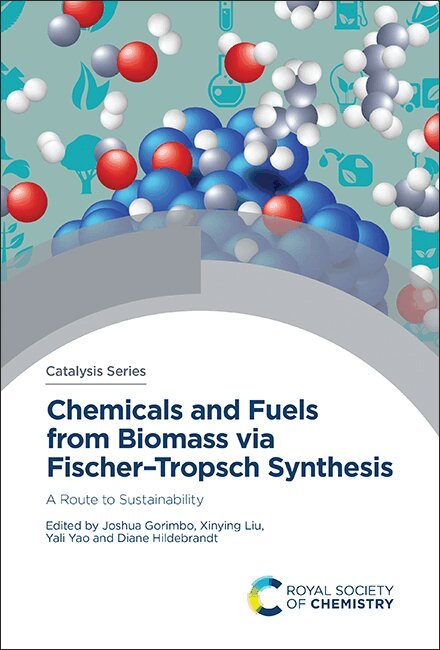
Chemicals and Fuels from Biomass via Fischer–Tropsch Synthesis
A Route to Sustainability
Inbunden, Engelska, 2022
3 099 kr
Skickas inom 5-8 vardagar
In an effort to reduce dependency on fossil fuel resources, biomass could essentially be converted into chemicals using high capacity processes. The Fischer–Tropsch Synthesis (FTS) pathway has been chosen as the focus of this book as it is a mature area, and unlike other pathways such as pyrolysis, FTS is a potential way of producing fuel/hydrocarbons with no sulfur, no nitrogen, and no heavy metals contamination, making it a good choice. Integrating technological development and business development rationales to highlight the key technological developments that are necessary to industrialize biofuels on a global scale, this book focusses on the key challenges that still hinder the effective biomass use and the realization of zero fossil fuel use. Traditional biomass to hydrocarbons pathways are covered, showcasing how they are tailored to yield a specific group of chemicals with the aim of reducing downstream processes. New developments are considered, including process synthesis, catalysts, and reactors, etc. Providing an up-to-date overview of the production of specialty chemicals and fuels from biomass via the Fischer–Tropsch Synthesis pathway, this title makes an excellent addition to the libraries of academics and practitioners working in catalysis and chemical engineering.