Y. Christen - Böcker
Visar alla böcker från författaren Y. Christen. Handla med fri frakt och snabb leverans.
12 produkter
12 produkter
1 635 kr
Skickas inom 10-15 vardagar
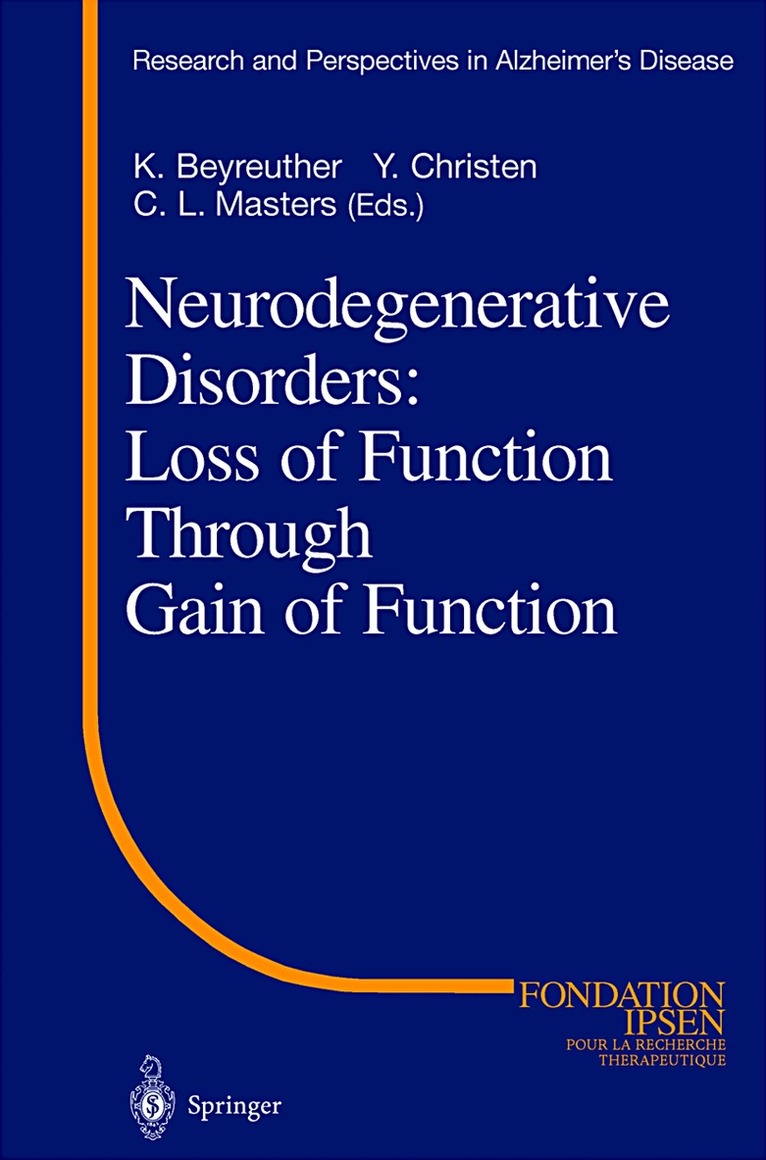
Fondation Ipsen sponsored a meeting in Paris in February 2000 on the emerging paradigm-shift in our understanding of the major degenerative diseases which- affect the aging human brain. This book sumarizes our deliberations on some of these major neurodegenerative diseases that are characterized by protein depos- its, and that are due to the pathogenic gain of function of an otherwise normal neuronal protein. For each of the major human neurodegenerative diseases covered in this book -the most prominent being Alzheimer's disease -experimental models are described, including cell culture systems and animal models which range from the round worm, Caenorhabditis elegans, the fruitfly, Drosophila melanogaster, to rodents. Remarkably, in the sporadic forms of these human diseases, only a minor change in the level of production or turn-over of the relevant proteins is sufficient to cause disease in late adult-hood. Neurodegeneration in Alzheimer's disease, for example, usually results in symptoms and signs in the seventh to eighth decades.In contrast, the development of protein deposits in transgenic mice over-expressing the corresponding disease gene parallels the genetic forms of the human diseases in regard to its manifestation occuring half-way through its normal life-span, i. e. about 50 years in humans (the so-called "presenium") and 9 to 12 months in the mouse. Nevertheless, these models have served to elu- cidate many of the pathways underlying the human disease processes, for instance clarifying the neuronal origin of parenchymal and perivascular amyloid in Alzheimer's disease and Creutzfeldt-Jakob disease.
1 635 kr
Skickas inom 10-15 vardagar
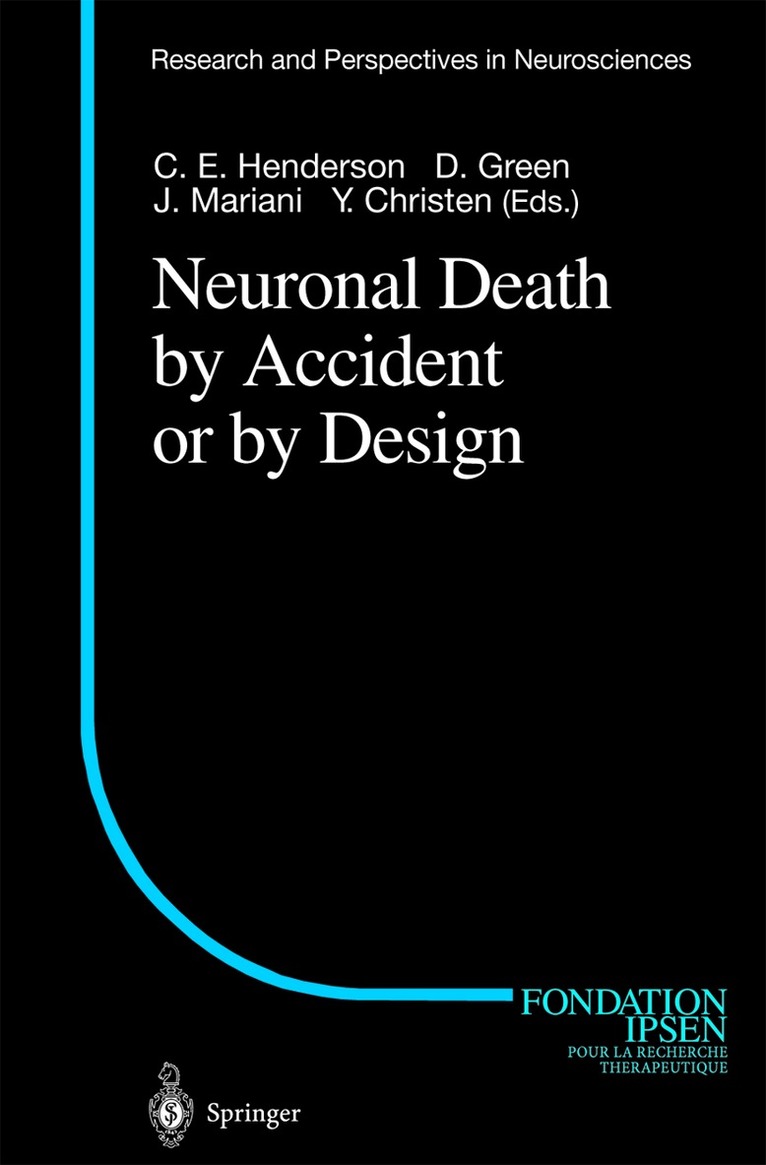
Four chapters represent the intense current effort to understand the way in which the mitochondrion controls the activation of the final stages of cell death. Another four articles attack the problem from the other side. How do specific insults in particular human or mouse neuro-degenerative diseases translate into mechanisms that will not only allow us to better understand what is happening in these patients but also, with luck, allow for development of more efficient and specific drugs in the future? Firstly, the concept of a central common cell death pathway, originally derived from studies on the nematode, has been an outstanding productive paradigm in bringing together different strands of research. Secondly, truly striking links have been made between results obtained in the culture dish (or even cell-free systems) and the diseased human brain.
1 635 kr
Skickas inom 10-15 vardagar
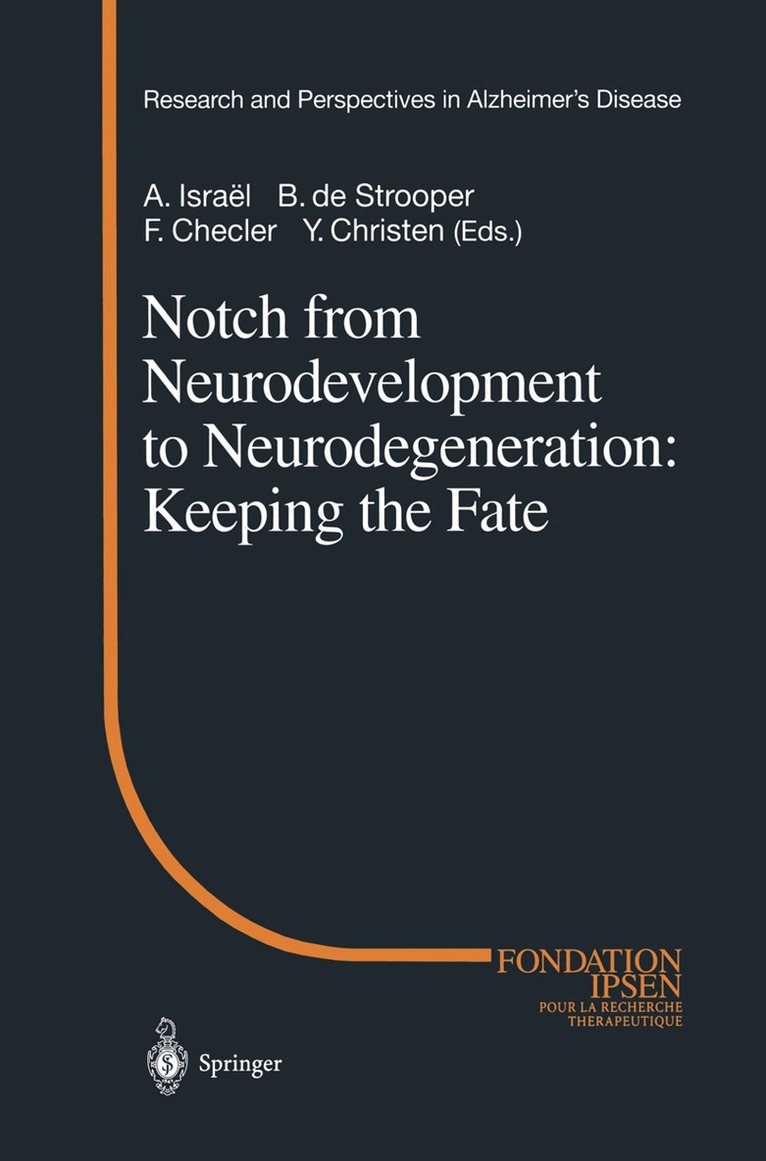
Can molecular mechanisms involved in neural development help us to understand, prevent and perhaps reverse the course of brain ageing and neurodegenerative disorders? Brain development and function require complex cellular and molecular processes controlled by a number of different signaling mechanisms. One such signaling mechanism, the Notch pathway, has been recognized as an important player in the regulation of cellfate decisions during early neural development. However, the action of this evolutionary conserved and widely used cell-cell interaction mechanism is not confined to the developing nervous system. In addition, recent studies have shown that elucidating the mechanism of Notch signaling and its role in the brain is important for our understanding of neurological disorders such as Alzheimer's disease and cerebral arteriopathy CADASIL.
2 178 kr
Skickas inom 10-15 vardagar
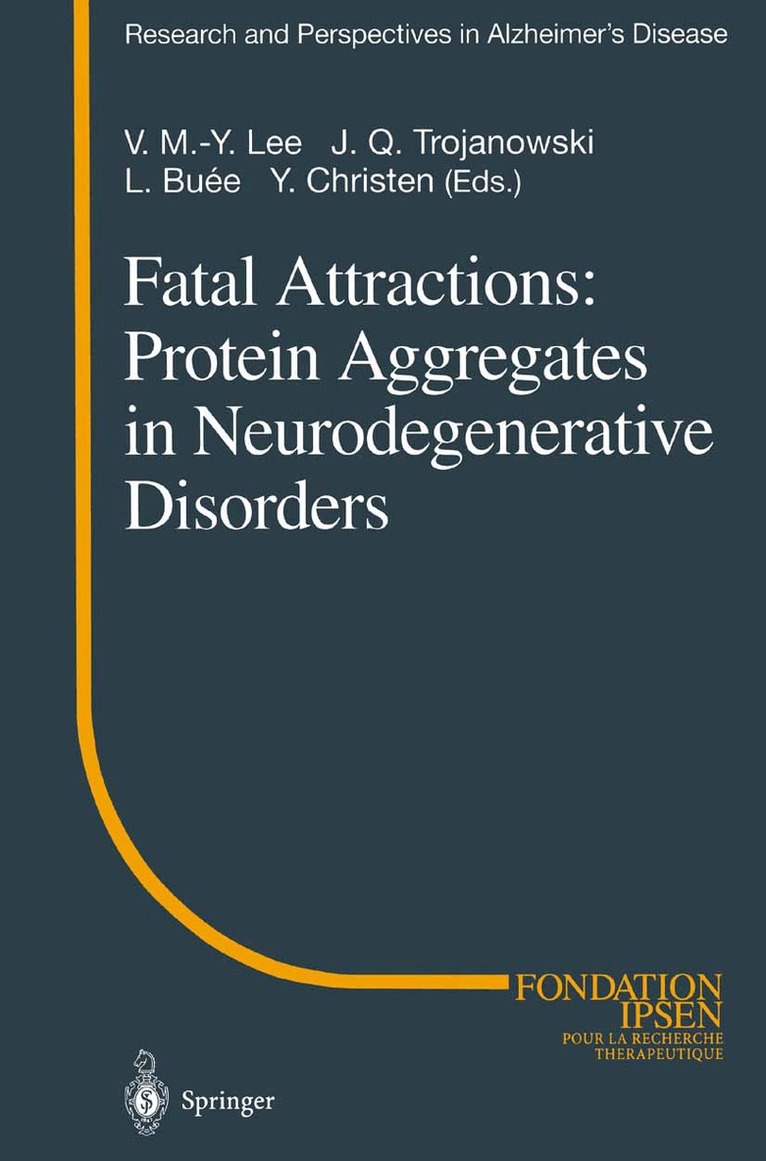
In this volume are contributions based on a meeting arranged by the WHO and the Fondation IPSEN. The scientists focus on neurodegenerative disorders like Alzheimer's Disease, Chromosome 17-Linked Dementia, Parkinson's Disease and disorders with tauopathies.
1 588 kr
Skickas inom 10-15 vardagar
Fondation Ipsen sponsored a meeting in Paris in February 2000 on the emerging paradigm-shift in our understanding of the major degenerative diseases which- affect the aging human brain. This book sumarizes our deliberations on some of these major neurodegenerative diseases that are characterized by protein depos- its, and that are due to the pathogenic gain of function of an otherwise normal neuronal protein. For each of the major human neurodegenerative diseases covered in this book -the most prominent being Alzheimer's disease -experimental models are described, including cell culture systems and animal models which range from the round worm, Caenorhabditis elegans, the fruitfly, Drosophila melanogaster, to rodents. Remarkably, in the sporadic forms of these human diseases, only a minor change in the level of production or turn-over of the relevant proteins is sufficient to cause disease in late adult-hood. Neurodegeneration in Alzheimer's disease, for example, usually results in symptoms and signs in the seventh to eighth decades.In contrast, the development of protein deposits in transgenic mice over-expressing the corresponding disease gene parallels the genetic forms of the human diseases in regard to its manifestation occuring half-way through its normal life-span, i. e. about 50 years in humans (the so-called "presenium") and 9 to 12 months in the mouse. Nevertheless, these models have served to elu- cidate many of the pathways underlying the human disease processes, for instance clarifying the neuronal origin of parenchymal and perivascular amyloid in Alzheimer's disease and Creutzfeldt-Jakob disease.
1 635 kr
Skickas inom 10-15 vardagar
Four chapters represent the intense current effort to understand the way in which the mitochondrion controls the activation of the final stages of cell death. Another four articles attack the problem from the other side. How do specific insults in particular human or mouse neuro-degenerative diseases translate into mechanisms that will not only allow us to better understand what is happening in these patients but also, with luck, allow for development of more efficient and specific drugs in the future? Firstly, the concept of a central common cell death pathway, originally derived from studies on the nematode, has been an outstanding productive paradigm in bringing together different strands of research. Secondly, truly striking links have been made between results obtained in the culture dish (or even cell-free systems) and the diseased human brain.
2 115 kr
Skickas inom 10-15 vardagar
In this volume are contributions based on a meeting arranged by the WHO and the Fondation IPSEN. The scientists focus on neurodegenerative disorders like Alzheimer's Disease, Chromosome 17-Linked Dementia, Parkinson's Disease and disorders with tauopathies.
1 635 kr
Skickas inom 10-15 vardagar
Can molecular mechanisms involved in neural development help us to understand, prevent and perhaps reverse the course of brain ageing and neurodegenerative disorders? Brain development and function require complex cellular and molecular processes controlled by a number of different signaling mechanisms. One such signaling mechanism, the Notch pathway, has been recognized as an important player in the regulation of cellfate decisions during early neural development. However, the action of this evolutionary conserved and widely used cell-cell interaction mechanism is not confined to the developing nervous system. In addition, recent studies have shown that elucidating the mechanism of Notch signaling and its role in the brain is important for our understanding of neurological disorders such as Alzheimer's disease and cerebral arteriopathy CADASIL.
550 kr
Skickas inom 10-15 vardagar
The advances in human genetics that have ocurred during the past 20 years have revolutionized our knowledge of the role played by inheritance in health and disase. It is clear that our DNA determines not only the emergence of catastrophic single-gene disorders, which affect millions of persons worldwide, but also interacts with environments to predispose individuals to cancer, allergy, hypertension, heart disease, diabetes, psychiatric disorders and even to some infectious diseases. Overall, the study of longevity and the demonstration of genes favouring a long lifespan suggest that such protective systems exist. In recent years, the study of genetic polymorphisms has made clear that some alleles have beneficial effects. These discoveries can substantially improve our understanding of the interactions between genetics and the environment, between pathogenetic mechanisms and new treatments.
1 092 kr
Skickas inom 10-15 vardagar
The idea that the brain is an "immune-privileged site" has perhaps served to slow our realization that the intact brain can generate its own inflammatory reactions. These responses can be to peripheral infection, or they can arise from local, internal causes, for instance as a response to stress or to the se vere changes in neuronal activity in seizure or the loss of oxygen in stroke. We are also becoming increasingly aware of the contribution of local inflam matory reactions to certain neurodegenerative diseases such as Alzheimer's In fact, evidence is accumulating that inflammatory processes disease (AD). contribute to the progression of AD, suggesting the possibility of using cur rently available or novel anti-inflammatory agents to interfere with this terri ble disease. Correlations are also being made between inflammatory signs and mental illness, which is a new frontier of research. This book presents the current state of knowledge in a variety of areas relevant to neuro-immune interactions, with particular attention to AD.
1 061 kr
Skickas inom 10-15 vardagar
There is now considerable genetic evidence that the type 4 allele of the apolipoprotein E gene is a major susceptibility factor associated with late- onset Alzheimer's disease, the common form of the disease defined as starting after 60 years of age. The roles of apolipoprotein E in normal brain metabo- lism and in the pathogenesis of Alzheimer's disease are new and exciting avenues of research. This is why the Fondation Ipsen organised an interna- tional meeting on this topic in Paris on May 29,1995, and the proceedings are contained in this book. The editors wish to thank Mrs Mary Lynn Gage for editorial and Mrs Jacqueline Mervaillie for the organization of the meeting in Paris. Allen Roses Karl Weisgraber Yves Christen Contents Apolipoprotein E and Alzheimer's Disease: State of the Field After Two Years A. D. Roses, W. I. Strittmatter, A. M. Saunders, D. E. Schmechel, and M. A. Pericak-Vance...1 Role of Apolipoprotein E in Alzheimer's Disease: Clues from its Structure KH. Weisgraber and L. M Dong ...11 Apolipoprotein E4, Cholinergic Integrity, Synaptic Plasticity and Alzheimer's Disease I. Poirier, M-C. Delisle, R. Quirion, I. Aubert, I. Rocheford, I. Rousse, S. Gracon, M.Farlow, and S. Gauthier...20 Pattern of Apolipoprotein E Immunoreactivity During Brain Aging D. E. Schmechel, MO. Tiller, P. Tong, M McSwain, S. -H. Han, R. Ange, D. S. Burkhart, and MK Izard...
1 635 kr
Skickas inom 10-15 vardagar
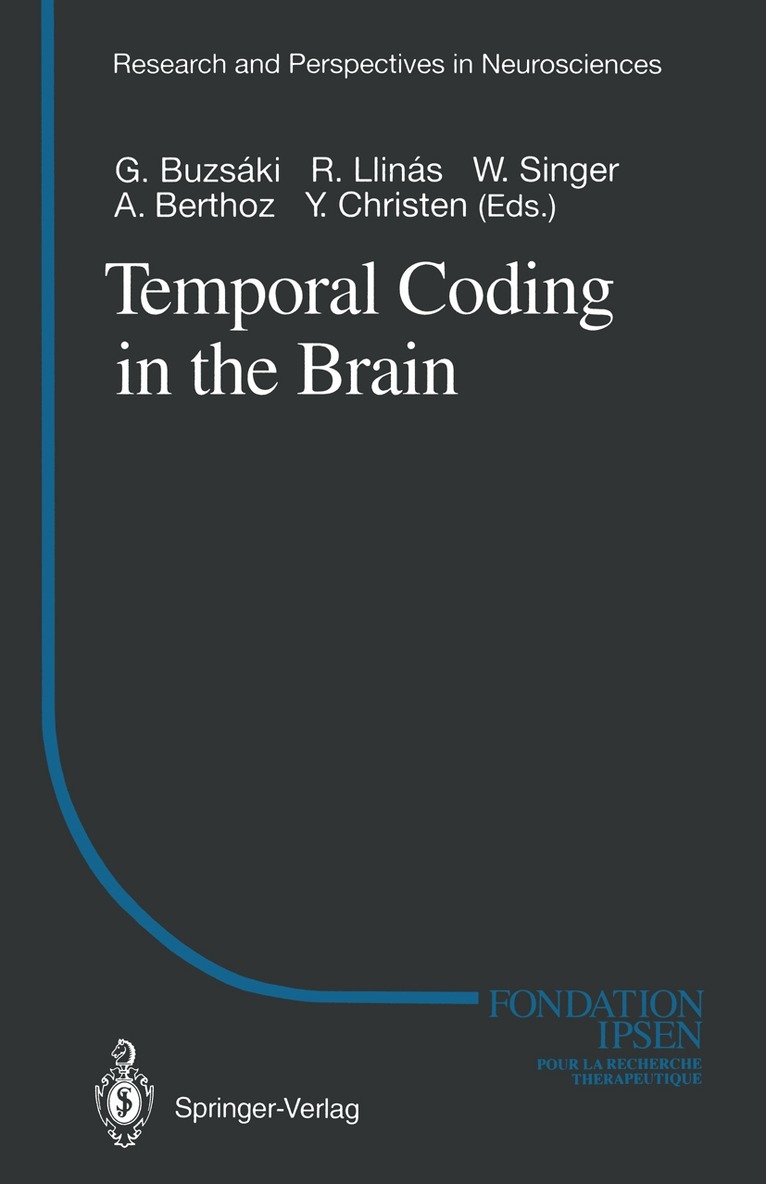
Temporal coding in the brain documents a revolution now occurring in the neurosciences. How does parallel processing of information bind together the complex nature of the outer and our inner worlds? Do intrinsic oscillations and transient cooperative states of neurons represent the physiological basis of cognitive and motor functions of the brain? Some answers to these challenging issues are provided in this book by leading world experts of brain function. A common denominator of the works presented in this volume is the nature and mechanisms of neuronal cooperation in the temporal domain. The topics range from simple organisms to the human brain. The volume is intended for investigators and graduate students in neurophysiology, cognitive neuroscience, neural computation and neurology.