Yanbo Huang – författare
Visar alla böcker från författaren Yanbo Huang. Handla med fri frakt och snabb leverans.
6 produkter
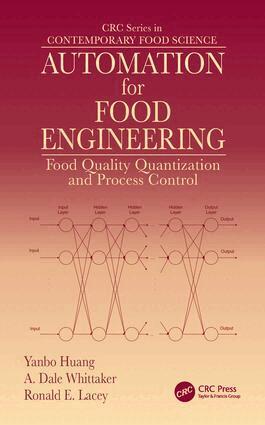
Automation for Food Engineering
Food Quality Quantization and Process Control
Av Yanbo Huang, A. Dale Whittaker m. fl.
Inbunden, 2001
4217 kr
Lägg i varukorg
In the past ten years electronics and computer technologies have significantly pushed forward the progress of automation in the food industry. The application of these technologies to automation for food engineering will produce more nutritious, better quality, and safer items for consumers. …
Automation for Food Engineering
Food Quality Quantization and Process Control
Av Yanbo Huang, A. Dale Whittaker m. fl.
E-bok, 2001
5021 kr
Lägg i varukorg
Automation for Food Engineering introduces the frameworks, methods, designs, algorithms, tests, and implementation of data acquisition, analysis, modeling, prediction, and control in automation for food engineering. Using numerous examples and case studies from food engineering projects, the book …
Automation for Food Engineering
Food Quality Quantization and Process Control
Av Yanbo Huang, A. Dale Whittaker m. fl.
E-bok, 2001
5021 kr
Lägg i varukorg
Automation for Food Engineering introduces the frameworks, methods, designs, algorithms, tests, and implementation of data acquisition, analysis, modeling, prediction, and control in automation for food engineering. Using numerous examples and case studies from food engineering projects, the book …
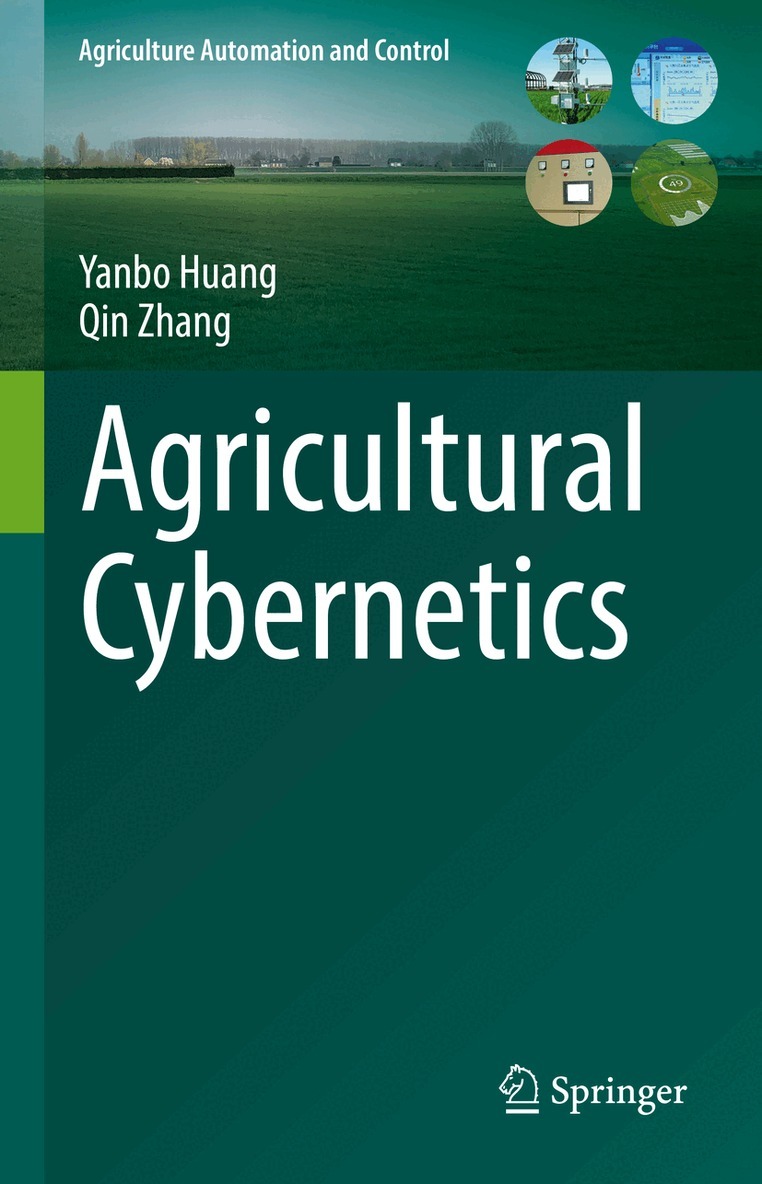
Agricultural Cybernetics
Av Yanbo Huang, Qin Zhang
Inbunden, 2021
1639 kr
Lägg i varukorg
Agricultural systems are uniquely complex systems, given that agricultural systems are parts of natural and ecological systems. Those aspects bring in a substantial degree of uncertainty in system operation. Also, impact factors, such as weather factors, are critical in agricultural systems but …
Agricultural Cybernetics
Av Qin Zhang, Yanbo Huang
E-bok, 2021
2065 kr
Lägg i varukorg
Agricultural systems are uniquely complex systems, given that agricultural systems are parts of natural and ecological systems. Those aspects bring in a substantial degree of uncertainty in system operation. Also, impact factors, such as weather factors, are critical in agricultural systems but …
Agricultural Cybernetics
Av Yanbo Huang, Qin Zhang
Häftad, 2022
1639 kr
Lägg i varukorg
Agricultural systems are uniquely complex systems, given that agricultural systems are parts of natural and ecological systems. Those aspects bring in a substantial degree of uncertainty in system operation. Also, impact factors, such as weather factors, are critical in agricultural systems but …