Yang Xing – författare
Visar alla böcker från författaren Yang Xing. Handla med fri frakt och snabb leverans.
4 produkter
4 produkter
Häftad, Engelska, 2020
1 278 kr
Skickas inom 10-15 vardagar
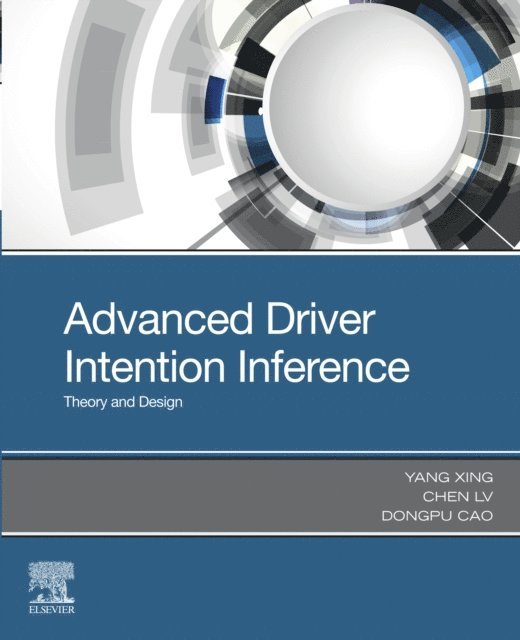
Advanced Driver Intention Inference: Theory and Design describes one of the most important function for future ADAS, namely, the driver intention inference. The book contains the state-of-art knowledge on the construction of driver intention inference system, providing a better understanding on how the human driver intention mechanism will contribute to a more naturalistic on-board decision system for automated vehicles.
Features examples of using machine learning/deep learning to build industry products Depicts future trends for driver behavior detection and driver intention inference Discuss traffic context perception techniques that predict driver intentions such as Lidar and GPSE-bok
Engelska, 20201 779 kr
Läs direkt efter köp
Advanced Driver Intention Inference: Theory and Design describes one of the most important function for future ADAS, namely, the driver intention inference. The book contains the state-of-art knowledge on the construction of driver intention inference system, providing a better understanding on how the human driver intention mechanism will contribute to a more naturalistic on-board decision system for automated vehicles.- Features examples of using machine learning/deep learning to build industry products- Depicts future trends for driver behavior detection and driver intention inference- Discuss traffic context perception techniques that predict driver intentions such as Lidar and GPS
Häftad, Engelska, 2020
362 kr
Skickas inom 10-15 vardagar
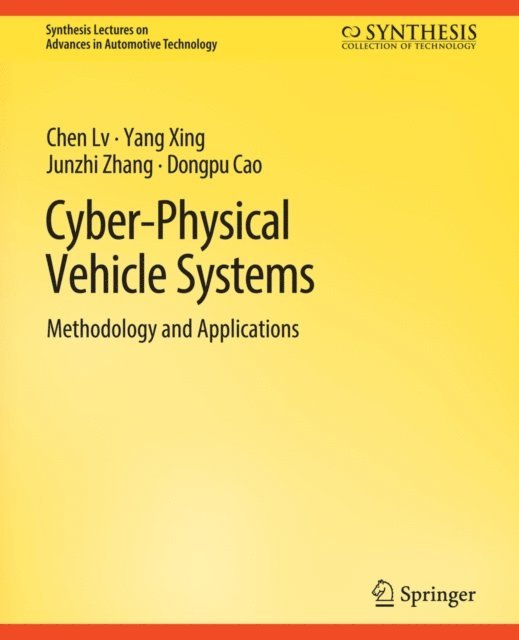
This book studies the design optimization, state estimation, and advanced control methods for cyber-physical vehicle systems (CPVS) and their applications in real-world automotive systems. First, in Chapter 1, key challenges and state-of-the-art of vehicle design and control in the context of cyber-physical systems are introduced. In Chapter 2, a cyber-physical system (CPS) based framework is proposed for high-level co-design optimization of the plant and controller parameters for CPVS, in view of vehicle's dynamic performance, drivability, and energy along with different driving styles. System description, requirements, constraints, optimization objectives, and methodology are investigated. In Chapter 3, an Artificial-Neural-Network-based estimation method is studied for accurate state estimation of CPVS. In Chapter 4, a high-precision controller is designed for a safety-critical CPVS. The detailed control synthesis and experimental validation are presented. The application results presented throughout the book validate the feasibility and effectiveness of the proposed theoretical methods of design, estimation, control, and optimization for cyber-physical vehicle systems.
E-bok
PDF, Engelska, 2022443 kr
Läs direkt efter köp
This book studies the design optimization, state estimation, and advanced control methods for cyber-physical vehicle systems (CPVS) and their applications in real-world automotive systems. First, in Chapter 1, key challenges and state-of-the-art of vehicle design and control in the context of cyber-physical systems are introduced. In Chapter 2, a cyber-physical system (CPS) based framework is proposed for high-level co-design optimization of the plant and controller parameters for CPVS, in view of vehicle''s dynamic performance, drivability, and energy along with different driving styles. System description, requirements, constraints, optimization objectives, and methodology are investigated. In Chapter 3, an Artificial-Neural-Network-based estimation method is studied for accurate state estimation of CPVS. In Chapter 4, a high-precision controller is designed for a safety-critical CPVS. The detailed control synthesis and experimental validation are presented. The application results presented throughout the book validate the feasibility and effectiveness of the proposed theoretical methods of design, estimation, control, and optimization for cyber-physical vehicle systems.