Yin-Wong Cheung – författare
460 kr
Läs direkt efter köp
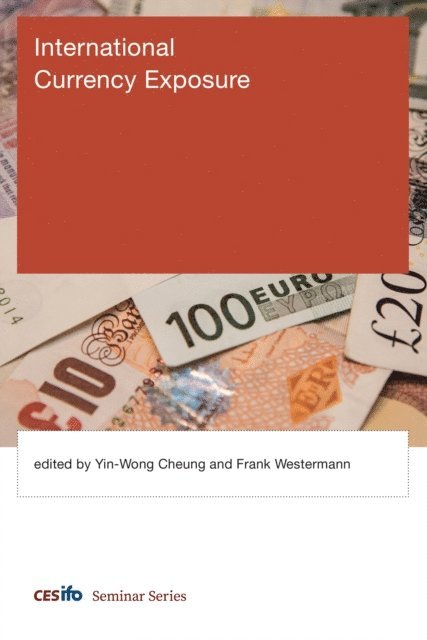
Issues in debates about foreign currency exposure—the denomination of liabilities or assets in foreign currency.
The foreign currency denomination of contracts in international transactions can lead to international currency exposure at the country level with important economic and policy implications. When debts are denominated in foreign currency and revenues in domestic currency, exchange rate fluctuations can result in balance sheet effects for countries with either net asset or liability positions. Moreover, currency mismatch between assets and liabilities can be a cause for crises in developing and emerging economies. This book looks at the issues surrounding foreign currency exposure in today''s increasingly integrated world economy.
The contributors draw on cross-country as well as country-specific data. They consider international currency risk after the Swiss franc ended its one-sided peg with the euro, for example, and the foreign exchange positions of firms in Turkey and Russia. Other contributors take macroeconomic perspectives, examining the potential effects of exchange rate realignment, the pressure to appreciate on countries with current account surpluses, and the currency exposure in international trade. Finally, contributors consider the issue from finance and political economy perspectives, addressing the phenomenon of the forward premium puzzle and discussing geopolitical aspects ascending currencies.
ContributorsFatih Altunok, Huseyin Aytug, Agustín S. Bénétrix, Jörg Breitung, Paul De Grauwe, Eiji Fujii, Peter Garber, Juann H. Hung, Signe Krogstrup, Philip R. Lane, Katja Mann, Arif Oduncu, Gunther Schnabl, Maria V. Sokolova, Cédric Tille
520 kr
Skickas inom 10-15 vardagar
1 503 kr
Skickas inom 10-15 vardagar
18 805 kr
Skickas inom 10-15 vardagar
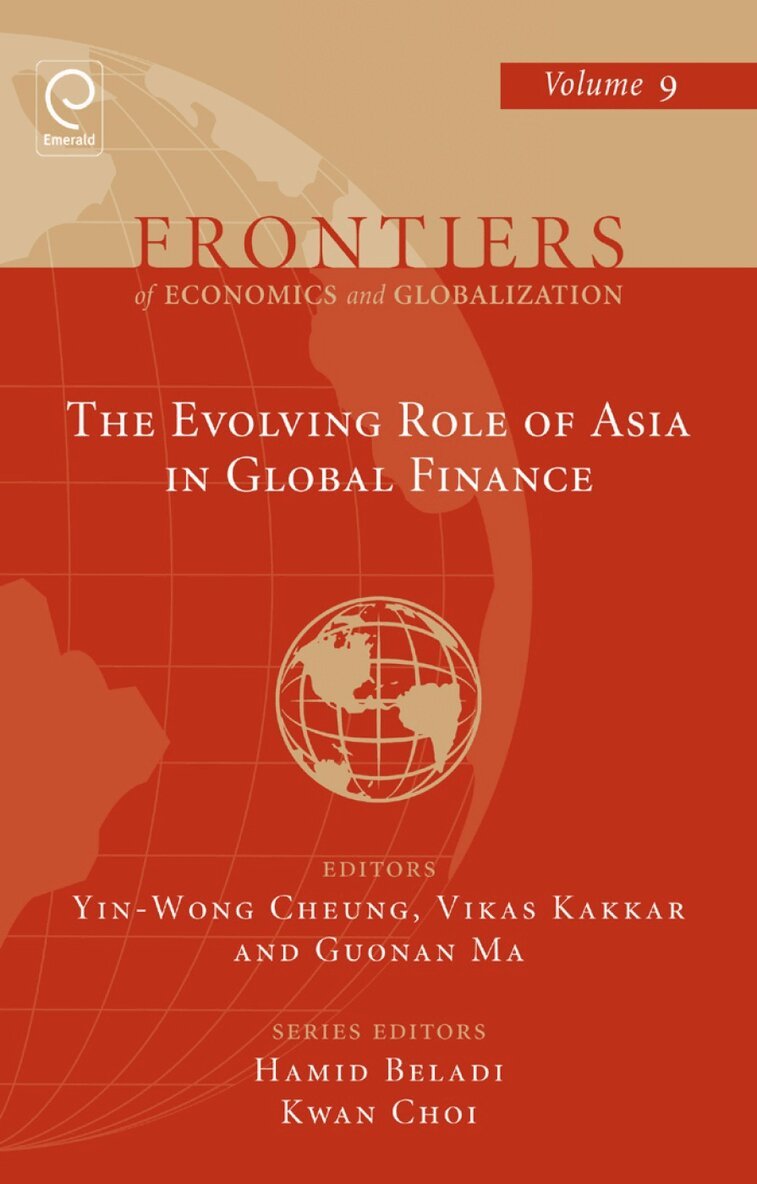
Evolving Role of Asia In Global Finance
1 652 kr
Skickas inom 5-8 vardagar
1 695 kr
Läs direkt efter köp
237 kr
Skickas inom 7-10 vardagar
283 kr
Läs direkt efter köp
286 kr
Läs direkt efter köp
602 kr
Läs direkt efter köp
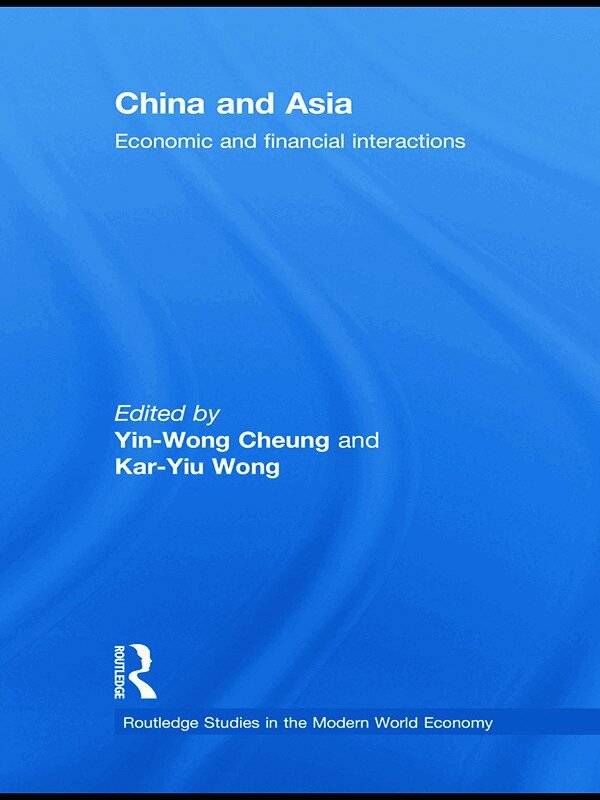
It is difficult to overstate the growing importance of China and Asia in the global economy. Despite the sharp downturn experienced in the 1997 financial crisis, China and Asia have bounced back strongly in the new millennium and delivered solid economic growth. In this book, Ying-Wong Cheung and Kar-Yiu Wong have gathered together 35 renowned researchers from four continents to examine contemporary issues on the economic and financial interactions with a focus on China and Asia. Four broad areas are discussed. The first part deals with China and her interactions with other economies, the second with economic interactions within the region, the third with foreign exchange rate issues facing Asian economies, and the fourth with financial market development in the region.
Within these chapters, some interesting results are explained, many of which differ from what is commonly believed. For example it is explained how exports from China and other Asian economies follow the "flying geese’ pattern and that these economies can grow in harmony; that appreciating the Asian exchange rates would not have much impact on their current account surpluses; that financial liberalization in Thailand did not create the short-term debt problem, which is believed to a major cause of the 1997 financial crisis. It is also described how developments in the US have very strong influences on Asian economies and that Mainland China was a less important source of external shocks than is commonly held.
602 kr
Läs direkt efter köp
It is difficult to overstate the growing importance of China and Asia in the global economy. Despite the sharp downturn experienced in the 1997 financial crisis, China and Asia have bounced back strongly in the new millennium and delivered solid economic growth. In this book, Ying-Wong Cheung and Kar-Yiu Wong have gathered together 35 renowned researchers from four continents to examine contemporary issues on the economic and financial interactions with a focus on China and Asia. Four broad areas are discussed. The first part deals with China and her interactions with other economies, the second with economic interactions within the region, the third with foreign exchange rate issues facing Asian economies, and the fourth with financial market development in the region.
Within these chapters, some interesting results are explained, many of which differ from what is commonly believed. For example it is explained how exports from China and other Asian economies follow the "flying geese’ pattern and that these economies can grow in harmony; that appreciating the Asian exchange rates would not have much impact on their current account surpluses; that financial liberalization in Thailand did not create the short-term debt problem, which is believed to a major cause of the 1997 financial crisis. It is also described how developments in the US have very strong influences on Asian economies and that Mainland China was a less important source of external shocks than is commonly held.
540 kr
Skickas inom 5-8 vardagar
3 626 kr
Skickas inom 3-6 vardagar
2 190 kr
Skickas inom 3-6 vardagar
1 556 kr
Skickas inom 5-8 vardagar
190 kr
Tillfälligt slut
82 kr
Tillfälligt slut
366 kr
Tillfälligt slut