Yoav Waisel – författare
Visar alla böcker från författaren Yoav Waisel. Handla med fri frakt och snabb leverans.
6 produkter
6 produkter
Inbunden, Engelska, 1998
868 kr
Skickas inom 10-15 vardagar
E-bok
PDF, Engelska, 2012696 kr
Läs direkt efter köp
Biology of Halophytes is a monograph on the biological aspects of halophytes and their behavior under saline conditions. It explores the physioecological characteristics of halophytes, such as reproduction, growth, metabolism, water relations, mineral nutrition, salt transport, salt secretion, and salt resistance. It also provides ecological information on higher marine plants, particularly submerged angiosperms, mangroves, and high coast plants. Organized into 16 chapters, this volume begins with an overview of sources of salinity and the development and nature of salines and salt-affected soils. It proceeds with a discussion of the classification of halophytes, their mutual relationships, distribution, and sociology. It also summarizes autecological information on some terrestrial halophytes and introduces the reader to the formative effects of salinity, interrelationships between plants and spatial distribution within the community, ion transport and mineral nutrition, and regulation of salt content of shoots, before concluding with a short review on ecotypic differentiation in halophytes. This book will be a valuable resource for advanced students, as well as teachers of plant and environmental sciences.
Häftad, Engelska, 2012
546 kr
Skickas inom 10-15 vardagar
This book contains the majority of the presentations of the Second International Symposium on the Biology of Root Formation and Development that was hcld in Jerusa lem, Israel, June 23---28, 1996. Following the First Symposium on the Biology of Adventi tious Root Formation, held in Dallas. USA, 1993, we perceived the need to include all kinds of roots, not only the shoot-borne ones. The endogenous signals that control root formation. and the subsequent growth and development processes, are very much alike, re gardless of the sites and sources of origin of the roots. Therefore, we included in the Sec ond Symposium contributions on both shoot-borne (i.e., adventitious) roots and root-borne (i.e., lateral) roots. Plant roots have remained an exciting and an intriguing field of sciencc. During thc years that followed the first symposium, an exceptional proliferation of interest in root biology has developed, associated with the intensive research activity in this field and the contemporary developments in the understanding of root function and development. New methods have been applied, and old ideas and interprctations werc rccxamined. Alto gether, it became necessary to update our viewpoints and to expand them.
E-bok
PDF, Engelska, 2012712 kr
Läs direkt efter köp
This book contains the majority of the presentations of the Second International Symposium on the Biology of Root Formation and Development that was hcld in Jerusa lem, Israel, June 23---28, 1996. Following the First Symposium on the Biology of Adventi tious Root Formation, held in Dallas. USA, 1993, we perceived the need to include all kinds of roots, not only the shoot-borne ones. The endogenous signals that control root formation. and the subsequent growth and development processes, are very much alike, re gardless of the sites and sources of origin of the roots. Therefore, we included in the Sec ond Symposium contributions on both shoot-borne (i.e., adventitious) roots and root-borne (i.e., lateral) roots. Plant roots have remained an exciting and an intriguing field of sciencc. During thc years that followed the first symposium, an exceptional proliferation of interest in root biology has developed, associated with the intensive research activity in this field and the contemporary developments in the understanding of root function and development. New methods have been applied, and old ideas and interprctations werc rccxamined. Alto gether, it became necessary to update our viewpoints and to expand them.
Inbunden, Engelska, 2006
1 623 kr
Skickas inom 10-15 vardagar
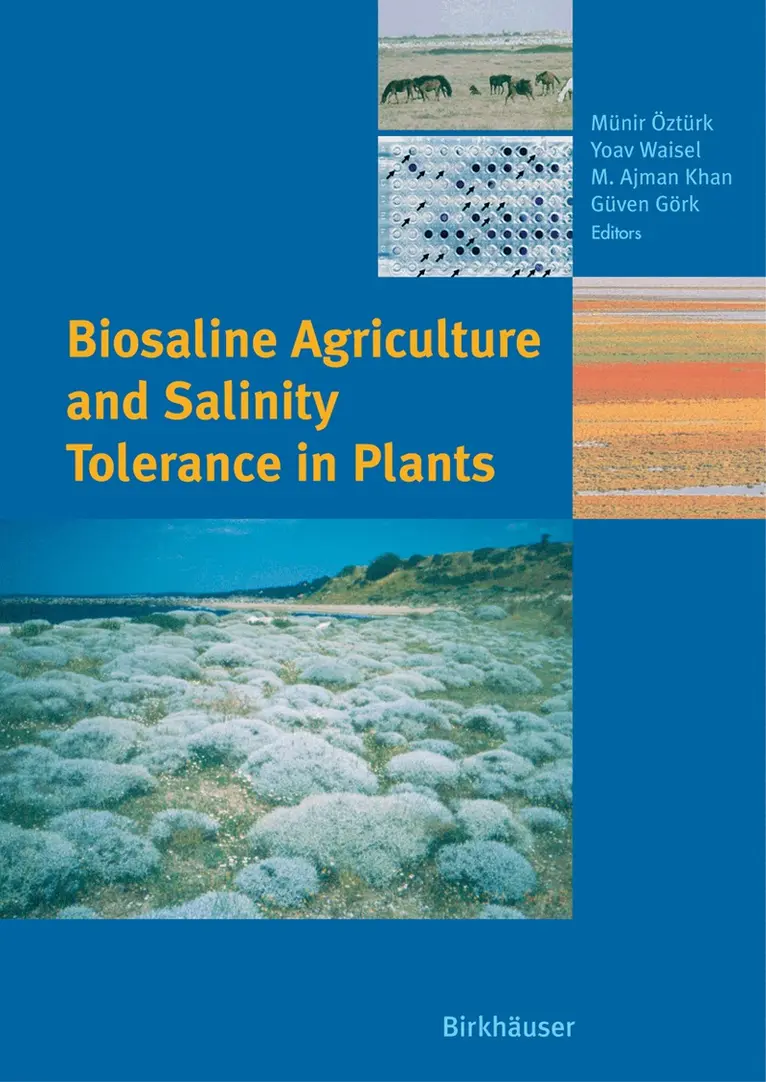
The availability of freshwater for agricultural use is declining in many areas of the world. This is the reason for the increasing use of lower quality or of saline water for crop production. Prolonged use of saline water severely affects the irrigated soils, which contributes to the global land degradation process and has direct impact on biomass production.For this reason, reduction of the spread of salinization, revitalization of salinized areas and introduction of salt tolerant high-yielding crops are important issues. The potential role of halophytes in the management of salinity problems of arid lands is investigated at length nowadays; some of these produced promising forage crops. This volume focuses on reclamation, management, and utilization of salt-affected soils, their sustainable use, and evaluation of plants inhabiting naturally occurring saline habitats. It is of interest to scientists and students as well as to agricultural institutions and farmers and will undoubtedly raise the scientific community's awareness of, and interest in salinity issues.
E-bok
PDF, Engelska, 20072 049 kr
Läs direkt efter köp
The availability of freshwater for agricultural use is declining in many areas of the world. This is the reason for the increasing use of lower quality or of saline water for crop production. Prolonged use of saline water severely affects the irrigated soils, which contributes to the global land degradation process and has direct impact on biomass production.For this reason, reduction of the spread of salinization, revitalization of salinized areas and introduction of salt tolerant high-yielding crops are important issues. The potential role of halophytes in the management of salinity problems of arid lands is investigated at length nowadays; some of these produced promising forage crops. This volume focuses on reclamation, management, and utilization of salt-affected soils, their sustainable use, and evaluation of plants inhabiting naturally occurring saline habitats. It is of interest to scientists and students as well as to agricultural institutions and farmers and will undoubtedly raise the scientific community's awareness of, and interest in salinity issues.