Yun Fan – författare
637 kr
Skickas inom 10-15 vardagar
2 179 kr
Skickas inom 10-15 vardagar
1 597 kr
Skickas inom 5-8 vardagar
1 847 kr
Läs direkt efter köp
Presents the theories and applications of determining the position of an object in space through the use of satellites
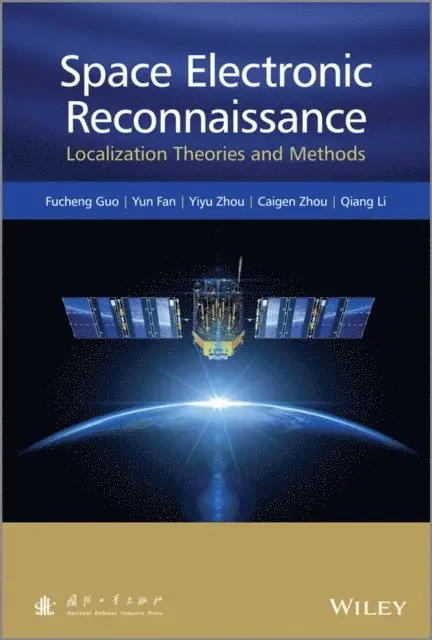
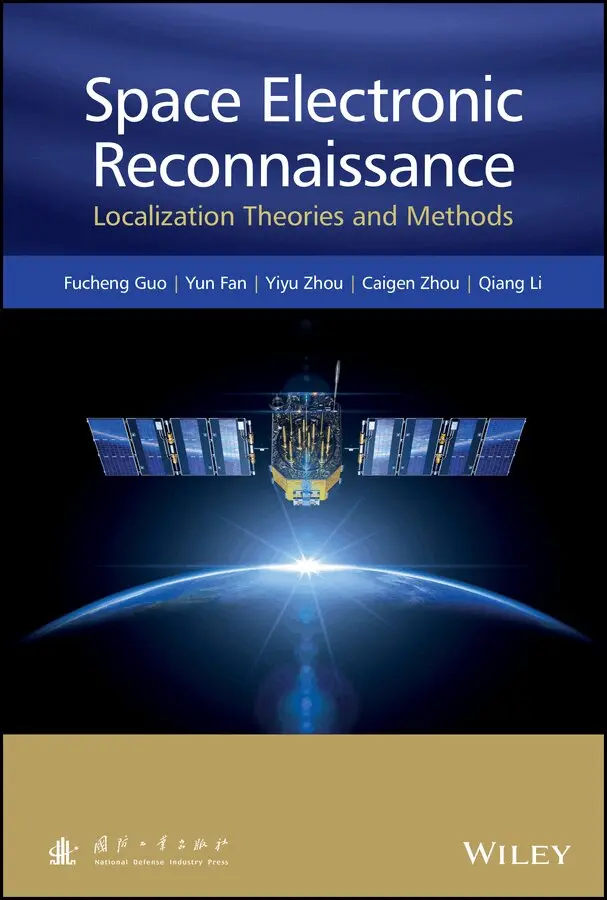
As the importance of space reconnaissance technology intensifies, more and more countries are investing money in building their own space reconnaissance satellites. Due to the secrecy and sensitivity of the operations, it is hard to find published papers and journals on the topic outside of military and governmental agencies. This book aims to fill the gap by presenting the various applications and basic principles of a very modern technology. The space electronic reconnaissance system in mono/multi-satellite platforms is a critical feature which can be used for detection, localization, tracking or identification of the various kinds of signal sources from radar, communication or navigation systems. Localization technology in space electronic reconnaissance uses single or multiple satellite receivers which receive signals from radar, communication and navigation emitters in the ground, ocean and space to specify the location of emitter. The methods, principles and technologies of different space electronic reconnaissance localization systems are introduced in this book, as are their performances, and the various methods are explained and analysed. Digital simulations illustrate the results.
Presents the theories and applications of determining the position of an object in space through the use of satellites Introduces methods, principles and technologies of localization and tracking in the space electronic reconnaissance system, the localization algorithm and error in satellite system and near space platform system, and the tracking algorithm and error in single satellite-to-satellite tracking system Provides the fundamentals, the mathematics, the limitations, the measurements, and systems, of localization with emphasis on defence industry applicationsHighly relevant for Engineers working in avionics, radar, communication, navigation and electronic warfare. Chapters include:- the introduction of space electronic reconnaissance localization technology, knowledge about the satellite orbit and basic terminology of passive localization, single satellite geolocation technology based on direction finding, three-satellite geolocation technology based on time difference of arrival (TDOA), two-satellite geolocation technology based on TDOA and frequency difference of arrival (FDOA), the single satellite localization technology based on kinematics theory, localization principles of near-space platform electronic reconnaissance systems, the orbit determination of single satellite-to-satellite tracking using bearings only(BO) information, the orbit determination of single satellite-to-satellite tracking using bearings and frequency information, the orbit determination of single satellite-to-satellite tracking using frequency only(FO) information. Each chapter ends with a problem and solution section, some using Matlab code.
1 863 kr
Läs direkt efter köp
Presents the theories and applications of determining the position of an object in space through the use of satellites
As the importance of space reconnaissance technology intensifies, more and more countries are investing money in building their own space reconnaissance satellites. Due to the secrecy and sensitivity of the operations, it is hard to find published papers and journals on the topic outside of military and governmental agencies. This book aims to fill the gap by presenting the various applications and basic principles of a very modern technology. The space electronic reconnaissance system in mono/multi-satellite platforms is a critical feature which can be used for detection, localization, tracking or identification of the various kinds of signal sources from radar, communication or navigation systems. Localization technology in space electronic reconnaissance uses single or multiple satellite receivers which receive signals from radar, communication and navigation emitters in the ground, ocean and space to specify the location of emitter. The methods, principles and technologies of different space electronic reconnaissance localization systems are introduced in this book, as are their performances, and the various methods are explained and analysed. Digital simulations illustrate the results.
Presents the theories and applications of determining the position of an object in space through the use of satellites Introduces methods, principles and technologies of localization and tracking in the space electronic reconnaissance system, the localization algorithm and error in satellite system and near space platform system, and the tracking algorithm and error in single satellite-to-satellite tracking system Provides the fundamentals, the mathematics, the limitations, the measurements, and systems, of localization with emphasis on defence industry applicationsHighly relevant for Engineers working in avionics, radar, communication, navigation and electronic warfare. Chapters include:- the introduction of space electronic reconnaissance localization technology, knowledge about the satellite orbit and basic terminology of passive localization, single satellite geolocation technology based on direction finding, three-satellite geolocation technology based on time difference of arrival (TDOA), two-satellite geolocation technology based on TDOA and frequency difference of arrival (FDOA), the single satellite localization technology based on kinematics theory, localization principles of near-space platform electronic reconnaissance systems, the orbit determination of single satellite-to-satellite tracking using bearings only(BO) information, the orbit determination of single satellite-to-satellite tracking using bearings and frequency information, the orbit determination of single satellite-to-satellite tracking using frequency only(FO) information. Each chapter ends with a problem and solution section, some using Matlab code.
730 kr
Läs direkt efter köp
Examining the relationships between activists and the changing political environment, this book analyzes the trajectories of three major social movements in Taiwan during the country’s democratic transition between 1980 and 2000. In doing so, it explores why the labor and environmental movements became less partisan, while the women’s movement became more so.
Providing a comparative discussion of these critical social movements, this book explores key theoretical questions and presents a rich and comprehensive analysis of social activism during this period of Taiwan’s political history. It focuses on causal mechanisms and variation and thus avoids the tautological trap of finding an "improving" political opportunity structure wherever a social movement is flourishing. Drawing on extensive data from over 140 activists’ demographic backgrounds, the discussion also builds upon existing studies of the "biographical" aspects of contention. This study then asks further questions about how certain tactics are chosen, not only how a repertoire of contention comes to have the shape it does.
Combining both a theoretical and an empirical approach, this book will be useful to students and scholars of Taiwanese politics and society, as well as social movements and democracy more generally.
730 kr
Läs direkt efter köp
Examining the relationships between activists and the changing political environment, this book analyzes the trajectories of three major social movements in Taiwan during the country’s democratic transition between 1980 and 2000. In doing so, it explores why the labor and environmental movements became less partisan, while the women’s movement became more so.
Providing a comparative discussion of these critical social movements, this book explores key theoretical questions and presents a rich and comprehensive analysis of social activism during this period of Taiwan’s political history. It focuses on causal mechanisms and variation and thus avoids the tautological trap of finding an "improving" political opportunity structure wherever a social movement is flourishing. Drawing on extensive data from over 140 activists’ demographic backgrounds, the discussion also builds upon existing studies of the "biographical" aspects of contention. This study then asks further questions about how certain tactics are chosen, not only how a repertoire of contention comes to have the shape it does.
Combining both a theoretical and an empirical approach, this book will be useful to students and scholars of Taiwanese politics and society, as well as social movements and democracy more generally.
1 357 kr
Tillfälligt slut