Yun Xiao – författare
Visar alla böcker från författaren Yun Xiao. Handla med fri frakt och snabb leverans.
4 produkter
4 produkter
679 kr
Skickas inom 10-15 vardagar
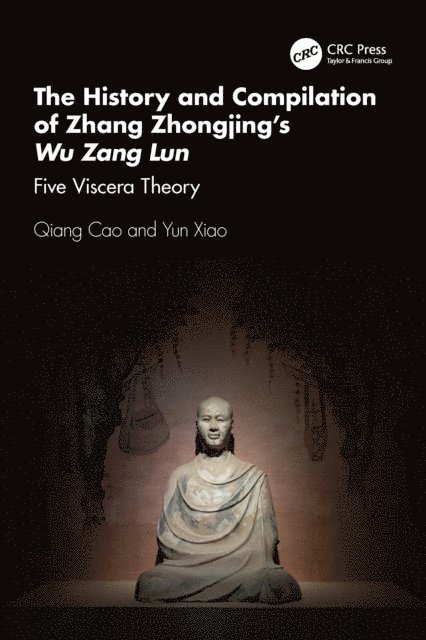
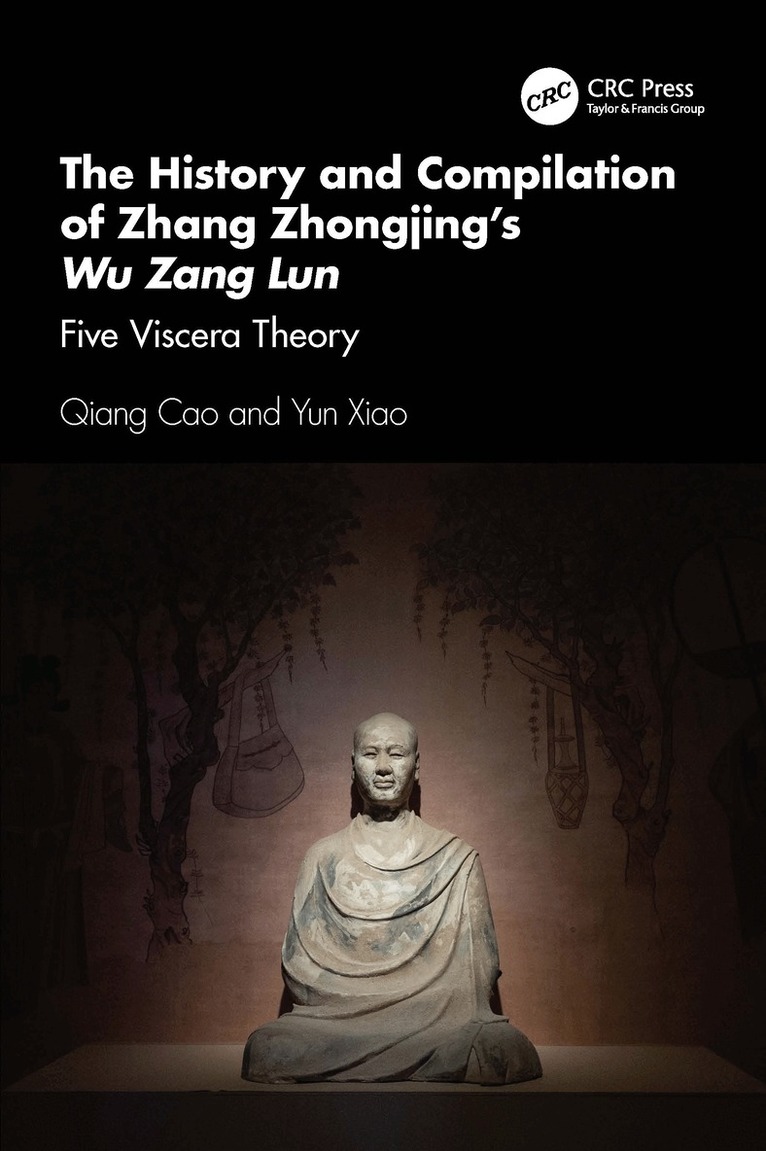
People who have studied acupuncture and Chinese medicine recognize Zhang Zhongjing as the author of two seminal texts that are among the most influential in Chinese medical history: the Treatise on Cold Damage Disorders (Shāng Hán Lùn, 伤寒论) and Essential Prescriptions from the Golden Cabinet (Jīn Guì Yào Lüè, 金匮要略). However, what is less well-known is that Zhang Zhongjing authored several other texts, all of which were lost over time, with the sole exception of the Five Viscera Theory (Wǔ Záng Lùn, 五藏论). This was discovered in 1900 in a hidden library of China’s Mogao Caves of Dunhuang by a Taoist priest named Wang Yuanlu.The History and Compilation of Zhang Zhongjing’s Wu Zang Lun stands as the first comprehensive work in English detailing the history and compilation of Zhongjing’s Five Viscera Theory (Wǔ Záng Lùn, 五藏论). It uses storytelling to illuminate the historical context of the eight versions of this book that were discovered: five versions found in Dunhuang and three versions from Zhejiang China, Korea, and Japan respectively. By exploring the origin and development of these versions, this book not only delves into Traditional Chinese Medicine but also intertwines fascinating elements of humanities, history, and geography. The reader is offered insight into the Dunhuang manuscripts’ background and the significance of Zhongjing’s contributions to medical literature.
2 526 kr
Skickas inom 10-15 vardagar
People who have studied acupuncture and Chinese medicine recognize Zhang Zhongjing as the author of two seminal texts that are among the most influential in Chinese medical history: the Treatise on Cold Damage Disorders (Shāng Hán Lùn, 伤寒论) and Essential Prescriptions from the Golden Cabinet (Jīn Guì Yào Lüè, 金匮要略). However, what is less well-known is that Zhang Zhongjing authored several other texts, all of which were lost over time, with the sole exception of the Five Viscera Theory (Wǔ Záng Lùn, 五藏论). This was discovered in 1900 in a hidden library of China’s Mogao Caves of Dunhuang by a Taoist priest named Wang Yuanlu.The History and Compilation of Zhang Zhongjing’s Wu Zang Lun stands as the first comprehensive work in English detailing the history and compilation of Zhongjing’s Five Viscera Theory (Wǔ Záng Lùn, 五藏论). It uses storytelling to illuminate the historical context of the eight versions of this book that were discovered: five versions found in Dunhuang and three versions from Zhejiang China, Korea, and Japan respectively. By exploring the origin and development of these versions, this book not only delves into Traditional Chinese Medicine but also intertwines fascinating elements of humanities, history, and geography. The reader is offered insight into the Dunhuang manuscripts’ background and the significance of Zhongjing’s contributions to medical literature.
Del 1094 - Advances in Experimental Medicine and Biology
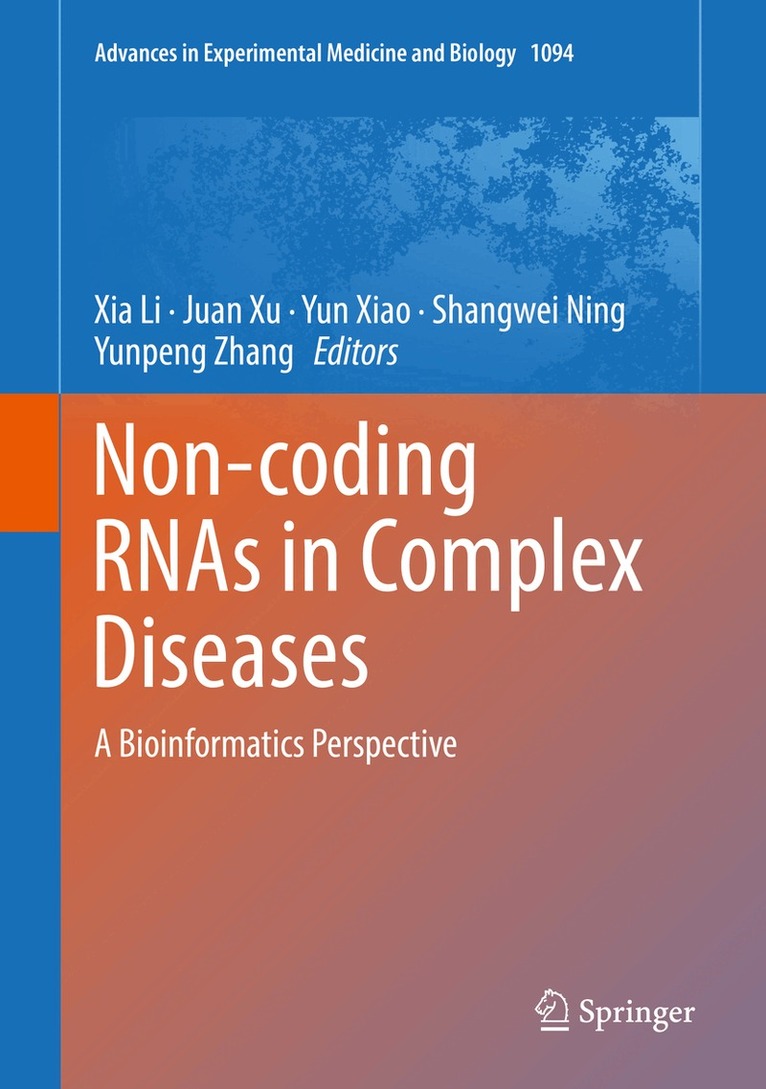
Non-coding RNAs in Complex Diseases
A Bioinformatics Perspective
Inbunden, Engelska, 2018
1 094 kr
Skickas inom 10-15 vardagar
This book offers an in-depth and comprehensive review on current understanding of regulatory ncRNAs in complex diseases from a view of bioinformatics. It conveys state-of-the-art bioinformatics tools and methods for ncRNAs from computational detection, functional prediction, to their roles in diseases. Computational methods used to investigate uncharacterised ncRNAs in diseases are mainly summarized in seven aspects: DNA variation of ncRNAs in diseases, prioritization of disease-related ncRNAs, dysregulation epigenetic factors that regulate ncRNA misexpression (DNA methylation and histone-modification), complex crosstalk across ncRNAs, ncRNAs acted as competing regulators to mediate the expression of protein-coding genes, non-coding RNAs mediated risk pathways,and their contributions to drug target predictions. The generally used data resources of ncRNAs are also listed in the end. This book provides important information on the current progress in the fast-moving fields of bioinformatics for regulatory ncRNAs. It provides a timely and useful reference for computational biologists, specifically with RNA interests, and other related areas.Prof. Xia Li is a Professor and the Dean of College of Bioinformatics Science and Technology, Harbin Medical University, China. Dr. Yun Xiao, Dr. Juan Xu, Dr. Shangwei Ning and Dr. Yunpeng Zhang are from College of Bioinformatics Science and Technology, Harbin Medical University, China.
Del 1094 - Advances in Experimental Medicine and Biology
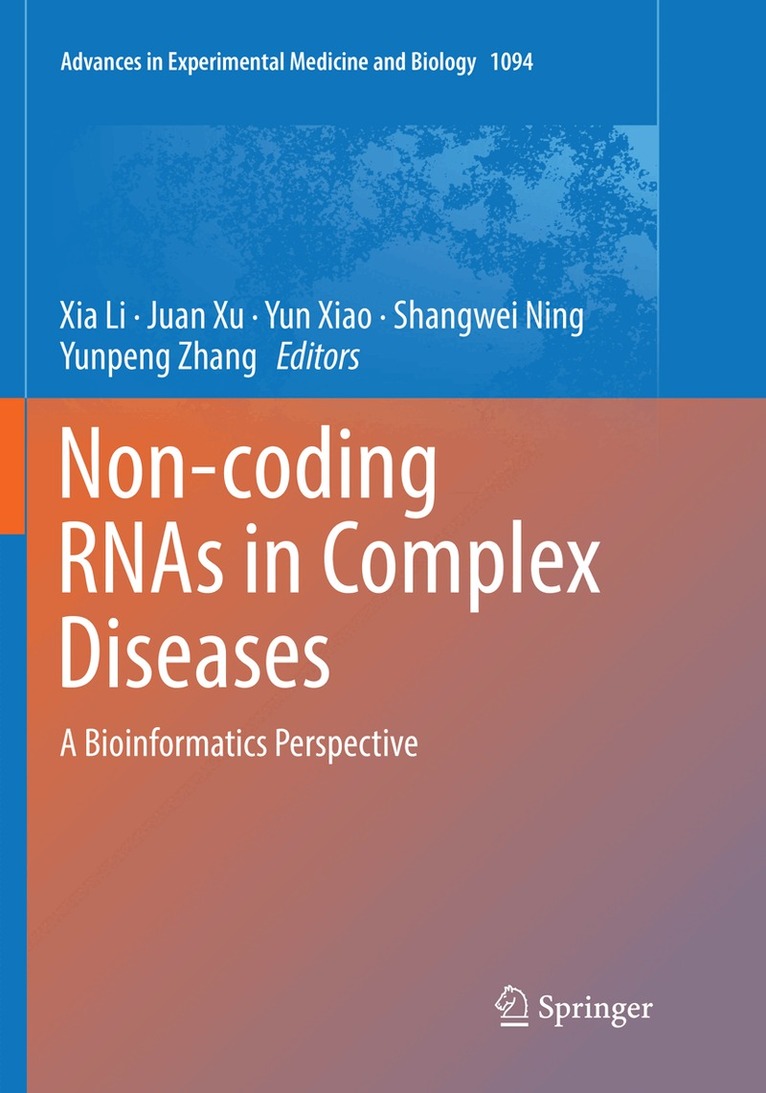
Non-coding RNAs in Complex Diseases
A Bioinformatics Perspective
Häftad, Engelska, 2019
1 094 kr
Skickas inom 10-15 vardagar
This book offers an in-depth and comprehensive review on current understanding of regulatory ncRNAs in complex diseases from a view of bioinformatics. It conveys state-of-the-art bioinformatics tools and methods for ncRNAs from computational detection, functional prediction, to their roles in diseases. Computational methods used to investigate uncharacterised ncRNAs in diseases are mainly summarized in seven aspects: DNA variation of ncRNAs in diseases, prioritization of disease-related ncRNAs, dysregulation epigenetic factors that regulate ncRNA misexpression (DNA methylation and histone-modification), complex crosstalk across ncRNAs, ncRNAs acted as competing regulators to mediate the expression of protein-coding genes, non-coding RNAs mediated risk pathways,and their contributions to drug target predictions. The generally used data resources of ncRNAs are also listed in the end. This book provides important information on the current progress in the fast-moving fields of bioinformatics for regulatory ncRNAs. It provides a timely and useful reference for computational biologists, specifically with RNA interests, and other related areas.Prof. Xia Li is a Professor and the Dean of College of Bioinformatics Science and Technology, Harbin Medical University, China. Dr. Yun Xiao, Dr. Juan Xu, Dr. Shangwei Ning and Dr. Yunpeng Zhang are from College of Bioinformatics Science and Technology, Harbin Medical University, China.