Yuri Tsivian – författare
Visar alla böcker från författaren Yuri Tsivian. Handla med fri frakt och snabb leverans.
9 produkter
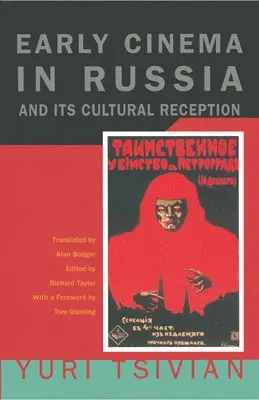
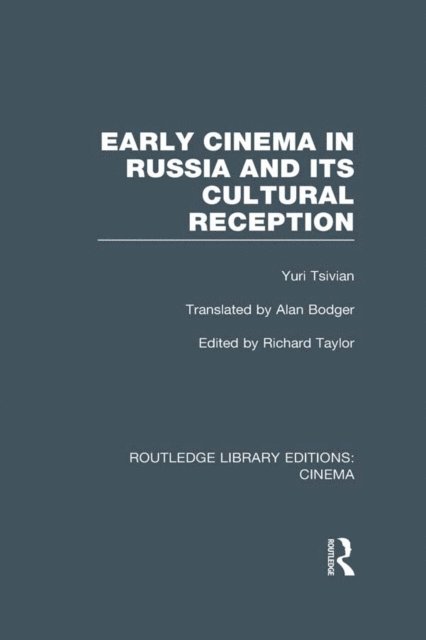
Early Cinema in Russia and Its Cultural Reception
Av Yuri Tsivian, Richard Taylor
Häftad, 1998
349 kr
Lägg i varukorg
Early Cinema in Russia chronicles one of the great lost periods in cinema history, that of Pre-Revolutionary Russia. In contrast to standard film histories, Yuri Tsivian focuses on reflected images: it features the historical film-goer and early writings on film as well as examining the physical …
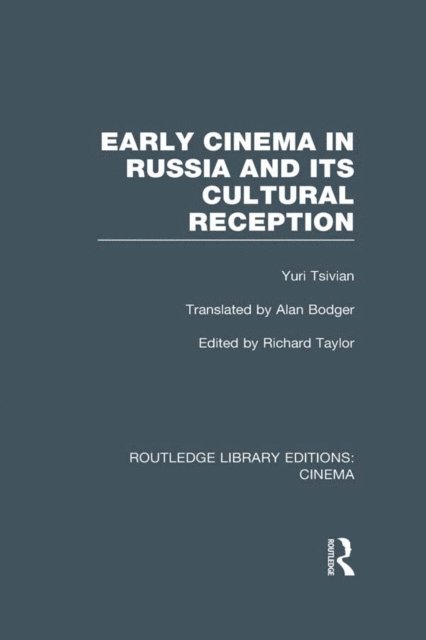
Early Cinema in Russia and its Cultural Reception
Av Yuri Tsivian, Richard Taylor
Inbunden, 2013
2578 kr
Lägg i varukorg
This book examines the development of cinematic form and culture in Russia, from its late nineteenth-century beginnings as a fairground attraction to the early post-Revolutionary years.The author traces the changing perceptions of cinema and its social transition from a modernist invention to a …
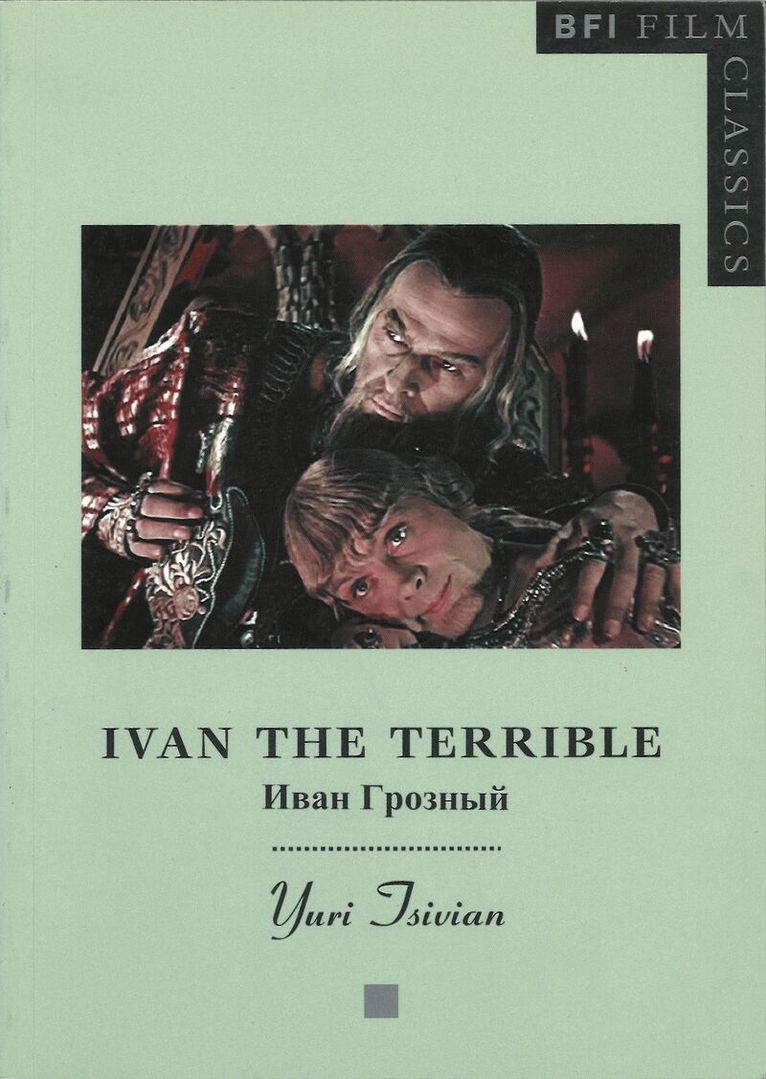
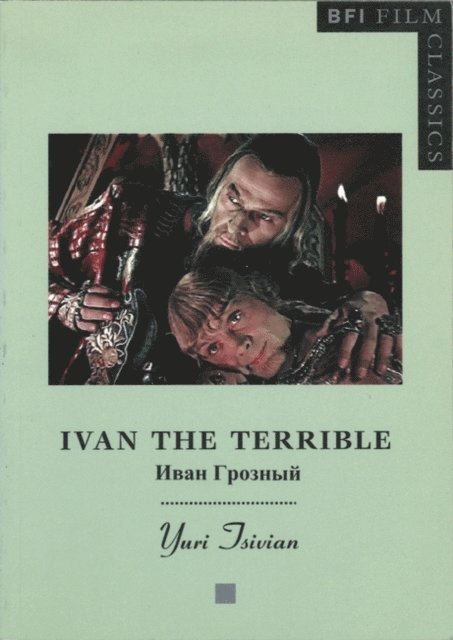
Ivan the Terrible
Av Yuri Tsivian
Häftad, 2001
200 kr
Lägg i varukorg
Ivan The Terrible (1944/46) was envisaged by its director, Sergei Eisenstein as a trilogy. But, Eisenstein died before begining the third part. Part One had been a resounding success, winning a Stalin prize, but Part Two met with the Kremlin's disfavour and was eventually banned until 1958. Using …
Early Cinema in Russia and its Cultural Reception
Av Yuri Tsivian, Richard Taylor
Häftad, 2015
785 kr
Lägg i varukorg
This book examines the development of cinematic form and culture in Russia, from its late nineteenth-century beginnings as a fairground attraction to the early post-Revolutionary years.The author traces the changing perceptions of cinema and its social transition from a modernist invention to a …
Early Cinema in Russia and its Cultural Reception
Av Yuri Tsivian, Richard Taylor
E-bok, 2013
907 kr
Lägg i varukorg
This book examines the development of cinematic form and culture in Russia, from its late nineteenth-century beginnings as a fairground attraction to the early post-Revolutionary years. The author traces the changing perceptions of cinema and its social transition from a modernist invention to a …
Early Cinema in Russia and its Cultural Reception
Av Yuri Tsivian, Richard Taylor
E-bok, 2013
927 kr
Lägg i varukorg
This book examines the development of cinematic form and culture in Russia, from its late nineteenth-century beginnings as a fairground attraction to the early post-Revolutionary years. The author traces the changing perceptions of cinema and its social transition from a modernist invention to a …
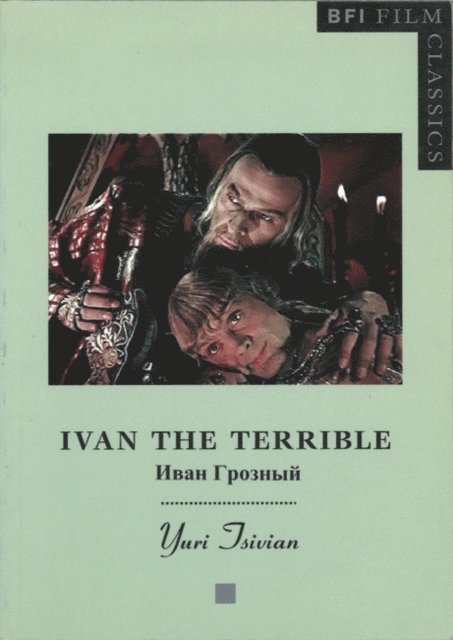
Ivan the Terrible
Av Yuri Tsivian
E-bok, 2019
211 kr
Lägg i varukorg
Ivan The Terrible (1944/46) was envisaged by its director, Sergei Eisenstein as a trilogy. But, Eisenstein died before begining the third part. Part One had been a resounding success, winning a Stalin prize, but Part Two met with the Kremlin''s disfavour and was eventually banned until 1958. Using …
Ivan the Terrible
Av Yuri Tsivian
E-bok, 2019
215 kr
Lägg i varukorg
Ivan The Terrible (1944/46) was envisaged by its director, Sergei Eisenstein as a trilogy. But, Eisenstein died before begining the third part. Part One had been a resounding success, winning a Stalin prize, but Part Two met with the Kremlin''s disfavour and was eventually banned until 1958. Using …
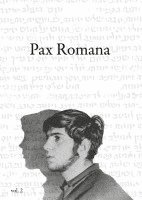
Pax Romana. In 2 Volumes.Vol.2. Princeton Slavic Series.
Av Esterum Publishing, Yuri Leving m. fl.
Inbunden, 2025
934 kr
Lägg i varukorg