
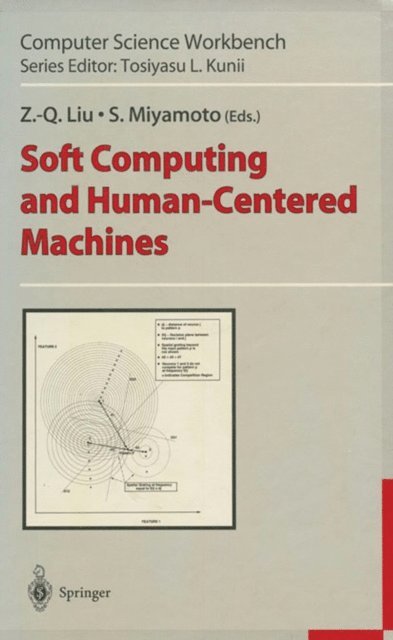
Computer Science Workbench is a monograph series which will provide you with an in-depth working knowledge of current developments in computer technology. Every volume in this series will deal with a topic of importance in computer science and elaborate on how you yourself can build systems related to the main theme. You will be able to develop a variety of systems, including computer software tools, computer graphics, computer animation, database management systems, and computer-aided design and manufacturing systems. Computer Science Work bench represents an important new contribution in the field of practical computer technology. Tosiyasu L. Kunii Preface With the advent of digital computers some five decades ago and the wide spread use of computer networks recently, we have gained enormous power in gathering information and manufacturing. Yet, this increase in comput ing power has not given us freedom in a real sense, we are increasingly enslaved by the very machine we built for gaining freedom and efficiency. Making machines to serve mankind is an essential issue we are facing. Building human-centered systems is an imperative task for scientists and engineers in the new millennium. The topic of human-centered servant modules covers a vast area. In our projects we have focused our efforts on developing theories and techn!ques based on fuzzy theories. Chapters 2 to 12 in this book collectively deal with the theoretical, methodological, and applicational aspects of human centered systems. Each chapter presents the most recent research results by the authors on a particular topic.
Del 20 - SERIES IN MACHINE PERCEPTION AND ARTIFICIAL INTELLIGENCE
Traditional methods for image scene interpretation and understanding are based mainly on such single-threaded procedural paradigms as hypothesize-and-test or syntactic parsing. As a result, these systems are unable to carry out tasks that require concurrent hypothesis testing.This book explores a method for symbolically interpreting images based upon a parallel implementation of a network-of-frames suggested, for example, by Minsky (1975), to describe intelligent processing. The system has been implemented in an object-oriented environment in the logic programming language Parlog++ and includes the propagation of uncertainty through each frame using Baldwin's (1986) formulation. The system is tested with several scenarios of increasing complexity, culminating with legal interpretation of traffic intersection images.
Computer Science Workbench is a monograph series which will provide you with an in-depth working knowledge of current developments in computer technology. Every volume in this series will deal with a topic of importance in computer science and elaborate on how you yourself can build systems related to the main theme. You will be able to develop a variety of systems, including computer software tools, computer graphics, computer animation, database management systems, and computer-aided design and manufacturing systems. Computer Science Work bench represents an important new contribution in the field of practical computer technology. Tosiyasu L. Kunii Preface With the advent of digital computers some five decades ago and the wide spread use of computer networks recently, we have gained enormous power in gathering information and manufacturing. Yet, this increase in comput ing power has not given us freedom in a real sense, we are increasingly enslaved by the very machine we built for gaining freedom and efficiency. Making machines to serve mankind is an essential issue we are facing. Building human-centered systems is an imperative task for scientists and engineers in the new millennium. The topic of human-centered servant modules covers a vast area. In our projects we have focused our efforts on developing theories and techn!ques based on fuzzy theories. Chapters 2 to 12 in this book collectively deal with the theoretical, methodological, and applicational aspects of human centered systems. Each chapter presents the most recent research results by the authors on a particular topic.
Del 20 - SERIES IN MACHINE PERCEPTION AND ARTIFICIAL INTELLIGENCE
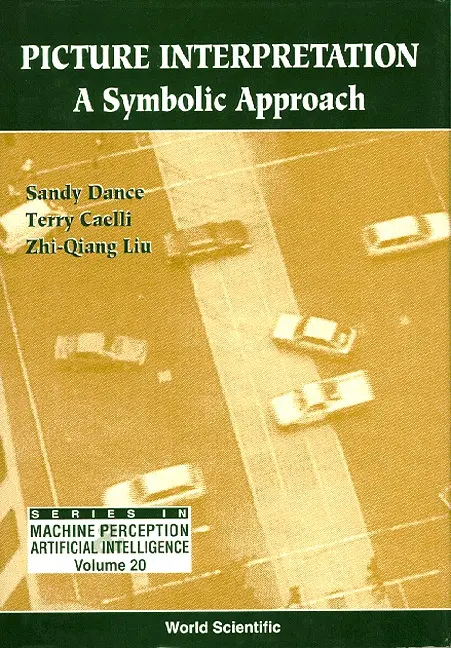
Traditional methods for image scene interpretation and understanding are based mainly on such single-threaded procedural paradigms as hypothesize-and-test or syntactic parsing. As a result, these systems are unable to carry out tasks that require concurrent hypothesis testing.This book explores a method for symbolically interpreting images based upon a parallel implementation of a network-of-frames suggested, for example, by Minsky (1975), to describe intelligent processing. The system has been implemented in an object-oriented environment in the logic programming language Parlog++ and includes the propagation of uncertainty through each frame using Baldwin's (1986) formulation. The system is tested with several scenarios of increasing complexity, culminating with legal interpretation of traffic intersection images.