Zachary Levenson – författare
Visar alla böcker från författaren Zachary Levenson. Handla med fri frakt och snabb leverans.
10 produkter
10 produkter
Inbunden, Engelska, 2022
1 376 kr
Skickas inom 5-8 vardagar
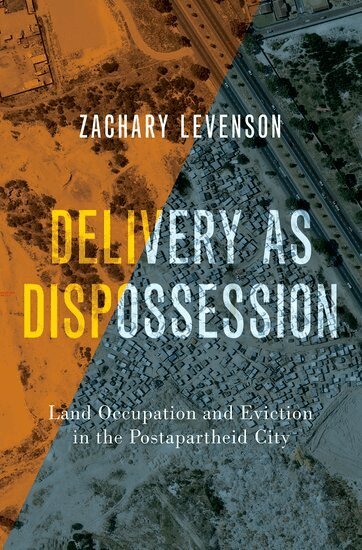
A sweeping historical and political analysis with detailed ethnographic fieldwork of the politics of everyday life in postcolonial Africa.In post-apartheid South Africa, nearly a fifth of the urban population lives in shacks. Unable to wait any longer for government housing, people occupy land, typically seeking to fly under the state's radar. Yet in most cases, occupiers wind up in dialogue with the state. In Delivery as Dispossession, Zachary Levenson follows this journey from avoidance to incorporation, explaining how the post-apartheid Constitution shifts squatters' struggles onto the judicial register. Providing a comparative ethnographic account of two land occupations in Cape Town and highlighting occupiers' struggles, Levenson further demonstrates why it is that housing officials seek the eviction of all new occupations: they view these unsanctioned settlements as a threat to the order they believe is required for delivery. Yet in evicting occupiers, he argues, they reproduce the problem anew, with subsequent rounds of land occupation as the inevitable consequence. Offering a unique framework for thinking about local states, this book proposes a novel theory of the state that will change the way ethnographers think about politics.
Häftad, Engelska, 2022
381 kr
Skickas inom 5-8 vardagar
A sweeping historical and political analysis with detailed ethnographic fieldwork of the politics of everyday life in postcolonial Africa.In post-apartheid South Africa, nearly a fifth of the urban population lives in shacks. Unable to wait any longer for government housing, people occupy land, typically seeking to fly under the state's radar. Yet in most cases, occupiers wind up in dialogue with the state. In Delivery as Dispossession, Zachary Levenson follows this journey from avoidance to incorporation, explaining how the post-apartheid Constitution shifts squatters' struggles onto the judicial register. Providing a comparative ethnographic account of two land occupations in Cape Town and highlighting occupiers' struggles, Levenson further demonstrates why it is that housing officials seek the eviction of all new occupations: they view these unsanctioned settlements as a threat to the order they believe is required for delivery. Yet in evicting occupiers, he argues, they reproduce the problem anew, with subsequent rounds of land occupation as the inevitable consequence. Offering a unique framework for thinking about local states, this book proposes a novel theory of the state that will change the way ethnographers think about politics.
Inbunden, Engelska, 2024
2 182 kr
Skickas inom 10-15 vardagar
This book documents the emergence and development of the theory of racial capitalism in apartheid South Africa. It interrogates the specificity of this theory in the South African context and draws lessons for its global applicability.Racism and capitalism have a long history of entanglement. Nowhere is this more evident than in South Africa, where colonial and apartheid regimes used explicit systems of racial hierarchy to shore up profit. It is therefore no surprise that South Africa has represented a key site for thinking about the role that racism plays in shaping state policy, labor markets, patterns of capital accumulation, and working-class struggle. Illuminating these dynamics, this volume develops a distinctive South African tradition of thought about the relationship between racism and capitalism.The South African Tradition of Racial Capitalism contributes to a burgeoning literature on the concept of “racial capitalism,” the origins of which many commentators trace back to apartheid South Africa. It pays particular attention to the crucial role of anti-apartheid activists as theorists, whose important insights remain relevant for scholars and activists around the globe. This book was originally published as a special issue of Ethnic and Racial Studies.
Häftad, Engelska, 2025
652 kr
Skickas inom 10-15 vardagar
This book documents the emergence and development of the theory of racial capitalism in apartheid South Africa. It interrogates the specificity of this theory in the South African context and draws lessons for its global applicability.Racism and capitalism have a long history of entanglement. Nowhere is this more evident than in South Africa, where colonial and apartheid regimes used explicit systems of racial hierarchy to shore up profit. It is therefore no surprise that South Africa has represented a key site for thinking about the role that racism plays in shaping state policy, labor markets, patterns of capital accumulation, and working-class struggle. Illuminating these dynamics, this volume develops a distinctive South African tradition of thought about the relationship between racism and capitalism.The South African Tradition of Racial Capitalism contributes to a burgeoning literature on the concept of “racial capitalism,” the origins of which many commentators trace back to apartheid South Africa. It pays particular attention to the crucial role of anti-apartheid activists as theorists, whose important insights remain relevant for scholars and activists around the globe. This book was originally published as a special issue of Ethnic and Racial Studies.
E-bok
PDF, Engelska, 2024753 kr
Läs direkt efter köp
This book documents the emergence and development of the theory of racial capitalism in apartheid South Africa. It interrogates the specificity of this theory in the South African context and draws lessons for its global applicability.Racism and capitalism have a long history of entanglement. Nowhere is this more evident than in South Africa, where colonial and apartheid regimes used explicit systems of racial hierarchy to shore up profit. It is therefore no surprise that South Africa has represented a key site for thinking about the role that racism plays in shaping state policy, labor markets, patterns of capital accumulation, and working-class struggle. Illuminating these dynamics, this volume develops a distinctive South African tradition of thought about the relationship between racism and capitalism.The South African Tradition of Racial Capitalism contributes to a burgeoning literature on the concept of "e;racial capitalism,"e; the origins of which many commentators trace back to apartheid South Africa. It pays particular attention to the crucial role of anti-apartheid activists as theorists, whose important insights remain relevant for scholars and activists around the globe. This book was originally published as a special issue of Ethnic and Racial Studies.
E-bok
Engelska, 2024746 kr
Läs direkt efter köp
This book documents the emergence and development of the theory of racial capitalism in apartheid South Africa. It interrogates the specificity of this theory in the South African context and draws lessons for its global applicability.Racism and capitalism have a long history of entanglement. Nowhere is this more evident than in South Africa, where colonial and apartheid regimes used explicit systems of racial hierarchy to shore up profit. It is therefore no surprise that South Africa has represented a key site for thinking about the role that racism plays in shaping state policy, labor markets, patterns of capital accumulation, and working-class struggle. Illuminating these dynamics, this volume develops a distinctive South African tradition of thought about the relationship between racism and capitalism.The South African Tradition of Racial Capitalism contributes to a burgeoning literature on the concept of "e;racial capitalism,"e; the origins of which many commentators trace back to apartheid South Africa. It pays particular attention to the crucial role of anti-apartheid activists as theorists, whose important insights remain relevant for scholars and activists around the globe. This book was originally published as a special issue of Ethnic and Racial Studies.
Häftad, Engelska, 2022
211 kr
Skickas inom 5-8 vardagar
Working with key concepts from theorist and human geographer Gillian Hart, this book argues for an ethnographic and geographic approach to critically engage contemporary political-economic processes in the context of real world struggles.
E-bok
Engelska, 2022373 kr
Läs direkt efter köp
In our time of rampant inequality, imperial-capitalist plunder, violence and ecocide, when radical concepts from the past seem inadequate, how do researchers and students of ethnographic work decide what concepts to work with or renew? Gillian Hart is a key thinker in radical political economy, geography, development studies, agrarian studies and Gramscian critique of postcolonial capitalism. In Ethnographies of Power each contributor engages her work and applies it to their own field of study. A major contribution of this collection is the merging of theory with praxis, resulting in invaluable research tools for postgraduate students. These include applying ‘gendered labour’ practices among workers in South Africa, reading ‘racial capitalism’ through agrarian debates, using ‘relational comparison’ in an ethnography of schooling across Durban, reworking ‘multiple socio-spatial trajectories’ in Guatemala’s Maya Biosphere Reserve, critiquing the notion of South Africa’s ‘second economy’, revisiting ‘development’ processes and ‘Development’ discourses in US military contracting, reconsidering Gramsci’s ‘conjunctures’ geographically, finding divergent ‘articulations’ in Cape Town land occupations, and exploring ‘nationalism’ as central to revaluing recyclables at a Soweto landfill. Together, the chapters show how important the ongoing reworking of radical concepts is to ethnographic critiques of power. Ethnographies of Power offers an invaluable toolkit for activists and scholars engaged in sharpening their critical concepts for social and environmental change towards a collective future.
E-bok
PDF, Engelska, 2022373 kr
Läs direkt efter köp
In our time of rampant inequality, imperial-capitalist plunder, violence and ecocide, when radical concepts from the past seem inadequate, how do researchers and students of ethnographic work decide what concepts to work with or renew? Gillian Hart is a key thinker in radical political economy, geography, development studies, agrarian studies and Gramscian critique of postcolonial capitalism. In Ethnographies of Power each contributor engages her work and applies it to their own field of study. A major contribution of this collection is the merging of theory with praxis, resulting in invaluable research tools for postgraduate students. These include applying ‘gendered labour’ practices among workers in South Africa, reading ‘racial capitalism’ through agrarian debates, using ‘relational comparison’ in an ethnography of schooling across Durban, reworking ‘multiple socio-spatial trajectories’ in Guatemala’s Maya Biosphere Reserve, critiquing the notion of South Africa’s ‘second economy’, revisiting ‘development’ processes and ‘Development’ discourses in US military contracting, reconsidering Gramsci’s ‘conjunctures’ geographically, finding divergent ‘articulations’ in Cape Town land occupations, and exploring ‘nationalism’ as central to revaluing recyclables at a Soweto landfill. Together, the chapters show how important the ongoing reworking of radical concepts is to ethnographic critiques of power. Ethnographies of Power offers an invaluable toolkit for activists and scholars engaged in sharpening their critical concepts for social and environmental change towards a collective future.
Inbunden, Engelska, 2024
1 145 kr
Skickas inom 5-8 vardagar
Working with key concepts from theorist and human geographer Gillian Hart, this book argues for an ethnographic and geographic approach to critically engage contemporary political-economic processes in the context of real world struggles.