Alex Loftus - Böcker
Visar alla böcker från författaren Alex Loftus. Handla med fri frakt och snabb leverans.
12 produkter
12 produkter
2 088 kr
Skickas inom 10-15 vardagar
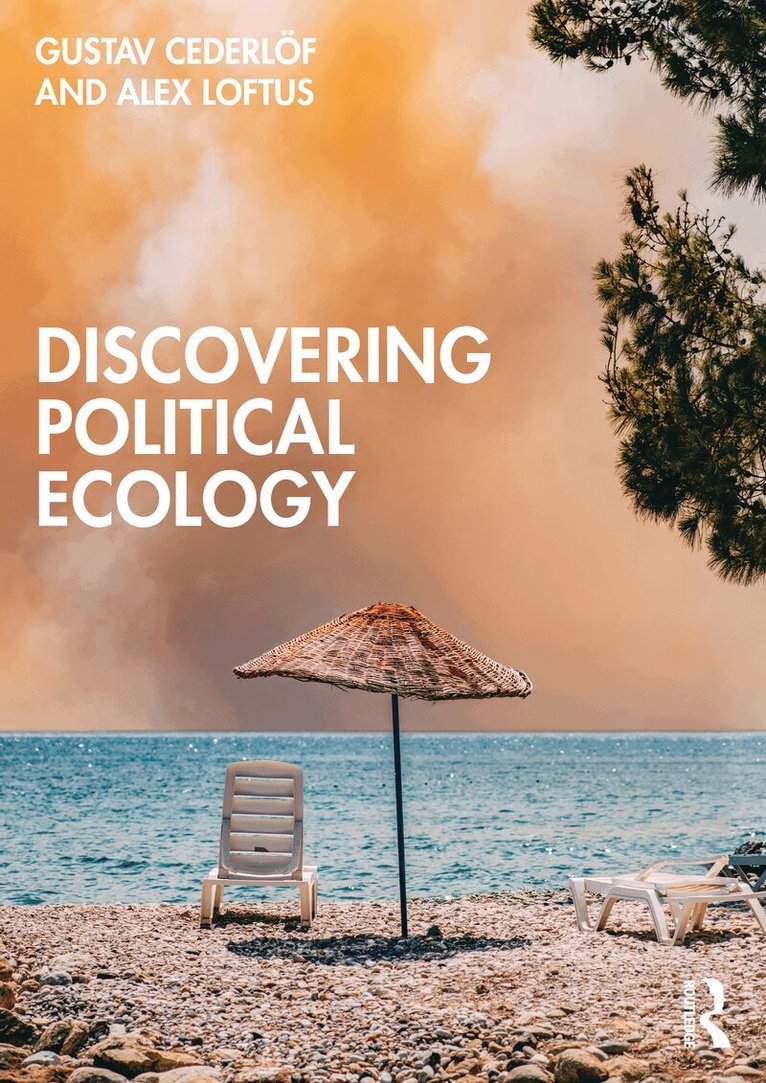
Political ecology is one of the most vibrant fields of environmental research. This book introduces political ecology to a new generation of students in a daring new way: as an interdisciplinary approach to environmental research but also as a series of lived realities and a praxis for change.The origins of political ecology are often traced through an Anglo-American canon. In Discovering Political Ecology, Gustav Cederlöf and Alex Loftus instead take up the challenge of presenting the key conversations and the diverse traditions that have shaped this field with attention to its extensive international roots. Inspired by voices and research in Asia, Africa, Europe and the Americas, the authors address the concerns of those who from different social backgrounds have grown up in a world shaped by climate change and increasing environmental inequalities. Engaging and accessible in style, Discovering Political Ecology introduces a set of key concepts around which conversations in political ecology coalesce. It also shows how these concepts allow you to make sense of some of the most pressing issues of our time—issues around water, energy, agriculture, forestry, climate change and environmental justice. Each chapter includes learning outcomes and suggested further readings, extensive bibliographies and seminar activities to be used by students and educators. At the cutting edge of the field, the book will be of interest to those in all disciplines brought together in political ecology, including but not limited to anthropology, development studies, ecology, geography, history and political science.
520 kr
Political ecology is one of the most vibrant fields of environmental research. This book introduces political ecology to a new generation of students in a daring new way: as an interdisciplinary approach to environmental research but also as a series of lived realities and a praxis for change.The origins of political ecology are often traced through an Anglo-American canon. In Discovering Political Ecology, Gustav Cederlöf and Alex Loftus instead take up the challenge of presenting the key conversations and the diverse traditions that have shaped this field with attention to its extensive international roots. Inspired by voices and research in Asia, Africa, Europe and the Americas, the authors address the concerns of those who from different social backgrounds have grown up in a world shaped by climate change and increasing environmental inequalities. Engaging and accessible in style, Discovering Political Ecology introduces a set of key concepts around which conversations in political ecology coalesce. It also shows how these concepts allow you to make sense of some of the most pressing issues of our time—issues around water, energy, agriculture, forestry, climate change and environmental justice. Each chapter includes learning outcomes and suggested further readings, extensive bibliographies and seminar activities to be used by students and educators. At the cutting edge of the field, the book will be of interest to those in all disciplines brought together in political ecology, including but not limited to anthropology, development studies, ecology, geography, history and political science.
283 kr
Skickas inom 7-10 vardagar
Everyday Environmentalism develops a conversation between marxist theories of everyday life and recent work in urban political ecology, arguing for a philosophy of praxis in relation to the politics of urban environments. Grounding its theoretical debate in empirical studies of struggles to obtain water in the informal settlements of Durban, South Africa, as well as in the creative acts of insurgent art activists in London, Alex Loftus builds on the work of key marxist thinkers to redefine “environmental politics.”A marxist philosophy of praxis-that world-changing ideas emerge from the acts of everyday people-undergirds the book. Our daily reality, writes Loftus, is woven out of the entanglements of social and natural relations, and as such a kind of environmental politics is automatically incorporated into our lives. Nevertheless, one effect of the public recognition of global environmental change, asserts Loftus, has been a resurgence of dualistic understandings of the world: for example, that nature is inflicting revenge on arrogant human societies. This ambitious work reformulates-with the assistance of such philosophers as LukÁcs, Gramsci, Lefebvre, and others-a politics of the environment in which everyday subjectivity is at the heart of a revolutionary politics.
375 kr
Skickas inom 7-10 vardagar
Discover the hydrosocial cycle and the impact of power, knowledge, and scarcity on water rights and use through this engaging and student-friendly textbook In Water: A Critical Introduction, a team of distinguished researchers delivers an expert examination of our most pressing water-related challenges, arguing that flows of water are shaped by social practices and geometries of power. Combining first-hand research and headline case studies, the authors reveal the hydrosocial relations often hidden in mainstream accounts of water, delving into current issues like water scarcity, floods, global water governance, legal conflicts, human rights, potable water provision, health, the water-food-energy nexus, and much more. Spanning five centuries, this comprehensive volume reflects on how imperial expansion has shaped hydrosocial relations in and between Europe, Asia, Africa, and the Americas, how water demand has changed over time, and how this change impacted lifestyle. As the first major text to synthesize critical water research in both local and global perspectives, this book is anchored by clear and compelling arguments — the "four planks" — and supported by the authors' original research and up-to-date synthesis of the latest critical research on major water problems. It also includes maps, illustrations, and additional learning materials to be used by educators. Readers will find: A lively and thorough introduction that explains why a critical approach is necessary to fully understand our current water challenges, with a focus on the "skeptical superhero"A global approach to key debates in water issues, including large dams, privatization, transboundary conflicts, agriculture and irrigation, water and sanitation provision, human rights, governance dilemmas, and the Sustainable Development GoalsComprehensive explorations of the roles played by expert knowledge, global capital, climate change, and justice struggles in the hydrosocial cycleCritical theoretical perspectives that integrate environmental social sciences, feminist critique, and a broadly defined political economy with the specificities of water resourcesFulsome treatments of water governance, science, and management, including the origins and implications of neoliberal approaches to the privatization, commodification, and financialization of waterAn accessible text that "invites the reader" on a critical journeyWater: A Critical Introduction is a key text for advanced high school, undergraduate, and graduate students who want a keener understanding of trends in environmental management, political ecology, and water governance, science, and engineering. Written with an interdisciplinary audience in mind, this book will benefit students taking courses in environmental studies, environmental law, geopolitics, international studies, human geography, hydrology, engineering, environmental economics, and related disciplines.
2 088 kr
Skickas inom 10-15 vardagar
Scholarship on the right to water has proliferated in interesting and unexpected ways in recent years. This book broadens existing discussions on the right to water in order to shed critical light on the pathways, pitfalls, prospects, and constraints that exist in achieving global goals, as well as advancing debates around water governance and water justice. The book shows how both discourses and struggles around the right to water have opened new perspectives, and possibilities in water governance, fostering new collective and moral claims for water justice, while effecting changes in laws and policies around the world. In light of the 2010 UN ratification on the human right to water and sanitation, shifts have taken place in policy, legal frameworks, local implementation, as well as in national dialogues. Chapters in the book illustrate the novel ways in which the right to water has been taken up in locations drawn globally, highlighting the material politics that are enabled and negotiated through this framework in order to address ongoing water insecurities. This book reflects the urgent need to take stock of debates in light of new concerns around post-neoliberal political developments, the challenges of the Anthropocene and climate change, the transition from the Millennium Development Goals (MDGs) to the Sustainable Development Goals (SDGs), as well as the mobilizations around the right to water in the global North. This book is essential reading for scholars and students of water governance, environmental policy, politics, geography, and law. It will be of great interest to policymakers and practitioners working in water governance, as well as the human right to water and sanitation.
617 kr
Skickas inom 10-15 vardagar
Scholarship on the right to water has proliferated in interesting and unexpected ways in recent years. This book broadens existing discussions on the right to water in order to shed critical light on the pathways, pitfalls, prospects, and constraints that exist in achieving global goals, as well as advancing debates around water governance and water justice. The book shows how both discourses and struggles around the right to water have opened new perspectives, and possibilities in water governance, fostering new collective and moral claims for water justice, while effecting changes in laws and policies around the world. In light of the 2010 UN ratification on the human right to water and sanitation, shifts have taken place in policy, legal frameworks, local implementation, as well as in national dialogues. Chapters in the book illustrate the novel ways in which the right to water has been taken up in locations drawn globally, highlighting the material politics that are enabled and negotiated through this framework in order to address ongoing water insecurities. This book reflects the urgent need to take stock of debates in light of new concerns around post-neoliberal political developments, the challenges of the Anthropocene and climate change, the transition from the Millennium Development Goals (MDGs) to the Sustainable Development Goals (SDGs), as well as the mobilizations around the right to water in the global North. This book is essential reading for scholars and students of water governance, environmental policy, politics, geography, and law. It will be of great interest to policymakers and practitioners working in water governance, as well as the human right to water and sanitation.
270 kr
Skickas inom 7-10 vardagar
This unique collection is the first to bring attention to Antonio Gramsci’s work within geographical debates. Presenting a substantially different reading to Gramsci scholarship, the collection forges a new approach within human geography, environmental studies and development theory. Offers the first sustained attempt to foreground Antonio Gramsci’s work within geographical debatesDemonstrates how Gramsci articulates a rich spatial sensibility whilst developing a distinctive approach to geographical questionsPresents a substantially different reading of Gramsci from dominant post-Marxist perspectives, as well as more recent anarchist and post-anarchist critiquesBuilds on the emergence of Gramsci scholarship in recent years, taking this forward through studies across multiple continents, and asking how his writings might engage with and animate political movements todayForges a new approach within human geography, environmental studies and development theory, building on Gramsci’s innovative philosophy of praxis
796 kr
Skickas inom 7-10 vardagar
This unique collection is the first to bring attention to Antonio Gramsci’s work within geographical debates. Presenting a substantially different reading to Gramsci scholarship, the collection forges a new approach within human geography, environmental studies and development theory. Offers the first sustained attempt to foreground Antonio Gramsci’s work within geographical debatesDemonstrates how Gramsci articulates a rich spatial sensibility whilst developing a distinctive approach to geographical questionsPresents a substantially different reading of Gramsci from dominant post-Marxist perspectives, as well as more recent anarchist and post-anarchist critiquesBuilds on the emergence of Gramsci scholarship in recent years, taking this forward through studies across multiple continents, and asking how his writings might engage with and animate political movements todayForges a new approach within human geography, environmental studies and development theory, building on Gramsci’s innovative philosophy of praxis
204 kr
Skickas inom 7-10 vardagar
Working with key concepts from theorist and human geographer Gillian Hart, this book argues for an ethnographic and geographic approach to critically engage contemporary political-economic processes in the context of real world struggles.
1 161 kr
Skickas inom 5-8 vardagar
Working with key concepts from theorist and human geographer Gillian Hart, this book argues for an ethnographic and geographic approach to critically engage contemporary political-economic processes in the context of real world struggles.
820 kr
Skickas inom 10-15 vardagar
The right to clean water has been adopted by the United Nations as a basic human right. Yet how such universal calls for a right to water are understood, negotiated, experienced and struggled over remain key challenges. The Right to Water elucidates how universal calls for rights articulate with local historical geographical contexts, governance, politics and social struggles, thereby highlighting the challenges and the possibilities that exist. Bringing together a unique range of academics, policy-makers and activists, the book analyzes how struggles for the right to water have attempted to translate moral arguments over access to safe water into workable claims. This book is an intervention at a crucial moment into the shape and future direction of struggles for the right to water in a range of political, geographic and socio-economics contexts, seeking to be pro-active in defining what this struggle could mean and how it might be taken forward in a far broader transformative politics. The Right to Water engages with a range of approaches that focus on philosophical, legal and governance perspectives before seeking to apply these more abstract arguments to an array of concrete struggles and case studies. In so doing, the book builds on empirical examples from Africa, Asia, Oceania, Latin America, the Middle East, North America and the European Union.
2 155 kr
Skickas inom 10-15 vardagar
The right to clean water has been adopted by the United Nations as a basic human right. Yet how such universal calls for a right to water are understood, negotiated, experienced and struggled over remain key challenges. The Right to Water elucidates how universal calls for rights articulate with local historical geographical contexts, governance, politics and social struggles, thereby highlighting the challenges and the possibilities that exist. Bringing together a unique range of academics, policy-makers and activists, the book analyzes how struggles for the right to water have attempted to translate moral arguments over access to safe water into workable claims. This book is an intervention at a crucial moment into the shape and future direction of struggles for the right to water in a range of political, geographic and socio-economics contexts, seeking to be pro-active in defining what this struggle could mean and how it might be taken forward in a far broader transformative politics. The Right to Water engages with a range of approaches that focus on philosophical, legal and governance perspectives before seeking to apply these more abstract arguments to an array of concrete struggles and case studies. In so doing, the book builds on empirical examples from Africa, Asia, Oceania, Latin America, the Middle East, North America and the European Union.