Zeng-Yu Wang - Böcker
Visar alla böcker från författaren Zeng-Yu Wang. Handla med fri frakt och snabb leverans.
3 produkter
3 produkter
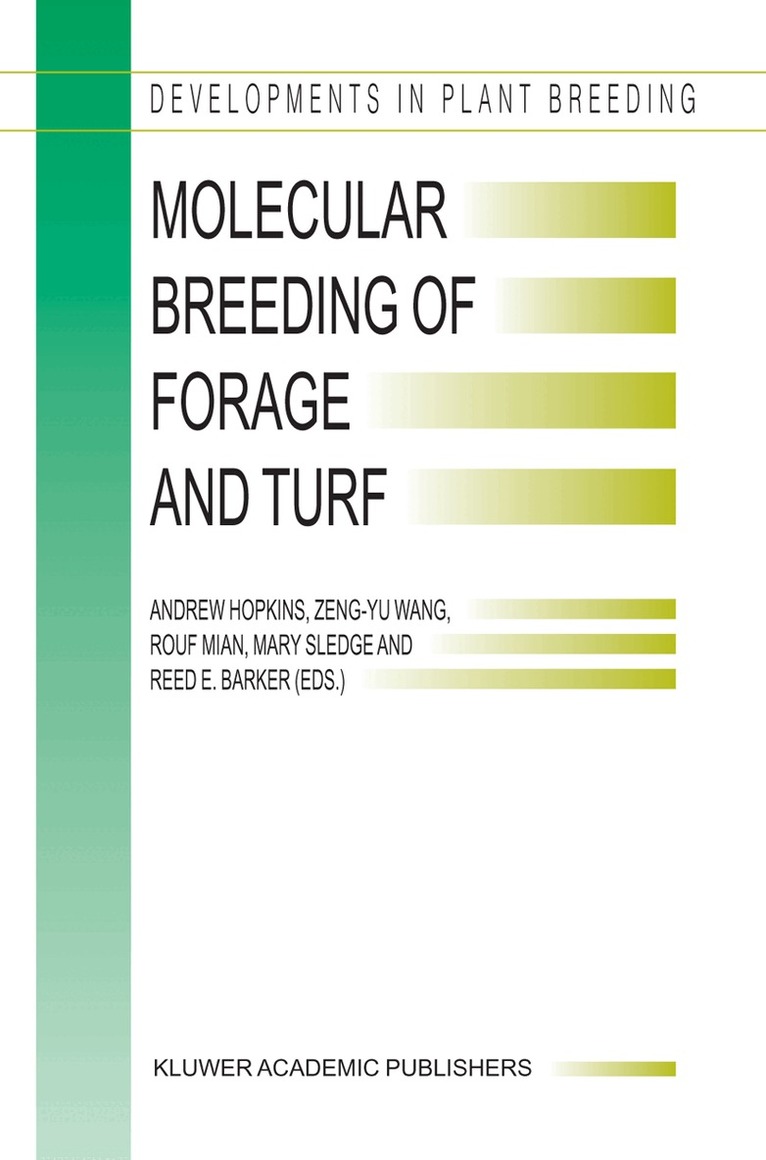
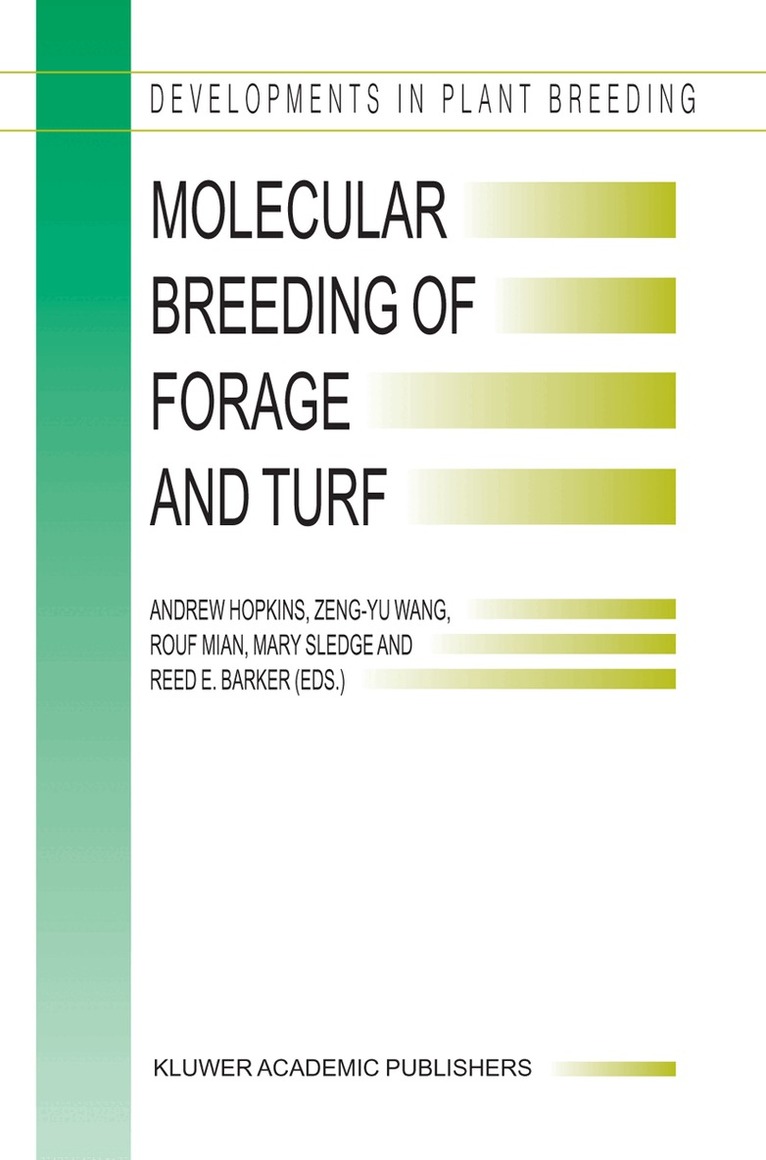
Molecular Breeding of Forage and Turf
Proceedings of the 3rd International Symposium, Molecular Breeding of Forage and Turf, Dallas, Texas, and Ardmore, Oklahoma, U.S.A., May, 18–22, 2003
Inbunden, Engelska, 2004
2 101 kr
Skickas inom 10-15 vardagar
Forage and turf are the backbone of sustainable agriculture and contribute extensively to the world economy. The fast-paced advancement of cellular and molecular biology provides novel methods to accelerate or complement conventional breeding efforts. This book contains the most comprehensive reviews on the latest development in applications of molecular techniques for the improvement of forage grasses, forage legumes and turf grasses. Detailed accounts and future opportunities in molecular breeding of forage and turf, from gene discovery to development of improved cultivars, are described in the book. Almost all relevant areas are explored in detail, including tolerance to biotic and abiotic stresses; flowering control; plant-symbiont relations; breeding for animal, human and environmental welfare; molecular markers; transgenics; bioinformatics; population genetics; genomics of the model legume M. truncatula; field testing and risk assessment as well as intellectual property rights. This book will be of interest to researchers in both academia and industry who are involved in forage and turf improvement. It will be especially important to breeders, molecular biologists, geneticists, physiologists and agronomists.
1 064 kr
Skickas inom 10-15 vardagar
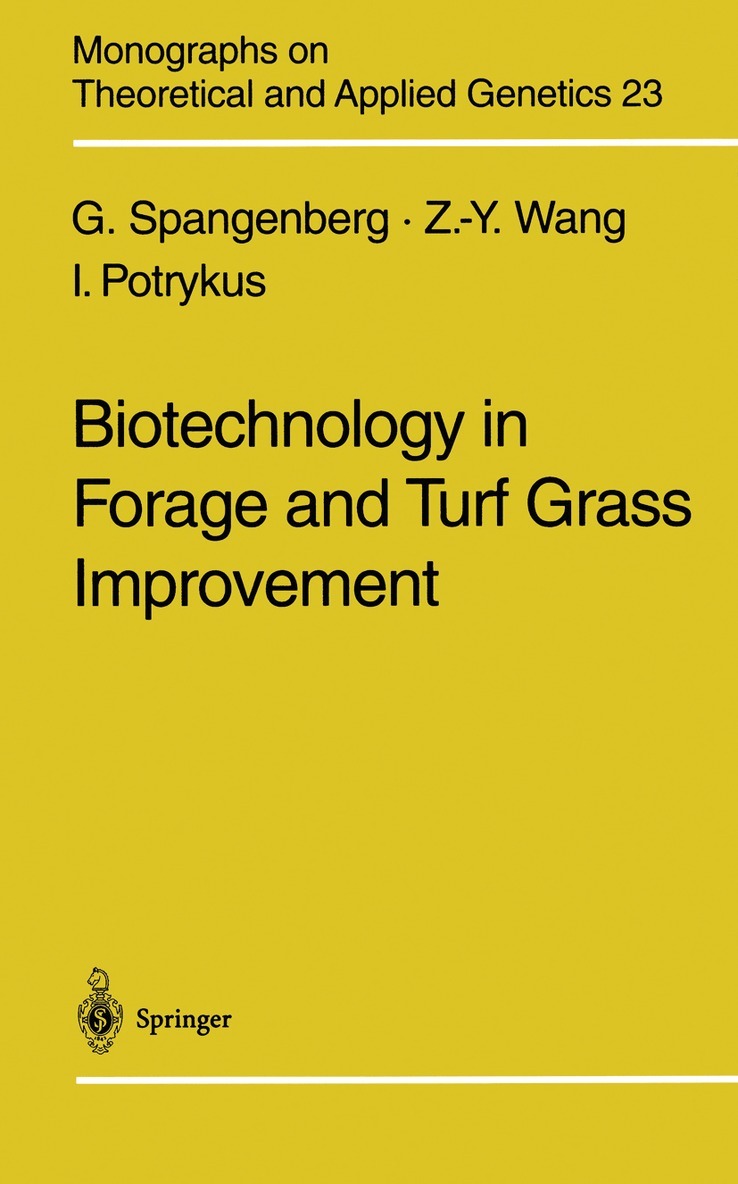
Worldwide, acreage under grassland is estimated to be twice that of cropland. Two closely related genera, Festuca L. (fescues) and Lolium L. (ryegrasses) are of significant value in temperate grasslands. These genera (tribe Poeae, subfamily Pooideae) contain well-adapted, very productive grasses widely distributed in temperate and cool climates in Europe, North and South America, North, East and South Africa, Asia, Australia and New Zealand, where they are used for agricultural and recreational purposes (Jauhar 1993). They are important for grazing, stabilizing soil for agriculture, and enhancing the environment through multiple uses, such as forage, conservation and turf (Barnes 1990). Therefore, in the family Poaceae, the Festuca-Lolium group of grasses is among the most extensively studied by agronomists, plant breeders, animal scientists, taxonomists and cytogeneticists. The potential of biotechno- logical approaches has been recognized for the development of improved fescue and rye grass cultivars (Barnes 1990; Kau11990; Jauhar 1993). 1.1 Agronomic Importance of the Festuca-Lolium Complex The Festuca-Lolium complex involves some well-adapted, highly productive persistent species which are widely used for soil stabilization, for agricultural purposes and as amenity grasses. For temperate grasslands, tall fescue, meadow fescue, Italian ryegrass and perennial ryegrass are particularly impor- tant species which show complementary desirable traits, such as palatability and fast initial growth of the ryegrasses, and winter hardiness, persistency combined with continued high production after the second harvest year of the fescues.
Molecular Breeding of Forage and Turf
Proceedings of the 3rd International Symposium, Molecular Breeding of Forage and Turf, Dallas, Texas, and Ardmore, Oklahoma, U.S.A., May, 18–22, 2003
Häftad, Engelska, 2010
2 164 kr
Skickas inom 10-15 vardagar
Forage and turf are the backbone of sustainable agriculture and contribute extensively to the world economy. The fast-paced advancement of cellular and molecular biology provides novel methods to accelerate or complement conventional breeding efforts. This book contains the most comprehensive reviews on the latest development in applications of molecular techniques for the improvement of forage grasses, forage legumes and turf grasses. Detailed accounts and future opportunities in molecular breeding of forage and turf, from gene discovery to development of improved cultivars, are described in the book. Almost all relevant areas are explored in detail, including tolerance to biotic and abiotic stresses; flowering control; plant-symbiont relations; breeding for animal, human and environmental welfare; molecular markers; transgenics; bioinformatics; population genetics; genomics of the model legume M. truncatula; field testing and risk assessment as well as intellectual property rights. This book will be of interest to researchers in both academia and industry who are involved in forage and turf improvement. It will be especially important to breeders, molecular biologists, geneticists, physiologists and agronomists.