Zeungnam Bien – författare
Visar alla böcker från författaren Zeungnam Bien. Handla med fri frakt och snabb leverans.
5 produkter
5 produkter
Inbunden, Engelska, 1998
1 623 kr
Skickas inom 10-15 vardagar
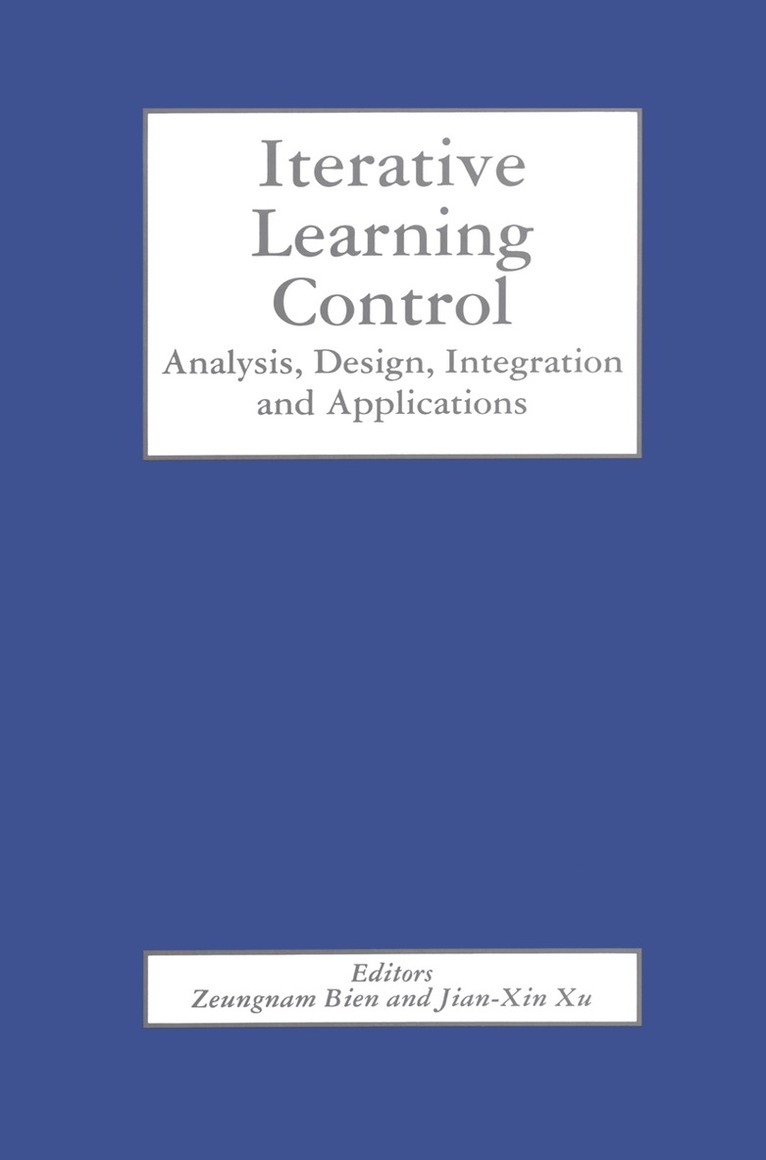
Iterative Learning Control (ILC) differs from most existing control methods in the sense that, it exploits every possibility to incorporate past control informa tion, such as tracking errors and control input signals, into the construction of the present control action. There are two phases in Iterative Learning Control: first the long term memory components are used to store past control infor mation, then the stored control information is fused in a certain manner so as to ensure that the system meets control specifications such as convergence, robustness, etc. It is worth pointing out that, those control specifications may not be easily satisfied by other control methods as they require more prior knowledge of the process in the stage of the controller design. ILC requires much less information of the system variations to yield the desired dynamic be haviors. Due to its simplicity and effectiveness, ILC has received considerable attention and applications in many areas for the past one and half decades. Most contributions have been focused on developing new ILC algorithms with property analysis. Since 1992, the research in ILC has progressed by leaps and bounds. On one hand, substantial work has been conducted and reported in the core area of developing and analyzing new ILC algorithms. On the other hand, researchers have realized that integration of ILC with other control techniques may give rise to better controllers that exhibit desired performance which is impossible by any individual approach.
Häftad, Engelska, 2012
1 622 kr
Skickas inom 10-15 vardagar
Iterative Learning Control (ILC) differs from most existing control methods in the sense that, it exploits every possibility to incorporate past control informa tion, such as tracking errors and control input signals, into the construction of the present control action. There are two phases in Iterative Learning Control: first the long term memory components are used to store past control infor mation, then the stored control information is fused in a certain manner so as to ensure that the system meets control specifications such as convergence, robustness, etc. It is worth pointing out that, those control specifications may not be easily satisfied by other control methods as they require more prior knowledge of the process in the stage of the controller design. ILC requires much less information of the system variations to yield the desired dynamic be haviors. Due to its simplicity and effectiveness, ILC has received considerable attention and applications in many areas for the past one and half decades. Most contributions have been focused on developing new ILC algorithms with property analysis. Since 1992, the research in ILC has progressed by leaps and bounds. On one hand, substantial work has been conducted and reported in the core area of developing and analyzing new ILC algorithms. On the other hand, researchers have realized that integration of ILC with other control techniques may give rise to better controllers that exhibit desired performance which is impossible by any individual approach.
E-bok
PDF, Engelska, 20122 049 kr
Läs direkt efter köp
Iterative Learning Control (ILC) differs from most existing control methods in the sense that, it exploits every possibility to incorporate past control informa tion, such as tracking errors and control input signals, into the construction of the present control action. There are two phases in Iterative Learning Control: first the long term memory components are used to store past control infor mation, then the stored control information is fused in a certain manner so as to ensure that the system meets control specifications such as convergence, robustness, etc. It is worth pointing out that, those control specifications may not be easily satisfied by other control methods as they require more prior knowledge of the process in the stage of the controller design. ILC requires much less information of the system variations to yield the desired dynamic be haviors. Due to its simplicity and effectiveness, ILC has received considerable attention and applications in many areas for the past one and half decades. Most contributions have been focused on developing new ILC algorithms with property analysis. Since 1992, the research in ILC has progressed by leaps and bounds. On one hand, substantial work has been conducted and reported in the core area of developing and analyzing new ILC algorithms. On the other hand, researchers have realized that integration of ILC with other control techniques may give rise to better controllers that exhibit desired performance which is impossible by any individual approach.
E-bok
PDF, Engelska, 2012687 kr
Läs direkt efter köp
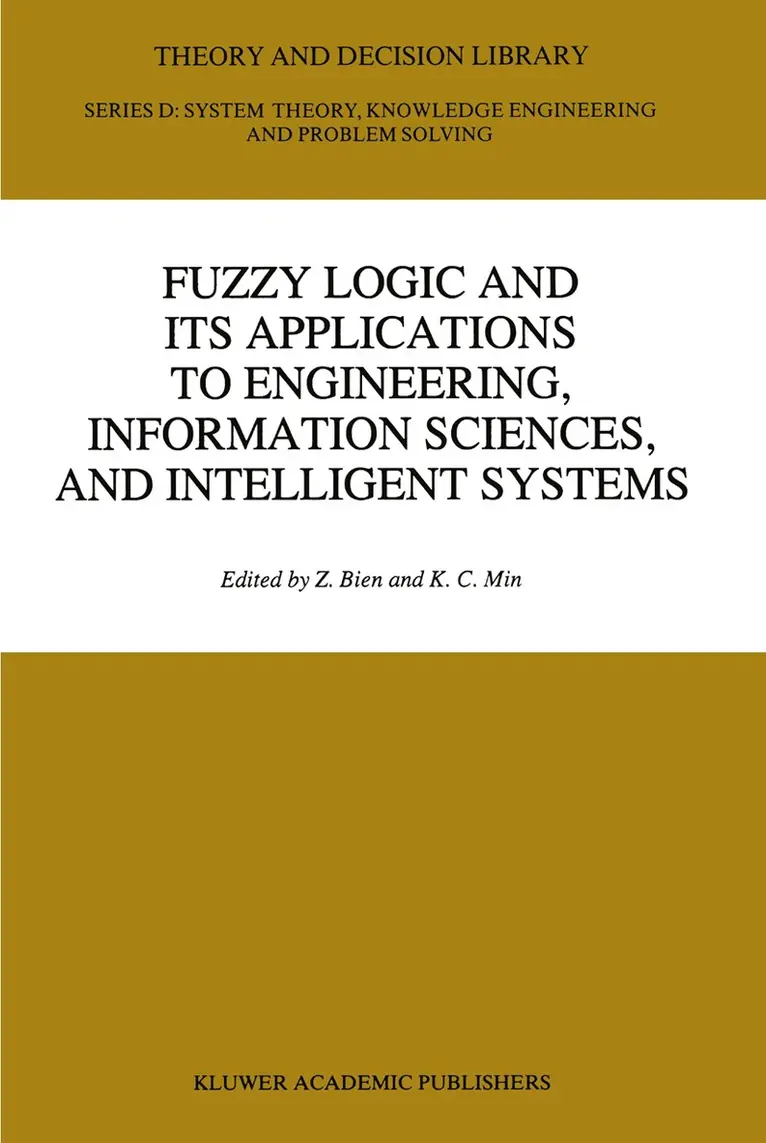
Fuzzy technology has emerged as one of the most exciting new concepts available. Fuzzy Logic and its Applications... covers a wide range of the theory and applications of fuzzy logic and related systems, including industrial applications of fuzzy technology, implementing human intelligence in machines and systems. There are four main themes: intelligent systems, engineering, mathematical foundations, and information sciences. Both academics and the technical community will learn how and why fuzzy logic is appreciated in the conceptual, design and manufacturing stages of intelligent systems, gaining an improved understanding of the basic science and the foundations of human reasoning.
Del 16 - Theory and Decision Library D:
Fuzzy Logic and its Applications to Engineering, Information Sciences, and Intelligent Systems
Häftad, Engelska, 2011
545 kr
Skickas inom 10-15 vardagar
Fuzzy technology has emerged as one of the most exciting new concepts available. Fuzzy Logic and its Applications... covers a wide range of the theory and applications of fuzzy logic and related systems, including industrial applications of fuzzy technology, implementing human intelligence in machines and systems. There are four main themes: intelligent systems, engineering, mathematical foundations, and information sciences. Both academics and the technical community will learn how and why fuzzy logic is appreciated in the conceptual, design and manufacturing stages of intelligent systems, gaining an improved understanding of the basic science and the foundations of human reasoning.