Zoltan Biedermann – författare
Visar alla böcker från författaren . Handla med fri frakt och snabb leverans.
7 produkter
7 produkter
E-bok
PDF, Engelska, 2018385 kr
Läs direkt efter köp
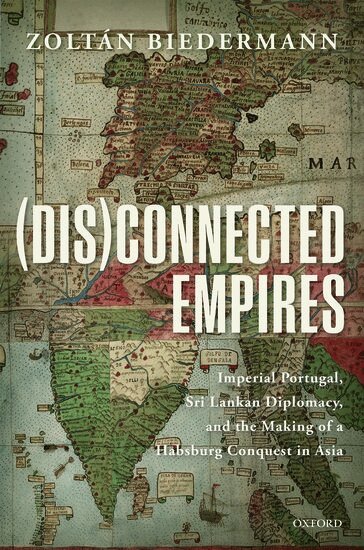
(Dis)connected Empires takes the reader on a global journey to explore the triangle formed during the sixteenth century between the Portuguese empire, the empire of Kotte in Sri Lanka, and the Catholic Monarchy of the Spanish Habsburgs. It explores nine decades of connections, cross-cultural diplomacy, and dialogue, to answer one troubling question: why, in the end, did one side decide to conquer the other?To find the answer, Biedermann explores the imperial ideas that shaped the politics of Renaissance Iberia and sixteenth-century Sri Lanka. (Dis)connected Empires argues that, whilst some of these ideas and the political idioms built around them were perceived as commensurate by the various parties involved, differences also emerged early on. This prepared the ground for a new kind of conquest politics, which changed the inter-imperial game at the end of the sixteenth century. Thetransition from suzerainty-driven to sovereignty-fixated empire-building changed the face of Lankan and Iberian politics forever, and is of relevance to global historians at large. Through its scrutiny of diplomacy, political letter-writing, translation practices, warfare, cartography, and art, (Dis)connectedEmpires paints a troubling panorama of connections breeding divergence and leading to communicational collapse. It examines a key chapter in the pre-history of British imperialism in Asia, highlighting how diplomacy and mutual understandings can, under certain conditions, produce conquest.
E-bok
Engelska, 2018385 kr
Läs direkt efter köp
(Dis)connected Empires takes the reader on a global journey to explore the triangle formed during the sixteenth century between the Portuguese empire, the empire of Kotte in Sri Lanka, and the Catholic Monarchy of the Spanish Habsburgs. It explores nine decades of connections, cross-cultural diplomacy, and dialogue, to answer one troubling question: why, in the end, did one side decide to conquer the other?To find the answer, Biedermann explores the imperial ideas that shaped the politics of Renaissance Iberia and sixteenth-century Sri Lanka. (Dis)connected Empires argues that, whilst some of these ideas and the political idioms built around them were perceived as commensurate by the various parties involved, differences also emerged early on. This prepared the ground for a new kind of conquest politics, which changed the inter-imperial game at the end of the sixteenth century. Thetransition from suzerainty-driven to sovereignty-fixated empire-building changed the face of Lankan and Iberian politics forever, and is of relevance to global historians at large. Through its scrutiny of diplomacy, political letter-writing, translation practices, warfare, cartography, and art, (Dis)connectedEmpires paints a troubling panorama of connections breeding divergence and leading to communicational collapse. It examines a key chapter in the pre-history of British imperialism in Asia, highlighting how diplomacy and mutual understandings can, under certain conditions, produce conquest.
Häftad, Engelska, 2022
420 kr
Skickas inom 5-8 vardagar
(Dis)connected Empires takes the reader on a global journey to explore the triangle formed during the sixteenth century between the Portuguese empire, the empire of Kotte in Sri Lanka, and the Catholic Monarchy of the Spanish Habsburgs. It explores nine decades of connections, cross-cultural diplomacy, and dialogue, to answer one troubling question: why, in the end, did one side decide to conquer the other?To find the answer, Biedermann explores the imperial ideas that shaped the politics of Renaissance Iberia and sixteenth-century Sri Lanka. (Dis)connected Empires argues that, whilst some of these ideas and the political idioms built around them were perceived as commensurate by the various parties involved, differences also emerged early on. This prepared the ground for a new kind of conquest politics, which changed the inter-imperial game at the end of the sixteenth century. The transition from suzerainty-driven to sovereignty-fixated empire-building changed the face of Lankan and Iberian politics forever, and is of relevance to global historians at large. Through its scrutiny of diplomacy, political letter-writing, translation practices, warfare, and art, (Dis)connected Empires paints a troubling panorama of connections breeding divergence and leading to communicational collapse. It examines a key chapter in the pre-history of British imperialism in Asia, highlighting how diplomacy and mutual understandings can, under certain conditions, produce conquest.
Inbunden, Engelska, 2018
1 500 kr
Skickas inom 5-8 vardagar
(Dis)connected Empires takes the reader on a global journey to explore the triangle formed during the sixteenth century between the Portuguese empire, the empire of Kotte in Sri Lanka, and the Catholic Monarchy of the Spanish Habsburgs. It explores nine decades of connections, cross-cultural diplomacy, and dialogue, to answer one troubling question: why, in the end, did one side decide to conquer the other?To find the answer, Biedermann explores the imperial ideas that shaped the politics of Renaissance Iberia and sixteenth-century Sri Lanka. (Dis)connected Empires argues that, whilst some of these ideas and the political idioms built around them were perceived as commensurate by the various parties involved, differences also emerged early on. This prepared the ground for a new kind of conquest politics, which changed the inter-imperial game at the end of the sixteenth century. The transition from suzerainty-driven to sovereignty-fixated empire-building changed the face of Lankan and Iberian politics forever, and is of relevance to global historians at large. Through its scrutiny of diplomacy, political letter-writing, translation practices, warfare, cartography, and art, (Dis)connected Empires paints a troubling panorama of connections breeding divergence and leading to communicational collapse. It examines a key chapter in the pre-history of British imperialism in Asia, highlighting how diplomacy and mutual understandings can, under certain conditions, produce conquest.
Häftad, Engelska, 2020
542 kr
Skickas inom 5-8 vardagar
Inbunden, Engelska, 2020
613 kr
Skickas inom 5-8 vardagar
Inbunden, Tyska
903 kr
Tillfälligt slut