Zsolt Komáromy – författare
Visar alla böcker från författaren Zsolt Komáromy. Handla med fri frakt och snabb leverans.
3 produkter
3 produkter
Inbunden, Engelska, 2016
1 495 kr
Skickas inom 10-15 vardagar
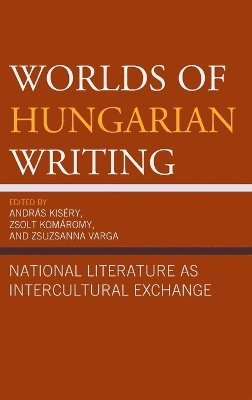
Worlds of Hungarian Writing responds to the rapidly growing interest in Hungarian authors throughout the English-speaking world. Addressing an international audience, the essays in the collection highlight the intercultural contexts that have molded the conventions, genres and institutions of Hungarian writing from the nineteenth century to the present. They are mapping some of the ways in which a modern literature is produced by encounters with languages, cultures, and media external to its traditionally conceived boundaries. But rather than viewing intercultural exchange as an external force, the collection recognizes its enabling importance to the globalizing reception and circulation of Hungarian writing over the continuities and constraints implied by more traditional national narratives. Worlds of Hungarian Writing posits intercultural exchange as the very substance of a literary culture.Discussions of the politics of appropriation and translation, of the impact of émigré writers and critics, and of the use of world-literary models in genre-formation complement studies of the fate of western leftist critical theory in post-1989 Hungary, of the role of African-American models in contemporary Roma culture, and of the use of photography in late 20th-century prose. The volume spans a wide generic range, from the achievements of such canonical 19th-century critics and poets as József Bajza and János Arany, to neglected women authors-translators such as Theresa Pulszky, to modernist writers and critics like Antal Szerb and György Lukács, and to the contemporary novelists Péter Esterházy, Péter Nádas, and László Krasznahorkai. Each essay is an original contribution to comparative literature and to the study of this Central-European literature, but is intended to be accessible to readers unfamiliar with its traditions.
E-bok
Engelska, 20161 595 kr
Läs direkt efter köp
Worlds of Hungarian Writing responds to the rapidly growing interest in Hungarian authors throughout the English-speaking world. Addressing an international audience, the essays in the collection highlight the intercultural contexts that have molded the conventions, genres and institutions of Hungarian writing from the nineteenth century to the present. They are mapping some of the ways in which a modern literature is produced by encounters with languages, cultures, and media external to its traditionally conceived boundaries. But rather than viewing intercultural exchange as an external force, the collection recognizes its enabling importance to the globalizing reception and circulation of Hungarian writing over the continuities and constraints implied by more traditional national narratives. Worlds of Hungarian Writing posits intercultural exchange as the very substance of a literary culture.Discussions of the politics of appropriation and translation, of the impact of émigré writers and critics, and of the use of world-literary models in genre-formation complement studies of the fate of western leftist critical theory in post-1989 Hungary, of the role of African-American models in contemporary Roma culture, and of the use of photography in late 20th-century prose. The volume spans a wide generic range, from the achievements of such canonical 19th-century critics and poets as József Bajza and János Arany, to neglected women authors-translators such as Theresa Pulszky, to modernist writers and critics like Antal Szerb and György Lukács, and to the contemporary novelists Péter Esterházy, Péter Nádas, and László Krasznahorkai. Each essay is an original contribution to comparative literature and to the study of this Central-European literature, but is intended to be accessible to readers unfamiliar with its traditions.
E-bok
Engelska, 20111 691 kr
Läs direkt efter köp
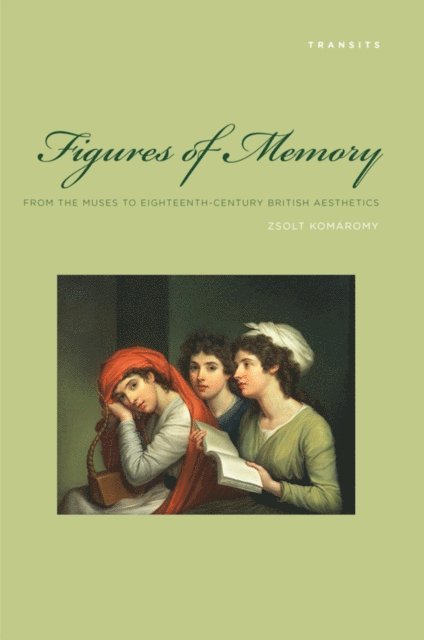
Zsolt Komáromy’s Figures of Memory: From the Muses to Eighteenth-Century British Aesthetics affects a rapprochement between memory studies and eighteenth-century British aesthetics. It argues that the assessment of memory in the history of aesthetics and criticism has been determined by the ideological import of the creative imagination, based on the dichotomies of imitative versus creative or reproductive versus productive mental and artistic procedures. The legacy of such an opposition can still be felt in the way the literary relevance of memory is based on either viewing it as a representational (reproductive, imitative) power that is a counter term to the creative sense of the imagination, or as a constructive (productive, creative) power that is assimilated by the creative imagination. The notion of memory, however, harbors problems that unsettle such dichotomies. This book does the timely work of employing insights offered by memory studies in reconsidering memory in the history of aesthetics: it suggests that memory’s literary relevance is explained precisely by the problems that make it resistant to the reproductive-productive opposition. These problems are explored through various “figures” representing senses of memory, such as the Muses, or metaphors for memory in philosophical and critical discourse. Tracing figures of memory from the Muses through Plato and Descartes to works by Pope, Addison, Gerard and Kames, Komáromy reveals an undercurrent of thought in eighteenth-century British aesthetics that questions memory’s nominal opposition to the imagination , and that exploits memory’s simultaneously reproductive and constructive nature in the emerging theory of the imagination. By thus claiming that the tradition of memory’s literary relevance is not marginalized but in fact perpetuated in eighteenth-century British critical thought, Figures of Memory gives a powerful new perspective on the history of memory in aesthetics and criticism.A theoretical work with claims for historical generalization, Figures of Memory will appeal to those interested in the history of aesthetics and criticism, in memory studies, in literary theory, to students of literature and memory, of literature and psychology, and to scholars of the eighteenth century with theoretical interests.