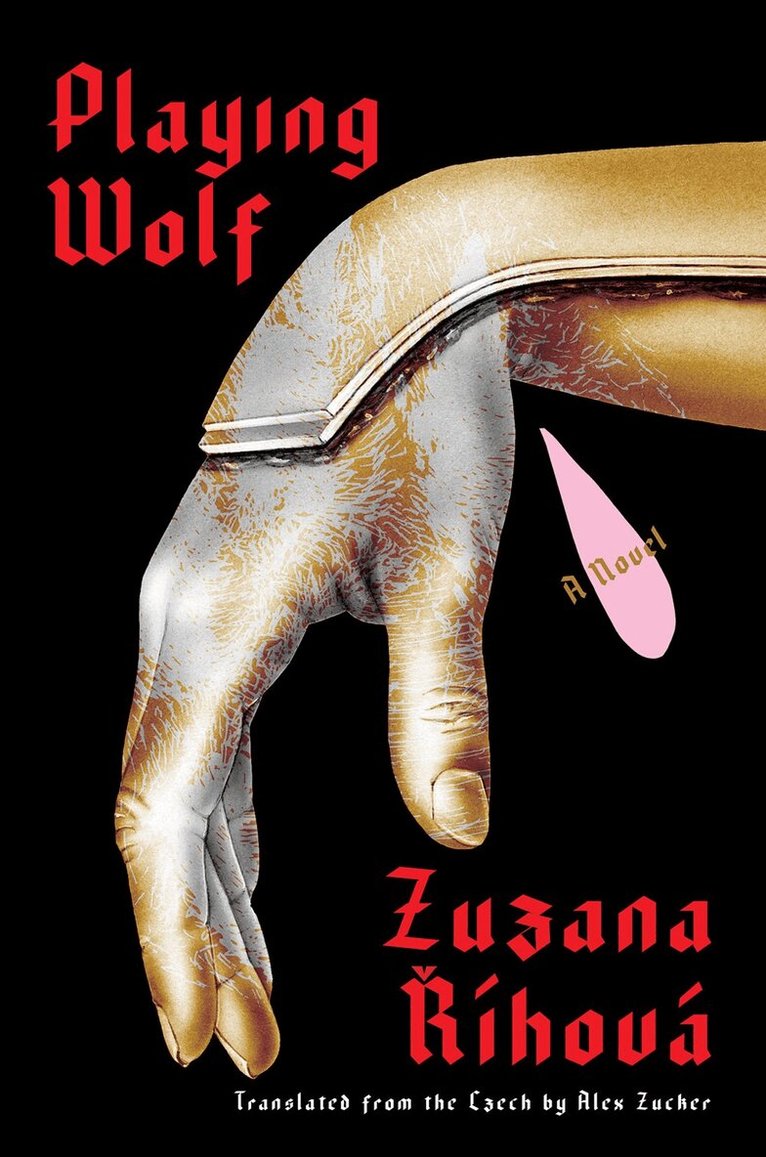
A couple deep in the woods of a failing marriage find themselves the unwitting victims of a kidnapping plot after they move to a mysterious village in this distinctly poetic and disturbingly elegant horror novel for fans of Midsommar and The WitchHusband and wife Bohumil and Bohumila, together with their son, move from Prague to a remote village with the hopes of salvaging their marriage. In the searing summer heat, they try to fit in with the villagers, only to be met with hostile stares and evasive lies. Each night, the couple hears what they suspect to be a large animal wandering around their cottage—an impression that oddly corresponds to the mysterious flyers found at the local watering hole regarding a wolfen fairytale. As inexplicable coincidences begin piling up, it’s clear something sinister is afoot.After a drunken night out, Bohumil and Bohumila come home to find the house empty: their son is gone. After three days of searching, they find the villagers in festive costumes gathered outside their cottage. Is it a bizarre game, or some perverse, folkloric ritual? Are Bohumil and Bohumila in danger? And what has happened to their son?A dark social tale that slides inexorably towards psychological horror, Playing Wolf is a modern ballad of human destiny and discovering the animal in each of us.
A comprehensive reader on the Czech literary avant-garde. In recent years a prominent trend in the study of European modernism and the avant-garde has been increased attention to texts and traditions that have long stood in the shadow of the French, German, and British traditions that dominate the canon. Yet this more expansive view of European modernism and the avant-garde has been hindered by the limited range of texts available outside the original languages. This book addresses that problem by offering a wide-ranging selection of literary, theoretical, and documentary sources from one of the most dynamic and original European avant-garde traditions: that of the first Czechoslovak Republic and of the Bohemian lands. The Czech avant-garde is in many respects the ideal “alternative” avant-garde to present in detail to a wider readership: it tracks Central European developments and was often influential internationally while being deeply embedded in particular cultural dynamics that produced original forms. This volume returns interwar Czech avant-garde writings to their place as a firmly embedded component of the European avant-garde.
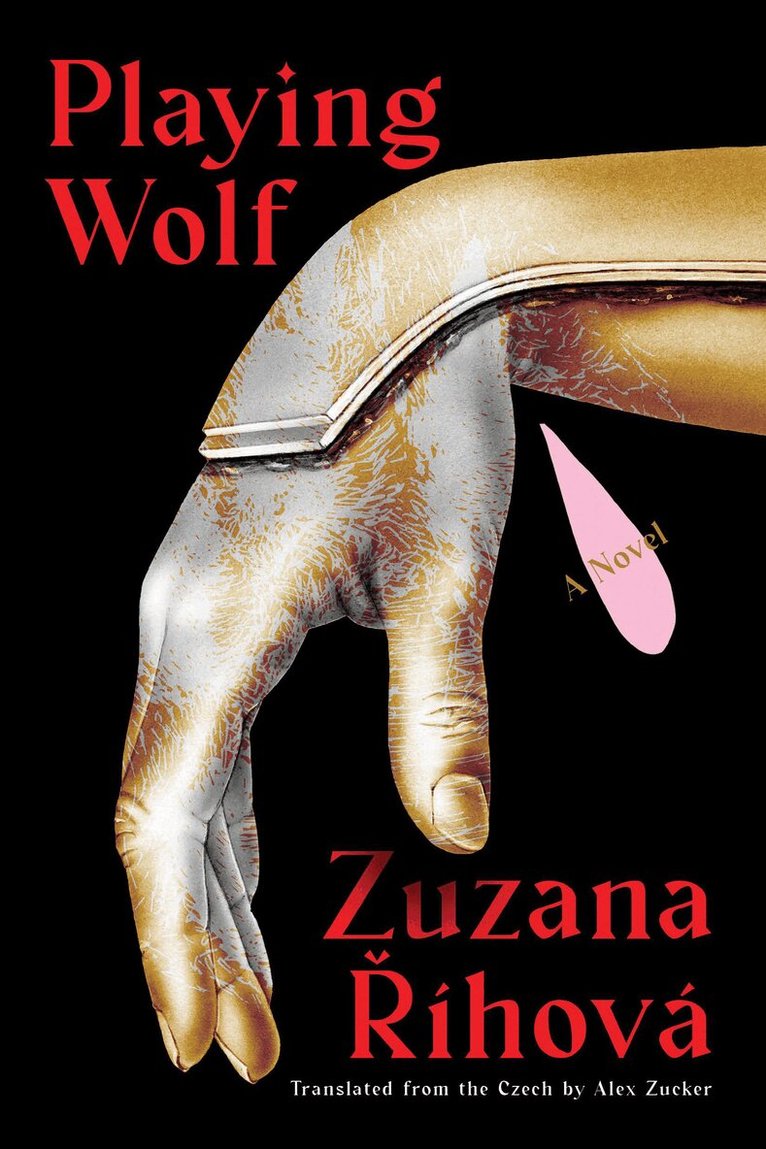
A couple deep in the woods of a failing marriage find themselves the unwitting victims of a kidnapping plot after they move to a mysterious village in this distinctly poetic and disturbingly elegant horror novel for fans of Midsommar and The WitchHusband and wife Bohumil and Bohumila, together with their son, move from Prague to a remote village with the hopes of salvaging their marriage. In the searing summer heat, they try to fit in with the villagers, only to be met with hostile stares and evasive lies. Each night, the couple hears what they suspect to be a large animal wandering around their cottage—an impression that oddly corresponds to the mysterious flyers found at the local watering hole regarding a wolfen fairytale. As inexplicable coincidences begin piling up, it’s clear something sinister is afoot.After a drunken night out, Bohumil and Bohumila come home to find the house empty: their son is gone. After three days of searching, they find the villagers in festive costumes gathered outside their cottage. Is it a bizarre game, or some perverse, folkloric ritual? Are Bohumil and Bohumila in danger? And what has happened to their son?A dark social tale that slides inexorably towards psychological horror, Playing Wolf is a modern ballad of human destiny and discovering the animal in each of us.
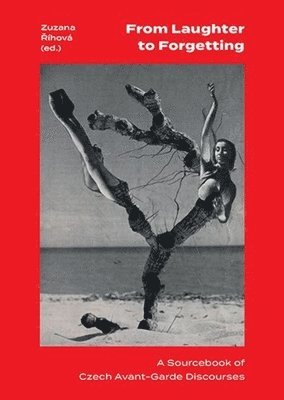
A comprehensive reader on the Czech literary avant-garde. In recent years a prominent trend in the study of European modernism and the avant-garde has been increased attention to texts and traditions that have long stood in the shadow of the French, German, and British traditions that dominate the canon. Yet this more expansive view of European modernism and the avant-garde has been hindered by the limited range of texts available outside the original languages. This book addresses that problem by offering a wide-ranging selection of literary, theoretical, and documentary sources from one of the most dynamic and original European avant-garde traditions: that of the first Czechoslovak Republic and of the Bohemian lands. The Czech avant-garde is in many respects the ideal “alternative” avant-garde to present in detail to a wider readership: it tracks Central European developments and was often influential internationally while being deeply embedded in particular cultural dynamics that produced original forms. This volume returns interwar Czech avant-garde writings to their place as a firmly embedded component of the European avant-garde.