20 kr
Läs direkt efter köp
20 kr
Läs direkt efter köp
77 kr
Skickas inom 5-8 vardagar
19 kr
Läs direkt efter köp
19 kr
Läs direkt efter köp
20 kr
Läs direkt efter köp
20 kr
Läs direkt efter köp
20 kr
Läs direkt efter köp
84 kr
Skickas inom 5-8 vardagar
19 kr
Läs direkt efter köp
19 kr
Läs direkt efter köp
19 kr
Läs direkt efter köp
20 kr
Läs direkt efter köp
20 kr
Läs direkt efter köp
20 kr
Läs direkt efter köp
19 kr
Läs direkt efter köp
20 kr
Läs direkt efter köp
20 kr
Läs direkt efter köp
20 kr
Läs direkt efter köp
20 kr
Läs direkt efter köp
19 kr
Läs direkt efter köp
54 kr
Läs direkt efter köp
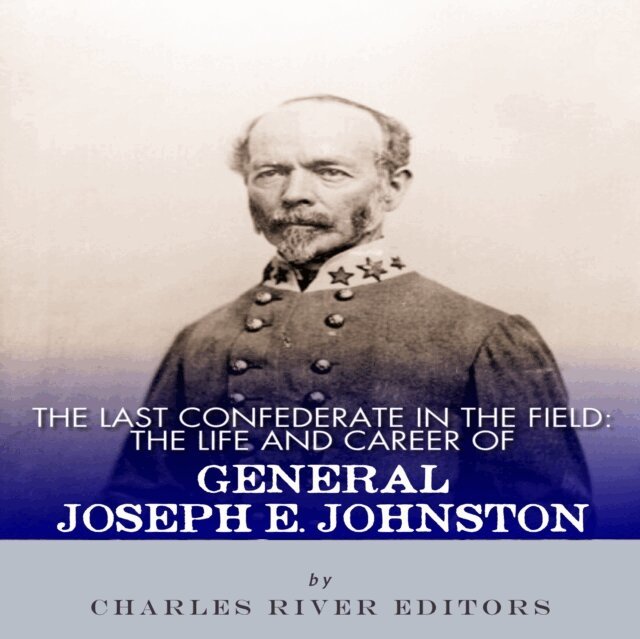
During the Civil War, one of the tales that was often told among Confederate soldiers was that Joseph E. Johnston was a crack shot who was a better bird hunter than just about everyone else in the South. However, as the story went, Johnston would never take the shot when asked to, complaining that something was wrong with the situation that prevented him from being able to shoot the bird when it was time.
The story is almost certainly apocryphal, but it was aptly used to demonstrate the Confederates’ frustration with a man who everyone regarded as a capable general. Johnston began the Civil War as one of the South’s senior commanders, leading the ironically named Army of the Potomac to victory in the Battle of First Bull Run over Irvin McDowell’s Union Army. But Johnston would become known more for losing by not winning. Johnston was never badly beaten in battle, but he had a habit of strategically withdrawing until he had nowhere left to retreat. When Johnston had retreated in the face of McClellan’s army before Richmond in 1862, he finally launched a complex attack that not only failed but left him severely wounded, forcing him to turn over command of the Army of Northern Virginia to Robert E. Lee.
Johnston and Confederate President Jefferson Davis had a volatile relationship throughout the war, but Johnston was too valuable to leave out of service and at the beginning of 1864 he was given command of the Army of Tennessee. When Johnston gradually retreated in the face of Sherman’s massive army (which outnumbered his 2-1) before Atlanta in 1864, Davis removed Johnston from command of the Army of Tennessee and gave it to John Bell Hood.
Johnston has never received the plaudits of many of the South’s other generals; in fact, there are only a couple of monuments commemorating his service in the South. Yet Johnston was a competent general who fought in some of the most important campaigns of the Civil War, and it’s often forgotten that it was his surrender to Sherman weeks after Appomattox that truly ended the Civil War. Johnston did so over Davis’s command to keep fighting, incurring his wrath once more. Having dealt with each other, Sherman and Johnston became friends after the war, and when the elderly Johnston served as a pallbearer at Sherman’s funeral, he contracted an illness that eventually killed him.
Given his prominent and controversial role in the Civil War, Johnston naturally took to writing memoirs, Narrative of Military Operations During the Civil War, which gives an extremely detailed account of the war, a defense of his actions, and criticism of Jefferson Davis and John Bell Hood. One of the most interesting parts of Johnston’s memoirs come at the end, with his letters, telegrams, and even an anecdote about the origins of the Confederate Battle Flag.
65 kr
Läs direkt efter köp
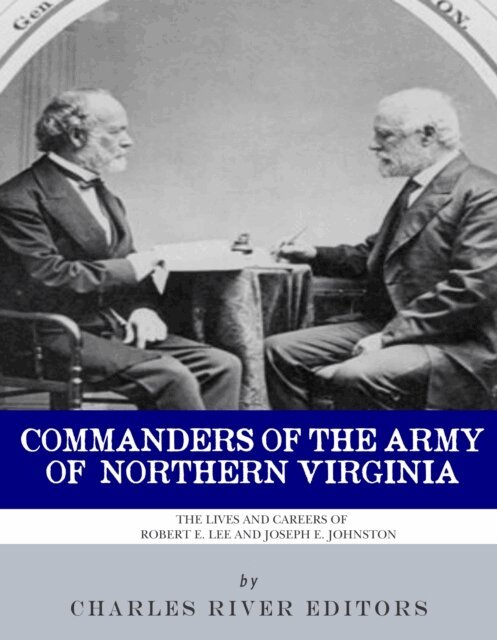
With the exception of George Washington, perhaps the most famous general in American history is Robert E. Lee (January 19, 1807 – October 12, 1870), despite the fact he led the Confederate Army of Northern Virginia against the Union in the Civil War. As the son of U.S. Revolutionary War hero Henry "Light Horse Harry" Lee III, and a relative of Martha Custis Washington, Lee was imbued with a strong sense of honor and duty from the beginning. And as a top graduate of West Point, Lee had distinguished himself so well before the Civil War that President Lincoln asked him to command the entire Union Army. Lee famously declined, serving his home state of Virginia instead after it seceded.
Lee is remembered today for constantly defeating the Union’s Army of the Potomac in the Eastern theater from 1862-1865, considerably frustrating Lincoln and his generals. His leadership of his army led to him being deified after the war by some of his former subordinates, especially Virginians, and he came to personify the Lost Cause’s ideal Southern soldier. His reputation was secured in the decades after the war as a general who brilliantly led his men to amazing victories against all odds.
Despite his successes and his legacy, Lee wasn’t perfect. And of all the battles Lee fought in, he was most criticized for Gettysburg, particularly his order of Pickett’s Charge on the third and final day of the war. Despite the fact his principle subordinate and corps leader, General James Longstreet, advised against the charge, Lee went ahead with it, ending the army’s defeat at Gettysburg with a violent climax that left half of the men who charged killed or wounded.
During the Civil War, one of the tales that was often told among Confederate soldiers was that Joseph E. Johnston was a crack shot who was a better bird hunter than just about everyone else in the South. However, as the story went, Johnston would never take the shot when asked to, complaining that something was wrong with the situation that prevented him from being able to shoot the bird when it was time.
The story is almost certainly apocryphal, but it was aptly used to demonstrate the Confederates’ frustration with a man who everyone regarded as a capable general. Johnston began the Civil War as one of the South’s senior commanders, leading the ironically named Army of the Potomac to victory in the Battle of First Bull Run over Irvin McDowell’s Union Army. But Johnston would become known more for losing by not winning. Johnston was never badly beaten in battle, but he had a habit of strategically withdrawing until he had nowhere left to retreat. When Johnston had retreated in the face of McClellan’s army before Richmond in 1862, he finally launched a complex attack that not only failed but left him severely wounded, forcing him to turn over command of the Army of Northern Virginia to Robert E. Lee.
Johnston and Confederate President Jefferson Davis had a volatile relationship throughout the war, but Johnston was too valuable to leave out of service and at the beginning of 1864 he was given command of the Army of Tennessee. When Johnston gradually retreated in the face of Sherman’s massive army (which outnumbered his 2-1) before Atlanta in 1864, Davis removed Johnston from command of the Army of Tennessee and gave it to John Bell Hood.
Johnston has never received the plaudits of many of the South’s other generals; in fact, there are only a couple of monuments commemorating his service in the South. Yet Johnston was a competent general who fought in some of the most important campaigns of the Civil War, and it’s often forgotten that it was his surrender to Sherman weeks after Appomattox that truly ended the Civil War. Johnston did so over Davis’s command to keep fighting, incurring his wrath once more.
52 kr
Läs direkt efter köp
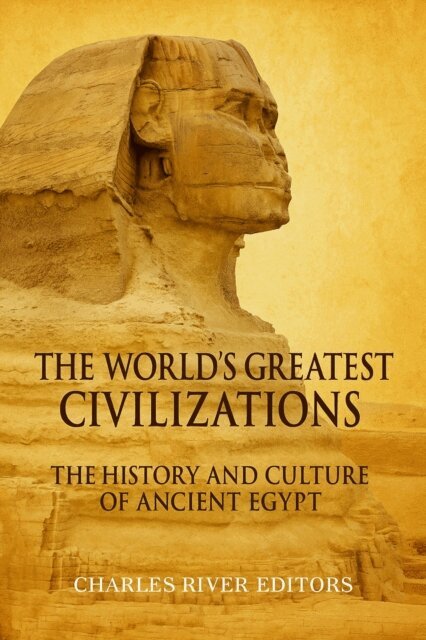
Africa may have given rise to the first human beings, and Egypt probably gave rise to the first great civilizations, which continue to fascinate modern societies across the globe nearly 5,000 years later. From the Library and Lighthouse of Alexandria to the Great Pyramid at Giza, the Ancient Egyptians produced several wonders of the world, revolutionized architecture and construction, created some of the world’s first systems of mathematics and medicine, and established language and art that spread across the known world. With world-famous leaders like King Tut and Cleopatra, it’s no wonder that today’s world has so many Egyptologists.
What makes the accomplishments of the Ancient Egyptians all the more remarkable is that Egypt was historically a place of great political turbulence. Its position made it both valuable and vulnerable to tribes across the Mediterranean and the Middle East, and Ancient Egypt had no shortage of its own internecine warfare. Its most famous conquerors would come from Europe, with Alexander the Great laying the groundwork for the Hellenic Ptolemy line and the Romans extinguishing that line after defeating Cleopatra and driving her to suicide.
The World’s Greatest Civilizations: The History and Culture of Ancient Egypt comprehensively covers the history and culture of Ancient Egypt, looking at its religious, political, foreign and military past, and examining all the architectural and artistic achievements from 3,000-30 B.C. Along with historic artwork depicting important people, places, and events, The History and Culture of Ancient Egypt will bring readers up to speed on Ancient Egypt today.
40 kr
Läs direkt efter köp
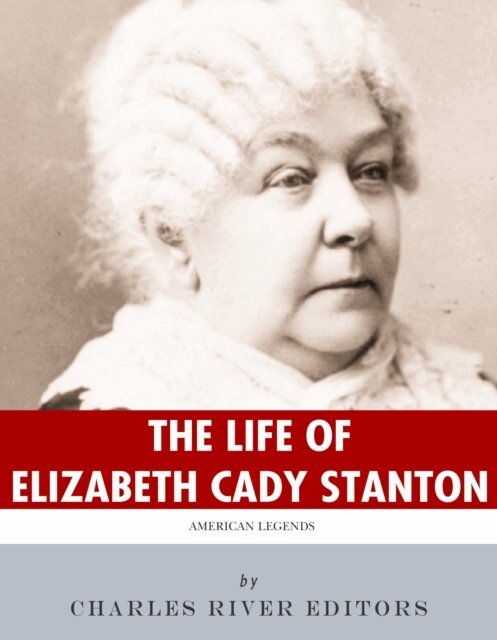
"The moment we begin to fear the opinions of others and hesitate to tell the truth that is in us, and from motives of policy are silent when we should speak, the divine floods of light and life no longer flow into our souls." – Elizabeth Cady Stanton
A lot of ink has been spilled covering the lives of history’s most influential figures, but how much of the forest is lost for the trees? In Charles River Editors’ American Legends series, readers can get caught up to speed on the lives of America’s most important men and women in the time it takes to finish a commute, while learning interesting facts long forgotten or never known.
Elizabeth Cady Stanton is something of an unsung hero in the history of the feminist movement. Though she is still primarily known as an advocate of women’s suffrage and is closely linked to the better known Susan B. Anthony, Stanton was shunned by many of her fellow suffragists because her ideas seem too radical and because many were disturbed by her barely Deist view of religion. Over a century after her death, modern feminists tend to overlook Stanton in favor of Anthony, while remembering that Stanton enjoyed taking on the traditional 19th century gender roles of being the mother of a large family and remaining devoted to her husband throughout her life. And while Anthony’s comments about abortion are still fiercely debated by pro-life and pro-choice crowds, Stanton held conservative views toward abortion. It’s clear that Elizabeth Cady Stanton was very much her own woman, certainly a fitting description that she would not have wanted any other way.
Though she is not as well known or fondly remembered as her closest counterpart, Stanton preceded Anthony as an advocate of women’s rights. It was Stanton who issued the Declaration of Sentiments at the first women''s rights convention in Seneca Falls, New York in 1848, touching off the organized movement that worked toward suffrage and equality. At the same time, Stanton was an ardent abolitionist, and she focused on progressive issues like custody rights, divorce, women’s property rights, employment issues, and even birth control.
American Legends: The Life of Elizabeth Cady Stanton chronicles the amazing life and work of one of America’s best known suffragists, examining her ideology and the controversies she generated. Along with pictures, you will learn about Elizabeth Cady Stanton like you never have before, in no time at all.
67 kr
Läs direkt efter köp
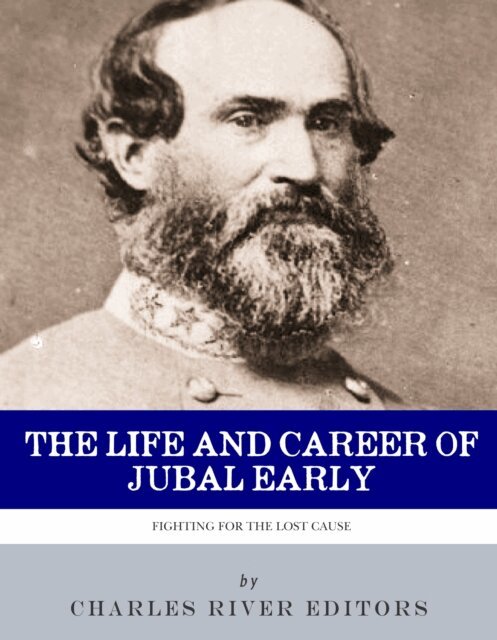
Jubal Early (1816-1894) fought two big wars during his life. About 150 years ago, Early played an important role as a general for the Confederacy, fighting his way up the ranks until he was eventually given an independent command by Robert E. Lee in late 1864. Early served under Stonewall Jackson and Robert E. Lee, rising from regiment commander to Corps commander in the Army of Northern Virginia, and he played crucial roles in key battles like Gettysburg and in the Shenandoah Valley campaigns. During his raid toward Washington D.C., his forces nearly killed President Lincoln during a battle at Fort Stevens, making Lincoln the only sitting president to come under live fire.
However, it was Early’s writing that truly changed history. During the 1870s, Early was one of the writers for the Southern Historical Society who helped establish the Lost Cause, a cultural phenomenon that dominated the writing of Civil War history for a century and is still a widely held view today. His autobiography, Lieutenant General Jubal A. Early , Confederate States of America, is a perfect example of Lost Cause writing, in which the Confederacy is unable to overcome the North’s vast advantage in men and resources. At the same time, the Lost Cause was primarily a creation of men from Virginia, so in turn they deified Lee and are widely responsible for Lee’s immense popularity today. And since Lee could do no wrong in their eyes, writers like Early looked for others to blame for the South’s loss, especially at Gettysburg, which was widely viewed then and now as the chief turning point of the war. For years, Early and James Longstreet argued in writing over who was to blame for the loss at Gettysburg, leading both men to attack each other in print.
Those who personally knew Early wouldn’t have been shocked by his writing. Though Lee admired Early and playfully referred to him as his “Bad Old Man” due to Early’s short temper, that same temper crossed many of Early’s subordinates. Early also alienated subordinates by being quick to point the finger at them for mistakes, even if they were his fault. Nevertheless, Early’s biography is a great read not just for the story it tells but also as one of the best examples of Lost Cause writing, and how the Lost Cause was developed in the years after the war.
40 kr
Läs direkt efter köp
“Here is buried Isaac Newton, Knight, who by a strength of mind almost divine, and mathematical principles peculiarly his own, explored the course and figures of the planets, the paths of comets, the tides of the sea, the dissimilarities in rays of light, and, what no other scholar has previously imagined, the properties of the colours thus produced. Diligent, sagacious and faithful, in his expositions of nature, antiquity and the holy Scriptures, he vindicated by his philosophy the majesty of God mighty and good, and expressed the simplicity of the Gospel in his manners. Mortals rejoice that there has existed such and so great an ornament of the human race! He was born on 25 December 1642, and died on 20 March 1726/7.” – Inscription on Sir Isaac Newton’s tomb.
A lot of ink has been spilled covering the lives of history’s most influential figures, but how much of the forest is lost for the trees? In Charles River Editors’ British Legends series, readers can get caught up to speed on the lives of Great Britain’s most important men and women in the time it takes to finish a commute, while learning interesting facts long forgotten or never known.
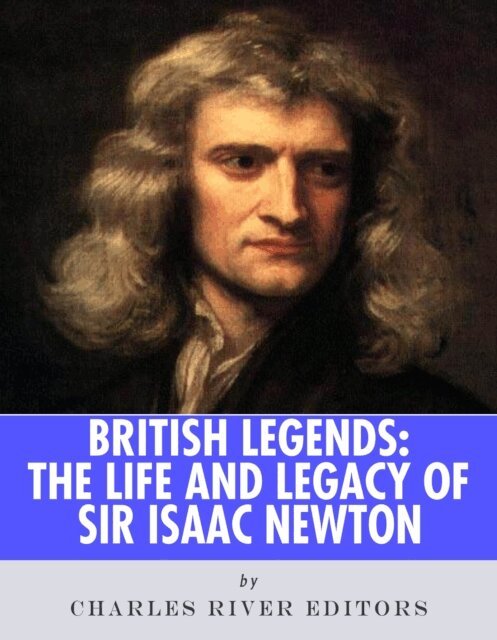
In 1676, Sir Isaac Newton famously wrote in a letter to philosopher Robert Hooke, “If I have seen further it is by standing on ye sholders of Giants.” By the time he died, Newton had become science’s greatest giant, and every scientist who has followed him has stood on his shoulders.
Newton is widely considered the most influential scientist in history, best known for the discovery of gravity and the subsequent laws of motion that he theorized. Schoolchildren around the world are still taught the famous legend about an apple falling on Newton’s head, but that colorful story and the preoccupation with Newton’s work in physics tend to make people forget Newton’s work in other fields. Using empirical studies, Newton developed theories about light prisms, how matter cools, and even tried studying and calculating the speed of sound. And those are just the sciences; Newton also helped develop several mathematical fields, including calculus.
When looking at Newton’s work, it’s easy to forget that he was also a man with typical human emotions and convictions. Though religion and science are often seen as antagonistic counterparts, Newton was very religious, and he intently studied the Bible and even occultist practices and theories. Newton wrote at length on these topics, which fascinated him so much that he spent more time writing about them than he did science and mathematics.
British Legends: The Life and Legacy of Sir Isaac Newton chronicles the amazing life and legacy of a man whose work helped propel the Scientific Revolution and modern physics, but it also humanizes him and looks at his non-scientific work as well. Along with pictures of important people, places, and events in his life, you will learn about Sir Isaac Newton like you never have before, in no time at all.
40 kr
Läs direkt efter köp
“The walls of Sparta were its young men, and its borders the points of their spears.” – attributed to King Agesilaos
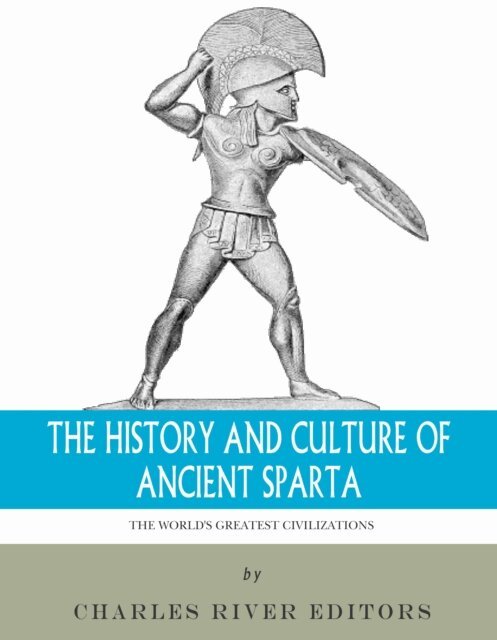
There have been no shortage of great warrior societies in history, including the Romans, Mongols, Macedonians, and Vikings, the list goes on. Yet one humble city in particular, nestled in a valley near the Eurotas river in the Greek region of the Peloponnese and once ridiculed as little more than a cluster of villages inhabited by uncouth shepherds, produced the most famous warrior elite the world has ever known.
The most unique city-state in Ancient Greece was Sparta, which continues to fascinate contemporaneous society. It is not entirely clear why Sparta placed such a great emphasis on having a militaristic society, but the result was that military fitness was a preoccupation from birth. If a Spartan baby did not appear physically fit at birth, it was left to die. Spartan children underwent military training around the age of 7 years old, and every male had to join the army around the age of 18.
The Spartans, whose carefully constructed approach to warfare and – there is no other word for it – Spartan way of life, earned the grudging admiration of all of Greece and succeeded in establishing themselves in the years following the reforms of the semi-legendary ruler Lycurgus as the greatest military force in all of Hellas. Athens might have the mightiest fleet and the greatest cadre of philosophers and dramatists, Thessaly might have had the most vaunted cavalry, and the great city-states of Argos, Thebes and Corinth all had their own claims to fame, but on the battlefield the Spartan phalanx stood without peer. So feared were they in Greece that their very appearance on the battlefield could cause entire enemy armies to flee in terror, and in one of history’s most famous battles, 300 Spartan warriors headed a combined Greek force which held off the hundreds of thousands of Persian warriors of Xerxes’s invading army for three days at Thermopylae, inflicting an estimated 20,000 casualties upon them before dying to the last man rather than retreating.
Sparta will forever be known for its military prowess, but they had lives off the battlefield as well, and their way of life was also unique. For example, Spartan females were formally educated, which was a rarity among the city-states, and the Spartan way of life was entirely dependent on a class of indentured servants known as the helots. Yet the Laws of Lycurgus, which ordered all Spartans to disregard art (with the exception of song, which the Spartans prized, and some forms of music and poetry), to distrust philosophy, and to abhor excess in all things, were designed to create the perfect warrior society, and they did. As a result, the Spartans became notorious for “Laconic phrases”
The World’s Greatest Civilizations: The History and Culture of Ancient Sparta comprehensively covers the history and culture of the famous Greek city-state, looking at their religious, political, and military past, and examining all their accomplishments. Along with historic artwork depicting important people, places, and events, The History and Culture of Ancient Sparta will bring readers up to speed on Ancient Sparta today.
40 kr
Läs direkt efter köp
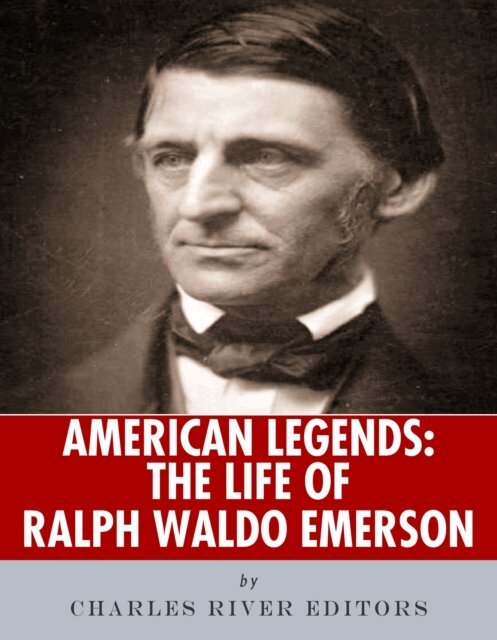
"Standing on the bare ground, — my head bathed by the blithe air, and uplifted into infinite space, — all mean egotism vanishes. I become a transparent eye-ball; I am nothing; I see all; the currents of the Universal Being circulate through me; I am part or particle of God." – Ralph Waldo Emerson
A lot of ink has been spilled covering the lives of history’s most influential figures, but how much of the forest is lost for the trees? In Charles River Editors’ American Legends series, readers can get caught up to speed on the lives of America’s most important men and women in the time it takes to finish a commute, while learning interesting facts long forgotten or never known.
In the mid-19th century, Romantic literature was still in full bloom across the West, but some American authors began producing literature that, while still Romantic, was unique enough to be considered a different genre. This new genre, Transcendentalism, focused on the spirituality of the self and nature, not rejecting religion outright but concentrating on pragmatism and the importance of individuals as the spiritual center of the cosmos. In addition to drawing upon the Age of Enlightenment, Transcendentalist authors also utilized the philosophy of Plato, who taught that self-fulfillment through attaining knowledge should be an individual’s ultimate goal.
The leader of Transcendentalism and the man who ushered the movement’s practices and literature was Ralph Waldo Emerson (1802-1883), one of America’s most famous writers and speakers. Whereas Romantic literature typically took the form of poetry, novels and short stories, much of Emerson’s writings disregarded those traditional structures and were written as essays. Emerson initiated Transcendentalism with the publishing of his essay Nature in 1836, which espoused the virtues of nature and the interconnectedness of all life in nature. With his focus on the environment and natural history, Emerson became the first major American writer whose work was not influenced in any way by European literature.
But Emerson didn’t just write Transcendentalist literature; he practiced what he preached. Now at the forefront of a movement, Emerson established group meetings, gave a series of lectures, and helped produce a Transcendentalist publication in the 1840s, which included his famous essay Self-Reliance. As Emerson’s movement and stature grew, he befriended other authors, including Nathaniel Hawthorne, Louisa May Alcott, and Henry David Thoreau, who became his greatest protégé. Thoreau in particular took a keen interest in the idea of getting in touch with nature, writing in Walden, “Most of the luxuries and many of the so-called comforts of life are not only not indispensable, but positive hindrances to the elevation of mankind."
American Legends: The Life of Ralph Waldo Emerson looks at the life and work of Emerson and the movement he helped lead. Along with pictures, you will learn about Ralph Waldo Emerson like you never have before, in no time at all.
40 kr
Läs direkt efter köp
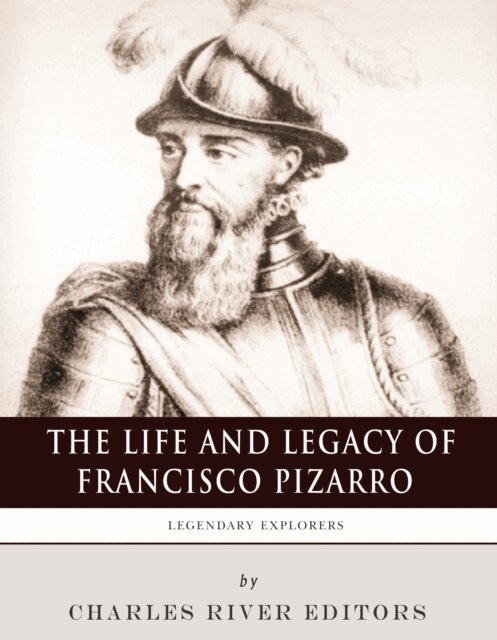
“Friends and comrades! On that side [south] are toil, hunger, nakedness, the drenching storm, desertion, and death; on this side ease and pleasure. There lies Peru with its riches; here, Panama and its poverty. Choose, each man, what best becomes a brave Castilian. For my part, I go to the south.” – Francisco Pizarro
A lot of ink has been spilled covering the lives of history’s most influential figures, but how much of the forest is lost for the trees? The Age of Exploration and the explorers who set out on their history-making expeditions left many legacies and profoundly influenced history around the world. The voyages of men like Columbus and the conquests of men like Cortés had dramatic consequences for the natives, escalated tensions between the European nations, initiated imperialistic empires on a global scale, helped birth the United States, and ensured that the wars in the 20th century were truly world wars. In Charles River Editors’ Legendary Explorers series, readers can get caught up to speed on the lives of the most important explorers of history in the time it takes to finish a commute, while learning interesting facts long forgotten or never known.
During the Age of Exploration, some of the most famous and infamous individuals were Spain’s best known conquistadors. Naturally, as one of the best known conquistadors, Francisco Pizarro (1471/6-1541) is also one of the most controversial. Like Christopher Columbus and Hernan Cortés before him, Pizarro was celebrated in Europe for subduing the Inca Empire, a culture that fascinated his contemporaries. At the same time, naturally, indigenous views of the man have been overwhelmingly negative.
. If Columbus and Cortés were the pioneers of Spain’s new global empire, Pizarro consolidated its immense power and riches, and his successes inspired a further generation to expand Spain’s dominions to unheard of dimensions. Furthermore, he participated in the forging of a new culture: like Cortés, he took an indigenous mistress with whom he had two mixed-race children, and yet the woman has none of the lasting fame of Cortés’s Doña Marina. With all of this in mind, it is again remarkable that Pizarro remains one of the less well-known and less written about of the explorers of his age.
On the other hand, there are certain factors that may account for the conqueror of Peru’s relative lack of lasting glory. For one, he was a latecomer in more than one sense. Cortés’s reputation was built on being the first to overthrow a great empire, so Pizarro’s similar feat, even if it bore even greater fruit in the long run, would always be overshadowed by his predecessor’s precedent. But Pizarro also lacked the youthful glamour of Cortés: already a wizened veteran in his 50s by the time he undertook his momentous expedition, he proceeded with the gritty determination of a hardened soldier rather than the audacity and cunning of a young courtier.
Legendary Explorers: The Life and Legacy of Francisco Pizarro chronicles Pizarro’s life, but it also examines the aftermath of his conquest and analyzes the controversy surrounding his legacy. Along with pictures of important people, places, and events in his life, you will learn about Pizarro like you never have before, in no time at all.
67 kr
Läs direkt efter köp
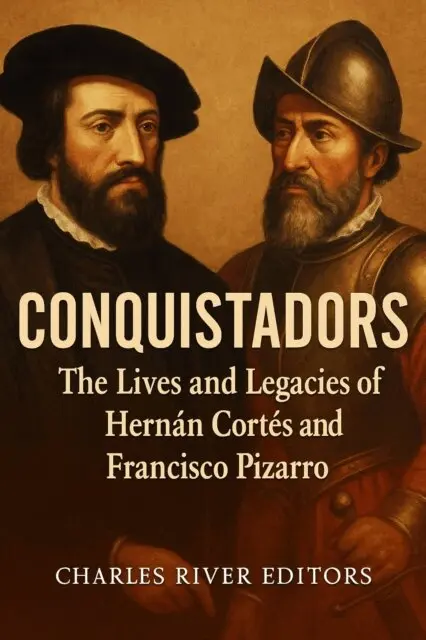
During the Age of Exploration, some of the most famous and infamous individuals were Spain’s best known conquistadors. Naturally, as the best known conquistador, Hernán Cortés (1485-1547) is also the most controversial. Like Christopher Columbus before him, Cortés was lionized for his successes for centuries without questioning his tactics or motives, while indigenous views of the man have been overwhelmingly negative for the consequences his conquests had on the Aztecs and other natives in the region. Just about the only thing everyone agrees upon is that Cortés had a profound impact on the history of North America.
Of course, the lionization and demonization of Cortés often take place without fully analyzing the man himself, especially because there are almost no contemporaneous sources that explain what his thinking and motivation was. If anything, Cortés seemed to have been less concerned with posterity or the effects of the Spanish conquest on the natives than he was on relations with the Mother Country itself. Of the few things that are known about Cortés, it appears that he was both extremely ambitious and fully cognizant of politics and political intrigue, even in a New World thousands of miles west of Spain itself. Cortés spent much of his time in Mexico and the New World defending himself against other Spanish officials in the region, as well as trying to portray and position himself in a favorable light back home.
While those ambitions and politics understandably colored his writings about his activities and conquests, scholars nevertheless use what he wrote to gain a better understanding of the indigenous natives he came into contact with. Even then, however, what he wrote was scarce; Cortés''s account of his conquest of Mexico is comprised of five letters he addressed to the Holy Roman Emperor, Charles V. As Adolph Francis Bandelier noted in the Catholic Encyclopedia in 1908, “Cortés was a good writer. His letters to the emperor, on the conquest, deserve to be classed among the best Spanish documents of the period. They are, of course, coloured so as to place his own achievements in relief, but, withal, he keeps within bounds and does not exaggerate, except in matters of Indian civilization and the numbers of population as implied by the size of the settlements. Even there he uses comparatives only, judging from outward appearances and from impressions.”
If Columbus and Cortés were the pioneers of Spain’s new global empire, Pizarro consolidated its immense power and riches, and his successes inspired a further generation to expand Spain’s dominions to unheard of dimensions. Furthermore, he participated in the forging of a new culture: like Cortés, he took an indigenous mistress with whom he had two mixed-race children, and yet the woman has none of the lasting fame of Cortés’s Doña Marina. With all of this in mind, it is again remarkable that Pizarro remains one of the less well-known and less written about of the explorers of his age.
On the other hand, there are certain factors that may account for the conqueror of Peru’s relative lack of lasting glory. For one, he was a latecomer in more than one sense. Cortés’s reputation was built on being the first to overthrow a great empire, so Pizarro’s similar feat, even if it bore even greater fruit in the long run, would always be overshadowed by his predecessor’s precedent. But Pizarro also lacked the youthful glamour of Cortés: already a wizened veteran in his 50s by the time he undertook his momentous expedition, he proceeded with the gritty determination of a hardened soldier rather than the audacity and cunning of a young courtier.