
- -15% på allt
Häftad, Engelska, 2021
376 kr
Skickas
376 kr
Skickas

Ramillies and the Campaign of 1706
388 kr
Skickas inom 11-20 vardagar
The 1706 campaign changed the War of the Spanish Succession. Within a few months French hopes of regaining the strategic initiative had gone, most of the Spanish Netherlands had been lost, and the Grand Alliance stood at the peak of its military fortunes. At the centre of the year was the Battle of Ramillies.
On 23 May, near a small village in Brabant, the Duke of Marlborough met an army of roughly his own strength under Marshal Villeroi and the Elector of Bavaria. In the space of a few hours the field army of the Two Crowns came apart. The consequences ran well beyond the battlefield: rather than fight again the French gave up huge tracts of territory, and Louis XIV was forced to draw troops from other theatres simply to rebuild in Flanders.
The Most Disastrous of Defeats is not, therefore, only the story of a battle. Neil Litten reconstructs the 1706 campaign as a whole, opening with the strategic frustrations left over from 1705 and Marlborough's abandoned plan to shift the war into Italy. He follows the competing French and Allied approaches as events in Spain, Italy and on the Rhine bore down on decisions in the Low Countries, and traces the two armies to their convergence at Ramillies and through the battle itself in unusually close tactical detail.
The victory opened a wholly new phase of the war. Marlborough pushed the collapse hard: Brussels, Antwerp, Ghent and Bruges all fell out of French hands, the Allied armies moved across Brabant and Flanders, and the fortresses of Ostend, Menin and Ath became the objects of major siege operations. Litten carries the story through the rest of the campaigning season — logistics, siege warfare, coalition command, troop movements, and the continuing French effort to rebuild an army capable of checking the Allied advance. As the year went on the campaign became entangled with growing disputes inside the Grand Alliance over the Dutch Barrier, the administration of the conquered provinces, competing priorities elsewhere, and proposals for peace. By December, the sheer scale of what had been won had begun to expose the political fractures that would in the end prevent Ramillies from producing a decisive settlement.
The author works from British, French, Dutch and German material, including the major manuscript holdings in London, Windsor, Vincennes, Paris and The Hague, and steps deliberately away from the older Anglocentric and Marlborough-centred accounts. He reassesses Villeroi, Louis XIV, the Dutch generals and their field deputies, and challenges a number of long-standing battlefield narratives that have persisted without support in the contemporary evidence. This extensively revised and expanded edition of the author’s earlier work on this battle draws on substantial new archival research, particularly in the French military records.
The narrative is backed by a large body of documentary and analytical material. Sixteen appendices give full orders of battle for both armies at Ramillies; troop strengths and national composition; regimental and campaign casualty returns; the captured colours; losses at the sieges of Ostend, Menin and Ath; the Menin garrison; a contemporary hospital return from Ghent; and the composition of the Allied force put together for the projected descent on France. With the maps and battlefield analysis, the volume works as both a narrative history and a reference on the armies and operations of 1706.
Ramillies was Marlborough's masterpiece, but the day itself cannot really be read apart from the campaign that flowed from it. The Most Disastrous of Defeats puts that whole campaign back at the centre of the story, and shows how one afternoon's fighting reshaped a year of operations, tilted the strategic balance across Europe, and — at the same moment — carried the Grand Alliance to its high point and planted the divisions that would come after.
Gustavus Adolphus's First War
376 kr
Skickas
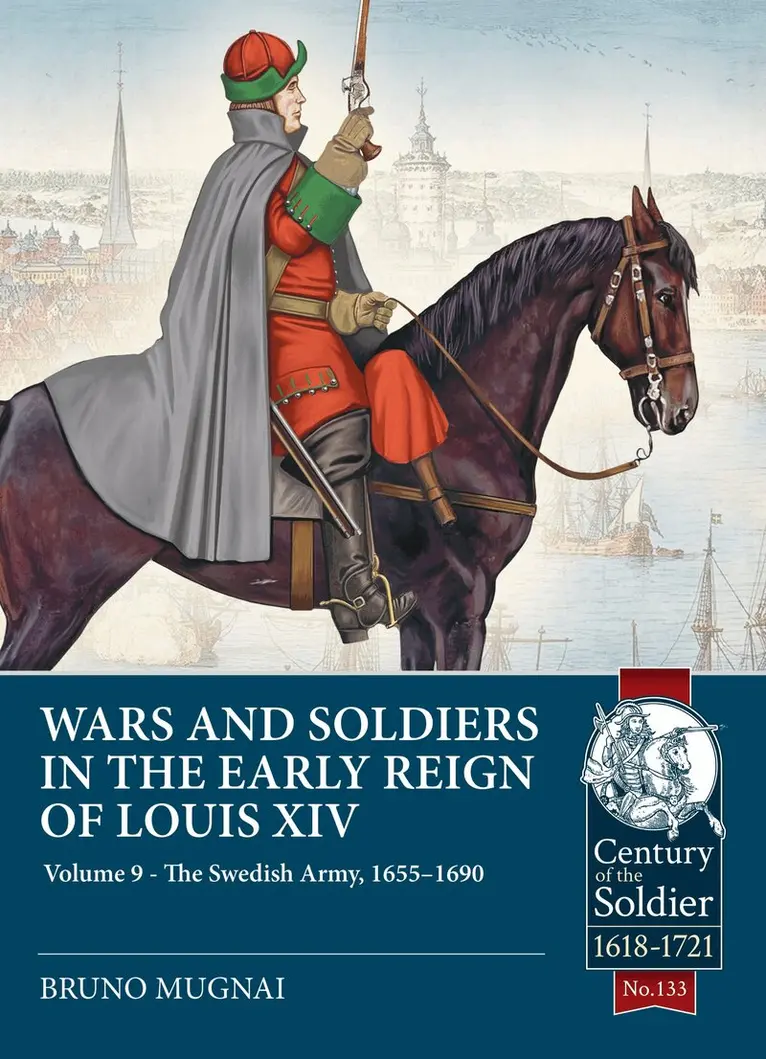
The Swedish Army, 1655-1690
636 kr
Skickas inom 3-6 vardagar
In the mid-seventeenth century, Sweden emerged as one of Europe’s foremost military powers, achieving a level of influence and battlefield effectiveness that belied its limited population and economic resources. This volume examines how Sweden not only achieved this remarkable ascent, but sustained it through decades of almost continuous warfare against formidable opponents including Poland-Lithuania, Denmark-Norway, the Habsburg Monarchy, and Muscovy.
Rather than focusing solely on battlefield performance or leadership, the book places the organisation, structure, and material culture of the Swedish army at the centre of the analysis. It explores recruitment systems, regimental organisation, command structures, and the practical realities of maintaining armies in the field, demonstrating that Sweden’s success rested on a coherent and innovative military system fully comparable to those of France or the Dutch Republic.
Covering the period from the wars of the 1650s through to the reforms of the later seventeenth century, the study is richly illustrated with detailed colour plates depicting infantry, cavalry, dragoons, artillery, and household troops, alongside uniforms, equipment, standards, guidons, and regimental colours. Many of these illustrations are supported by surviving originals held in Scandinavian and European museum collections, including captured colours and standards from Denmark and other theatres of war.
By integrating operational history with organisational analysis and visual evidence, this volume provides a comprehensive account of the Swedish army at the height of its power. It will be of interest not only to specialists in Scandinavian and early modern warfare, but also to readers concerned with the broader development of European armies, military administration, and the conduct of war in the seventeenth century.
The Battle of Visby 1361 and the Danish Conquest of Gotland
376 kr
Skickas

424 kr
Skickas inom 3-6 vardagar
The Russia–Ukraine War has produced many surprises, but none more profound — or more consequential for the future of armed conflict — than the explosive ascent of the drone. In Rise of the Machines, Illya Sekirin offers the first comprehensive, insider-informed study of how unmanned systems have come to dominate the modern battlefield. Drawing on his own experience as a volunteer drone pilot, front-line soldier, interpreter for Western units, researcher for the Ukrainian General Staff, and later adviser to Ukraine’s High Command, Sekirin delivers an unparalleled account of how drones reshaped every level of war: tactics, operations and strategy.
From the chaotic early months of 2022 to the immense set-piece battles of Bakhmut, Avdiivka, the Kursk offensive and the defence of Southern Donbas, drones have become the decisive actors in spotting, striking, supplying, overwhelming and outmanoeuvring conventional forces. Sekirin explains how FPV attack drones, reconnaissance platforms, electronic warfare systems, naval USVs and autonomous technologies have overturned long-standing assumptions about firepower, manoeuvre, armour and air control. Tanks, artillery and manned aircraft — once the arbiters of victory — now struggle for survival under constant observation and precise, expendable robotic attack.
Yet this is not merely a battlefield chronicle. Sekirin sets the drone revolution within a wider geopolitical awakening. As China, Iran, North Korea and Russia form a new “axis of upheaval”, and Western democracies wrestle with the institutional inertia of legacy doctrines, the book argues that the West must urgently adapt or risk strategic obsolescence. The lessons Ukraine has learnt — at enormous cost — offer a blueprint for how modern militaries must reorganise, procure, train and fight.
Rich in operational detail, strategic insight and first-hand testimony, Rise of the Machines is an essential guide to the conflict that is redefining twenty-first-century combat. It shows not only how drones changed this war, but how they will shape all wars to come.
436 kr
Skickas

A Wargamer's Guide to the American Revolution, 1775-1782
442 kr
Skickas

278 kr
Skickas

376 kr
Skickas
Volume 7 - Armies of the German States 1655-1690 Part 1
386 kr
Skickas

German Armies, 1660-1687
388 kr
Skickas
333 kr
Skickas

333 kr
Skickas

469 kr
Skickas inom 3-6 vardagar
From humble beginnings in Rootstown, Ohio, to the upper reaches of classified aerospace innovation, Colonel Richard “Butch” Sheffield’s life was anything but ordinary. Ohio to Supersonic charts his remarkable rise from a small-town boy with a learning disability to one of the most trusted men in American defense, Cold War intelligence, and aerospace history.
Chosen in 1964 for the ultra-secretive SR-71 Blackbird programmer, Butch was among the first crew members trained by Lockheed’s Skunk Works. He went on to fly some of the most daring reconnaissance missions of the Cold War – including the first SR-71 over North Korea and a supersonic overflight of the North Pole with no chance of recovery. In 1967, he became the first Air Force officer to eject from an SR-71 and survive. Six weeks later, he returned to flying at Mach 3.
Butch’s extraordinary career didn’t end in the cockpit. At the Pentagon, he was a key figure behind the early development of GPS and led operations involving the SR-71 and U-2. As an investigator for Congress, he was granted over 300 code word clearances to probe the nation’s most sensitive intelligence programs. Later, as the Skunk Works’ lone representative in Washington D.C., he became the quiet conduit between Lockheed’s black projects and the halls of power.
Written by his daughter Linda with warmth and unflinching honesty, Ohio to Supersonic offers an intimate, inspiring, and at times hair-raising account of a man who lived through the birth of modern reconnaissance aviation, shaped national security policy, and never forgot where he came from.
This is not just a story of supersonic jets and Cold War missions – it is the story of resilience, humility, faith, and a deep love of country. A must-read for aviation enthusiasts, Cold War historians, and anyone who believes in the power of determination to change a life.
331 kr
Skickas

The Campaigns of Bernadotte, Britain and the Swedes 1810-1815
386 kr
Skickas
The Northern Coalition Against Napoleon provides a new, exciting perspective on the wars against Napoleon. Initially orchestrated by former French Marshal Bernadotte, the coalition developed with British support to include all the great powers of Europe. By 1813, the coalition defeated Napoleon at Leipzig and drove him to the very gates of Paris.
The Napoleonic Wars of 1810-1815 are depicted in a way that has never been done before. Including many events previously unpublished, The Northern Coalition Against Napoleon is a must-read for anyone with an interest in European history and the Napoleonic Wars.
As sources, Patrik Björk has used letters, diaries, memoires, muster rolls, reports and journals. He has drawn upon information from documents in French, British, Swedish and Finnish archives, much of which has never been used before. Using a total of more than 500 different sources, including German, Russian, Danish, Norwegian and Italian literature, Björk presents a balanced and neutral narrative.
Björk’s multifaceted account includes the conflicts between Napoleon and Bernadotte, and the remarkable events leading up to Bernadotte being elected Crown Prince of Sweden. New light is shed on the formation of the Northern Coalition. The campaigns and battles on land and at sea are described in depth, often with emphasis on Bernadotte, the Swedes, and the British. The Northern Coalition Against Napoleon is also a testimony to the human tragedies, hardships and courage of soldiers and civilians.
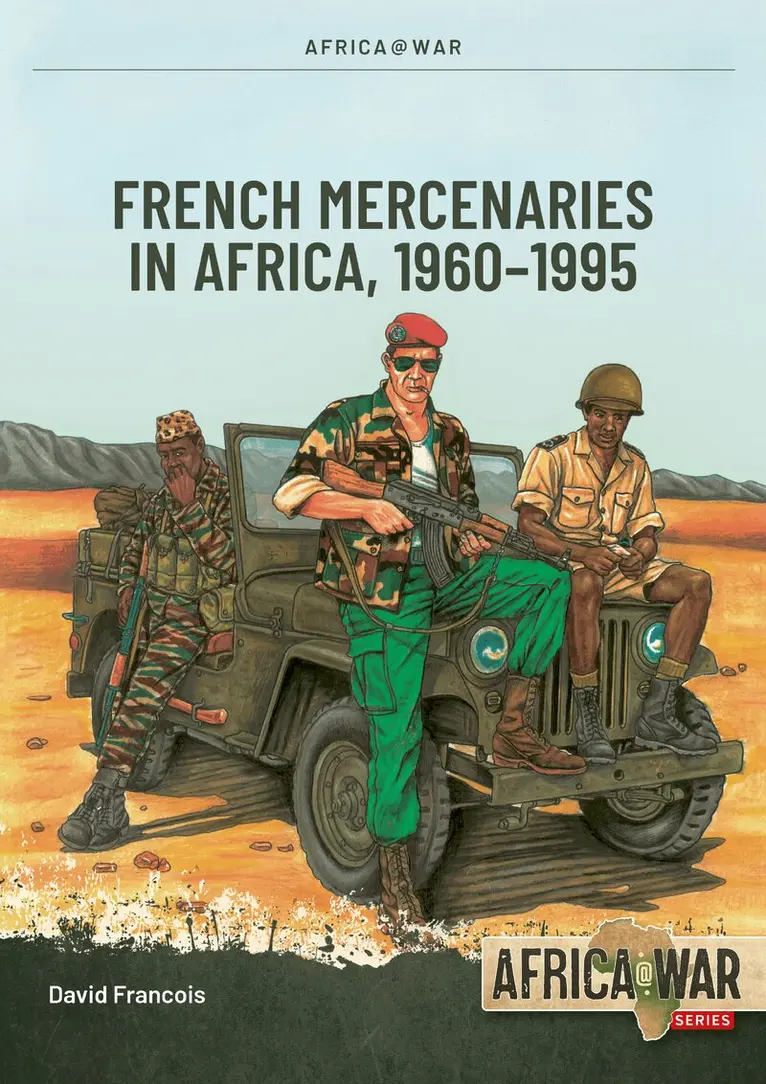
1960-1995
223 kr
Skickas
223 kr
Läs direkt efter köp
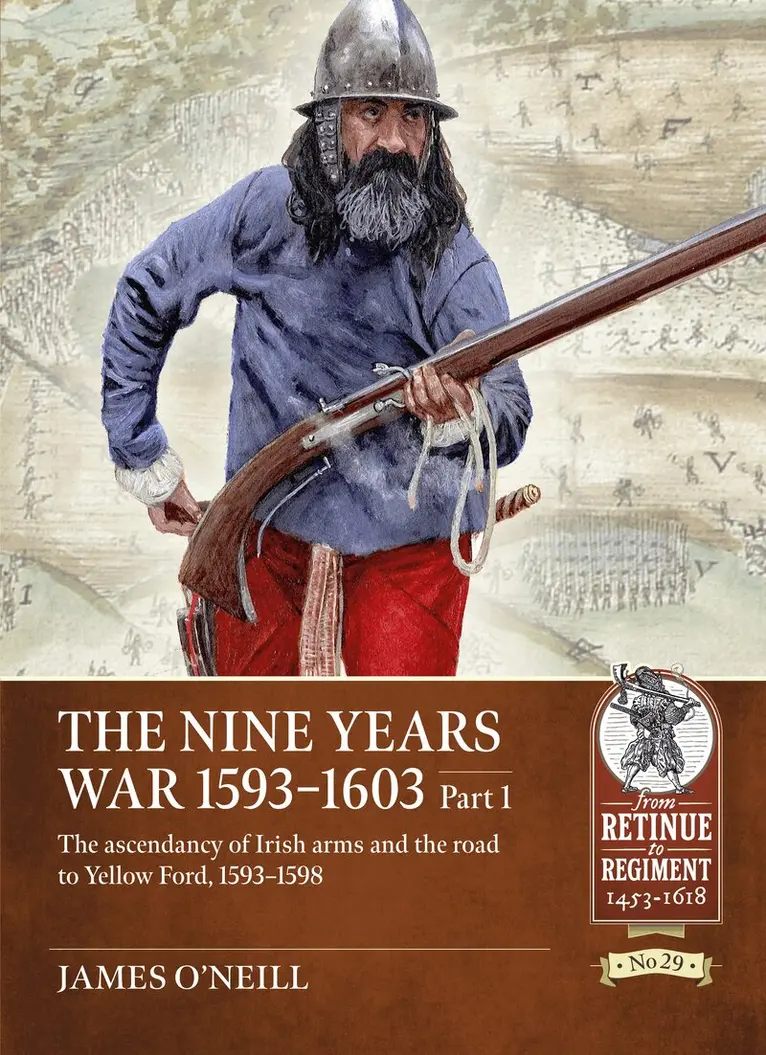
The ascendancy of Irish arms and the road to Yellow Ford, 1593-1598
331 kr
Skickas
533 kr
Kommande
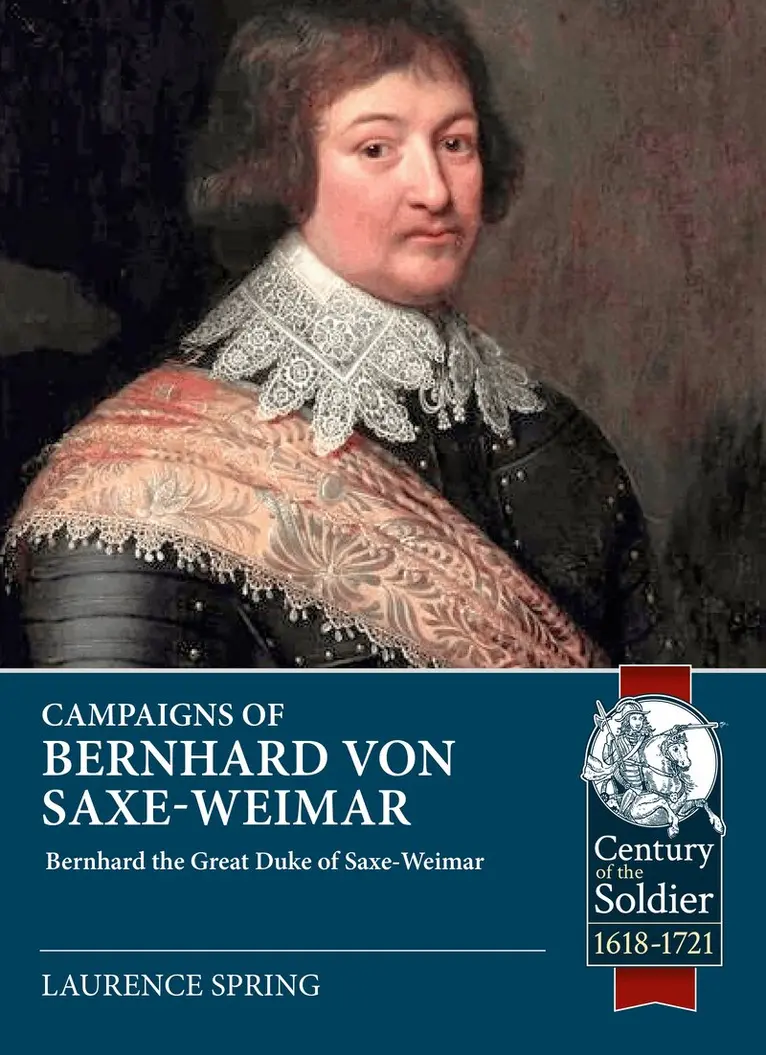
Bernhard von Saxe-Weimar (1604–1639) was one of the most remarkable German commanders of the Thirty Years’ War. A younger son with little prospect of inheriting a principality of his own, he made war his career and rose to command armies in the service of German Protestant princes, Gustav II Adolph of Sweden and, ultimately, France. Soldier, prince and military entrepreneur, he fought across the Holy Roman Empire and became one of the conflict’s most capable - and controversial - commanders.
His career took him through some of the defining battles and sieges of the war, including Wimpfen, Stadtlohn, Lützen, Nördlingen, Wittenweier and Rheinfelden, as well as the sieges of ‘s-Hertogenbosch, Regensburg and Breisach. After the death of Gustav II Adolph, Bernhard emerged as an increasingly independent commander, eventually campaigning along the Rhine with French support while pursuing ambitions of his own. His victories helped pave the way for French control of Alsace, yet his motives have remained contested: German patriot, Protestant champion, mercenary prince - or a military entrepreneur fighting to create a state for himself?
Drawing on a wealth of contemporary accounts, many of them previously unpublished in English, Laurence Spring reconstructs Bernhard’s campaigns and the armies with which he served. The book examines not only battlefield operations and sieges, but also the Danish and Hessian armies, the logistics and realities of campaigning, and the devastating impact of warfare and famine upon civilian populations. Particular attention is given to the campaigns along the Rhine between 1635 and 1639.
Bernhard’s sudden death in 1639 brought an extraordinary career to an abrupt end and immediately prompted rumours of murder. The Campaigns of Bernhard von Saxe-Weimar 1631–1639 offers a fresh assessment of a commander whose ambitions, loyalties and achievements place him among the most fascinating figures of the Thirty Years’ War.

The Last Successful invasion of England
333 kr
Skickas

Indigenous Peoples During the Period of the Seven Years War in North America, 1752-1766
489 kr
Skickas inom 3-6 vardagar
War on the Turtle’s Back examines all the campaigns fought by Woodland Indians of North America during the period of the Seven Years War (French and Indian War) and beyond from 1752 to 1766. Using contemporary documents and accounts, and recorded oral evidence, research papers and published works by native scholars and others, the book covers the wars from the various viewpoints of Indigenous Peoples, putting their motives and military involvement centre stage from the Atlantic coast to the Mississippi valley. Indeed, consensual choices made by people of sovereign tribal nations unacceptable to officials of France or Britain were to eventually lead to war between these European powers.
To enhance the appreciation of the part played by Woodland Indians during the French and Indian War, War on the Turtle’s Back gives contextual background information on daily life, governance, beliefs, dress, and the way war was carried out, from the initiation of a war party to its return home. Details of training, organisation, the role of women, campaigning and the actual tactics employed (as opposed to those portrayed in novels, movies and the media) are given. As well as descriptions of dress fashion at the time, contemporary illustrations and photographs help give a guide to the visual appearance of Indigenous Peoples.
The book will particularly appeal to those interested in history generally, military history, the history of colonial America and American Indian history and culture. The book would also be useful to wargamers wanting to simulate indigenous warfare of the period on the tabletop, and to modellers with regard to the clothing and accoutrements.
333 kr
Skickas inom 3-6 vardagar
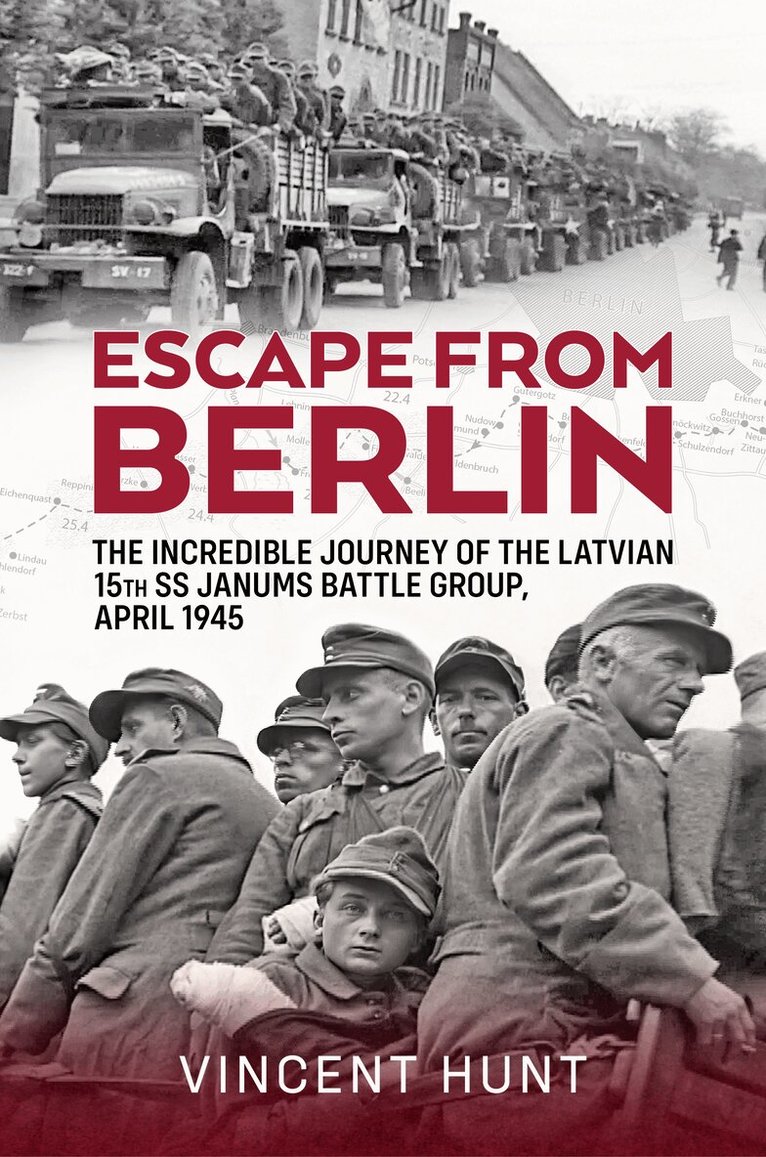
An hour after midnight, on 27 April 1945, 850 men of the Latvian 15th SS Division surrendered to American troops at Güterglück. They reached the River Elbe south of Berlin a week after abandoning their positions south-east of the city. To defend Hitler’s capital meant almost certain death: to desert was deadly dangerous, and to survive they needed to dodge German patrols and Red Army tanks. The river meant survival.
Remarkable film of the Latvians that day was discovered during the writing of this book. The still images reproduced here show the relief etched on their faces. Now for the first time in English, their exhilarating story can be told through the diary of the regiment’s adjutant, First Lieutenant Edvīns Bušmanis. The Bušmanis diary is a tense, gripping and wonderfully eloquent account revealing the drama and detail of their incredible escape – and their will to survive.
Eighty years later, the author follows their journey to the banks of the river through the fields of sunflowers and tiny countryside villages of Brandenburg. His new research in a modern landscape brings to life this virtually unknown story of daring, determination and a desire for life.
130 kr
Läs direkt efter köp
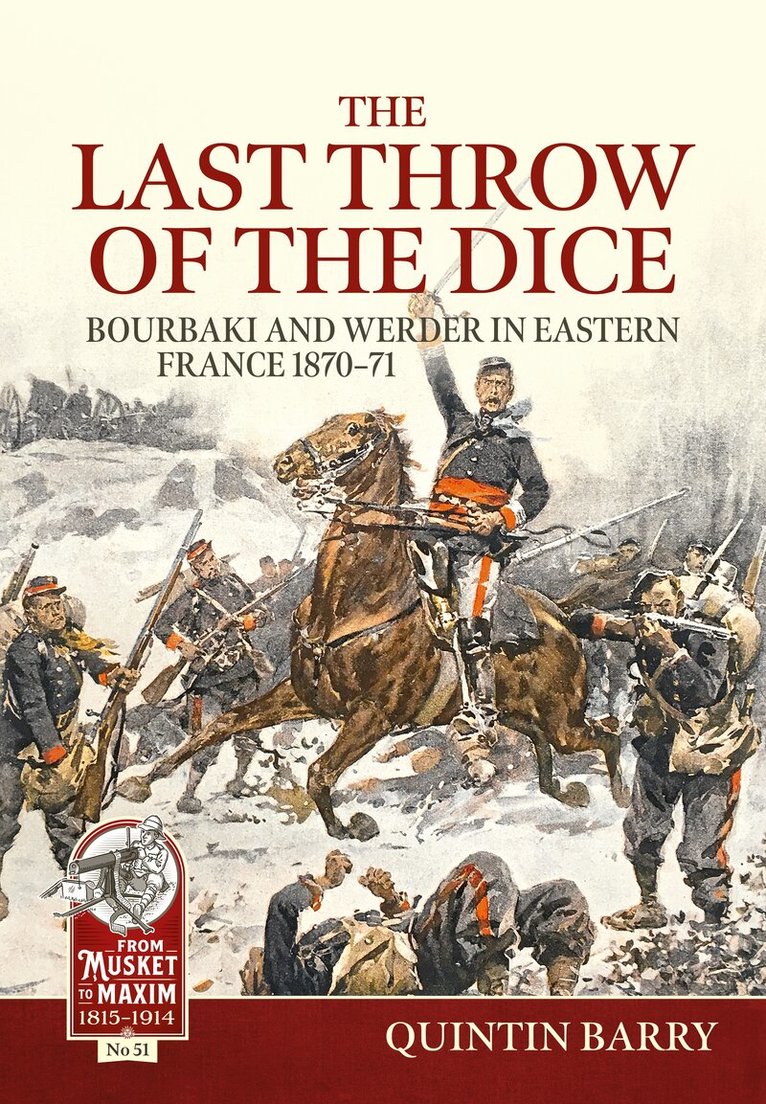
Bourbaki and Werder in Eastern France 1870-71
331 kr
Skickas
376 kr
Skickas

A Military History of the Knights of Malta, 1614-1714
388 kr
Skickas

The Armies of Denmark-Norway, Courland and Danzig,1655-1690
388 kr
Skickas
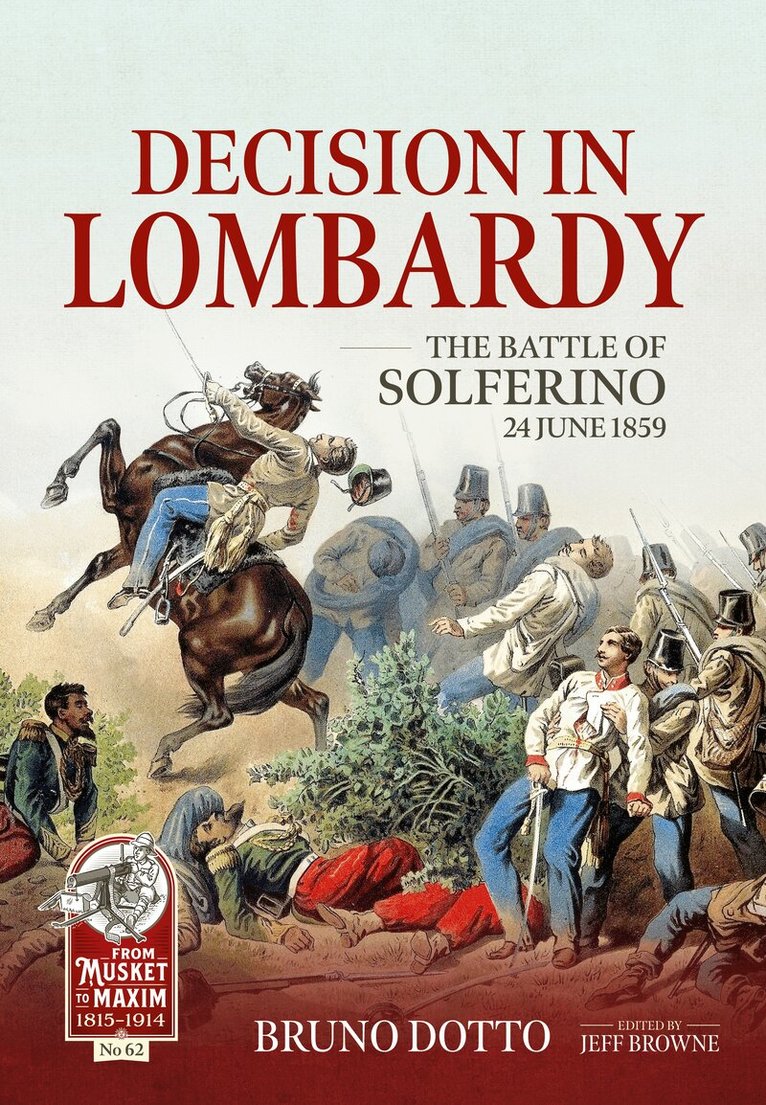
The Battle of Solferino, 24 June 1859
616 kr
Skickas