
Häftad, Engelska, 1976
247 kr
Skickas inom 5-8 vardagar
247 kr
Skickas inom 5-8 vardagar
247 kr
Skickas inom 5-8 vardagar
254 kr
Skickas inom 5-8 vardagar
135 kr
Skickas inom 5-8 vardagar
131 kr
Skickas inom 5-8 vardagar
218 kr
Skickas inom 5-8 vardagar

97 kr
Skickas inom 5-8 vardagar
159 kr
Skickas inom 5-8 vardagar
135 kr
Skickas inom 5-8 vardagar
195 kr
Skickas inom 5-8 vardagar
247 kr
Skickas inom 5-8 vardagar
135 kr
Skickas inom 5-8 vardagar
162 kr
Skickas inom 5-8 vardagar

195 kr
Skickas inom 5-8 vardagar
195 kr
Skickas inom 5-8 vardagar
114 kr
Skickas
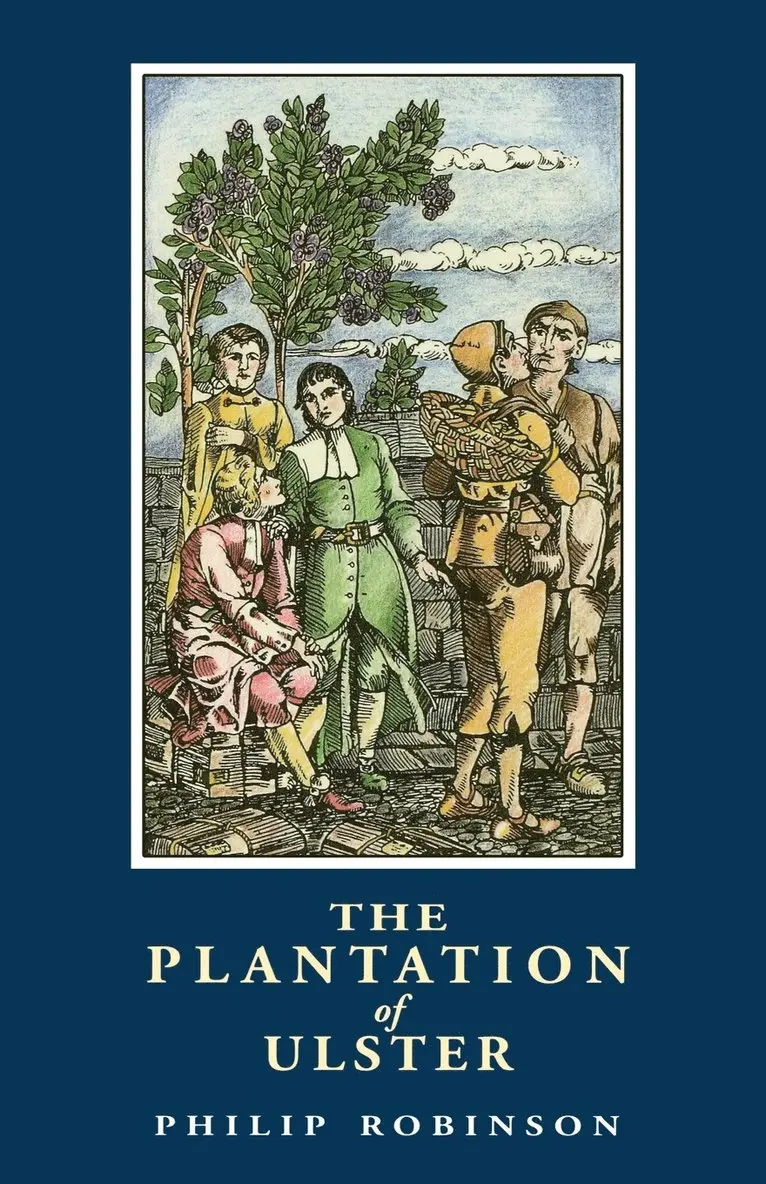
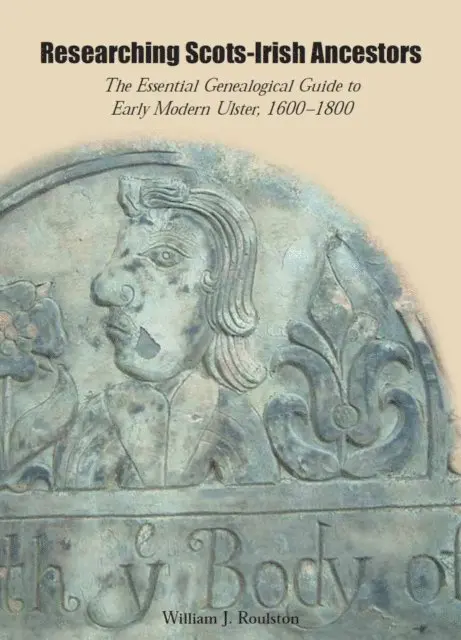
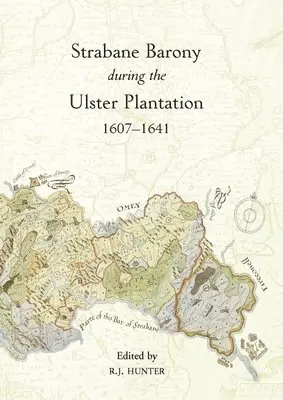
One of the greatest frustrations for generations of genealogical researchers has been that reliable guidance on sources for perhaps the most critical period in the establishment of their family’s links with Ulster, the period up to 1800, has proved to be so elusive. Not any more. This book can claim to be the first comprehensive guide for family historians searching for ancestors in seventeenth- and eighteenth-century Ulster.
Whether their ancestors are of English, Scottish or Gaelic Irish origin, it will be of enormous value to anyone wishing to conduct research in Ulster prior to 1800. A comprehensive range of sources from the period 1600-1800 are identified and explained in very clear terms. Information on the whereabouts of these records and how they may be accessed is also provided. Equally important, there is guidance on how effectively they might be used.
The appendices to the book include a full listing of pre-1800 church records for Ulster; a detailed description of nearly 250 collections of seventeenth- and eighteenth-century estate papers; and a summary breakdown of the sources available from this period for each parish in Ulster.
173 kr
Skickas inom 5-8 vardagar
206 kr
Skickas inom 5-8 vardagar
186 kr
Skickas inom 5-8 vardagar
201 kr
Skickas inom 5-8 vardagar
254 kr
Skickas inom 5-8 vardagar
159 kr
Skickas inom 5-8 vardagar
254 kr
Skickas inom 5-8 vardagar
118 kr
Läs direkt efter köp
One of the greatest frustrations for generations of genealogical researchers has been that reliable guidance on sources for perhaps the most critical period in the establishment of their family’s links with Ulster, the period up to 1800, has proved to be so elusive. Not any more. This book can claim to be the first comprehensive guide for family historians searching for ancestors in seventeenth- and eighteenth-century Ulster.
Whether their ancestors are of English, Scottish or Gaelic Irish origin, it will be of enormous value to anyone wishing to conduct research in Ulster prior to 1800. A comprehensive range of sources from the period 1600-1800 are identified and explained in very clear terms. Information on the whereabouts of these records and how they may be accessed is also provided. Equally important, there is guidance on how effectively they might be used.
The appendices to the book include a full listing of pre-1800 church records for Ulster; a detailed description of nearly 250 collections of seventeenth- and eighteenth-century estate papers; and a summary breakdown of the sources available from this period for each parish in Ulster.
115 kr
Läs direkt efter köp
This book introduces researchers to the treasure of printed and manuscript resources available in Irish libraries, archives,and genealogical centers. Irish and non-Irish researchers alike will find it of inestimable value for their research anywhere in Ireland.
Essential information on operating hours, contact information, access and service information, descriptions, and the location of these repositories will prove to be immensely practical. There are lists of publications, a detailed glossary and bibliography, and an extensive index. Of special interest are the vital reference details for each parish in Ireland for the crucially important tithe and valuation records from c. 1830 in the record offices in Belfast and Dublin.
The guide also provides information of practical benefit to many other interested parties, including holidaymakers interested in learning about local resources available to them during their stay in Ireland.

195 kr
Skickas inom 5-8 vardagar
118 kr
Läs direkt efter köp
During the course of the eighteenth century, migration from Europe and Africa shaped the emerging consciousness and culture of the American Colonies. Whether free, bond servant, or slave, migrants brought skills and folkways from their motherlands, contributing to the agricultural and commercial development as well as to the peopling of North America. Emigrants from Ulster, the northern province of Ireland, did all of this and more. Ulster exported an economy.
This new book tells the story of the transatlantic links between Ulster and America in the eighteenth century. The author draws upon a remarkable range of sources gleaned from numerous repositories in America and Ireland as he explores the realities of life and work for the merchants. The trading networks and connections established and the economic background to the period are examined in some detail. This volume provides fascinating insights into the connections between Ulster and Colonial America through the experiences of the Scotch-Irish merchants.
114 kr
Läs direkt efter köp
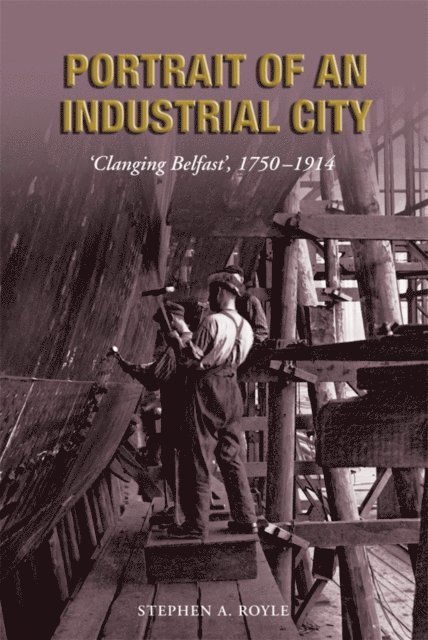
Clanging: Belfast in its industrial pomp must have been noisy: shipyards manipulating sheets of metal, the constant riveting being only one source of racket; the endless clatter from linen mills, the screeching of trams on unyielding rails, sirens and hooters marking time at the factories. There were steam trains and steam engines in addition to horses'' hooves beating on the streets. The rumbustious, often riotous, eternally spirited Belfast people packed into the terraced houses as well as the alleys would have added their din, especially around the drinking dens. The noise is gone, one aspect of the urban past that cannot be recreated. However, the industrial city has left other remembrances, from many buildings which still grace the post-industrial city, to the humdrum details of citizens'' lives revealed in newspapers, to more formal sources such as the corporation''s minute books, the deliberations of the Linen Merchants'' Association and the sometimes shocking revelations in parliamentary reports.
Utilising where possible contemporary materials, this book details Belfast''s development from the eighteenth century market town, where only hindsight can discover the seeds of industrial greatness, to the titanic city - in every respect - of the period prior to Great War, whose horrors were to usher in such changes. Belfast was a success: its unparalleled growth, its might in textiles, shipbuilding and other industries. However, the book cannot, does not, shy away from the darkness that imbued the clanging city, from the health problems of mill workers to the poverty behind the well-lit main streets a ''charnel house breaking in upon the gaiety and glitter of a bridal'' as one description inelegantly had it. Then there were, of course, the ''intestine broils'', the sectarian conflicts that blighted Belfast in the nineteenth century, as they were to do in the twentieth.
121 kr
Läs direkt efter köp
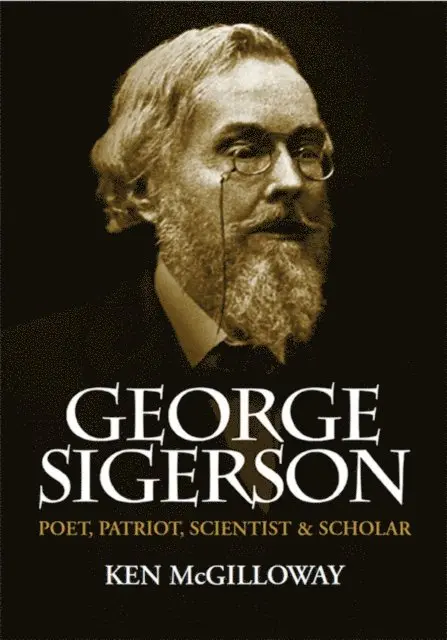
Born in 1836 near Strabane, Co. Tyrone, George Sigerson was educated in Paris and University College, Cork, where he studied medicine. He became one of the foremost authorities on diseases of the nervous system, a university professor, and a prolific writer on scientific subjects. An outstanding linguist, he made an historic contribution to the Irish literary revival through his translations from Irish into English verse, first of The Poets and Poetry of Munster in 1860, and then in 1897 of the monumental Bards of the Gael and Gall. He was president of the Irish National Literary Society from 1893 until 1924.
His pen was never idle in arguing the cause of Ireland over a wide range of controversial issues such as the land question, the establishment of a National University, prison reform, the established church, the poor law and social and economic conditions. An intimate friend of Charles Kickham, John O’Leary and other Fenian leaders, and later of the poet and 1916 signatory, Thomas MacDonagh, he maintained correspondence with the leading political figures of his time, while his home in Clare Street in Dublin was a meeting place for more than forty years for literary people interested in the Gaelic revival. He was appointed a member of Seanad Éireann in 1922 and was chosen to preside at its first meeting.
Douglas Hyde’s hope that the Irish people would never forget the memory of this great man will at last be fulfilled with the publication of this biography. The fruit of many years of research by Ken McGilloway, it draws on the recollections of Sigerson’s daughter, Hester Sigerson Piatt, contained in a hitherto unpublished manuscript, on the author’s conversations with Hester’s daughter, Eibhlin Humphries, and on letters, photographs and other materials which she made available, on contemporary published sources, and on the author’s collection of Sigerson’s own publications.
The book also includes a chapter on the history of the Sigerson Cup – the oldest national trophy in Gaelic games competitions – written by Dónal McAnallen, co-editor of the highly acclaimed The Evolution of the GAA.
121 kr
Läs direkt efter köp
Educated at Campbell College, Belfast and Trinity College, Dublin, Bill Jackson retired in 1999 from a career with Oxfam, the Irish public service and the United Nations.
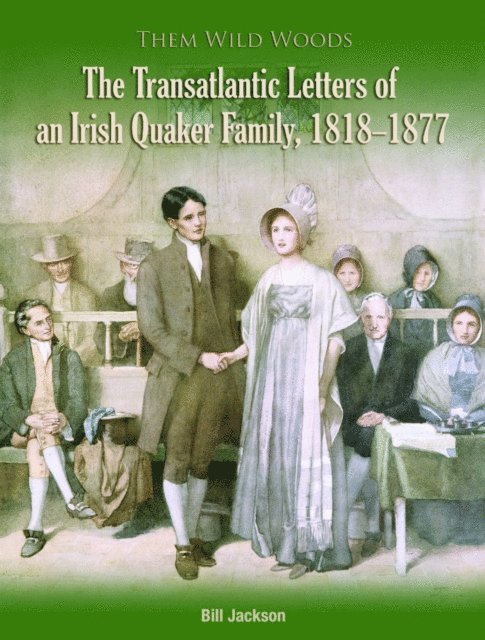
That emigration tore Irish families apart is a given, but rarely is the separation chronicled across three generations.
These hitherto unpublished letters describe the life of an Ulster Quaker shop-keeping family whose daughter married and emigrated in 1818. They bring out the fears of parents who will never see their child again and the preoccupations of sisters and brothers who remained behind, caring for the parents and themselves hoping just as much for material success, romance and marriage, as well as for spiritual fulfilment.
They reveal along the way the situation of Irish Friends in the first half of the nineteenth century, and the difficulties of making one’s way, whether in unsettled Tyrone or settler upstate New York.
Among other things, just about everyone who was anyone in Dungannon and its hinterland is mentioned – for good or ill. Armagh, Dublin and Lisburn also feature, as do New York, Buffalo and Collins. There is everything here, from jilting to murders, bankruptcies to fashions, potato prices to politics. The events of the times stud the background. In Ireland, visits by Dungannon’s absentee landlords, the proscription of unionist and nationalist parades, O’Connell’s trial for sedition, the possibility ‘of propelling vessels by steam’, Queen Victoria’s opening of the Queen’s College, Belfast. In America, an encounter with Napoleon’s brother, the opening of the Erie Canal, the ball given in New York for Charles Dickens, the abolitionist cause, various presidential elections, P. T. Barnum’s hoax exhibition of the ‘Feejee Mermaid’
These couple of hundred simple family letters throw a candid but sympathetic light on life as it was lived in Ulster and on the Lake Erie shore nearly two centuries ago.