675 kr
Läs direkt efter köp
675 kr
Läs direkt efter köp
457 kr
Läs direkt efter köp
1 248 kr
Läs direkt efter köp
1 464 kr
Läs direkt efter köp
546 kr
Läs direkt efter köp
1 312 kr
Läs direkt efter köp
392 kr
Läs direkt efter köp
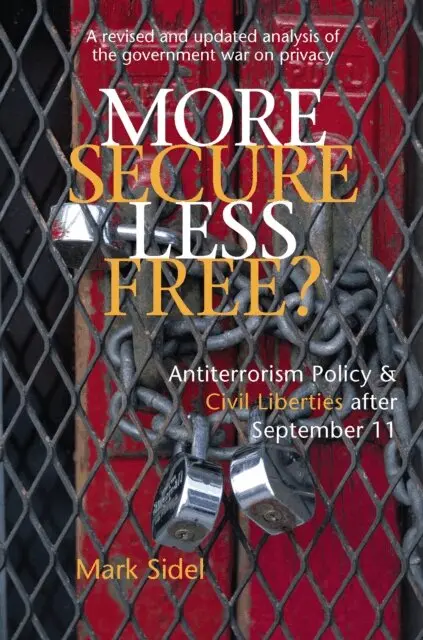
Mark Sidel is Associate Professor of Law at the University of Iowa and a research scholar at the University''s Obermann Center for Advanced Studies.
602 kr
Läs direkt efter köp
In an era when human lives are increasingly measured and weighed in relation to the medical and scientific, notions of what is “normal” have changed drastically. While it is no longer useful to think of a person’s particular race, gender, sexual orientation, or choice as “normal,” the concept continues to haunt us in other ways. In The End of Normal, Lennard J. Davis explores changing perceptions of body and mind in social, cultural, and political life as the twenty-first century unfolds. The book’s provocative essays mine the worlds of advertising, film, literature, and the visual arts as they consider issues of disability, depression, physician-assisted suicide, medical diagnosis, transgender, and other identities.
Using contemporary discussions of biopower and biopolitics, Davis focuses on social and cultural production—particularly on issues around the different body and mind. The End of Normal seeks an analysis that works comfortably in the intersection between science, medicine, technology, and culture, and will appeal to those interested in cultural studies, bodily practices, disability, science and medical studies, feminist materialism, psychiatry, and psychology.
487 kr
Läs direkt efter köp
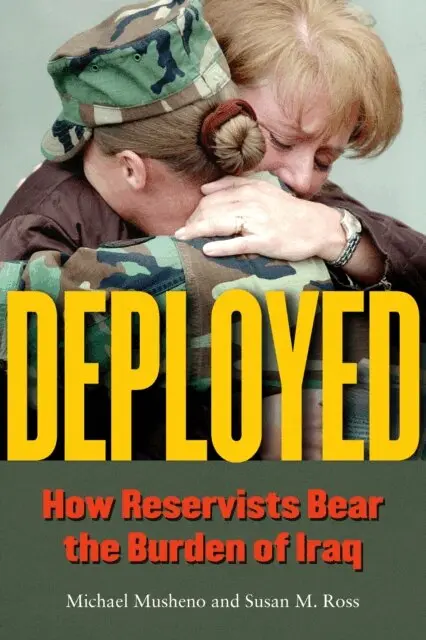
"Deployed is an important and deeply moving book. Here, in this story, the heroic tradition of the American citizen-soldier lives on." ---Andrew J. Bacevich, Professor, Boston University, and author of The New American Militarism: How Americans Are Seduced by War
"Whatever your feelings about Iraq, Deployed is an important and compelling work that illuminates the real human cost of the war, and gives voice to those compelled to fight it." ---Ken Wells, Senior Editor, Condé Nast Portfolio
"Currently, there are few to no books dealing with the sociology of Iraq, and even fewer have empirical data on the experiences of American soldiers. More important, this work provides a strong and needed voice for soldiers---their words are compelling, rich, and moving." ---Morten Ender, Professor of Sociology, United States Military Academy at West Point
"This is a unique book that weaves historical, ethnographic, and organizational approaches for a study of Iraq-War military reservists. . . . the authors'' findings challenge the pervading wisdom on reservists'' motivations for service; the chemistry between family, reserve duty, and relations with regular military; and the effect that service in Iraq had on them." ---Jerry Lembcke, Associate Professor of Sociology, Holy Cross College
What is it like to be one of the citizen-soldiers summoned to duty in Iraq and Afghanistan? The events of 9/11 were a call to arms for many reservists, as shock, anger, and fear propelled large numbers to volunteer for the opportunity to serve their country in the Middle East. Even the most patriotic, however, had not expected that the wars would last so long or that the Army Reserve would supply so much of the manpower.
Using the soldiers'' own voices, Deployed draws upon the life stories of members of an Army Reserve MP Company, who were called to extraordinary service after September 11. The book explores how and why they joined the Army Reserve, how they dealt with the seismic changes in their lives during and after deployment, the evolution of their relationships inside and outside their military unit, and their perspectives on the U.S. Army.
Musheno and Ross uncover five pathways that led these citizens to join the reserves, showing how basic needs and cultural idioms combined to stimulate enlistments. Whatever path led to enlistment, the authors find that citizen-soldiers fall into three distinct categories: adaptive reservists who adjust quickly to the huge changes in their lives abroad and at home, struggling reservists whose troubles are more a product of homegrown circumstances than experiences specific to serving in a war zone, and reservists who are dismissive of military life while they live it and oppose the war even as they fight it. Perhaps most important, Deployed challenges the prevailing stereotype of returning soldiers as war-damaged citizens.
Jacket photograph: AP Photo/Hutchinson News, Travis Morisse.
484 kr
Läs direkt efter köp
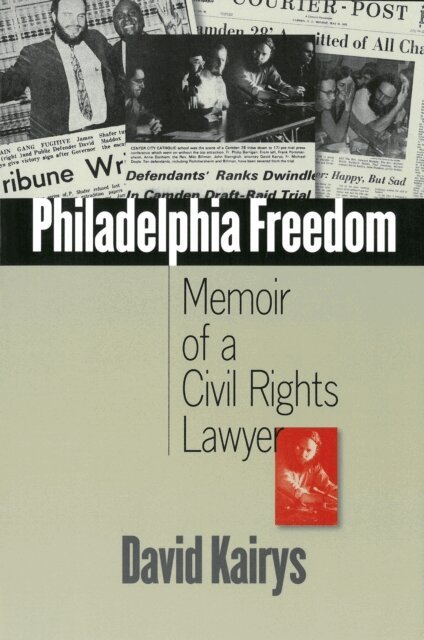
"David Kairys is one of the grand long-distance runners in the struggle for justice in America. His brilliant legal mind and superb lawyerly skills are legendary. This marvelous book is his gift to us!" ---Cornel West, Professor of Religion and African American Studies, Princeton University, and award-winning author of Race Matters
Philadelphia Freedom is the spellbinding tale of an idealistic young lawyer coming of age in the political cauldron of the 1960s and 1970s. From his immersion in the civil rights movement to his determined court battles to quell criminal violence by Philadelphia police, Kairys recounts how he helped make history in the city of brotherly love." ---William K. Marimow, Editor and Executive Vice President, Philadelphia Inquirer, and recipient of two Pulitzer Prizes
"In the current climate of political deception and the trampling of our civil rights, Kairys''s compelling book is a clenched fist, a prayer for social justice and a call to conscience." ---Steve Lopez, Los Angeles Times columnist and former Philadelphia Inquirer columnist
"With engaging, insider stories of innovative legal strategies of a truly creative lawyer, this book evokes the ebullient spirit of progressive social change launched in the 1960s and should be read by aspiring and practicing lawyers as well as anyone interested in American social history. Philadelphia Freedom reads like a suspense novel and reveals how novel legal and political thinking can and does make a real difference to individuals and to the quality of justice." ---Martha L. Minow, Jeremiah Smith, Jr. Professor of Law, Harvard University
"David Kairys''s compelling book properly explains the vital role that civil rights attorneys play in our system of justice." ---Judge John E. Jones III, United States District Court for the Middle District of Pennsylvania, and presiding judge in the landmark Kitzmiller v. Dover Area School District case
A memoir that is also a compelling page-turner, Philadelphia Freedom is the poignant, informative, often inspiring account of renowned civil-rights lawyer David Kairys''s personal quest for achieving social justice during the turbulent 1960s and 70s.
Philadelphia Freedom brings us intimately and directly into Kairys''s burgeoning law career and the struggles of the 60s as his professional and private life navigated the turmoil and promise of the civil rights and antiwar movements.
Many of the cases Kairys took on involved discrimination and equal protection, freedom of speech, and government malfeasance. Kairys is perhaps most well known for his victory in the Camden 28 draft board case, in which the FBI set up a sting of the Catholic anti-war left at the behest of the highest levels of government.
The stories and cases range from nationally important and recognizable---the family of the scientist the CIA unwittingly gave LSD in the 1950s; the leading race discrimination case against the FBI; Dr. Benjamin Spock''s First Amendment case before the Supreme Court; the city handgun lawsuits Kairys conceived---to those he encountered in his early work as a public defender. The characters include public figures such as FBI Directors J. Edgar Hoover and Louis Freeh; CIA Director William Colby; Pennsylvania Senator Arlen Specter; New York Attorney General Eliot Spitzer; U.S. Attorneys General Edward Levi and John Mitchell; Georgia Governor Lester Maddox; Pennsylvania Governor, former Philadelphia Mayor, and Democratic National Committee chair Ed Rendell; Philadelphia Mayor and Police Commissioner Frank Rizzo. But some of the most memorable are not well known, involving regular people caught up in the often heartless machinery of the courts and legal system.
Though it reads like a novel, with all the elements of character, plot, and suspense, Philadelphia Freedom also has historical significance as a firsthand account of the 1960s and 70s and contains social commentary about race as well as insights and major perspectives on the nature and social role of law.
David Kairys is Professor of Law at Beasley School of Law, Temple University. He was a full-time civil rights lawyer from 1968 to 1990.
522 kr
Läs direkt efter köp
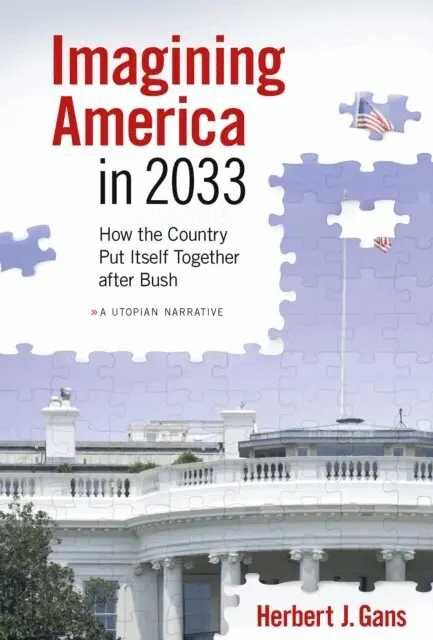
At the heart of Herbert J. Gans''s utopian narrative is the vision of progress with fairness on which the best of American idealism has been built. Part utopia, part realism, Imagining America in 2033 is also a liberal''s dream of life after Bush and a set of progressive yet practical guidelines for restoring sanity and intelligence to nearly every aspect of public and political life post-Bush.
Herbert J. Gans, one of the most influential and prolific sociologists and social commentators of our time, achieves a realistic utopia set mostly in the second and third decades of the century. In Gans''s imagined future, elected officials, policymakers, activists, and citizens have transformed America into a much more humane and effective democracy. The book features three Democratic presidents; the major new domestic, foreign, and social policies their administrations pursue; and the political battles they fight.
Gans provides chapters on an exhaustive list of social, political, and economic policy issues: jobs; war; tax reform; global warming; economic, racial, gender, and religious equality; family policies; the creation of affordable housing and energy saving communities; education reform; and more. While hopeful and idealistic, many of Gans''s proposals---such as the concept of the nurse-doctor, in which nurses increasingly take on tasks previously handled only by medical doctors within a framework of national health care---are ideas innovative enough that they should be taken seriously by actual policymakers.
Imagining America in 2033 is lively and accessible, with an appeal for general readers, policy hounds, and the politically savvy alike.
507 kr
Läs direkt efter köp
1 132 kr
Läs direkt efter köp
"A definitive study of an extremely important, though curiously neglected, Supreme Court decision, Pierce v. Society of Sisters." ---Robert O''Neil, Professor of Law Emeritus, University of Virginia School of Law
"A careful and captivating examination of a dramatic and instructive clash between nationalism and religious pluralism, and of the ancient but ongoing struggle for control over the education of children and the formation of citizens." ---Richard W. Garnett, Professor of Law and Associate Dean, Notre Dame Law School"A well-written, well-researched blend of law, politics, and history." ---Joan DelFattore, Professor of English and Legal Studies, University of Delaware
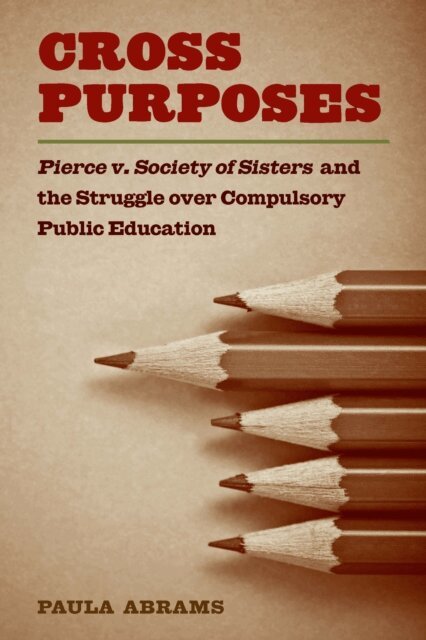
In 1922, the people of Oregon passed legislation requiring all children to attend public schools. For the nativists and progressives who had campaigned for the Oregon School Bill, it marked the first victory in a national campaign to homogenize education---and ultimately the populace. Private schools, both secular and religious, vowed to challenge the law. The Catholic Church, the largest provider of private education in the country and the primary target of the Ku Klux Klan campaign, stepped forward to lead the fight all the way to the U.S. Supreme Court.
In Pierce v. Society of Sisters (1925), the court declared the Oregon School Bill unconstitutional and ruled that parents have the right to determine how their children should be educated. Since then, Pierce has provided a precedent in many cases pitting parents against the state.
Paula Abrams is Professor of Constitutional Law at Lewis & Clark Law School.
624 kr
Läs direkt efter köp
526 kr
Läs direkt efter köp
757 kr
Läs direkt efter köp
593 kr
Läs direkt efter köp
Given the massive demographic changes in the United States during the past few decades, understanding the place of immigrants in the public sphere has never been more critical. Democracy''s Promise examines both the challenges and opportunities posed to American civic institutions by the presence of increasing numbers of immigrants. Author Janelle Wong argues that the low levels of political participation among contemporary immigrants are not due to apathy or preoccupation with their homeland, but to the inability of American political parties and advocacy organizations to mobilize immigrant voters. Wong''s rich study of Chinese and Mexican immigrants in New York and Los Angeles complements traditional studies of political behavior and civic institutions while offering a nuanced examination of immigrants'' political activity.
Democracy''s Promise will appeal to a broad spectrum of social scientists and ethnic studies scholars who study or teach immigration, racial and ethnic politics, political participation, civic engagement, and American political institutions. In addition, it will appeal to community organizers and party activists who are interested in issues of race and ethnicity, immigration, political participation, and political mobilization.
Janelle Wong is Assistant Professor of Political Science and American Studies and Ethnicity at the University of Southern California.
"As political parties (perhaps) decline in the United States, as civic organizations (perhaps) move away from direct participatory politics, and as the number of immigrants certainly increases--what will link new Americans to the political realm? Janelle Wong answers this important question clearly, with elegance, nuance, rich description, and galvanizing provocativeness. Her evidence is compelling and her sense of urgency about the need for parties to look beyond short-term interests even more so." --Jennifer L. Hochschild, Harvard University "Wong draws on the Latino and Asian immigrant experience, with specific examples from the Chinese and Mexican communities of New York and Los Angeles, to show how the political parties have largely failed to organize these groups and why labor unions and immigrant advocacy organizations have stepped in to take their place. Far from ''disuniting'' America, she clearly shows that bringing these groups into the political fray is central to the project of renewing American democracy." --John Mollenkopf, CUNY Graduate Center "A scathing critique of the role of parties in the mobilization of new immigrants and an invaluable analysis of alternative pathways of mobilization through community organizations." --Michael Jones-Correa, Cornell University "By employing multiple empirical methods, including in-depth interviews and sophisticated survey analyses, Janelle Wong provides a compelling account of the political activities and allegiances of America''s Asian and Latino immigrants that challenges much conventional wisdom. Often the political parties are failing to reach out to these groups, and often immigrants remain concerned about their home countries; but they are nonetheless increasingly active in American politics, in ways that may do much to shape the course of American political development in the 21st century. Democracy''s Promise is a major contribution to our understanding of this crucial dimension of American politics." --Rogers M. Smith, University of Pennsylvania "Democracy''s Promise challenges political parties to reexamine their priorities for mobilizing new voters, and identifies the critical role civic institutions play in invigorating participation among immigrant citizens. Wong''s analysis is at once precise and expansive; illuminating the contours of Latino and Asian American political incorporation and provoking thoughtful debate on inclusion in democratic theory." --Jane Junn, Rutgers University279 kr
Läs direkt efter köp
“Never before has the case been more compellingly made that America’s dependence on a free and abundant water supply has become an illusion. Cynthia Barnett does it by telling us the stories of the amazing personalities behind our water wars, the stunning contradictions that allow the wettest state to have the most watered lawns, and the thorough research that makes her conclusions inescapable. Barnett has established herself as one of Florida’s best journalists and Mirage is a must-read for anyone who cares about the future of the state.”
—Mary Ellen Klas, Capital Bureau Chief, Miami Herald
“Mirage is the finest general study to date of the freshwater-supply crisis in Florida. Well-meaning villains abound in Cynthia Barnett’s story, but so too do heroes, such as Arthur R. Marshall Jr., Nathaniel Reed, and Marjorie Harris Carr. The author’s research is as thorough as her prose is graceful. Drinking water is the new oil. Get used to it.”
—Michael Gannon, Distinguished Professor of history, University of Florida, and author of Florida: A Short History
“With lively prose and a journalist’s eye for a good story, Cynthia Barnett offers a sobering account of water scarcity problems facing Florida—one of our wettest states—and the rest of the East Coast. Drawing on lessons learned from the American West, Mirage uses the lens of cultural attitudes about water use and misuse to plead for reform. Sure to engage and fascinate as it informs.”
—Robert Glennon, Morris K. Udall Professor of Law and Public Policy, University of Arizona, and author of Water Follies: Groundwater Pumping and the Fate of America’s Fresh Waters
Part investigative journalism, part environmental history, Mirage reveals how the eastern half of the nation—historically so wet that early settlers predicted it would never even need irrigation—has squandered so much of its abundant freshwater that it now faces shortages and conflicts once unique to the arid West.
Florida’s parched swamps and supersized residential developments set the stage in the first book to call attention to the steady disappearance of freshwater in the American East, from water-diversion threats in the Great Lakes to tapped-out freshwater aquifers along the Atlantic seaboard.
Told through a colorful cast of characters including Walt Disney, Jeb Bush and Texas oilman Boone Pickens, Mirage ferries the reader through the key water-supply issues facing America and the globe: water wars, the politics of development, inequities in the price of water, the bottled-water industry, privatization, and new-water-supply schemes.
From its calamitous opening scene of a sinkhole swallowing a house in Florida to its concluding meditation on the relationship between water and the American character, Mirage is a compelling and timely portrait of the use and abuse of freshwater in an era of rapidly vanishing natural resources.
1 198 kr
Läs direkt efter köp
392 kr
Läs direkt efter köp
328 kr
Läs direkt efter köp
760 kr
Läs direkt efter köp
780 kr
Läs direkt efter köp
570 kr
Läs direkt efter köp
“A powerful, detailed, and exceptionally balanced critique of NCLB. It offers some hope for how we might overcome its faults. No legislator or educational expert should be allowed to get away with not reading it—whether to agree or disagree. It’s a must learning experience.”
—Deborah Meier, Senior Scholar and Adjunct Professor, Steinhardt School of Education, New York University, and author of In Schools We Trust
“A concise, highly readable, and balanced account of NCLB, with insightful and realistic suggestions for reform. Teachers, professors, policymakers, and parents—this is the one book about NCLB you ought to read.”
—James E. Ryan, William L. Matheson and Robert M. Morgenthau Distinguished Professor, University of Virginia School of Law
This far-reaching new study looks at the successes and failures of one of the most ambitious and controversial educational initiatives since desegregation—the No Child Left Behind Act of 2001.
NCLB’s opponents criticize it as underfunded and unworkable, while supporters see it as a radical but necessary educational reform that evens the score between advantaged and disadvantaged students. Yet the most basic and important question remains unasked: “Can we ever really know if a child’s education is good?”
Ultimately, Scott Franklin Abernathy argues, policymakers must begin from this question, rather than assuming that any test can accurately measure the elusive thing we call “good” education.
522 kr
Läs direkt efter köp
549 kr
Läs direkt efter köp
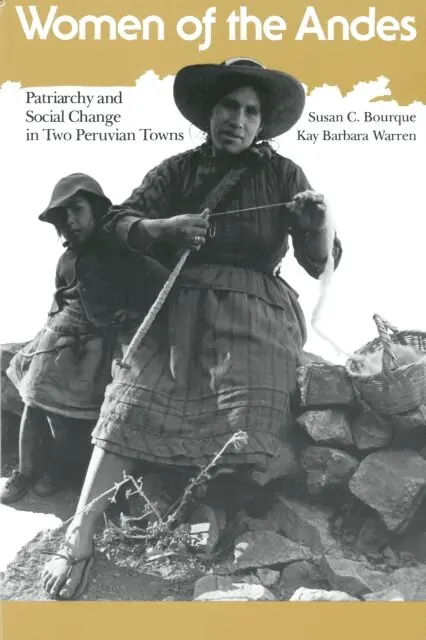
Pilar is a capable, energetic merchant in the small, Peruvian highland settlement of Chiuchin. Genovena, an unmarried day laborer in the same town, faces an impoverished old age without children to support her. Carmen is the wife of a prosperous farmer in the agricultural community of Mayobamba, eleven thousand feet above Chiuchin in the Andean sierra. Mariana, a madre soltera—single mother—without a husband or communal land of her own, also resides in Mayobamba.
These lives form part of an interlocking network that the authors carefully examine in Women of the Andes. In doing so, they explore the riddle of women’s structural subordination by analyzing the social, political, and economic realities of life in Peru. They examine theoretical explanations of sexual hierarchies against the backdrop of life histories. The result is a study that pinpoints the mechanisms perpetuating sexual repression and traces the impact of social change and national policy on women’s lives.
429 kr
Läs direkt efter köp
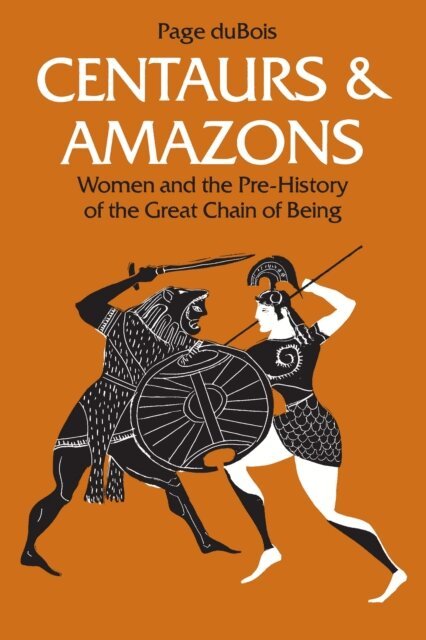
In Centaurs and Amazons, Page duBois offers a prehistory of hierarchy. Using structural anthropology, symbolic analysis, and recent literary theory, she demonstrates a shift in Greek thought from the fifth to the fourth century B.C. that had a profound influence upon subsequent Western culture and politics.
Through an analysis of mythology, drama, sculpture, architecture, and Greek vase painting, duBois documents the transition from a system of thought that organized the experience of difference in terms of polarity and analogy to one based upon a relatively rigid hierarchical scheme. This was the beginning of "the great chain of being," the philosophical construct that all life was organized in minute gradations of superiority and inferiority. This scheme, in various guises, has continued to influence philosophical and political thought.
The author''s intelligent and discriminating use of scholarship from various fields makes Centaurs and Amazons an impressive interdisciplinary study of interest to classicists, feminist scholars, historians, art historians, anthropologists, and political scientists.
720 kr
Läs direkt efter köp
"Ambitious, provocative, and wide-ranging, this rich collection of essays from U.S. and South African perspectives reflects the thinking of thoughtful advocates of affirmative action." ---William G. Bowen, President Emeritus, The Andrew W. Mellon Foundation, and President Emeritus, Princeton University
"Thoughtful commentary from outstanding experts on affirmative action’s future in two countries struggling to overcome a legacy of racial injustice." ---Derek Bok, 300th Anniversary University Research Professor, and President Emeritus, Harvard University
"An enormously important comparative study and reflection on affirmative (U.S.) and corrective (South Africa) action with exhaustive and sensitive treatment of a vital topic." ---Kader Asmal, Professor of Law, University of the Western Cape, Cape Town, and former Minister of Education, South Africa
A penetrating exploration of affirmative action''s continued place in 21st-century higher education, The Next Twenty-five Years assembles the viewpoints of some of the most influential scholars, educators, university leaders, and public officials. Its comparative essays span the political spectrum and dissect debates in two nations to elucidate the legal, political, social, economic, and moral dimensions of affirmative action in higher education and its role in contributing to a just, equitable, and vital society.
David L. Featherman is Professor of Sociology and Psychology and Founding Director of the Center for Advancing Research and Solutions for Society at the University of Michigan.
Martin Hall is Vice-Chancellor of the University of Salford, Greater Manchester, and previously was Deputy Vice-Chancellor at the University of Cape Town.
Marvin Krislov is President of Oberlin College and previously was Vice President and General Counsel at the University of Michigan.
568 kr
Läs direkt efter köp
528 kr
Läs direkt efter köp