David Quinn – illustratör
Upptäck titlar med illustrationer av David Quinn.
13 produkter
13 produkter
Häftad, Engelska, 1992
1 136 kr
Skickas inom 5-8 vardagar
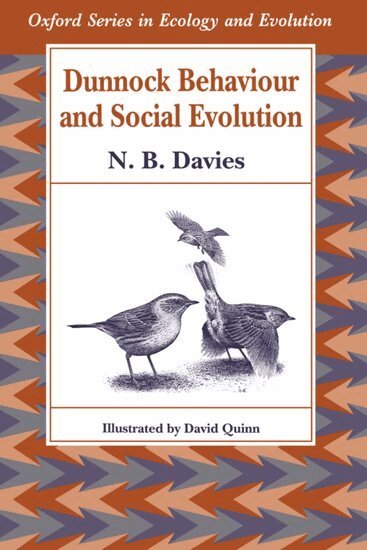
At first sight just a small brown bird, the dunnock's unobtrusive appearance belies its extraordinary behaviour and mating patterns. In this book Nick Davies gives a full account of the mating systems of the dunnock or hedge sparrow, Prunella modularis, which include pairs, a male with two females, two males with one female, and several males with several females. Detailed observations, elegant field experiments, and DNA fingerprinting are combined to show how this variable social organization from selfish individuals competing to maximize their own reproductive success. Further experiments reveal how the cuckoo may thwart the dunnock's parental efforts. David Quinn's exquisite drawings provide a visual summary of the birds' behaviour. All students of ecology, evolution, and animal behaviour will want to be familiar with this work, which addresses the wider issues of the influence of ecology on mating systems and the evolutionary significance of conflict within and between species.This is the third volume in the Oxford Series in Ecology and Evolution, and the first in this series to tackly behavioural ecology. Nick Davies is a Lecturer in Zoology at the University of Cambridge and co-editor with J. R. Krebs of the leading text in the field, Behavioural ecology: an evolutionary approach.
E-bok
Engelska, 2010908 kr
Läs direkt efter köp
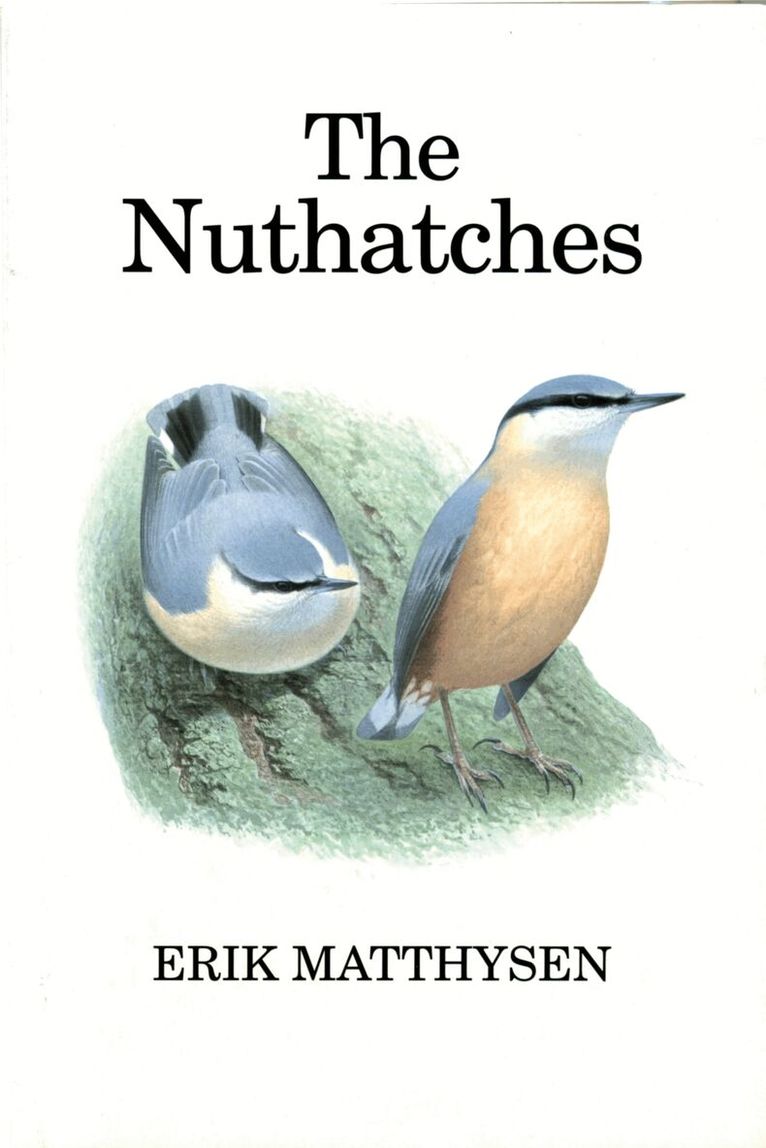
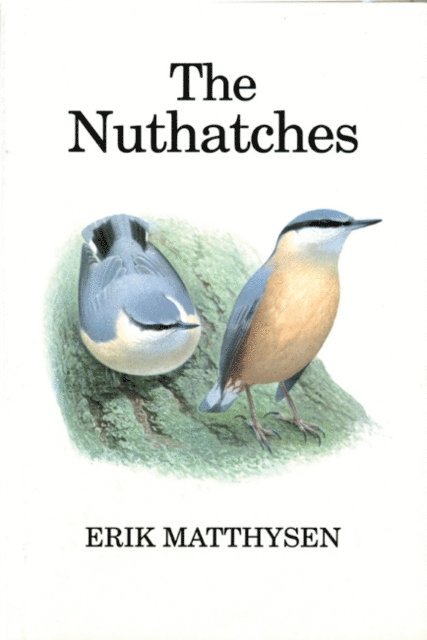
The Nuthatches is based on the European Nuthatch, with comparative information on the other west Paleartic and world species.The nuthatches are common and widespread birds throughout the Northern Hemisphere, but only poorly studied until quite recently. Erik Matthysen''s extensive studies, started in 1982, have done much to illuminate the ecology of the Eurasian species, and to create a rich picture both of this bird and its 23 fellows around the world.The nuthatches are familiar for their peculiar, head-down, foraging style on the trunks of mature woodland trees. They are also noteworthy for their generally elaborate nest building behaviour - ten of the nuthatch species use mud to reduce the nest cavity entrance Ca behaviour otherwise shown only by hornbills) while others make elaborate constructs entirely of mud, or use resin to repel nest predators. They also exhibit a complex territorial system and associated behavioural repertoire, occupying a territory as a pair, year round, perhaps as an adaptation to their reliance on stored food during the winter months. The intricate dynamics of pair-bond stability, territory size and the various strategies of floating, non-territory holders is the subject of an entire and fascinating chapter.The habitat fragmentation that has accompanied widespread disruption of woodland habitats everywhere has had a profound effect on territorial and social behaviour and this too is dealt with at length. Following a detailed description of the ecology and behaviour of the Eurasian Nuthatch, Erik Matthysen goes on to consider what is known of the other species, and to compare and contrast their biology.Although many are poorly known, this part of the book enables many fascinating insights and sets the scene for further work which may explain the links between the ecology, behaviour, habitat and evolutionary relationships of the various species. David Quinn'' s excellent drawings complete an interesting and authoritative volume.
E-bok
Engelska, 2010701 kr
Läs direkt efter köp
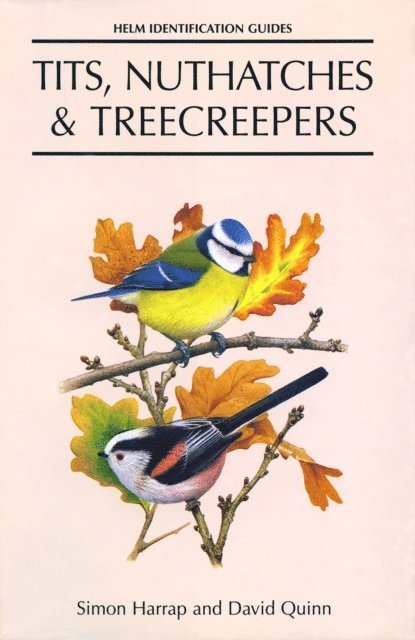
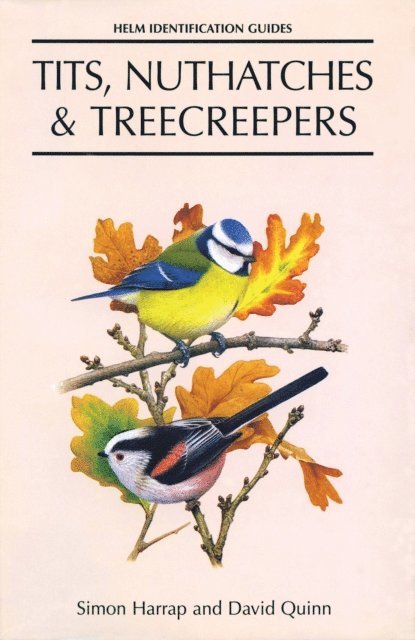
This guide covers all 110 of the world''s species of tits, nuthatches and creepers.The Parulidae ("true" tits), Remizidae (penduline tits) and Aegithalidae (long-tailed tits) form the bulk of the book (78 species), with a further 24 species of nuthatch and eight creepers.The text covers each species under a number of headings: identification, sex and age, voice, distribution and movements, habitat, population, habits, breeding biology, description, movements, geographical variation, relationships, and references.
E-bok
Engelska, 2010701 kr
Läs direkt efter köp
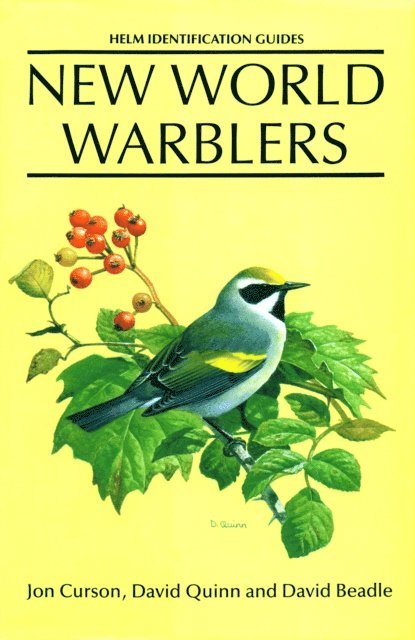
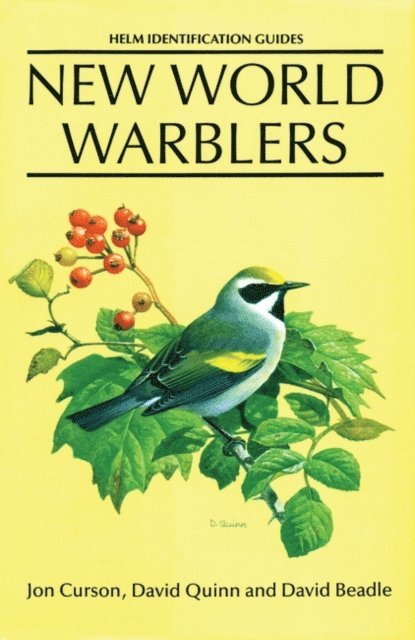
Following the same format as other book in the series, this guide to North American wood warblers, the parulinae, looks at their distribution throughout the USA and into Central and South America.New World warblers are one of the most colourful, popular and enigmatic groups of North American birds. This is the first time comprehensive guide to the identification, ageing and sexing of all 116 species. Thirty-six colour plates show the major age, sex and racial variations for all species (many of which have never been fully illustrated before). They are accompanied by colour distribution maps and black-and-white drawings. Jon Curson''s up-to-the-minute text is based on over ten years'' field research in North, South and Central America coupled with meticulous museum work by both author and artists. The book contains a full text for each species, including wing-formulae drawings. Some of the species covered find their way to the UK and Europe.New World Warblers represents a significant step forward in our knowledge of one of the most beautiful and conspicuous groups of North American birds.
E-bok
PDF, Engelska, 2010908 kr
Läs direkt efter köp
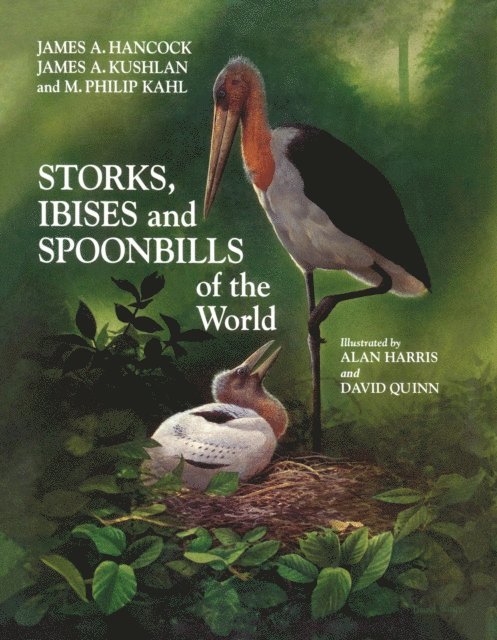
Everything you ever wanted to know about storks, ibises and spoonbills.Some of the world''s largest and most spectacular birds are to be found among this group of wading birds. Tragically, they also include many of the world''s most endangered species, as changes in land use erode their wetland habitats.Some like the White Stork have lived alongside humans for hundreds of years and are well known from numerous studies. Others, like the Storm''s stork and ibises of West Africa, South-East Asia and South America live so secluded a life in the remote corners of the globe that they will probably be extinct before even the most basic details of their biology are known.In this monograph, three authors and two artists have combined their skills to capture what is known of this group of wading birds. The text opens with general chapters on taxonomy and feeding, breeding and behaviour, followed by detailed coverage of each species.
E-bok
Engelska, 2010876 kr
Läs direkt efter köp
Everything you ever wanted to know about storks, ibises and spoonbills. Some of the world''s largest and most spectacular birds are to be found among this group of wading birds. Tragically, they also include many of the world''s most endangered species, as changes in land use erode their wetland habitats. Some like the White Stork have lived alongside humans for hundreds of years and are well known from numerous studies. Others, like the Storm''s stork and ibises of West Africa, South-East Asia and South America live so secluded a life in the remote corners of the globe that they will probably be extinct before even the most basic details of their biology are known. In this monograph, three authors and two artists have combined their skills to capture what is known of this group of wading birds. The text opens with general chapters on taxonomy and feeding, breeding and behaviour, followed by detailed coverage of each species.
E-bok
PDF, Engelska, 2010701 kr
Läs direkt efter köp
Following the same format as other book in the series, this guide to North American wood warblers, the parulinae, looks at their distribution throughout the USA and into Central and South America. New World warblers are one of the most colourful, popular and enigmatic groups of North American birds. This is the first time comprehensive guide to the identification, ageing and sexing of all 116 species. Thirty-six colour plates show the major age, sex and racial variations for all species (many of which have never been fully illustrated before). They are accompanied by colour distribution maps and black-and-white drawings. Jon Curson''s up-to-the-minute text is based on over ten years'' field research in North, South and Central America coupled with meticulous museum work by both author and artists. The book contains a full text for each species, including wing-formulae drawings. Some of the species covered find their way to the UK and Europe. New World Warblers represents a significant step forward in our knowledge of one of the most beautiful and conspicuous groups of North American birds.
E-bok
PDF, Engelska, 2010701 kr
Läs direkt efter köp
This guide covers all 110 of the world''s species of tits, nuthatches and creepers. The Parulidae ("true" tits), Remizidae (penduline tits) and Aegithalidae (long-tailed tits) form the bulk of the book (78 species), with a further 24 species of nuthatch and eight creepers. The text covers each species under a number of headings: identification, sex and age, voice, distribution and movements, habitat, population, habits, breeding biology, description, movements, geographical variation, relationships, and references.
E-bok
PDF, Engelska, 20101 059 kr
Läs direkt efter köp
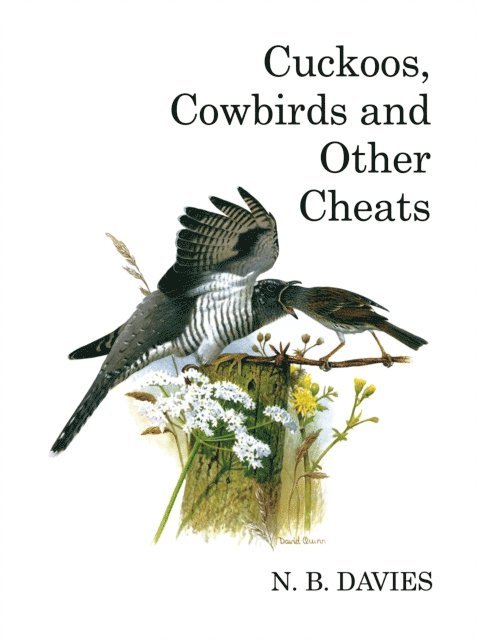
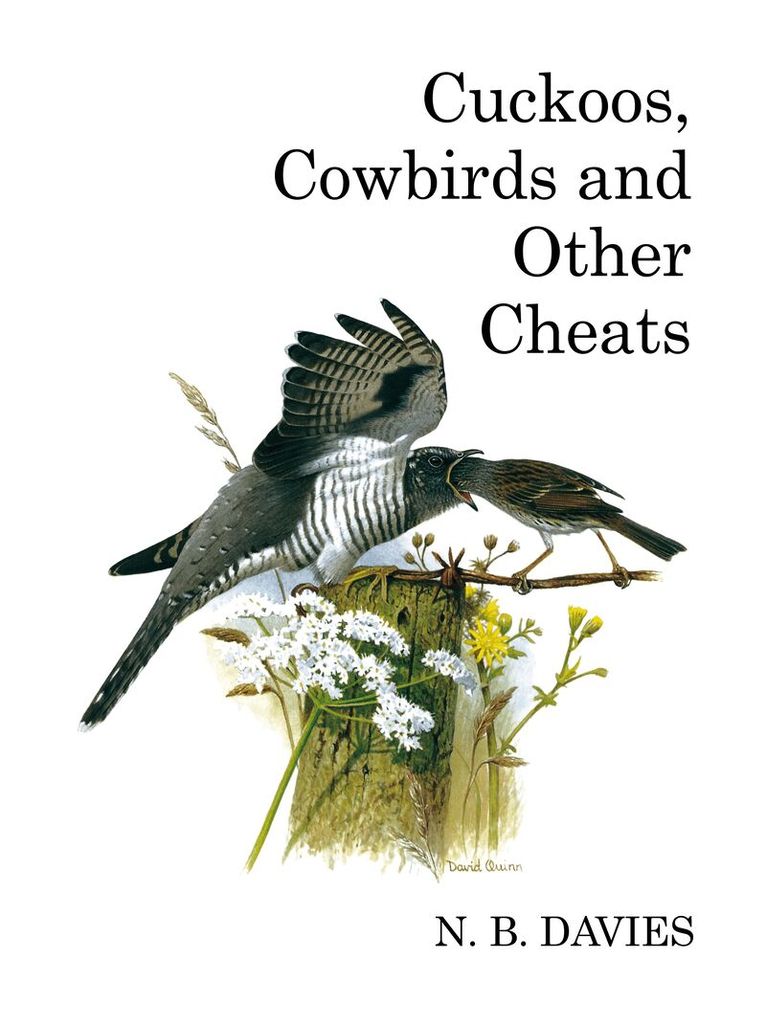
This fascinating study describes the natural histories of these brood parasites and examines many of the exciting questions they raise about the evolution of cheating and the arms race between parasites and their prey.Brood parasites fill their armoury with adaptations including exquisite egg mimicry, rapid laying, ejection of host eggs, murder of host young, chick mimicry and manipulative begging behaviour: ploys shown by recent research to have evolved in response to host defence behaviour or through competition among the parasites themselves. While many host species appear defenceless, accepting parasite eggs quite unlike their own, many are more discriminating against odd-looking eggs and some have evolved the ability to discriminate against odd-looking chicks as well.How is this arms race conducted? Will defenceless hosts develop defences in time, or are there constraints which limit the evolution and perfection of host defences? And why are so few species obliged only to lay eggs in host nests? Have host defences limited the success of brood parasitism, or is it in fact much more common than we suspect, but occurring mainly when birds parasitize the nest of their own kind? All of these puzzles are examined in descriptions of the natural history of each of the groups of parasites in turn. Here is a book with wide appeal, both to amateur naturalists fascinated by this most singular and macabre of behaviours and by ornithologists and ecologists interested in the evolution of ecology and behaviour. The story takes us from the classic field work by pioneer ornithologists such as Edgar Chance, Stuart Baker, Herbert Friedmann and others, through to the experimental field work and molecular techniques of today''s leading scientists. We visit brood parasites in Europe, Asia, Japan, Africa, Australasia, and North and South America, to look at some of the world''s most interesting birds and some of biology''s most interesting questions, many of which still beg answers from ornithologists in the future. Brilliant illustrations by David Quinn illuminate the species discussed, showing many behaviours never before illustrated and conveying the thrill of watching these astonishing birds in the wild.
E-bok
Engelska, 20101 059 kr
Läs direkt efter köp
This fascinating study describes the natural histories of these brood parasites and examines many of the exciting questions they raise about the evolution of cheating and the arms race between parasites and their prey.Brood parasites fill their armoury with adaptations including exquisite egg mimicry, rapid laying, ejection of host eggs, murder of host young, chick mimicry and manipulative begging behaviour: ploys shown by recent research to have evolved in response to host defence behaviour or through competition among the parasites themselves. While many host species appear defenceless, accepting parasite eggs quite unlike their own, many are more discriminating against odd-looking eggs and some have evolved the ability to discriminate against odd-looking chicks as well.How is this arms race conducted? Will defenceless hosts develop defences in time, or are there constraints which limit the evolution and perfection of host defences? And why are so few species obliged only to lay eggs in host nests? Have host defences limited the success of brood parasitism, or is it in fact much more common than we suspect, but occurring mainly when birds parasitize the nest of their own kind? All of these puzzles are examined in descriptions of the natural history of each of the groups of parasites in turn. Here is a book with wide appeal, both to amateur naturalists fascinated by this most singular and macabre of behaviours and by ornithologists and ecologists interested in the evolution of ecology and behaviour. The story takes us from the classic field work by pioneer ornithologists such as Edgar Chance, Stuart Baker, Herbert Friedmann and others, through to the experimental field work and molecular techniques of today''s leading scientists. We visit brood parasites in Europe, Asia, Japan, Africa, Australasia, and North and South America, to look at some of the world''s most interesting birds and some of biology''s most interesting questions, many of which still beg answers from ornithologists in the future. Brilliant illustrations by David Quinn illuminate the species discussed, showing many behaviours never before illustrated and conveying the thrill of watching these astonishing birds in the wild.
Inbunden, Engelska, 2011
968 kr
Skickas inom 5-8 vardagar
E-bok
PDF, Engelska, 2010908 kr
Läs direkt efter köp
The Nuthatches is based on the European Nuthatch, with comparative information on the other west Paleartic and world species. The nuthatches are common and widespread birds throughout the Northern Hemisphere, but only poorly studied until quite recently. Erik Matthysen''s extensive studies, started in 1982, have done much to illuminate the ecology of the Eurasian species, and to create a rich picture both of this bird and its 23 fellows around the world. The nuthatches are familiar for their peculiar, head-down, foraging style on the trunks of mature woodland trees. They are also noteworthy for their generally elaborate nest building behaviour - ten of the nuthatch species use mud to reduce the nest cavity entrance Ca behaviour otherwise shown only by hornbills) while others make elaborate constructs entirely of mud, or use resin to repel nest predators. They also exhibit a complex territorial system and associated behavioural repertoire, occupying a territory as a pair, year round, perhaps as an adaptation to their reliance on stored food during the winter months. The intricate dynamics of pair-bond stability, territory size and the various strategies of floating, non-territory holders is the subject of an entire and fascinating chapter. The habitat fragmentation that has accompanied widespread disruption of woodland habitats everywhere has had a profound effect on territorial and social behaviour and this too is dealt with at length. Following a detailed description of the ecology and behaviour of the Eurasian Nuthatch, Erik Matthysen goes on to consider what is known of the other species, and to compare and contrast their biology. Although many are poorly known, this part of the book enables many fascinating insights and sets the scene for further work which may explain the links between the ecology, behaviour, habitat and evolutionary relationships of the various species. David Quinn'' s excellent drawings complete an interesting and authoritative volume.
Inbunden, Engelska, 2017
1 477 kr
Tillfälligt slut