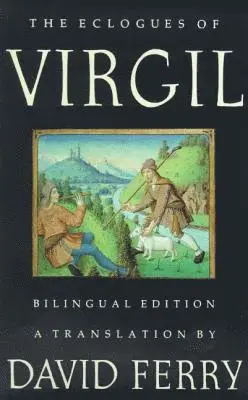
In 2012, David Ferry capped a long career as a poet with a National Book Award, given in honor of his book Bewilderment: New Poems and Translations. But he had no interest in resting on his laurels. In fact, he was in the middle of the most ambitious poetic project of his life. Six years earlier, at age eighty-two, he had embarked on a complete translation of one of the foundational works of Western culture: Virgil's Aeneid. Now we have it, and it is a glorious thing. Ferry has long been known as perhaps the foremost contemporary translator of Latin poetry, his translations of Virgil's Eclogues and Georgics having established themselves as much-admired standards. He brings to the Aeneid the same genius, rendering Virgil's formal, metrical lines into an English that is familiar and alive. Yet in doing so, he surrenders none of the feel of the ancient world that resonates throughout the poem and gives it the power that has drawn readers to it for centuries. In Ferry's hands, the Aeneid becomes once more a lively, dramatic poem of daring and adventure, of love and loss, devotion and death.Never before have Virgil's twin gifts of poetic language and fleet storytelling been presented so powerfully for English-language readers. Ferry's Aeneid will be a landmark, a gift to longtime lovers of Virgil and the perfect entry point for new readers. "I sing of arms and the man ..." The epic journey, from the fall of Troy to the founding of Rome, is ready to begin. Join us.
This volume represents the most ambitious project of distinguished poet David Ferry’s life: a complete translation of Virgil’s Aeneid. Ferry has long been known as the foremost contemporary translator of Latin poetry, and his translations of Virgil’s Eclogues and Georgics have become standards. He brings to the Aeneid the same genius, rendering Virgil’s formal, metrical lines into an English that is familiar, all while surrendering none of the poem’s original feel of the ancient world. In Ferry’s hands, the Aeneid becomes once more a lively, dramatic poem of daring and adventure, of love and loss, devotion and death. The paperback and e-book editions include a new introduction by Richard F. Thomas, along with a new glossary of names that makes the book even more accessible for students and for general readers coming to the Aeneid for the first time who may need help acclimating to Virgil’s world.
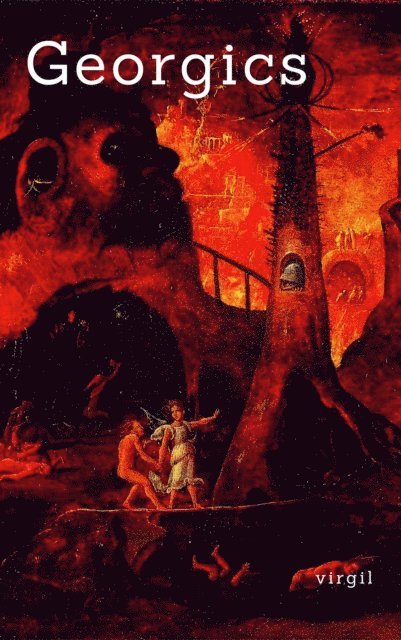
The Georgics is a poem by Latin poet Virgil, likely published in 29 BC. As the name suggests (from the Greek word γεωργικά, geōrgika, i.e. "agricultural (things)") the subject of the poem is agriculture; but far from being an example of peaceful rural poetry, it is a work characterized by tensions in both theme and purpose.The Georgics is considered Virgil''s second major work, following his Eclogues and preceding the Aeneid. The poem draws on a variety of prior sources,[citation needed] and has influenced many later authors from antiquity to the present.