• Fri frakt över 249 kr
  • •
  • Snabba leveranser
  • •
  • Billiga böcker
Kundservice

Du är på sajten för privatpersoner.

Företag, bibliotek eller offentlig verksamhet?

Du handlar på classic.bokus.com, där alla dina funktioner finns intakta.
Till classic.bokus.com
Bokus logotyp. Gå till startsidan.
  • Erbjudanden
  • Nyheter
  • Student
  • Topplistor
  • Barn & ungdom
  • Bokus Play
  • E-böcker
  • Pocketböcker
  • Spel & pussel

10% rabatt på allt med kod: NYSTART10 →

Sidfot

Mina sidor

    Hjälp

    • Kundservice
    • Vanliga frågor och svar
    • Frakt och leverans
    • Retur vid ångerrätt
    • Reklamera vara
    • Betalning
    • Köpvillkor
    • Allmänna villkor
    • Information om webbplatsens tillgänglighet

    Om Bokus

    • Om oss
    • Pressrum
    • För studenter
    • För företag
    • För bibliotek och offentlig verksamhet
    • För leverantörer
    • Hållbarhet

    Populärt

    • Aktuella erbjudanden
    • Presentkort
    • Studentlitteratur
    • Nya böcker
    • Topplistor
    • Signerade böcker
    • Engelska böcker

    Inspiration

    • Boktips
    • BookTok
    • Populära bokserier
    • Barnbokskaraktärer
    • Populära författare
    Logotyp för Bokus
    Följ oss på Facebook (extern länk)Följ oss på Instagram (extern länk)Följ oss på YouTube (extern länk)Följ oss på TikTok (extern länk)
    bokus @ CookiesAnpassa cookiesIntegritetspolicyKöpvillkor
    Till Citymail hemsida (extern länk)Till Budbee hemsida (extern länk)Till Postnord hemsida (extern länk)Till Schenker hemsida (extern länk)Till Early Bird hemsida (extern länk)Till Walleys hemsida (extern länk)
    1. Språk och ordböcker
    2. Språkundervisning och språkinlärning

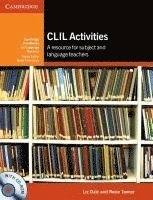
    CLIL Activities with CD-ROM

    A Resource for Subject and Language Teachers

    AvLiz Dale,Rosie Tanner

    Cambridge University Press

    2012

    Del i serien CLIL

    619 kr

    Beställningsvara. Skickas inom 10-15 vardagar. Fri frakt över 249 kr.

    Beskrivning

    Innovative activities for Content and Language Integrated Learning (CLIL) teachers and trainee teachers. CLIL Activities is organised into five chapters: Activating, Guiding understanding, Focus on language, Focus on speaking and Focus on writing. A further chapter provides practical ideas for assessment, review and feedback. The Background to CLIL section offers a clear explanation of what CLIL is and its benefits and challenges. The book contains a wide range of easily accessible activities that can be used in any order. Dedicated subject pages include annotated extracts from authentic school teaching materials, demonstrating how language is used in particular school subjects, such as geography, science, maths and ICT. The accompanying CD-ROM contains print-ready CLIL activities.

    Produktinformation

    • Märke:Cambridge University Press
    • Utgivningsdatum:2012-03-15
    • Höjd:190 x 245 x 17 mm
    • Vikt:600 g
    • Språk:Engelska
    • Serie:CLIL
    • Antal sidor:294
    • Förlag:Cambridge University Press
    • EAN:9780521149846

    Utforska kategorier

    • Språkundervisning och språkinlärning inom Språk och ordböcker
    • Lärarutbildning inom Psykologi och pedagogik

    Innehållsförteckning

    • Thanks. Acknowledgments. Introduction. PART 1 BACKGROUND TO CLIL What is CLIL? CLIL, content-based language teaching (CBLT) and immersion. Teaching in another language versus teaching through another language. CLIL snapshots. Benefits of CLIL: why is integrating content and a language a good thing? Benefits for learners. Benefits for teachers and schools. The CLIL teacher's role. How 'CLIL' are you? CLIL teachers: new roles. New roles: CLIL subject teachers. New roles: CLIL language teachers. Collaboration between language and subject teachers. Rubric 'Collaboration in CLIL'. Challenges in CLIL. Who is this book for? PART 2 SUBJECT PAGES Introduction. Challenges for CLIL learners. CLIL in subject teaching. How to use the subject pages. Features of the subject pages. Art, design and technology. Economics and business studies. Geography. History. Information and communication technology (ICT). Maths. Music and drama. Physical education (PE). Science. PART 3 PRACTICAL ACTIVITIES 1. ACTIVATING. 1.1 Finish the sentence. 1.2 Graphic organisers for activating (1) Venn diagram. 1.3 Graphic organisers for activating (2) target practice. 1.4 Graphic organisers for activating (3) spider diagram. 1.5 Guessing the lesson. 1.6 Hands-on discovering. 1.7 KWL (know, want, learn) grid. 1.8 Newsy newspapers. 1.9 Placemat. 1.10 Quickest, most, best. 1.11 Red and green circles. 1.12 Researching the lesson. 1.13 Scrambled eggs. 1.14 Vital visuals. 1.15 Word wall. 2. GUIDING UNDERSTANDING. 2.1 Expert groups. 2.2 Gist statements. 2.3 Graffiti. 2.4 Graphic organisers. 2.5 Interactive PowerPoint. 2.6 Interview as input. 2.7 Jumbles. 2.8 Learner-generated questions. 2.9 Listening questions. 2.10 Mind the gap. 2.11 Running commentary. 2.12 Skinny and fat questions and thinking skills. 2.13 Subheadings. 2.14 Understanding new words. 2.15 What was the question? 3. FOCUS ON LANGUAGE. 3.1 Academic word list. 3.2 Bingo. 3.3 Guess the word. 3.4 Hot seat. 3.5 Matching trios. 3.6 Mind maps. 3.7 Mnemonics. 3.8 Noticing. 3.9 Odd one out. 3.10 Personal vocabulary file or glossary. 3.11 Ranking. 3.12 Snake. 3.13 Sorting. 3.14 Taboo. 3.15 Vocabulary posters. 3.16 Vocabulary strategies. 3.17 Word association. 3.18 Word puzzle. 3.19 Word stories. 4. FOCUS ON SPEAKING. 4.1 Balloon debate. 4.2 Describe and draw. 4.3 Eyewitness. 4.4 Information gaps. 4.5 Living gaps. 4.6 Problems, problems. 4.7 Prove it. 4.8 Ranking cards. 4.9 Role play: job interview. 4.10 Rubric jigsaw for presentations. 4.11 Speak for an audience. 4.12 Speaking frames. 4.13 Think, Pair, Share. 4.14 Vivid visuals. 5. FOCUS ON WRITING. 5.1 Advice Column. 5.2 Aliens. 5.3 Brainstorming for writing (1) posters. 5.4 Brainstorming for writing (2) focused free writing. 5.5 Class magazine. 5.6 Framing writing. 5.7 I am a... 5.8 Instructions. 5.9 Lost in conversion. 5.10 Questions to paragraph. 5.11 Recreate a text. 5.12 Real-life writing. 5.13 Storyboard. 5.14 Visuals. 6. ASSESSMENT, REVIEW AND FEEDBACK. 6.1 Assessment questions. 6.2 Complete a rubric. 6.3 Correction code. 6.4 Correction cards. 6.5 First person revision. 6.6 Group self-evaluation. 6.7 Jigsaw rubric: assessing speaking. 6.8 Language feedback. 6.9 Multiple intelligences: exploring. 6.10 Multiple intelligences: assessment. 6.11 Rewrite together. 6.12 Revision circles. 6.13 Stickers. 6.14 Visual assessments. References and further reading. Appendix: The Common European Framework of Reference for Languages. Index.