• Fri frakt över 249 kr
  • •
  • Snabba leveranser
  • •
  • Billiga böcker
Kundservice

Du är på sajten för privatpersoner.

Företag, bibliotek eller offentlig verksamhet?

Du handlar på classic.bokus.com, där alla dina funktioner finns intakta.
Till classic.bokus.com
Bokus logotyp. Gå till startsidan.
  • Erbjudanden
  • Nyheter
  • Student
  • Topplistor
  • Barn & ungdom
  • Bokus Play
  • E-böcker
  • Pocketböcker
  • Spel & pussel

10% rabatt på allt med kod NYSTART10 →

Sidfot

Mina sidor

    Hjälp

    • Kundservice
    • Vanliga frågor och svar
    • Frakt och leverans
    • Retur vid ångerrätt
    • Reklamera vara
    • Betalning
    • Köpvillkor
    • Allmänna villkor
    • Information om webbplatsens tillgänglighet

    Om Bokus

    • Om oss
    • Pressrum
    • För studenter
    • För företag
    • För bibliotek och offentlig verksamhet
    • För leverantörer
    • Hållbarhet

    Populärt

    • Aktuella erbjudanden
    • Presentkort
    • Studentlitteratur
    • Nya böcker
    • Topplistor
    • Signerade böcker
    • Engelska böcker

    Inspiration

    • Boktips
    • BookTok
    • Populära bokserier
    • Barnbokskaraktärer
    • Populära författare
    Logotyp för Bokus
    Följ oss på Facebook (extern länk)Följ oss på Instagram (extern länk)Följ oss på YouTube (extern länk)Följ oss på TikTok (extern länk)
    bokus @ CookiesAnpassa cookiesIntegritetspolicyKöpvillkor
    Till Citymail hemsida (extern länk)Till Budbee hemsida (extern länk)Till Postnord hemsida (extern länk)Till Schenker hemsida (extern länk)Till Early Bird hemsida (extern länk)Till Walleys hemsida (extern länk)
    1. Naturvetenskap och teknik
    2. Matematik och naturvetenskap
    3. Biologi
    4. Cellbiologi

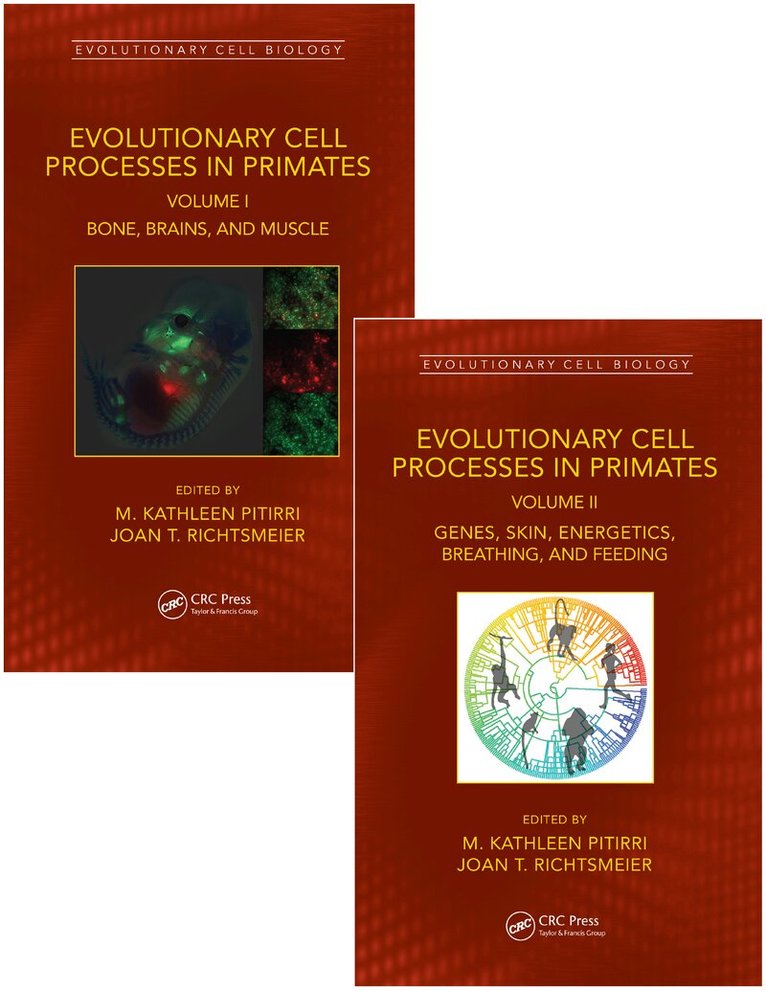
    Evolutionary Cell Processes in Primates

    Two Volume Set

    AvM. Kathleen Pitirri,Joan T. Richtsmeier

    Taylor & Francis Ltd

    2025

    Del i serien Evolutionary Cell Biology

    1 647 kr

    Beställningsvara. Skickas inom 10-15 vardagar. Fri frakt över 249 kr.

    Beskrivning

    These two volumes demonstrate the role of cellular mechanisms in the production of the many specialized traits defining primates. By exploring gene activity transforming into evolutionary change through the work of cellular mechanisms, the goal is to encourage others to adopt evolutionary cell biology as an approach to the genotype-phenotype map of the diversification of primates, human variation, and human evolution. Contributors highlight how genetic analysis, visualization of cells and tissues, and merging Evo-Devo with evolutionary cell biology combine to answer questions central to understanding the human and primate evolution. Key Features Explores the developmental basis of characteristics that define the primate lineage Documents cellular mechanisms associated with everything from skin and eneregetics to the brain and communication. Chapters by a team of leading international researchers

    Produktinformation

    • Märke:Taylor & Francis Ltd
    • Utgivningsdatum:2025-04-16
    • Höjd:156 x 234 x undefined mm
    • Vikt:1 200 g
    • Språk:Engelska
    • Serie:Evolutionary Cell Biology
    • Antal sidor:530
    • Förlag:Taylor & Francis Ltd
    • EAN:9781032073583

    Utforska kategorier

    • Cellbiologi inom Naturvetenskap och teknik
    • Biologi inom Naturvetenskap och teknik
    • Människans biologi inom Naturvetenskap och teknik

    Recensioner i media

    " … these volumes will be of broad interest to biological anthropologists and demonstrates that cell biology can be incorporated into the study of any biological trait. In addition to the wide variety of complex traits covered by the authors, an equally impressive range of cellular and molecular concepts and techniques are included. The chapters within these volumes provide an excellent survey [and will be] a valuable resource for biological anthropologists for year to come." K. E. Willmore – American Journal of Biological Anthropology.

    Innehållsförteckning

    • Volume 1 Introduction - Why are we looking at cells (and why aren’t we focusing on genes)?. Locomotion. Bipedalism - Developmental mechanisms of hindlimb elongation. Evolution of leaping and jumping. Bipedalism - Artificial selection for increased running in mice, plasticity and limb shape, what changes? Hands and Feet - how does a pisiform make a difference? Axial Skeleton/Tail length. Visual cortex development and locomotion in primates. Stereoscopic 3D vision. Evolution and development of the shoulder. Energetics. Biology of human-environment interactions. Brown adipose tissue in human evolution. Evolution of color vision in primates (opsin genes). Craniofacial morphology and thermoregulation or short limbs (dwarfism). Diet. Taste bud development and evolution of primate diets. Mandibular function. Primate dental evolution. Jaw bone and tooth development and evolution. Hair Loss, Skin, Nails. Evolution and development of nails in primates. Human evolution of sweat glands and hair loss. Hair and fur: cell biology of tissue polarity and epithelial patterning. Hair and skin pigmentation in human evolution. Development of skin in human evolution.Volume 2 Introduction. Encephalization. Expensive tissue hypothesis revisited. Human cognition. Stem cells in cranial sutures. Chondrocytes becoming osteoblasts or Neural crest cells and forebrain morphogenesis. Craniofacial development in primates. Determinants of brain size. Developmental basis of evolutionary trend in primate encephalization. How cells make brains. Tool Making. Digit evolution. Evolution of carpals in primates. Molecular development of the thumb in primates. Neural basis for tool-making. Breathing, smelling, spoken language. Olfaction versus respiration in primates. Nasal architecture. Vocal tract. Evolution of larynx and language. Evolutionary neuroscience of language. Aging, life history, growth patterns. Life history in non-human primates: what would it take at the cellular level? Life History – Developmental changes in quadrupedal and leaping primates. Evolution and embryonic development. Life history and growth patterns. Evolution of aging. Integration of the skull during growth and development and evolution.