• Fri frakt över 249 kr
  • •
  • Snabba leveranser
  • •
  • Billiga böcker
Kundservice

Du är på sajten för privatpersoner.

Företag, bibliotek eller offentlig verksamhet?

Du handlar på classic.bokus.com, där alla dina funktioner finns intakta.
Till classic.bokus.com
Bokus logotyp. Gå till startsidan.
  • Erbjudanden
  • Nyheter
  • Student
  • Topplistor
  • Barn & ungdom
  • Bokus Play
  • E-böcker
  • Pocketböcker
  • Spel & pussel

Må bättre, för mindre! Upp till 50% rabatt på hälsoböcker

Sidfot

Mina sidor

    Hjälp

    • Kundservice
    • Vanliga frågor och svar
    • Frakt och leverans
    • Retur vid ångerrätt
    • Reklamera vara
    • Betalning
    • Köpvillkor
    • Allmänna villkor
    • Information om webbplatsens tillgänglighet

    Om Bokus

    • Om oss
    • Pressrum
    • För studenter
    • För företag
    • För bibliotek och offentlig verksamhet
    • För leverantörer
    • Hållbarhet

    Populärt

    • Aktuella erbjudanden
    • Presentkort
    • Studentlitteratur
    • Nya böcker
    • Topplistor
    • Signerade böcker
    • Engelska böcker

    Inspiration

    • Boktips
    • BookTok
    • Populära bokserier
    • Barnbokskaraktärer
    • Populära författare
    Logotyp för Bokus
    Följ oss på Facebook (extern länk)Följ oss på Instagram (extern länk)Följ oss på YouTube (extern länk)Följ oss på TikTok (extern länk)
    bokus @ CookiesAnpassa cookiesIntegritetspolicyKöpvillkor
    Till Citymail hemsida (extern länk)Till Budbee hemsida (extern länk)Till Postnord hemsida (extern länk)Till Schenker hemsida (extern länk)Till Early Bird hemsida (extern länk)Till Walleys hemsida (extern länk)
    1. Medicin
    2. Medicin: icke kliniska discipliner
    3. Fysiologi
    • Nyhet

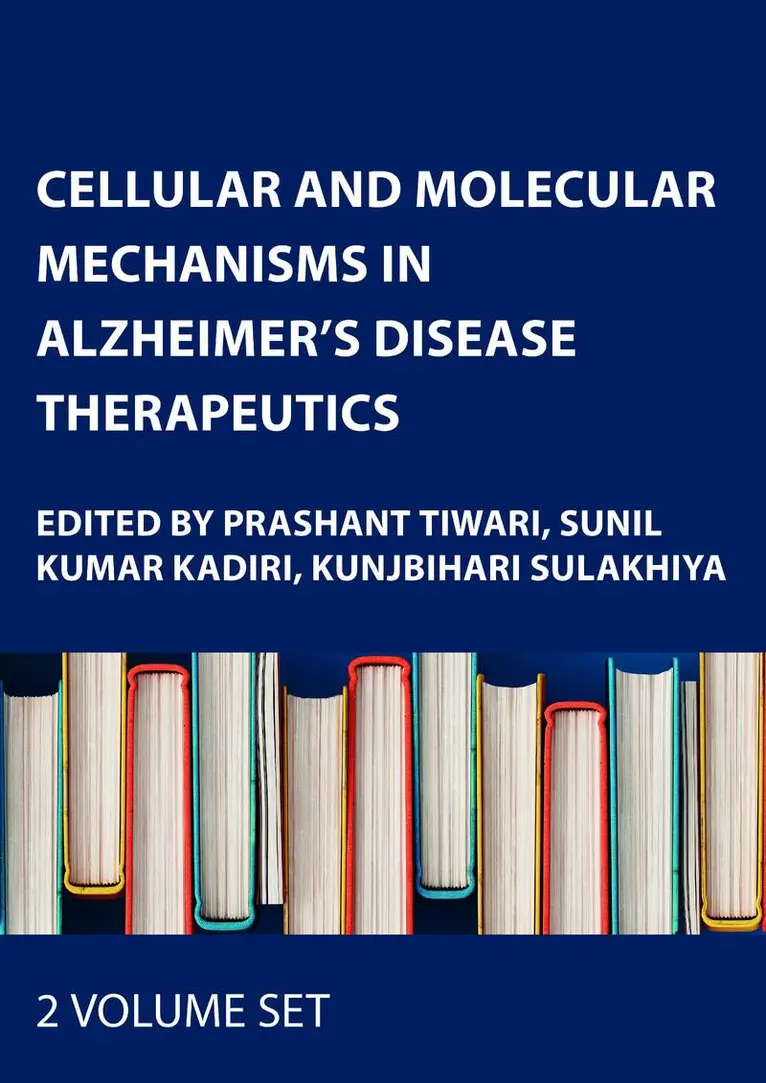
    Cellular and Molecular Mechanisms in Alzheimer’s Disease Therapeutics

    2-volume set

    AvPrashant Tiwari,Sunil Kumar Kadiri

    Apple Academic Press Inc.

    2026

    5 462 kr

    Beställningsvara. Skickas inom 10-15 vardagar. Fri frakt över 249 kr.

    Beskrivning

    Alzheimer’s disease (AD) stands as a profound and growing global health concern, characterized by progressive neurodegeneration and cognitive decline. As research into the underlying causes of AD advances, it becomes clear that a deeper understanding of its molecular mechanisms is crucial for the development of effective therapeutic interventions. This new two-volume set, Cellular and Molecular Mechanism in Alzheimer’s Disease Therapeutics, presents a detailed exploration of the cellular and molecular processes that drive the onset and progression of Alzheimer’s disease. The volume brings together leading experts who offer insights into the intricate cellular and molecular pathways involved in AD pathology as well as potential therapeutic targets and innovative treatment strategies.Volume 1: Cellular Mechanism in Alzheimer’s Disease Therapeutics presents a detailed and up-to-date exploration of the cellular processes involved in AD, with an emphasis on their implications for therapeutic interventions. The book offers a comprehensive understanding of how various cellular mechanisms, such as synaptic dysfunction, neuroinflammation, mitochondrial impairment, and protein aggregation, contribute to the pathology of disease. Topics include blood-brain barrier dysfunction in AD, personalized medicine approaches based on genetic profiling, microRNAs in the management of disease, and more.Volume 2: Molecular Mechanism in Alzheimer’s Disease Therapeutics provides a comprehensive understanding of the disease at a molecular level, from the misfolding and aggregation of amyloid-beta and tau proteins to the disruptions in cellular homeostasis, mitochondrial dysfunction, and neuroinflammation. The volume presents some emerging tools and novel therapeutics and also discusses pharmacological modulation of neurodegenerative disorders, behavioral intervention and cognitive training in AD management, customizing therapies to individual genetic and molecular characteristics, ethical considerations in clinical trials and research, international efforts in AD research and treatment, and more. This volume bridges the gap between molecular research and therapeutic applications, shedding light on the latest findings related to disease mechanisms, such as oxidative stress, synaptic alterations, and the role of neuroinflammatory pathways.Unlike other texts, these two volumes integrate the latest research on biomarkers, drug development, and innovative treatment strategies, offering a comprehensive and up-to-date resource. The unique focus on both fundamental science and practical therapeutic applications makes this two-volume set an invaluable guide for researchers, clinicians, and students aiming to advance their understanding and treatment of disease. By focusing on the cellular and molecular insights into this disease, these volumes pave the way for inspiring novel therapeutic approaches that address the root causes of neurodegeneration.

    Produktinformation

    • Märke:Apple Academic Press Inc.
    • Utgivningsdatum:2026-08-17
    • Höjd:156 x 234 x undefined mm
    • Vikt:1 570 g
    • Språk:Engelska
    • Antal sidor:764
    • Förlag:Apple Academic Press Inc.
    • EAN:9781779641762

    Utforska kategorier

    • Fysiologi inom Medicin
    • Farmakologi inom Medicin
    • Alzheimer, demens inom Medicin

    Mer om författaren

    Prashant Tiwari, PhD, is an Associate Professor in the Department of Pharmacology at the College of Pharmaceutical Sciences, Dayananda Sagar University, Bengaluru, India. He has over a decade of experience in the field of teaching and research related to pharmacology. His expertise includes drug screening, method validation for brain-targeted drug delivery, drug-induced dyskinesia revalidation, and the neuroprotective effects of benzimidazole derivatives. His research has explored the dopaminergic pathway, prolactin inhibition, and neuroprotection, with notable studies on nanoemulsions containing Lepidium sativum oil for Parkinson’s disease and Muntingia calabura leaf extract for Alzheimer’s disease. For his outstanding work, Dr. Tiwari received the Dr. P. D. Patil National Award for Best Thesis in Pharmaceutical Sciences (2022). In addition to his research, Dr. Tiwari has authored five books, edited five books, and co-authored six book chapters. He has filed seven patents, two of which have been granted. He organized a national e-seminar on targeted drug delivery against neurodegenerative diseases, sponsored by the Department of Biotechnology (DBT), Government of India. Dr. Tiwari has been honored with various awards as well. He supervises five PhD students and has guided nine MPharm students. He is also an active member of professional bodies and serves as a peer reviewer for international journals. His research interests span neurodegenerative disorders, drug interactions, pharmacokinetics/pharmacodynamics, and metabolic disorders. He holds a PhD from Siksha O Anusandhan University, Bhubaneswar, and was a fellow of the Indian Council of Medical Research (ICMR), New Delhi, India.Sunil Kumar Kadiri, PhD, is currently working as a Professor in the College of Pharmaceutical Sciences at Dayananda Sagar University, Bengaluru, Karnataka, India. He has 16 years of experience in teaching. His area of interest is neuropharmacology and drug interactions. He has over 50 research and review publications to his credit as well as four books and three patents. He is a professional member of the Association of Pharmaceutical Teachers of India. Dr. Kadiri completed his PhD in Pharmaceutical Sciences at JNTU Hyderabad, Telangana, India.Kunjbihari Sulakhiya, PhD, is working as an Assistant Professor at the Department of Pharmacy, Indira Gandhi National Tribal University, Amarkantak, Madhya Pradesh, India. He has published over 20 research papers, seven review articles, and more than 10 book chapters. He has received 13 awards and fellowships, including six travel awards to present his research papers at international conferences in the USA, Canada, Japan, France, and Macau. He is a member of various professional societies, including the Indian Academy of Neurosciences, the International Society for Neurochemistry, Asia Pacific Society for Neurochemistry, Association of Pharmaceutical Teachers of India, etc. He is serving as an editorial member and reviewer for various reputed journals. His area of research is pre-clinical research in the field of neuropharmacology. He earned his MPharm and PhD in Pharmacology and Toxicology at the National Institute of Pharmaceutical Education and Research (NIPER), Guwahati, Assam, India.

    Innehållsförteckning

    • Volume 1: Cellular Mechanisms in Alzheimer’s Disease Therapeutics Preface 1. Exploring the Cellular and Molecular Mechanisms, Pathogenesis, Etiology, and Complications of Alzheimer’s Disease 2. Epigenetic Alterations in Alzheimer’s Disease: DNA Methylation and Histone Modifications with Non-Coding DNA Involvement 3. Neuroinflammation and Role of Peripheral Immune Cells in Alzheimer’s Disease 4. Blood-Brain Barrier Dysfunction: Relevance to Alzheimer’s Disease Pathology and Challenges and Opportunities in Drug Discovery 5. Interdisciplinary Methods: The Integration of Neurology, Genetics, and Systems Biology Approaches to Comprehend Alzheimer’s Disease 6. Personalized Medicine Approaches Based on Genetic Profiling in the Treatment of Alzheimer’s Disease 7. Integration of Biomarker Data into Clinical Trials and Personalized Treatment Plans 8. Role of Oxidative Stress and Mitochondrial Dysfunction in Progression of Alzheimer’s Disease and Its Emerging Phyto-Therapeutic and Nanomedicinal Interventions 9. MicroRNAs in the Management of Alzheimer’s Disease: Significant Approaches as Diagnostic Biomarkers 10. Cellular Symphony: Harmonizing Therapeutic Approaches for Alzheimer’s Disease Through Targeted Intervention Strategies 11. Exploring the Role of the Gene Mutation in the Management of Alzheimer’s Disease Index Volume 2: Molecular Mechanism in Alzheimer’s Disease Therapeutics Preface 1. Investigating the Role of Amyloid Beta and Tau Peptides in Alzheimer’s Histopathological Brain Lesions 2. Advances in Comprehending Cholinergic System and Emerging Tools to Novel Therapeutics 3. Current Progress in Mono Amino Oxidase Inhibitors in Anti-Alzheimer’s Therapy: An Understanding into Therapeutic Prospects of Inhibitors 4. Assimilation of Transgenic Modeling Methods of Alzheimer’s Disease: Mechanism of Neurodegeneration 5. Methods for Tailoring Medicines for Alzheimer’s Disease Treatment: Customizing Therapies According to Individual Genetic and Molecular Characteristics 6. Ethical Considerations in Field of Alzheimer’s Research and Overcoming Obstacles in Clinical Trials and Ethical of Research 7. International Efforts in Alzheimer’s Research and Treatment: A Worldwide Outlook on Alzheimer’s Disease 8. Role of Neurotrophins in Alzheimer’s Disease Pathogenesis to Develop Novel Therapeutics 9. Behavioral Intervention and Cognitive Training in Disease Management in Alzheimer’s Disease 10. Therapeutic Potential of NMDA Receptors in Alzheimer’s Disease 11. Unrevealing the Insights of NMDA Receptors in Neurodegenerative Disorders 12. Pharmacological Modulation of Neurodegenerative Disorders: Therapeutic Potential and Persisting Obstacles Index