Visar resultat för..."bröto"
Sökningen "De bröto bygd. Per Wikberg" gav inga träffar.694 kr
Skickas inom 10-15 vardagar
568 kr
Skickas inom 10-15 vardagar
2 182 kr
Skickas inom 10-15 vardagar
764 kr
Skickas inom 10-15 vardagar
2 420 kr
Skickas inom 10-15 vardagar
2 420 kr
Skickas inom 10-15 vardagar
877 kr
Skickas inom 10-15 vardagar
649 kr
Läs direkt efter köp
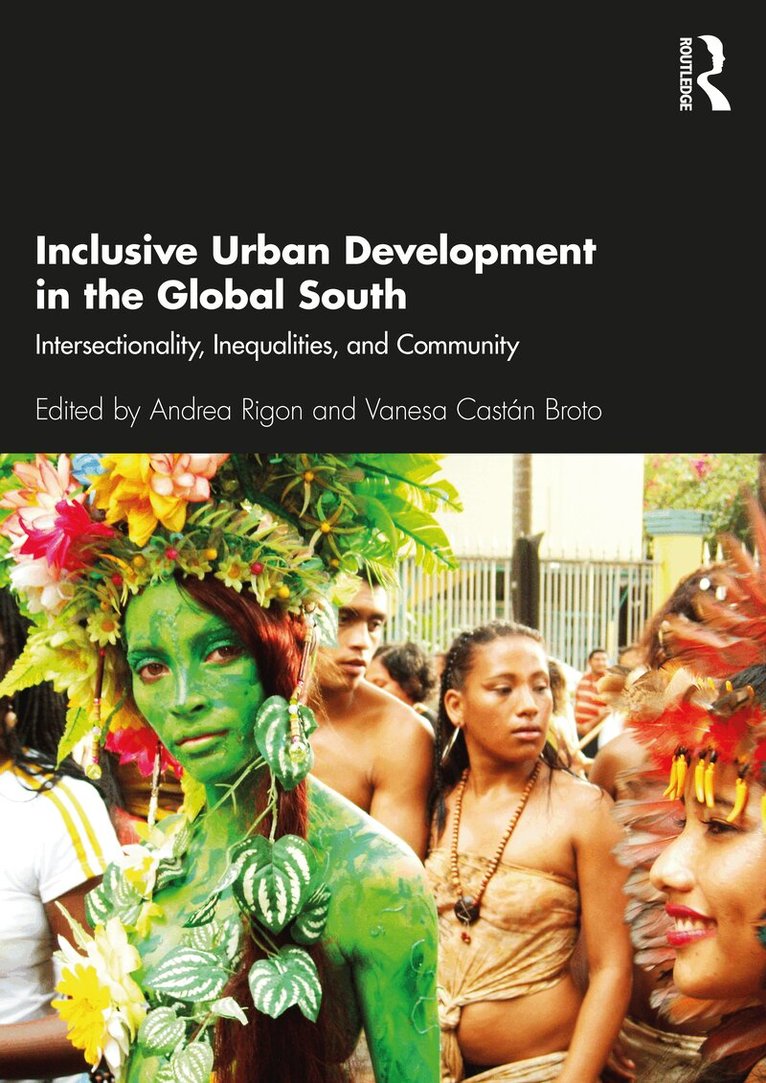
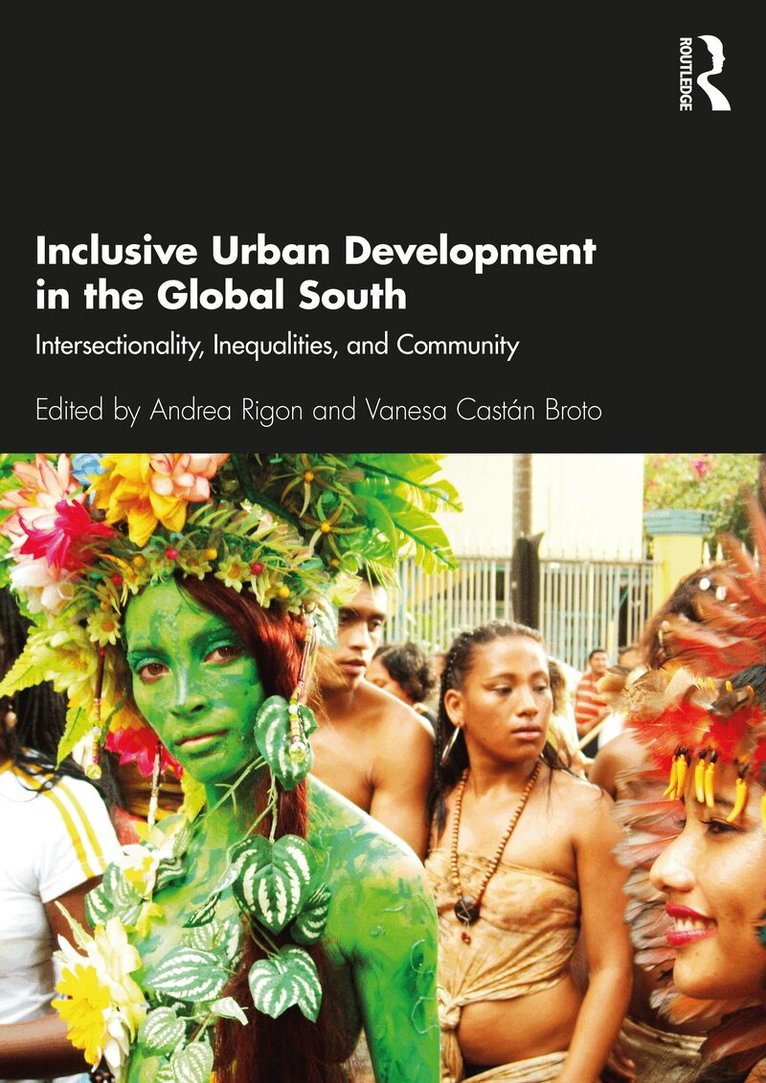
Inclusive Urban Development in the Global South emphasizes the importance of the neighbourhood in urban development planning, with case studies aimed at transforming current intervention practices towards more inclusive and just means of engagement with individuals and communities. The chapters explore how diversity of gender, class, race and ethnicity, citizenship status, age, ability, and sexuality is taken (or not taken) into account and approached in the planning and implementation of development policy and interventions in poor urban areas. The book employs a practical perspective on the deployment of theoretical critiques of intersectionality and diversity in development practice through case studies examining issues such as water and sanitation planning in Dhaka, indigenous rights to the city in Bolivia, post-colonial planning in Hong Kong, land reform in Zimbabwe, and many more. The book focuses on radical alternatives with the potential to foster urban transformations for planning and development communities working around the world.
673 kr
Läs direkt efter köp
Inclusive Urban Development in the Global South emphasizes the importance of the neighbourhood in urban development planning, with case studies aimed at transforming current intervention practices towards more inclusive and just means of engagement with individuals and communities. The chapters explore how diversity of gender, class, race and ethnicity, citizenship status, age, ability, and sexuality is taken (or not taken) into account and approached in the planning and implementation of development policy and interventions in poor urban areas. The book employs a practical perspective on the deployment of theoretical critiques of intersectionality and diversity in development practice through case studies examining issues such as water and sanitation planning in Dhaka, indigenous rights to the city in Bolivia, post-colonial planning in Hong Kong, land reform in Zimbabwe, and many more. The book focuses on radical alternatives with the potential to foster urban transformations for planning and development communities working around the world.
1 491 kr
Skickas inom 7-10 vardagar
992 kr
Läs direkt efter köp
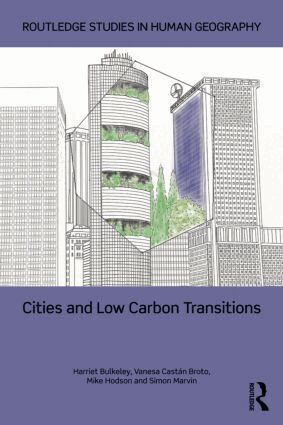
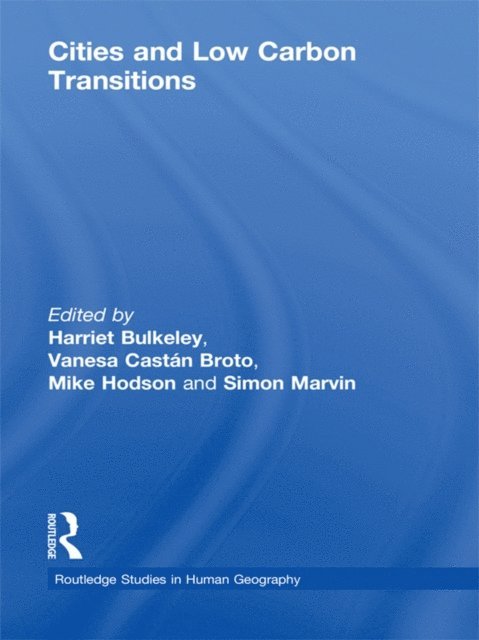
Current societies face unprecedented risks and challenges connected to climate change. Addressing them will require fundamental transformations in the infrastructures that sustain everyday life, such as energy, water, waste and mobility. A transition to a ‘low carbon’ future implies a large scale reorganisation in the way societies produce and use energy. Cities are critical in this transition because they concentrate social and economic activities that produce climate change related emissions. At the same time, cities are increasingly recognised as sources of opportunities for climate change mitigation. Whether, how and why low carbon transitions in urban systems take place in response to climate change will therefore be decisive for the success of global mitigation efforts. As a result, climate change increasingly features as a critical issue in the management of urban infrastructure and in urbanisation policies.
Cities and Low Carbon Transitions presents a ground-breaking analysis of the role of cities in low carbon socio-technical transitions. Insights from the fields of urban studies and technological transitions are combined to examine how, why and with what implications cities bring about low carbon transitions. The book outlines the key concepts underpinning theories of socio-technical transition and assesses its potential strengths and limits for understanding the social and technological responses to climate change that are emerging in cities. It draws on a diverse range of examples including world cities, ordinary cities and transition towns, from North America, Europe, South Africa and China, to provide evidence that expectations, aspirations and plans to undertake purposive socio-technical transitions are emerging in different urban contexts.
This collection adds to existing literature on cities and energy transitions and introduces critical questions about power and social interests, lock-in and development trajectories, social equity and economic development, and socio-technical change in cities. The book addresses academics, policy makers, practitioners and researchers interested in the development of systemic responses in cities to curb climate change.
992 kr
Läs direkt efter köp
Current societies face unprecedented risks and challenges connected to climate change. Addressing them will require fundamental transformations in the infrastructures that sustain everyday life, such as energy, water, waste and mobility. A transition to a ‘low carbon’ future implies a large scale reorganisation in the way societies produce and use energy. Cities are critical in this transition because they concentrate social and economic activities that produce climate change related emissions. At the same time, cities are increasingly recognised as sources of opportunities for climate change mitigation. Whether, how and why low carbon transitions in urban systems take place in response to climate change will therefore be decisive for the success of global mitigation efforts. As a result, climate change increasingly features as a critical issue in the management of urban infrastructure and in urbanisation policies.
Cities and Low Carbon Transitions presents a ground-breaking analysis of the role of cities in low carbon socio-technical transitions. Insights from the fields of urban studies and technological transitions are combined to examine how, why and with what implications cities bring about low carbon transitions. The book outlines the key concepts underpinning theories of socio-technical transition and assesses its potential strengths and limits for understanding the social and technological responses to climate change that are emerging in cities. It draws on a diverse range of examples including world cities, ordinary cities and transition towns, from North America, Europe, South Africa and China, to provide evidence that expectations, aspirations and plans to undertake purposive socio-technical transitions are emerging in different urban contexts.
This collection adds to existing literature on cities and energy transitions and introduces critical questions about power and social interests, lock-in and development trajectories, social equity and economic development, and socio-technical change in cities. The book addresses academics, policy makers, practitioners and researchers interested in the development of systemic responses in cities to curb climate change.
2 182 kr
Skickas inom 10-15 vardagar
694 kr
Skickas inom 10-15 vardagar
908 kr
Läs direkt efter köp
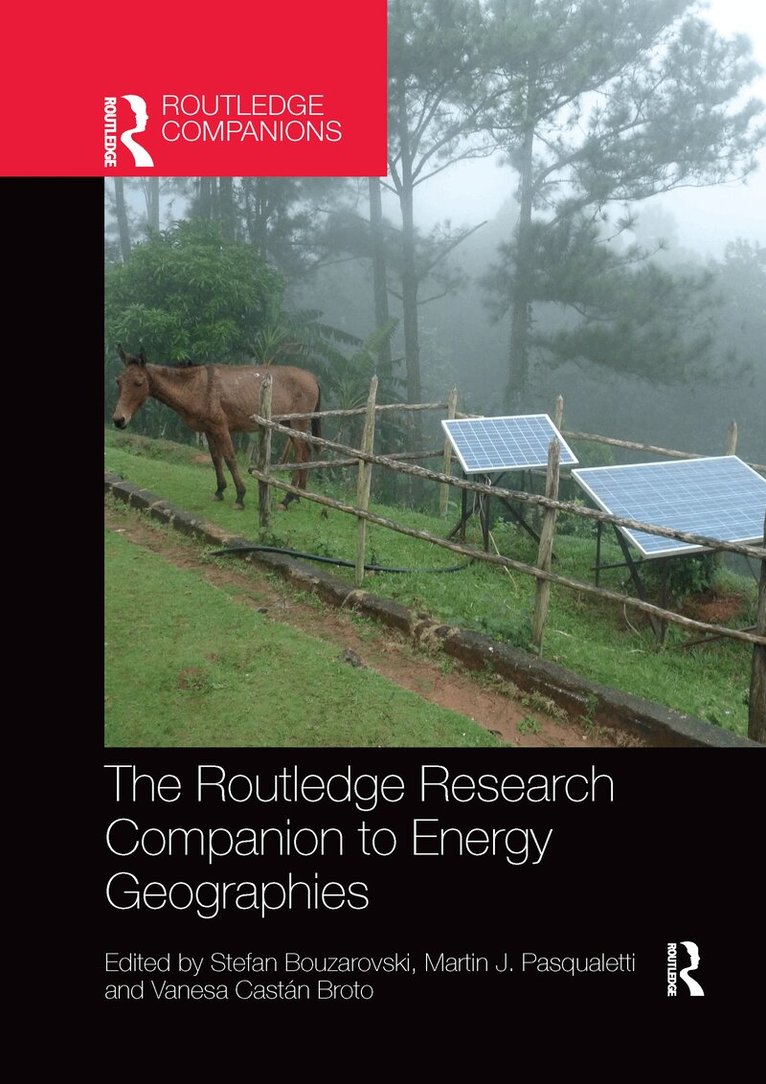
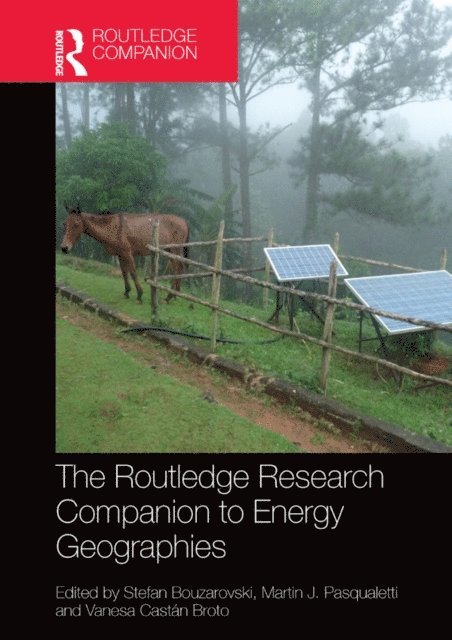
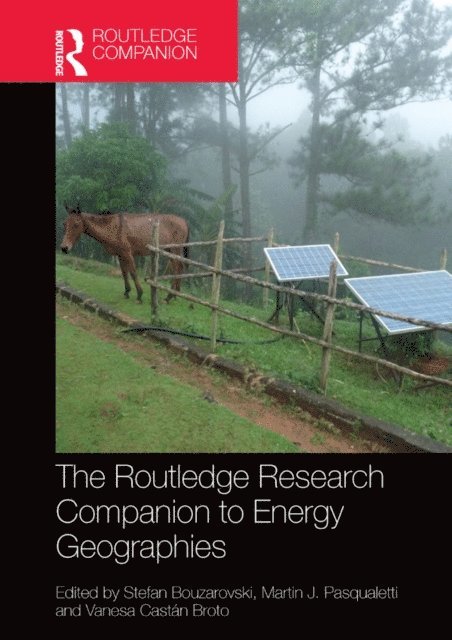
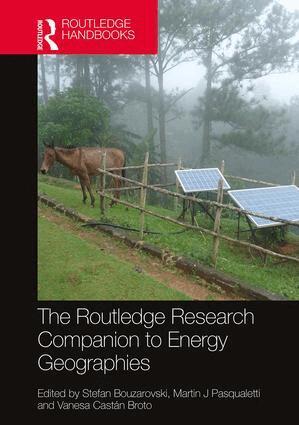
Energy has become a central concern of many strands of geographical inquiry, from global climate change to the effects of energy decisions on our lives. However, many aspects of the ‘black box’ of relationships at the energy-society interface remain unopened, especially in terms of the spatial underpinnings of energy production and consumption within nations, cities and regions. Debates focusing on the location and nature of energy flows frequently fail to consider the multiple geographical networks that illustrate and explain the distribution of fuels and services around the world.
Providing an integrated perspective on the complex interdependencies between energy and geography, The Routledge Research Companion to Energy Geographies offers a timely conceptual framework to study the multiple facets of energy geography, including security, space and place, planning, environmental science, economics and political science. Illustrating how a geographic approach towards energy can aid decision-making pathways in the domains of social justice and environment, this book provides insights that will help move the international community toward greater cooperation, stability, and sustainability.
908 kr
Läs direkt efter köp
Energy has become a central concern of many strands of geographical inquiry, from global climate change to the effects of energy decisions on our lives. However, many aspects of the ‘black box’ of relationships at the energy-society interface remain unopened, especially in terms of the spatial underpinnings of energy production and consumption within nations, cities and regions. Debates focusing on the location and nature of energy flows frequently fail to consider the multiple geographical networks that illustrate and explain the distribution of fuels and services around the world.
Providing an integrated perspective on the complex interdependencies between energy and geography, The Routledge Research Companion to Energy Geographies offers a timely conceptual framework to study the multiple facets of energy geography, including security, space and place, planning, environmental science, economics and political science. Illustrating how a geographic approach towards energy can aid decision-making pathways in the domains of social justice and environment, this book provides insights that will help move the international community toward greater cooperation, stability, and sustainability.
824 kr
Läs direkt efter köp
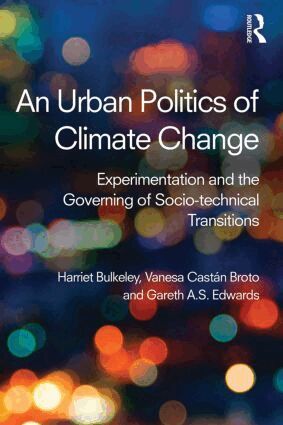
The confluence of global climate change, growing levels of energy consumption and rapid urbanization has led the international policy community to regard urban responses to climate change as ‘an urgent agenda’ (World Bank 2010). The contribution of cities to rising levels of greenhouse gas emissions coupled with concerns about the vulnerability of urban places and communities to the impacts of climate change have led to a relatively recent and rapidly proliferating interest amongst both academic and policy communities in how cities might be able to respond to mitigation and adaptation. Attention has focused on the potential for municipal authorities to develop policy and plans that can address these twin issues, and the challenges of capacity, resource and politics that have been encountered. While this literature has captured some of the essential means through which the urban response to climate change is being forged, is that it has failed to take account of the multiple sites and spaces of climate change response that are emerging in cities ‘off-plan’.
An Urban Politics of Climate Change provides the first account of urban responses to climate change that moves beyond the boundary of municipal institutions to critically examine the governing of climate change in the city as a matter of both public and private authority, and to engage with the ways in which this is bound up with the politics and practices of urban infrastructure. The book draws on cases from multiple cities in both developed and emerging economies to providing new insight into the potential and limitations of urban responses to climate change, as well as new conceptual direction for our understanding of the politics of environmental governance.
824 kr
Läs direkt efter köp
The confluence of global climate change, growing levels of energy consumption and rapid urbanization has led the international policy community to regard urban responses to climate change as ‘an urgent agenda’ (World Bank 2010). The contribution of cities to rising levels of greenhouse gas emissions coupled with concerns about the vulnerability of urban places and communities to the impacts of climate change have led to a relatively recent and rapidly proliferating interest amongst both academic and policy communities in how cities might be able to respond to mitigation and adaptation. Attention has focused on the potential for municipal authorities to develop policy and plans that can address these twin issues, and the challenges of capacity, resource and politics that have been encountered. While this literature has captured some of the essential means through which the urban response to climate change is being forged, is that it has failed to take account of the multiple sites and spaces of climate change response that are emerging in cities ‘off-plan’.
An Urban Politics of Climate Change provides the first account of urban responses to climate change that moves beyond the boundary of municipal institutions to critically examine the governing of climate change in the city as a matter of both public and private authority, and to engage with the ways in which this is bound up with the politics and practices of urban infrastructure. The book draws on cases from multiple cities in both developed and emerging economies to providing new insight into the potential and limitations of urban responses to climate change, as well as new conceptual direction for our understanding of the politics of environmental governance.
790 kr
Läs direkt efter köp
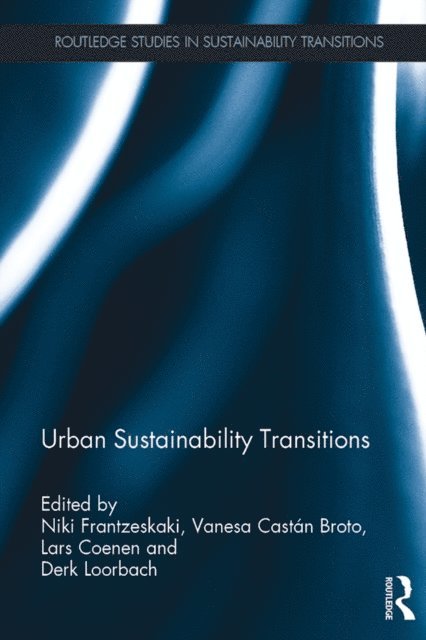
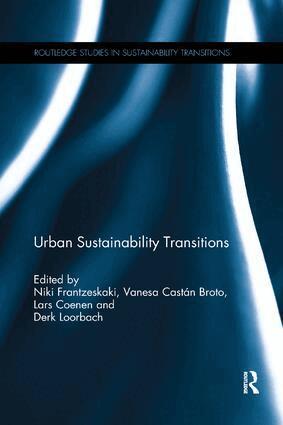
The world’s population is currently undergoing a significant transition towards urbanisation, with the UN expecting that 70% of people globally will live in cities by 2050. Urbanisation has multiple political, cultural, environmental and economic dimensions that profoundly influence social development and innovation. This fundamental long-term transformation will involve the realignment of urban society’s technologies and infrastructures, culture and lifestyles, as well as governance and institutional frameworks. Such structural systemic realignments can be referred to as urban sustainability transitions: fundamental and structural changes in urban systems through which persistent societal challenges are addressed, such as shifts towards urban farming, renewable decentralised energy systems, and social economies.
This book provides new insights into how sustainability transitions unfold in different types of cities across the world and explores possible strategies for governing urban transitions, emphasising the co-evolution of material and institutional transformations in socio-technical and socio-ecological systems. With case studies of mega-cities such as Seoul, Tokyo, New York and Adelaide, medium-sized cities such as Copenhagen, Cape Town and Portland, and nonmetropolitan cities such as Freiburg, Ghent and Brighton, the book provides an opportunity to reflect upon the comparability and transferability of theoretical/conceptual constructs and governance approaches across geographical contexts.
Urban Sustainability Transitions is key reading for students and scholars working in Environmental Sciences, Geography, Urban Studies, Urban Policy and Planning.
790 kr
Läs direkt efter köp
The world’s population is currently undergoing a significant transition towards urbanisation, with the UN expecting that 70% of people globally will live in cities by 2050. Urbanisation has multiple political, cultural, environmental and economic dimensions that profoundly influence social development and innovation. This fundamental long-term transformation will involve the realignment of urban society’s technologies and infrastructures, culture and lifestyles, as well as governance and institutional frameworks. Such structural systemic realignments can be referred to as urban sustainability transitions: fundamental and structural changes in urban systems through which persistent societal challenges are addressed, such as shifts towards urban farming, renewable decentralised energy systems, and social economies.
This book provides new insights into how sustainability transitions unfold in different types of cities across the world and explores possible strategies for governing urban transitions, emphasising the co-evolution of material and institutional transformations in socio-technical and socio-ecological systems. With case studies of mega-cities such as Seoul, Tokyo, New York and Adelaide, medium-sized cities such as Copenhagen, Cape Town and Portland, and nonmetropolitan cities such as Freiburg, Ghent and Brighton, the book provides an opportunity to reflect upon the comparability and transferability of theoretical/conceptual constructs and governance approaches across geographical contexts.
Urban Sustainability Transitions is key reading for students and scholars working in Environmental Sciences, Geography, Urban Studies, Urban Policy and Planning.
3 655 kr
Skickas inom 10-15 vardagar
1 186 kr
Skickas inom 10-15 vardagar
465 kr
Skickas inom 10-15 vardagar
26 kr
Läs direkt efter köp
27 kr
Läs direkt efter köp
1 295 kr
Skickas inom 10-15 vardagar
1 733 kr
Läs direkt efter köp
1 295 kr
Skickas inom 10-15 vardagar
544 kr
Skickas inom 10-15 vardagar
436 kr
Skickas inom 10-15 vardagar