Visar resultat för..."Uppror Alfred"
Sökningen "Uppror Alfred Lindén" gav inga träffar.20 produkter
20 produkter
283 kr
Skickas inom 10-15 vardagar
1 043 kr
Skickas inom 10-15 vardagar
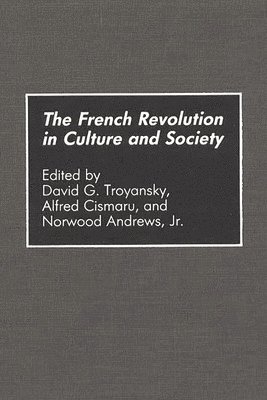
This volume examines the issue of the timing of cultural change, problems of Revolutionary anticipations and reverberations, and the relationship between culture, politics, and society. Individual essays combine both old and new approaches, ranging from textual analysis to the study of local judicial records, from the psychohistorical to the demographic. But they all demonstrate the usefulness of linking social and cultural history, broadly conceived, and of interdisciplinary approaches to the study of events.Part One addresses directly the creation of French Revolutionary culture. The contributors describe the physical act of dismantling and redefining the culture of the Ancien Regime for revolutionary purposes, new conceptions of time, and generation relations in Revolutionary rhetoric and law. The second part identifies key cultural ingredients from the distant past. It reminds us of the extent to which the Revolution employed the huge storehouse of Western culture to create something original. Because the creation of a democratic culture implies a crisis of consciousness, Part Three brings together a range of investigations into the question of cultural crisis. Three essays see the Revolutionary era as engendering psychological dislocation. In Part Four, social historians reveal the variety of approaches they have taken in trying to understand eighteenth century France. The varied contributions exploit the sources that have become the stock-in-trade of modern social history. Poverty, crime, and population are among the leading topics in current historiography, but military and political institutions are also examined in new ways. This edited collection provides new insights into a critical period of world history and will be welcomed by all scholars of the French Revolution and its aftermath.
988 kr
Skickas inom 10-15 vardagar
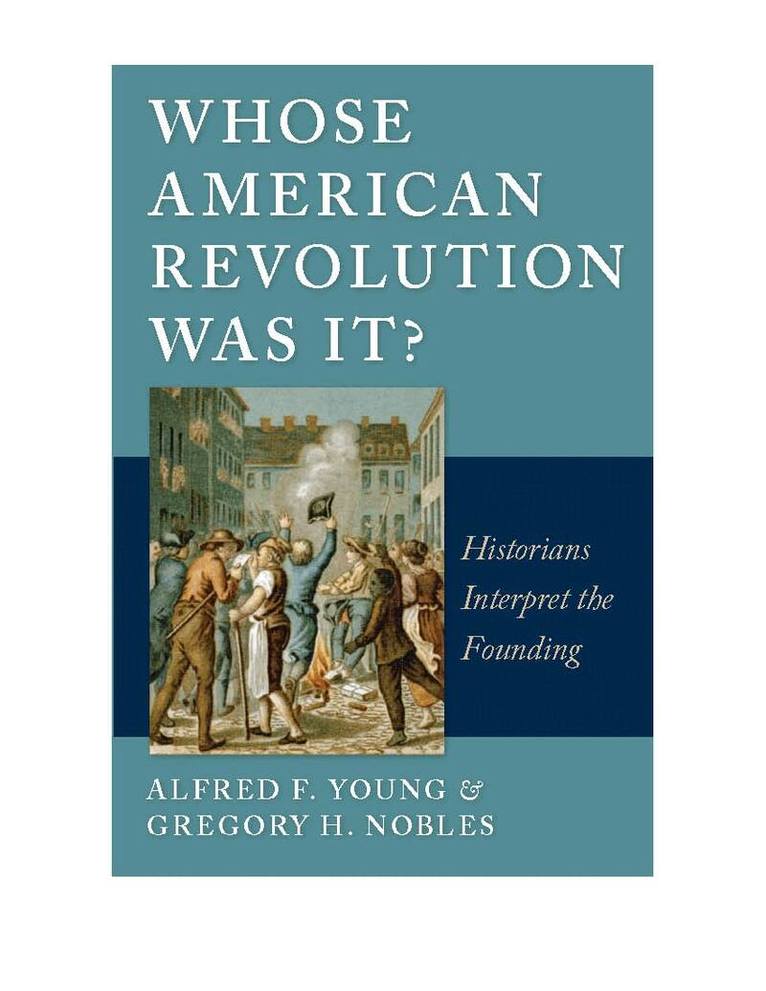
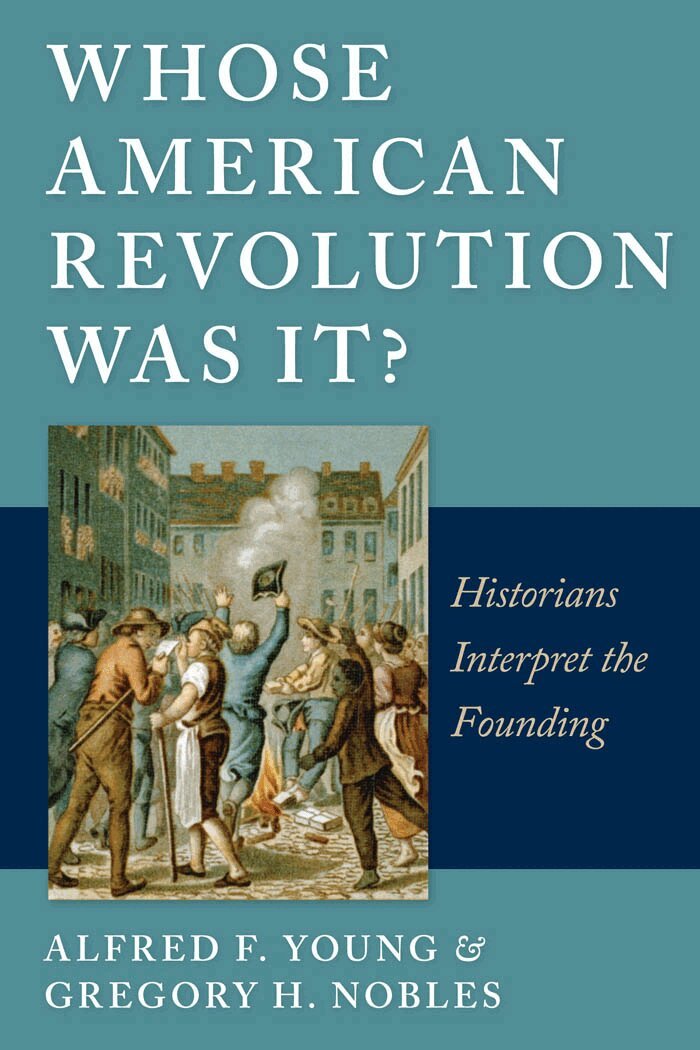
The meaning of the American Revolution has always been a much-contested question, and asking it is particularly important today: the standard, easily digested narrative puts the Founding Fathers at the head of a unified movement, failing to acknowledge the deep divisions in Revolutionary-era society and the many different historical interpretations that have followed. Whose American Revolution Was It? speaks both to the ways diverse groups of Americans who lived through the Revolution might have answered that question and to the different ways historians through the decades have interpreted the Revolution for our own time. As the only volume to offer an accessible and sweeping discussion of the period's historiography and its historians, Whose American Revolution Was It? is an essential reference for anyone studying early American history. The first section, by Alfred F. Young, begins in 1925 with historian J. Franklin Jameson and takes the reader through the successive schools of interpretation up to the 1990s. The second section, by Gregory H. Nobles, focuses primarily on the ways present-day historians have expanded our understanding of the broader social history of the Revolution, bringing onto the stage farmers and artisans, who made up the majority of white men, as well as African Americans, Native Americans, and women of all social classes.
416 kr
Skickas inom 5-8 vardagar
The meaning of the American Revolution has always been a much-contested question, and asking it is particularly important today: the standard, easily digested narrative puts the Founding Fathers at the head of a unified movement, failing to acknowledge the deep divisions in Revolutionary-era society and the many different historical interpretations that have followed. Whose American Revolution Was It? speaks both to the ways diverse groups of Americans who lived through the Revolution might have answered that question and to the different ways historians through the decades have interpreted the Revolution for our own time. As the only volume to offer an accessible and sweeping discussion of the period's historiography and its historians, Whose American Revolution Was It? is an essential reference for anyone studying early American history. The first section, by Alfred F. Young, begins in 1925 with historian J. Franklin Jameson and takes the reader through the successive schools of interpretation up to the 1990s. The second section, by Gregory H. Nobles, focuses primarily on the ways present-day historians have expanded our understanding of the broader social history of the Revolution, bringing onto the stage farmers and artisans, who made up the majority of white men, as well as African Americans, Native Americans, and women of all social classes.
472 kr
Tillfälligt slut
365 kr
Tillfälligt slut
391 kr
Skickas inom 5-8 vardagar
278 kr
Skickas inom 5-8 vardagar
418 kr
Skickas inom 5-8 vardagar
297 kr
Skickas inom 5-8 vardagar
Histoire Générale Du Ive Siècle À Nos Jours. La Révolution Française, 1789-1799
Häftad, Franska, 2013
586 kr
Skickas inom 5-8 vardagar
314 kr
Skickas inom 5-8 vardagar
151 kr
Skickas inom 5-8 vardagar
151 kr
Skickas inom 5-8 vardagar
173 kr
Skickas inom 5-8 vardagar
461 kr
Skickas inom 5-8 vardagar
348 kr
Skickas inom 5-8 vardagar
511 kr
Skickas inom 5-8 vardagar
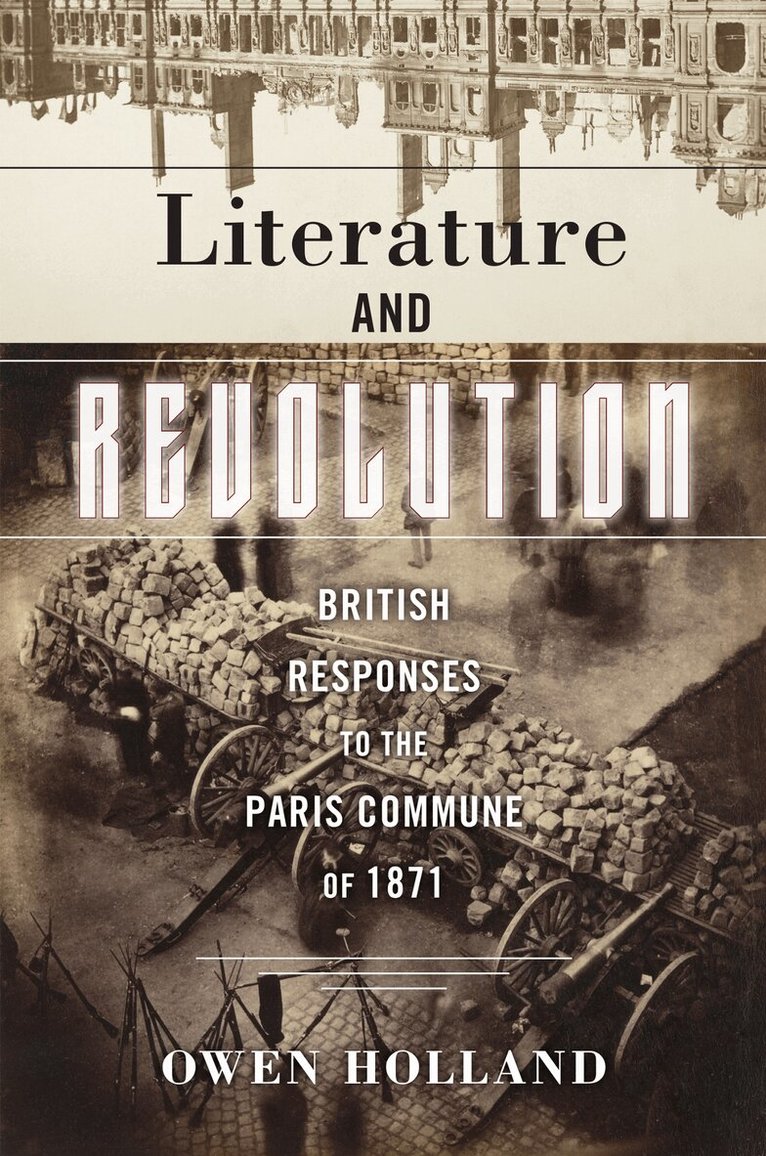
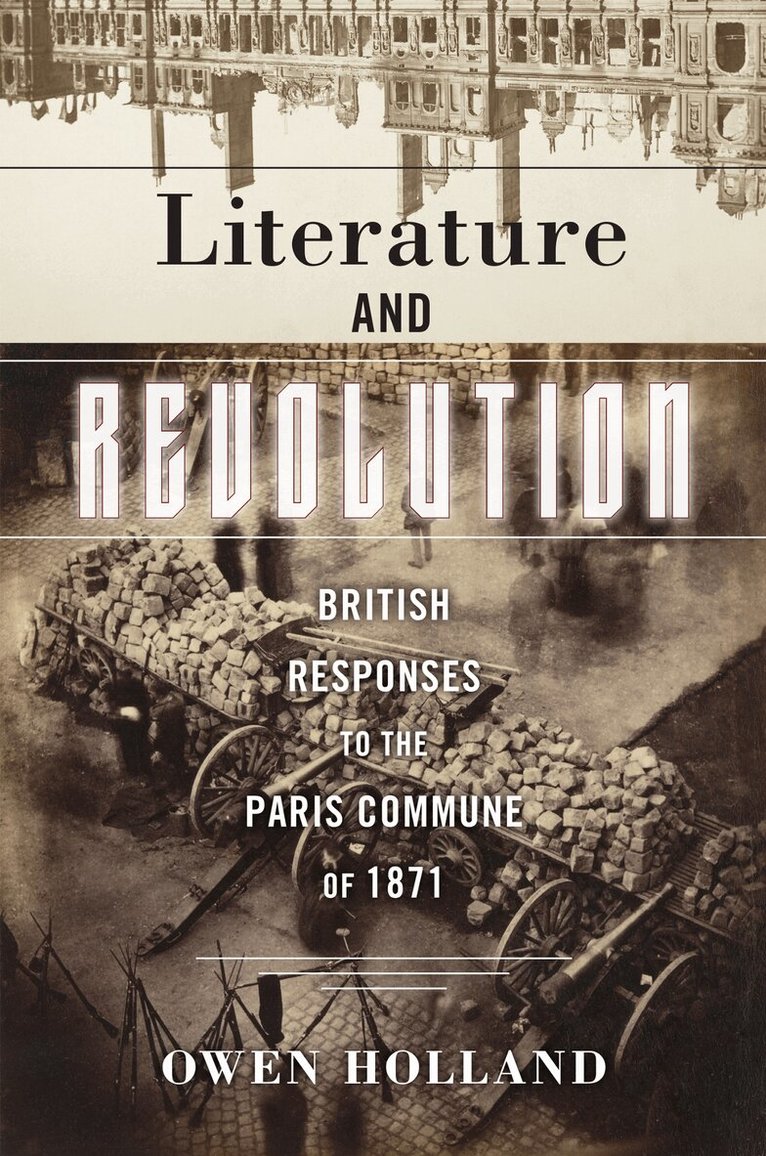
Between March and May 1871, the Parisian Communards fought for a revolutionary alternative to the status quo grounded in a vision of internationalism, radical democracy and economic justice for the working masses that cut across national borders. The eventual defeat and bloody suppression of the Commune resonated far beyond Paris. In Britain, the Commune provoked widespread and fierce condemnation, while its defenders constituted a small, but vocal, minority. The Commune evoked long-standing fears about the continental 'spectre' of revolution, not least because the Communards' seizure of power represented an embryonic alternative to the bourgeois social order. This book examines how a heterogeneous group of authors in Britain responded to the Commune. In doing so, it provides the first full-length critical study of the reception and representation of the Commune in Britain during the closing decades of the nineteenth century, showing how discussions of the Commune functioned as a screen to project hope and fear, serving as a warning for some and an example to others. Writers considered in the book include John Ruskin, Edward Bulwer-Lytton, Eliza Lynn Linton, Mary Elizabeth Braddon, Anne Thackeray Ritchie, Margaret Oliphant, George Gissing, Henry James, William Morris, Alfred Austin and H.G. Wells. As the book shows, many, but not all, of these writers responded to the Commune with literary strategies that sought to stabilize bourgeois subjectivity in the wake of the traumatic shock of a revolutionary event. The book extends critical understanding of the Commune's cultural afterlives and explores the relationship between literature and revolution.
1 837 kr
Skickas inom 5-8 vardagar
Between March and May 1871, the Parisian Communards fought for a revolutionary alternative to the status quo grounded in a vision of internationalism, radical democracy and economic justice for the working masses that cut across national borders. The eventual defeat and bloody suppression of the Commune resonated far beyond Paris. In Britain, the Commune provoked widespread and fierce condemnation, while its defenders constituted a small, but vocal, minority. The Commune evoked long-standing fears about the continental 'spectre' of revolution, not least because the Communards' seizure of power represented an embryonic alternative to the bourgeois social order. This book examines how a heterogeneous group of authors in Britain responded to the Commune. In doing so, it provides the first full-length critical study of the reception and representation of the Commune in Britain during the closing decades of the nineteenth century, showing how discussions of the Commune functioned as a screen to project hope and fear, serving as a warning for some and an example to others. Writers considered in the book include John Ruskin, Edward Bulwer-Lytton, Eliza Lynn Linton, Mary Elizabeth Braddon, Anne Thackeray Ritchie, Margaret Oliphant, George Gissing, Henry James, William Morris, Alfred Austin and H.G. Wells. As the book shows, many, but not all, of these writers responded to the Commune with literary strategies that sought to stabilize bourgeois subjectivity in the wake of the traumatic shock of a revolutionary event. The book extends critical understanding of the Commune's cultural afterlives and explores the relationship between literature and revolution.
274 kr
Skickas inom 3-6 vardagar
Letar du efter digitala böcker?
E-böcker och ljudböcker handlar du än så länge på vår tidigare sajt.