Academy of Rehabilitation Psychology Series – serie
Visar alla böcker i serien Academy of Rehabilitation Psychology Series. Handla med fri frakt och snabb leverans.
10 produkter
10 produkter
837 kr
Skickas inom 5-8 vardagar
The primary focus of critical care is doing everything necessary to save lives. With so many things to manage, it comes as no surprise that the complex, multi-layered issues faced by critical illness survivors cannot be managed by intensive care specialists alone. Critical Care Psychology and Rehabilitation provides insight into holistic care of survivors. Written by leading experts, the book builds upon current literature and illustrates the benefits of integrating psychological and rehabilitation techniques throughout the care continuum. Chapters include summaries of treatment techniques, developments in intensive care settings, support and training for staff, and opportunities for further research. Although all chapters are relevant to contemporary psychology practice, the book is written in a style that is accessible to a wide audience of physicians, nurses, and other health professionals. Critical Care Psychology and Rehabilitation offers tools to improve the quality of intensive and post intensive care, with positive outcomes for patients, families, and caregivers.
482 kr
Skickas inom 5-8 vardagar
This is the first book devoted to the topic of validity assessment in rehabilitation contexts and is written by two board certified psychologists with extensive experience in clinical neuropsychology and rehabilitation psychology. This book describes (a) why validity assessment is important, (b) validity assessment methods, and (c) special topics related to validity assessment in rehabilitation psychology (e.g., managing invalid presentations, mild traumatic brain injury, forensic and disability applications, ethical considerations). Although primarily intended for the rehabilitation psychologist who is new to the topic of validity assessment, this book is also designed to be helpful to other rehabilitation specialists, students and trainees, and psychologists experienced in validity assessment, including neuropsychologists.
Understanding the Experience of Disability
Perspectives from Social and Rehabilitation Psychology
Häftad, Engelska, 2019
670 kr
Skickas inom 5-8 vardagar
Rehabilitation psychologists have long argued that situational constraints (e.g., missing ramps, lack of Braille signage, nondisabled peoples' attitudes) create greater social barriers and behavioral restrictions for people with disabilities (PWDs) than do the disabilities themselves. In other words, as social psychologist Kurt Lewin argued, situational factors, including the perceptions and actions of other people, often have greater impact on the experience of disability than do the personal qualities of PWDs themselves. Thus, the experience of disability is shaped by a variety of psychosocial forces and factors, some of which enhance while others hinder daily living. For adequate understanding and to plan constructive interventions, psychological science must attend to how the disabled person and the situation interact with one another. Understanding the Experience of Disability: Perspectives from Social and Rehabilitation Psychology is an edited book containing chapters written by social and rehabilitation psychologists who study how social psychological theory can inform our understanding of the experience of disability and rehabilitation. Chapters are arranged topically into four sections: Established areas of inquiry (e.g., stigma, social biases, stereotyping), mainstream topics (e.g., women, culture and race, aging), emerging issues (e.g., implicit attitudes, family and parenting issues, positive psychology), and issues of injustice, advocacy, and social policy (e.g., perceived injustice, disability advocacy, policy implications). Besides informing advanced undergraduate and graduate students and professional (researchers, practitioners) audiences, the book will help families and caregivers of PWDs, policy makers, and PWDs themselves, understand the social psychological processes linked to disability.
645 kr
Skickas inom 5-8 vardagar
This book takes a nonpathological approach to disability, viewing it as part of diversity rather than as deficit. The opening chapters introduce basic knowledge of teaching in disability communities, covering attitudes and behaviors that may be difficult for instructors to relate to. Next, the book delves into the three activities sections that increase in difficulty over the course of the book. The activities highlight barriers and psychosocial impediments that hamper progress in disability communities. Designed by an expert educator and clinician who is also an insider in the disability community, each of the 34 activities translate well in classroom environments or as homework, and each can be done individually or in group settings. All activities include a list of required materials, time expectation, goal setting criteria, possible outcomes, and talking and debriefing points for reflection, thereby facilitating effective planning and execution. The activities also recommend possible modifications to adjust the difficulty of the activities. This flexibility makes this a valuable resource for a wider audience of expertise and settings, ranging from introductory to sophisticated readers and users, students and non-students, in classrooms, in workshops, or in other surroundings.Lastly, the book concludes with a chapter on accessing outcomes, with six measures for evaluating knowledge and skill. Teaching Disability is a well-rounded, highly applicable tool for instructors and students in the disability community.
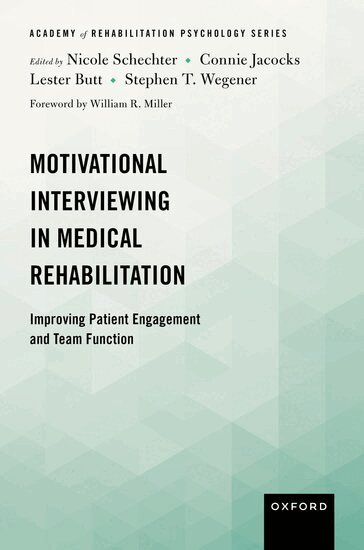
Motivational Interviewing in Medical Rehabilitation
Improving Patient Engagement and Team Function
Häftad, Engelska, 2024
605 kr
Skickas inom 5-8 vardagar
Medical rehabilitation and the management of chronic health conditions requires patients to be proactive and engaged in their health care. This need for active partnership between patients and rehabilitation professionals takes place in an evolving health care environment that calls for patient-centered care with a greater focus on patient experience and improved outcomes. Rehabilitation professionals need strategies and tools to build trusting therapeutic alliances, support goal-setting, and promote behavior change to engage patients as collaborative partners.Motivational interviewing (MI) is an evidenced-based approach shown to change behaviors and increase engagement in many patient populations. The foundational concepts and skills of MI emphasize building a collaborative relationship in which the person's autonomy is respected and their personal goals are clarified and pursued, empowering individuals towards goal attainment and independence, consistent with the ethos of rehabilitation settings. The goals of the book are to 1) provide rehabilitation professionals with the knowledge of MI; 2) describe how this approach can be applied by a range of rehabilitation professionals working with persons with a wide range of impairments and chronic health problems; and 3) deliver strategies for implementing MI training and evaluation in rehabilitation settings.
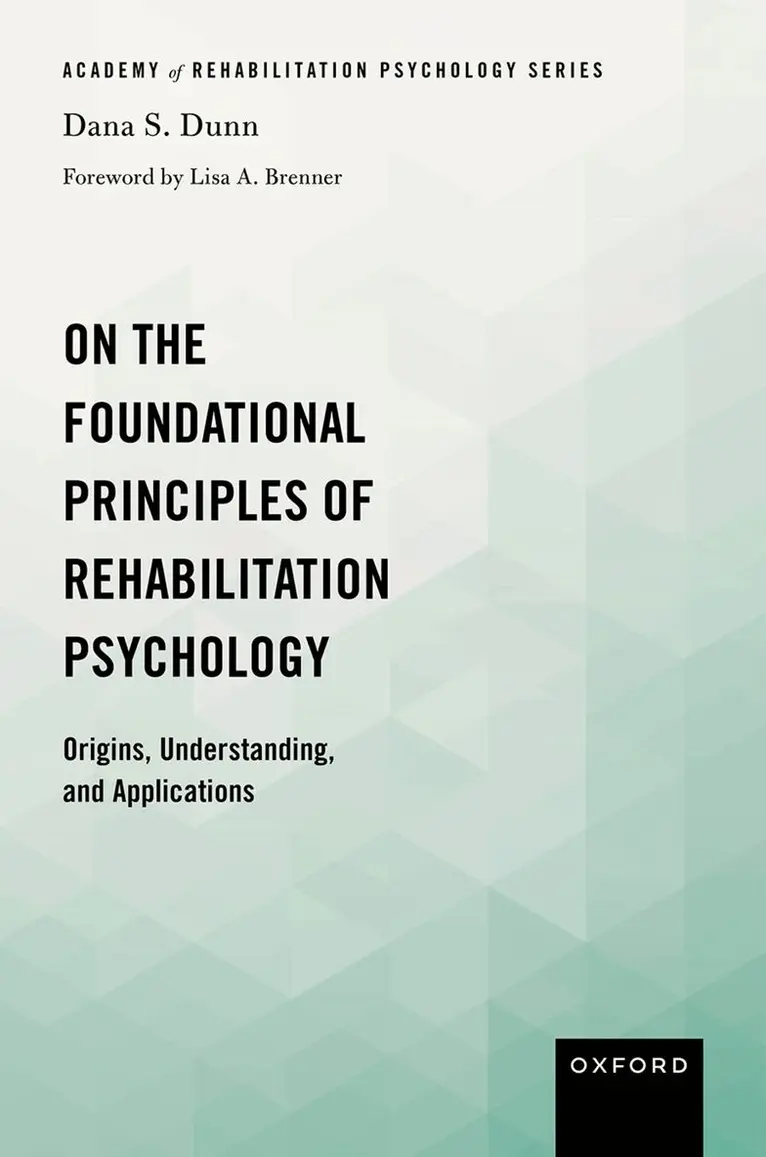
On the Foundational Principles of Rehabilitation Psychology
Origins, Understanding, and Applications
Inbunden, Engelska, 2026
901 kr
Skickas inom 5-8 vardagar
The field of Rehabilitation Psychology codified a group of Foundational Principles that are grounded in clinical and practice efforts as well as the social psychology of disability. These principles are drawn from the work of the social psychologist, Kurt Lewin, his student, Beatrice A. Wright, and her colleagues, who founded and shaped the field of rehabilitation psychology. The Foundational Principles include (a) the person-environment relation, (b) the insider-outsider distinction, (c) adjustment to disability, (d) psychological assets, (e) self-perception of bodily states, (f) human dignity, and (g) advocacy, including self-advocacy by people with disabilities and that conducted by allies. These principles can help disabled persons develop a positive disability identity while also promoting or maintaining resilience when encountering obstacles and challenges linked to disability. For their part, non-disabled people can reduce their ableist beliefs and become allies by becoming familiar with the Foundational Principles.The book reviews the history, role, and potential application of the Foundational Principles for fostering resilience, health, and well-being among individuals with disabilities. The importance of viewing disability as a form of diversity will also be emphasized, including its intersectional nature; that is, individuals with disabilities connect to a wide range of demographic groupings, including race, ethnicity, gender identity, gender expression, sexual identity, sexual expression, religious beliefs, and social class.
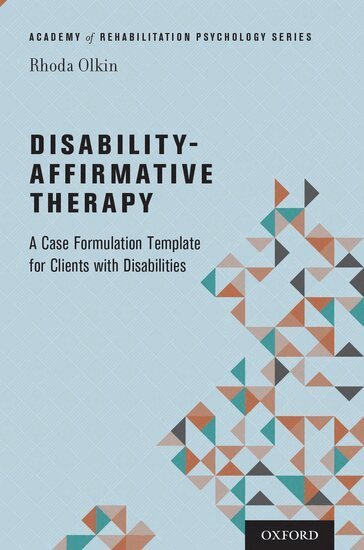
Disability-Affirmative Therapy
A Case Formulation Template for Clients with Disabilities
Häftad, Engelska, 2017
706 kr
Skickas inom 5-8 vardagar
Clinicians outside of rehabilitation psychology do not receive training on how to work with clients with disabilities. Nonetheless, given that people with disabilities comprise over 15% of the population, virtually all clinicians will have clients with disabilities in their practice. Without education or training in disability, clinicians are prone to make errors in estimating the role of disability in the presenting problems and the case formulation. Disability-Affirmative Therapy (D-AT) helps clinicians put the disability of a client into proper focus, without making one of the usual mistakes associated with cross-cultural therapy: overinflating the role of the disability, or underestimating its profound effects. D-AT provides a template for evaluation - nine areas to be discussed with the client - that allows understanding of the client's lifetime experiences with disability. The template is not a theory of therapy, but an overlay onto the therapist's own approach, thus having broad appeal and utility. D-AT is a positive and affirming approach to therapy with clients with disabilities, regardless of the theory of therapy used. The book contains many vignettes to illustrate key points and an extended case example to which the D-AT template is applied. Grounded in social and clinical psychology research, this book will be an important and unique guide to all clinicians working with clients with disabilities and their families.
742 kr
Skickas inom 5-8 vardagar
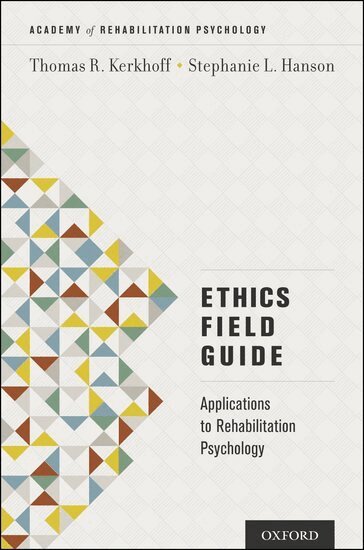
We have provided the reader with a resource for applied ethical decision-making for use in clinical, educational, and research settings. The Rehabilitation Psychologist using this book will have a choice of utilizing a Quick Reference guide including pro-con positions regarding possible resolutions and a tabular summary of the varied case examples presented, or making use of more detailed discussion of the ethical concepts pertinent to each case. The most important aspect of this book is inclusion of psycho-social context information for each case example. This critical factor allows the reader to understand the flow of events and other factors influencing the actions of the key stakeholders, thereby facilitating the ethical decision-making process.The mix of case examples is intentionally broad-based, including ample clinical practice situations, along with challenges found in educational and research settings. There is also variety among the case examples, with two detailed scenarios in each chapter, along with two briefer learning exercises with focused summaries. The reader is challenged to analyze each case and compare the results with the preferred resolution proposed by the authors.Finally, at the end of the book, the reader has access to a list of ethics-relevant reading resources. These resources are divided into categorical domains that will assist with literature searches and further research into applied ethics. The authors trust that this book will serve as a preparatory experience for those psychologists studying for the Rehabilitation Psychology specialty board exam, as well as trainees and clinicians at all levels who desire an applied approach to utilizing the APA Ethics Code as an invaluable guide to everyday professional practice.
670 kr
Skickas inom 5-8 vardagar
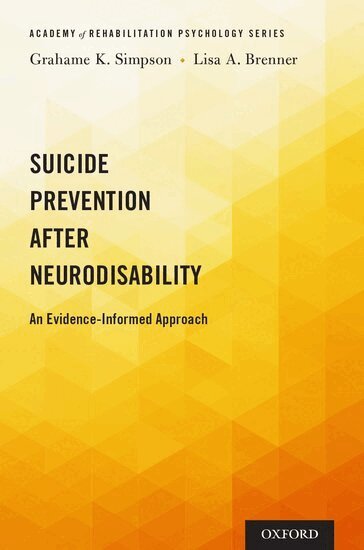
Suicide risk after disabling neurological conditions is up to five times higher than for the general population; however, knowledge about the extent of the problem, associated risk factors, and effective evidence-informed suicide prevention approaches are limited and fragmented. Suicide Prevention after Neurodisability focuses on the challenges faced by eight different types of neurodisability, namely stroke, spinal cord injury, traumatic brain injury, amyotrophic lateral sclerosis, epilepsy, Huntington's disease, multiple sclerosis, and Parkinson's disease. It pulls together the current knowledge about this risk, detailing a complex interplay between neuropathological, psychiatric, psychological, and psychosocial factors that in part account for this increased presence of suicidal thoughts and behaviors.Despite the challenges, suicide is often preventable. The best available evidence-informed approaches to suicide prevention in neurodisability are outlined, including clinical approaches to screening, suicide risk assessment, psychotherapeutic interventions, and psychosocial management. The reader-friendly approach will help make suicide prevention after neurodisability everyone's business.
726 kr
Skickas inom 5-8 vardagar
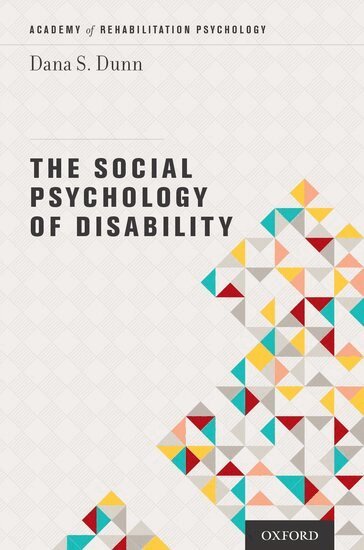
This is the first book to systematically review, update, organize, and critique the literature on the social psychology of disability in 30 years. The book gives pride of place to classic as well as contemporary concepts from the social psychology of disability and rehabilitation psychology that researchers and clinicians can use or adapt for their professional venues. The book's overarching message is an important one: The experience of most people with disabilities is not what nondisabled persons anticipate--contrary to the latter's beliefs and expectations, the former can lead full and normal lives. Thus, The Social Psychology of Disability is designed to counter stereotypical or biased perspectives aimed at an often overlooked minority group. The primary audience for the book is rehabilitation researchers and clinicians in psychology and allied fields (e.g., social work, nursing). A secondary audience includes policy makers and graduate students in rehabilitation and clinical psychology, as well as interested undergraduates.