Computational Analysis, Synthesis, and Design of Dynamic Systems - Böcker
Visar alla böcker i serien Computational Analysis, Synthesis, and Design of Dynamic Systems. Handla med fri frakt och snabb leverans.
11 produkter
11 produkter
1 184 kr
Skickas inom 10-15 vardagar
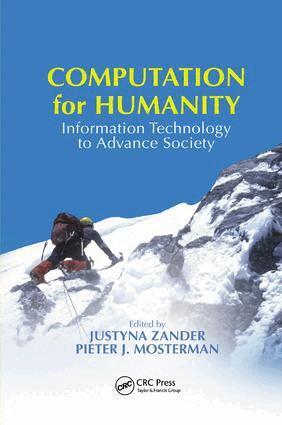
The exponential progress and accessibility of computing has vastly increased data flows and revolutionized the practice of science, engineering, and communication. Computing plays a critical role in advancing research across almost every scientific discipline. Computation for Humanity: Information Technology to Advance Society is a guide for the creation of services, products, and tools that facilitate, support, and enhance progress of humanity toward more sustainable life. This book: Provides a deep understanding of the practical applications of computation to solve human-machine problemsDelivers insight into theoretical approaches in an accessible mannerProvides a comprehensive overview of computational science and engineering applications in selected disciplinesCrosses the boundaries between different domains and shows how they interrelate and complement one anotherFocuses on grand challenges and issues that matter for the future of humanityShows different perspectives of computational thinking, understanding, and reasoningProvides a basis for scientific discoveries and enables adopting scientific theories and engineering practices from other disciplinesTakes a step back to provide a human-related abstraction level that is not ultimately seen in pure technological elaborations/collectionsThe editors provide a collection of numerous computation-related projects that form a foundation from which to cross-pollinate between different disciplines and further extensive collaboration. They present a clear and profound understanding of computing in today's world, and provide fundamental solutions to some of the most pertinent humanity-related problems.
1 144 kr
Skickas inom 10-15 vardagar
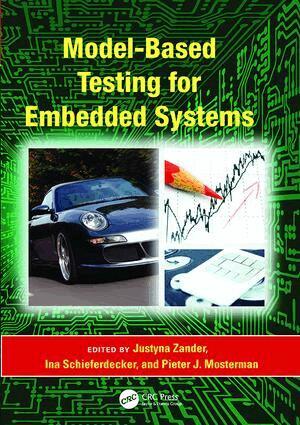
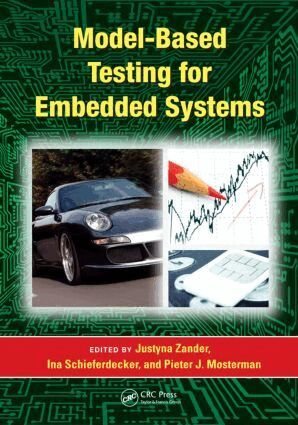
What the experts have to say about Model-Based Testing for Embedded Systems:"This book is exactly what is needed at the exact right time in this fast-growing area. From its beginnings over 10 years ago of deriving tests from UML statecharts, model-based testing has matured into a topic with both breadth and depth. Testing embedded systems is a natural application of MBT, and this book hits the nail exactly on the head. Numerous topics are presented clearly, thoroughly, and concisely in this cutting-edge book. The authors are world-class leading experts in this area and teach us well-used and validated techniques, along with new ideas for solving hard problems. "It is rare that a book can take recent research advances and present them in a form ready for practical use, but this book accomplishes that and more. I am anxious to recommend this in my consulting and to teach a new class to my students."—Dr. Jeff Offutt, professor of software engineering, George Mason University, Fairfax, Virginia, USA"This handbook is the best resource I am aware of on the automated testing of embedded systems. It is thorough, comprehensive, and authoritative. It covers all important technical and scientific aspects but also provides highly interesting insights into the state of practice of model-based testing for embedded systems."—Dr. Lionel C. Briand, IEEE Fellow, Simula Research Laboratory, Lysaker, Norway, and professor at the University of Oslo, Norway"As model-based testing is entering the mainstream, such a comprehensive and intelligible book is a must-read for anyone looking for more information about improved testing methods for embedded systems. Illustrated with numerous aspects of these techniques from many contributors, it gives a clear picture of what the state of the art is today."—Dr. Bruno Legeard, CTO of Smartesting, professor of Software Engineering at the University of Franche-Comté, Besançon, France, and co-author of Practical Model-Based Testing
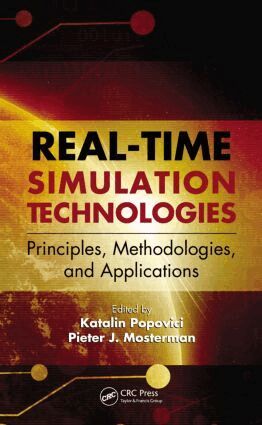
Real-Time Simulation Technologies: Principles, Methodologies, and Applications
Häftad, Engelska, 2017
1 184 kr
Skickas inom 10-15 vardagar
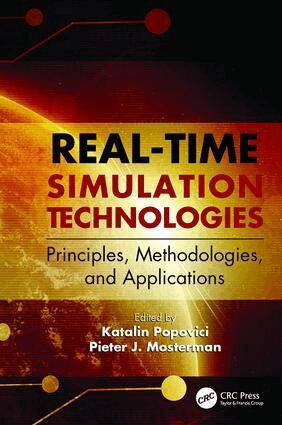
Real-Time Simulation Technologies: Principles, Methodologies, and Applications is an edited compilation of work that explores fundamental concepts and basic techniques of real-time simulation for complex and diverse systems across a broad spectrum. Useful for both new entrants and experienced experts in the field, this book integrates coverage of detailed theory, acclaimed methodological approaches, entrenched technologies, and high-value applications of real-time simulation—all from the unique perspectives of renowned international contributors.Because it offers an accurate and otherwise unattainable assessment of how a system will behave over a particular time frame, real-time simulation is increasingly critical to the optimization of dynamic processes and adaptive systems in a variety of enterprises. These range in scope from the maintenance of the national power grid, to space exploration, to the development of virtual reality programs and cyber-physical systems. This book outlines how, for these and other undertakings, engineers must assimilate real-time data with computational tools for rapid decision making under uncertainty.Clarifying the central concepts behind real-time simulation tools and techniques, this one-of-a-kind resource: Discusses the state of the art, important challenges, and high-impact developments in simulation technologiesProvides a basis for the study of real-time simulation as a fundamental and foundational technologyHelps readers develop and refine principles that are applicable across a wide variety of application domains As science moves toward more advanced technologies, unconventional design approaches, and unproven regions of the design space, simulation tools are increasingly critical to successful design and operation of technical systems in a growing number of application domains. This must-have resource presents detailed coverage of real-time simulation for system design, parallel and distributed simulations, industry tools, and a large set of applications.
1 103 kr
Skickas inom 10-15 vardagar
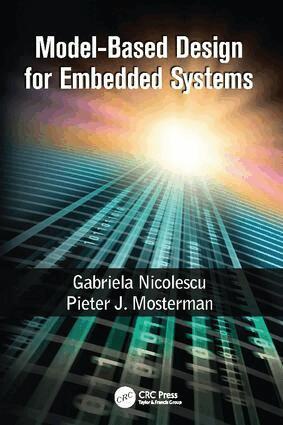
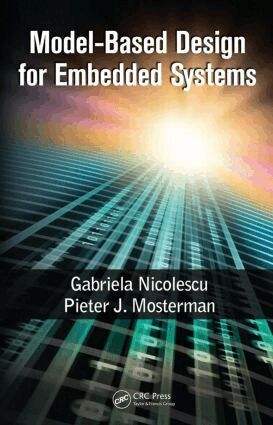
The demands of increasingly complex embedded systems and associated performance computations have resulted in the development of heterogeneous computing architectures that often integrate several types of processors, analog and digital electronic components, and mechanical and optical components—all on a single chip. As a result, now the most prominent challenge for the design automation community is to efficiently plan for such heterogeneity and to fully exploit its capabilities.A compilation of work from internationally renowned authors, Model-Based Design for Embedded Systems elaborates on related practices and addresses the main facets of heterogeneous model-based design for embedded systems, including the current state of the art, important challenges, and the latest trends. Focusing on computational models as the core design artifact, this book presents the cutting-edge results that have helped establish model-based design and continue to expand its parameters.The book is organized into three sections: Real-Time and Performance Analysis in Heterogeneous Embedded Systems, Design Tools and Methodology for Multiprocessor System-on-Chip, and Design Tools and Methodology for Multidomain Embedded Systems. The respective contributors share their considerable expertise on the automation of design refinement and how to relate properties throughout this refinement while enabling analytic and synthetic qualities. They focus on multi-core methodological issues, real-time analysis, and modeling and validation, taking into account how optical, electronic, and mechanical components often interface. Model-based design is emerging as a solution to bridge the gap between the availability of computational capabilities and our inability to make full use of them yet. This approach enables teams to start the design process using a high-level model that is gradually refined through abstraction levels to ultimately yield a prototype. When executed well, model-based design encourages enhanced performance and quicker time to market for a product. Illustrating a broad and diverse spectrum of applications such as in the automotive aerospace, health care, consumer electronics, this volume provides designers with practical, readily adaptable modeling solutions for their own practice.
2 376 kr
Skickas inom 10-15 vardagar
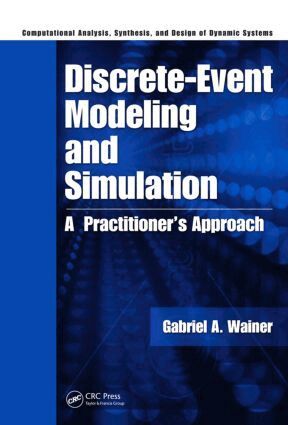
Complex artificial dynamic systems require advanced modeling techniques that can accommodate their asynchronous, concurrent, and highly non-linear nature. Discrete Event systems Specification (DEVS) provides a formal framework for hierarchical construction of discrete-event models in a modular manner, allowing for model re-use and reduced development time.Discrete Event Modeling and Simulation presents a practical approach focused on the creation of discrete-event applications. The book introduces the CD++ tool, an open-source framework that enables the simulation of discrete-event models. After setting up the basic theory of DEVS and Cell-DEVS, the author focuses on how to use the CD++ tool to define a variety of models in biology, physics, chemistry, and artificial systems. They also demonstrate how to map different modeling techniques, such as Finite State Machines and VHDL, to DEVS. The in-depth coverage elaborates on the creation of simulation software for DEVS models and the 3D visualization environments associated with these tools.A much-needed practical approach to creating discrete-event applications, this book offers world-class instruction on the field’s most useful modeling tools.
3 282 kr
Skickas inom 10-15 vardagar
The demands of increasingly complex embedded systems and associated performance computations have resulted in the development of heterogeneous computing architectures that often integrate several types of processors, analog and digital electronic components, and mechanical and optical components—all on a single chip. As a result, now the most prominent challenge for the design automation community is to efficiently plan for such heterogeneity and to fully exploit its capabilities.A compilation of work from internationally renowned authors, Model-Based Design for Embedded Systems elaborates on related practices and addresses the main facets of heterogeneous model-based design for embedded systems, including the current state of the art, important challenges, and the latest trends. Focusing on computational models as the core design artifact, this book presents the cutting-edge results that have helped establish model-based design and continue to expand its parameters.The book is organized into three sections: Real-Time and Performance Analysis in Heterogeneous Embedded Systems, Design Tools and Methodology for Multiprocessor System-on-Chip, and Design Tools and Methodology for Multidomain Embedded Systems. The respective contributors share their considerable expertise on the automation of design refinement and how to relate properties throughout this refinement while enabling analytic and synthetic qualities. They focus on multi-core methodological issues, real-time analysis, and modeling and validation, taking into account how optical, electronic, and mechanical components often interface. Model-based design is emerging as a solution to bridge the gap between the availability of computational capabilities and our inability to make full use of them yet. This approach enables teams to start the design process using a high-level model that is gradually refined through abstraction levels to ultimately yield a prototype. When executed well, model-based design encourages enhanced performance and quicker time to market for a product. Illustrating a broad and diverse spectrum of applications such as in the automotive aerospace, health care, consumer electronics, this volume provides designers with practical, readily adaptable modeling solutions for their own practice.
2 578 kr
Skickas inom 10-15 vardagar
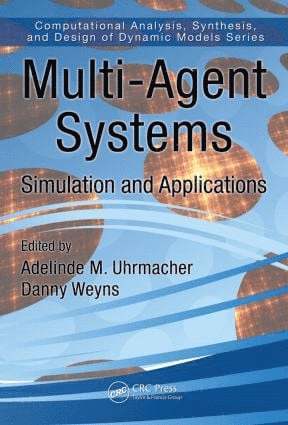
Methodological Guidelines for Modeling and Developing MAS-Based SimulationsThe intersection of agents, modeling, simulation, and application domains has been the subject of active research for over two decades. Although agents and simulation have been used effectively in a variety of application domains, much of the supporting research remains scattered in the literature, too often leaving scientists to develop multi-agent system (MAS) models and simulations from scratch. Multi-Agent Systems: Simulation and Applications provides an overdue review of the wide ranging facets of MAS simulation, including methodological and application-oriented guidelines. This comprehensive resource reviews two decades of research in the intersection of MAS, simulation, and different application domains. It provides scientists and developers with disciplined engineering approaches to modeling and developing MAS-based simulations. After providing an overview of the field’s history and its basic principles, as well as cataloging the various simulation engines for MAS, the book devotes three sections to current and emerging approaches and applications.Simulation for MAS — explains simulation support for agent decision making, the use of simulation for the design of self-organizing systems, the role of software architecture in simulating MAS, and the use of simulation for studying learning and stigmergic interaction.MAS for Simulation — discusses an agent-based framework for symbiotic simulation, the use of country databases and expert systems for agent-based modeling of social systems, crowd-behavior modeling, agent-based modeling and simulation of adult stem cells, and agents for traffic simulation. Tools — presents a number of representative platforms and tools for MAS and simulation, including Jason, James II, SeSAm, and RoboCup Rescue.Complete with over 200 figures and formulas, this reference book provides the necessary overview of experiences with MAS simulation and the tools needed to exploit simulation in MAS for future research in a vast array of applications including home security, computational systems biology, and traffic management.
1 610 kr
Skickas inom 10-15 vardagar
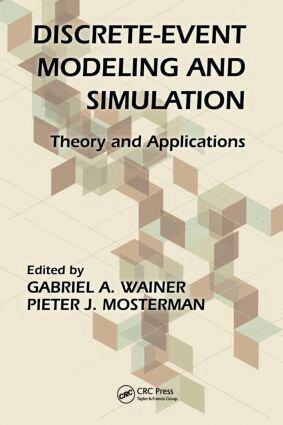
Collecting the work of the foremost scientists in the field, Discrete-Event Modeling and Simulation: Theory and Applications presents the state of the art in modeling discrete-event systems using the discrete-event system specification (DEVS) approach. It introduces the latest advances, recent extensions of formal techniques, and real-world examples of various applications.The book covers many topics that pertain to several layers of the modeling and simulation architecture. It discusses DEVS model development support and the interaction of DEVS with other methodologies. It describes different forms of simulation supported by DEVS, the use of real-time DEVS simulation, the relationship between DEVS and graph transformation, the influence of DEVS variants on simulation performance, and interoperability and composability with emphasis on DEVS standardization. The text also examines extensions to DEVS, new formalisms, and abstractions of DEVS models as well as the theory and analysis behind real-world system identification and control. To support the generation and search of optimal models of a system, a framework is developed based on the system entity structure and its transformation to DEVS simulation models. In addition, the book explores numerous interesting examples that illustrate the use of DEVS to build successful applications, including optical network-on-chip, construction/building design, process control, workflow systems, and environmental models.A one-stop resource on advances in DEVS theory, applications, and methodology, this volume offers a sampling of the best research in the area, a broad picture of the DEVS landscape, and trend-setting applications enabled by the DEVS approach. It provides the basis for future research discoveries and encourages the development of new applications.
3 073 kr
Skickas inom 10-15 vardagar
What the experts have to say about Model-Based Testing for Embedded Systems:"This book is exactly what is needed at the exact right time in this fast-growing area. From its beginnings over 10 years ago of deriving tests from UML statecharts, model-based testing has matured into a topic with both breadth and depth. Testing embedded systems is a natural application of MBT, and this book hits the nail exactly on the head. Numerous topics are presented clearly, thoroughly, and concisely in this cutting-edge book. The authors are world-class leading experts in this area and teach us well-used and validated techniques, along with new ideas for solving hard problems. "It is rare that a book can take recent research advances and present them in a form ready for practical use, but this book accomplishes that and more. I am anxious to recommend this in my consulting and to teach a new class to my students."—Dr. Jeff Offutt, professor of software engineering, George Mason University, Fairfax, Virginia, USA"This handbook is the best resource I am aware of on the automated testing of embedded systems. It is thorough, comprehensive, and authoritative. It covers all important technical and scientific aspects but also provides highly interesting insights into the state of practice of model-based testing for embedded systems."—Dr. Lionel C. Briand, IEEE Fellow, Simula Research Laboratory, Lysaker, Norway, and professor at the University of Oslo, Norway"As model-based testing is entering the mainstream, such a comprehensive and intelligible book is a must-read for anyone looking for more information about improved testing methods for embedded systems. Illustrated with numerous aspects of these techniques from many contributors, it gives a clear picture of what the state of the art is today."—Dr. Bruno Legeard, CTO of Smartesting, professor of Software Engineering at the University of Franche-Comté, Besançon, France, and co-author of Practical Model-Based Testing
Real-Time Simulation Technologies: Principles, Methodologies, and Applications
Inbunden, Engelska, 2012
2 984 kr
Skickas inom 10-15 vardagar
Real-Time Simulation Technologies: Principles, Methodologies, and Applications is an edited compilation of work that explores fundamental concepts and basic techniques of real-time simulation for complex and diverse systems across a broad spectrum. Useful for both new entrants and experienced experts in the field, this book integrates coverage of detailed theory, acclaimed methodological approaches, entrenched technologies, and high-value applications of real-time simulation—all from the unique perspectives of renowned international contributors.Because it offers an accurate and otherwise unattainable assessment of how a system will behave over a particular time frame, real-time simulation is increasingly critical to the optimization of dynamic processes and adaptive systems in a variety of enterprises. These range in scope from the maintenance of the national power grid, to space exploration, to the development of virtual reality programs and cyber-physical systems. This book outlines how, for these and other undertakings, engineers must assimilate real-time data with computational tools for rapid decision making under uncertainty.Clarifying the central concepts behind real-time simulation tools and techniques, this one-of-a-kind resource: Discusses the state of the art, important challenges, and high-impact developments in simulation technologiesProvides a basis for the study of real-time simulation as a fundamental and foundational technologyHelps readers develop and refine principles that are applicable across a wide variety of application domains As science moves toward more advanced technologies, unconventional design approaches, and unproven regions of the design space, simulation tools are increasingly critical to successful design and operation of technical systems in a growing number of application domains. This must-have resource presents detailed coverage of real-time simulation for system design, parallel and distributed simulations, industry tools, and a large set of applications.
3 073 kr
Skickas inom 10-15 vardagar
The exponential progress and accessibility of computing has vastly increased data flows and revolutionized the practice of science, engineering, and communication. Computing plays a critical role in advancing research across almost every scientific discipline. Computation for Humanity: Information Technology to Advance Society is a guide for the creation of services, products, and tools that facilitate, support, and enhance progress of humanity toward more sustainable life. This book: Provides a deep understanding of the practical applications of computation to solve human-machine problemsDelivers insight into theoretical approaches in an accessible mannerProvides a comprehensive overview of computational science and engineering applications in selected disciplinesCrosses the boundaries between different domains and shows how they interrelate and complement one anotherFocuses on grand challenges and issues that matter for the future of humanityShows different perspectives of computational thinking, understanding, and reasoningProvides a basis for scientific discoveries and enables adopting scientific theories and engineering practices from other disciplinesTakes a step back to provide a human-related abstraction level that is not ultimately seen in pure technological elaborations/collectionsThe editors provide a collection of numerous computation-related projects that form a foundation from which to cross-pollinate between different disciplines and further extensive collaboration. They present a clear and profound understanding of computing in today's world, and provide fundamental solutions to some of the most pertinent humanity-related problems.