Sense, Matter, and Medium - Böcker
Visar alla böcker i serien Sense, Matter, and Medium. Handla med fri frakt och snabb leverans.
7 produkter
7 produkter
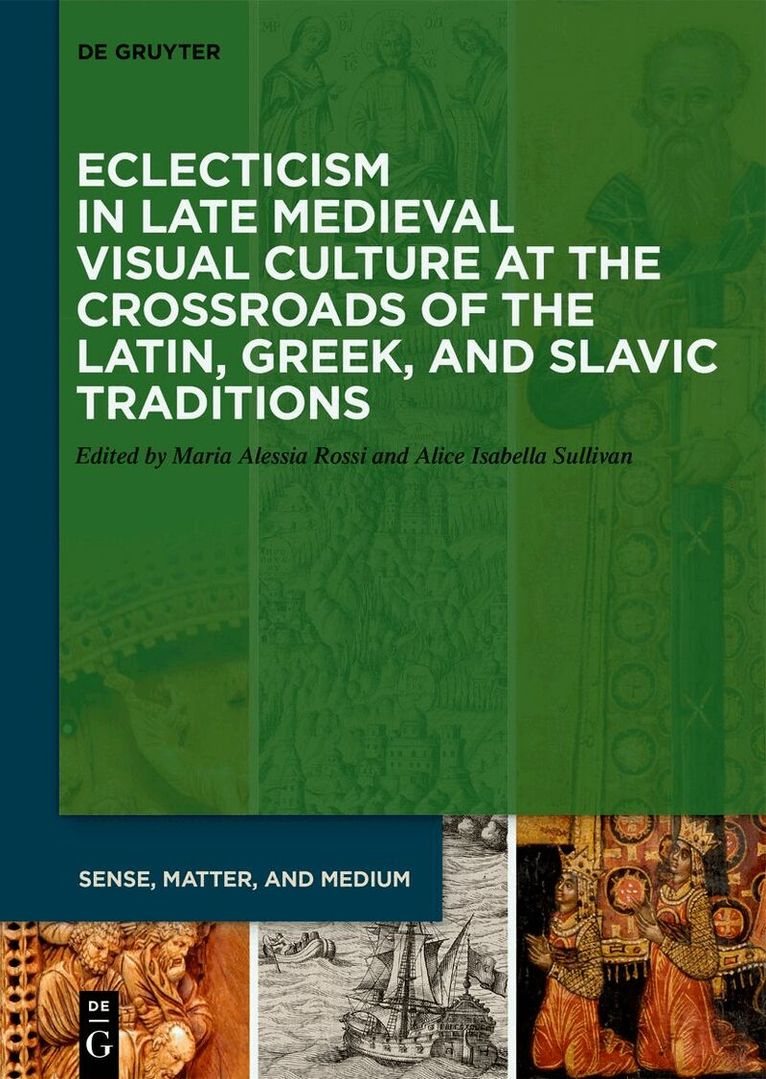
Eclecticism in Late Medieval Visual Culture at the Crossroads of the Latin, Greek, and Slavic Traditions
Inbunden, Engelska, 2021
1 321 kr
Skickas inom 3-6 vardagar
This volume builds upon the new worldwide interest in the global Middle Ages. It investigates the prismatic heritage and eclectic artistic production of Eastern Europe between the fourteenth and seventeenth centuries, while challenging the temporal and geographical parameters of the study of medieval, Byzantine, post-Byzantine, and early-modern art. Contact and interchange between primarily the Latin, Greek, and Slavic cultural spheres resulted in local assimilations of select elements that reshaped the artistic landscapes of regions of the Balkan Peninsula, the Carpathian Mountains, and further north. The specificities of each region, and, in modern times, politics and nationalistic approaches, have reinforced the tendency to treat them separately, preventing scholars from questioning whether the visual output could be considered as an expression of a shared history. The comparative and interdisciplinary framework of this volume provides a holistic view of the visual culture of these regions by addressing issues of transmission and appropriation, as well as notions of cross-cultural contact, while putting on the global map of art history the eclectic artistic production of Eastern Europe.
372 kr
Skickas inom 5-8 vardagar
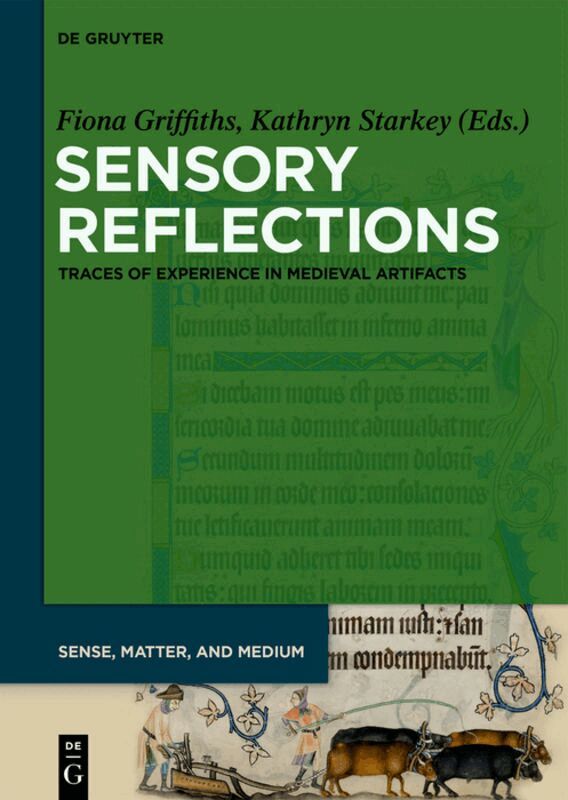
This volume draws on emerging scholarship at the intersection of two already vibrant fields: medieval material culture and medieval sensory experience. The rich potential of medieval matter (most obviously manuscripts and visual imagery, but also liturgical objects, coins, textiles, architecture, graves, etc.) to complement and even transcend purely textual sources is by now well established in medieval scholarship across the disciplines. So, too, attention to medieval sensory experiences—most prominently emotion—has transformed our understanding of medieval religious life and spirituality, violence, power, and authority, friendship, and constructions of both the self and the other. Our purpose in this volume is to draw the two approaches together, plumbing medieval material sources for traces of sensory experience - above all ephemeral and physical experiences that, unlike emotion, are rarely fully described or articulated in texts.
1 203 kr
Skickas inom 7-10 vardagar
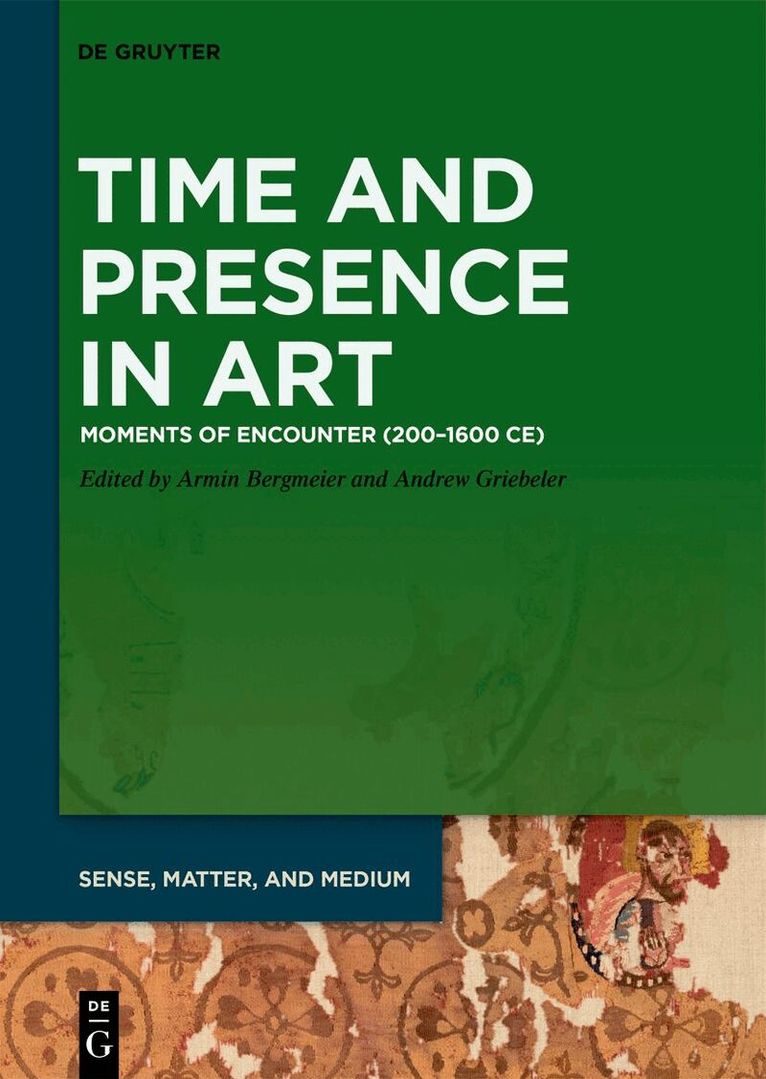
This volume explores the relationship between temporality and presence in medieval artworks from the third to the sixteenth centuries. It is the first extensive treatment of the interconnections between medieval artworks' varied presences and their ever-shifting places in time. The volume begins with reflections on the study of temporality and presence in medieval and early modern art history. A second section presents case studies delving into the different ways medieval artworks once created and transformed their original viewers' experience of the present. These range from late antique Constantinople, early Islamic Jerusalem and medieval Italy, to early modern Venice and the Low Countries. A final section explores how medieval artworks remain powerful and relevant today. This section includes case studies on reconstructing presence in medieval art through embodied experience of pilgrimage, art historical research and museum education. In doing so, the volume provides a first dialog between museum educators and art historians on the presence of medieval artifacts. It includes contributions by Hans Belting, Keith Moxey, Rika Burnham and others.
1 409 kr
Skickas inom 5-8 vardagar
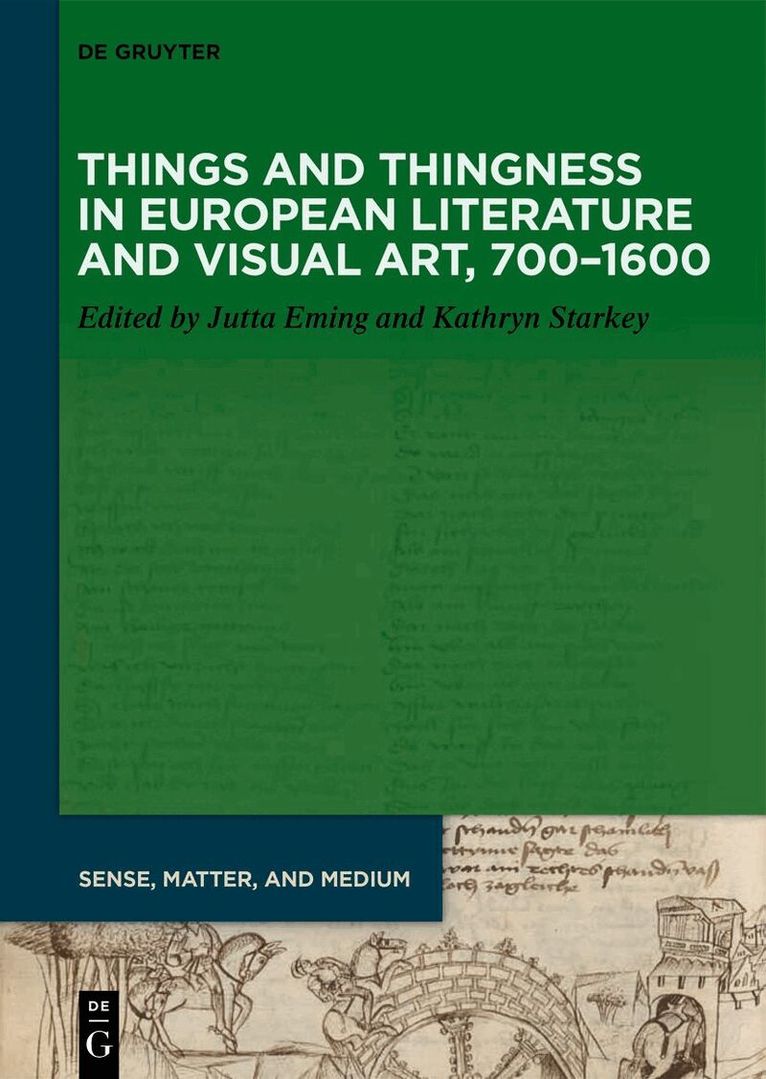
The eleven chapters in this international volume draw on a variety of theoretical and methodological approaches to focus our attention on medieval and early modern things (ca. 700–1600). The range of things includes actual objects (the Altenburg Crucifixion, a copy of Hieronymus Brunschwig’s Liber de arte distillandi, a pilgrim’s letter), imagined objects (a prayed cloak for the Virgin Mary), and narrative objects in texts (the Alliterative Morte Arthure, the Ordene de Chevalerie, Hartmann von Aue’s Erec, Heinrich of Neustadt’s Apollonius of Tyre, Luís de Camões’s Os Lusíadas, and the vita of Saint Guthlac). Each in its own way, the papers consider how things do what they do in texts and art, often foregrounding the intersection between the material and the immaterial by exploring such questions as how things act, how they express power, and how texts and images represent them. Medieval and early modern things are repeatedly shown to be more than symbolic or passive, they are agentive and determinative in both their intra- and extradiegetic worlds. The things that are addressed in this volume are varied and are embedded, or entangled, in different contexts and societies, and yet they share a concerted engagement in human life.
Gender Bonds, Gender Binds
Women, Men, and Family in Middle High German Literature
Häftad, Engelska, 2022
291 kr
Skickas inom 5-8 vardagar
While Gender Studies has made its mark on literary studies, much scholarship on the German Middle Ages is largely inaccessible to the Anglo-American audience. With gender at its core as a category of analysis, "Gender Bonds, Gender Binds"uniquely opens up medieval German material to English speakers. Recognizing the impact of Ann Marie Rasmussen’s Mothers and Daughters in Medieval German Literature, this transatlantic volume expands on questions introduced in her 1997 book and subsequent work. More than a mere tribute, the collection moves the debates forward in new directions: it examines how gender bonds together people, practices, texts, and interpretive traditions, while constraining and delimiting these things socially, ideologically, culturally, or historically. As the contributions demonstrate, a close, materially focused analysis produces complex results, not easily reduced to a platitude. The essays steer a firm course through the terrain of gender bonds and binds, many of which remain challenging in the present. Herein lies the broader reach of this volume, for understanding the longevity of patriarchy and its effects on human relations demonstrates how crucial the study of the past can be for us as a society today.
Del 7 - Sense, Matter, and Medium
Things and Thingness in European Literature and Visual Art, 700–1600
Häftad, Engelska, 2023
242 kr
Skickas inom 3-6 vardagar
The eleven chapters in this international volume draw on a variety of theoretical and methodological approaches to focus our attention on medieval and early modern things (ca. 700–1600). The range of things includes actual objects (the Altenburg Crucifixion, a copy of Hieronymus Brunschwig’s Liber de arte distillandi, a pilgrim’s letter), imagined objects (a prayed cloak for the Virgin Mary), and narrative objects in texts (the Alliterative Morte Arthure, the Ordene de Chevalerie, Hartmann von Aue’s Erec, Heinrich of Neustadt’s Apollonius of Tyre, Luís de Camões’s Os Lusíadas, and the vita of Saint Guthlac). Each in its own way, the papers consider how things do what they do in texts and art, often foregrounding the intersection between the material and the immaterial by exploring such questions as how things act, how they express power, and how texts and images represent them. Medieval and early modern things are repeatedly shown to be more than symbolic or passive, they are agentive and determinative in both their intra- and extradiegetic worlds. The things that are addressed in this volume are varied and are embedded, or entangled, in different contexts and societies, and yet they share a concerted engagement in human life.
1 883 kr
Skickas inom 3-6 vardagar
This volume interrogates the role of the manuscript medium in conveying history to medieval and early modern readers. The contributors adopt a capacious understanding of "history" to explore history-writing in its materiality from a variety of methodological and disciplinary perspectives. The core contentions of this book are that the material features of manuscripts helped shaping historical narratives and defining history conceptually, and that therefore, the makers of these manuscripts played an instrumental role in history-writing alongside authors. Ranging from the ninth to the sixteenth centuries and comprising materials from across Western Europe in Latin and the vernaculars, the ten chapters of this volume uncover stakes and strategies tied to highly specific contexts, such as late thirteenth-century Corbie or fifteenth-century Zurich, yet partaking in a shared practice of history-writing with manuscripts. Manuscript makers "made" history through layout, rewriting, illumination, compilation, choice of script, and annotation, and conferred history-writing its material dimension. This volume therefore situates the writing of history in its material dimension and invites us to consider medieval and early modern historiography in its medium.