Nitrogen Fixation: Origins, Applications, and Research Progress - Böcker
Visar alla böcker i serien Nitrogen Fixation: Origins, Applications, and Research Progress. Handla med fri frakt och snabb leverans.
14 produkter
14 produkter
2 116 kr
Skickas inom 10-15 vardagar
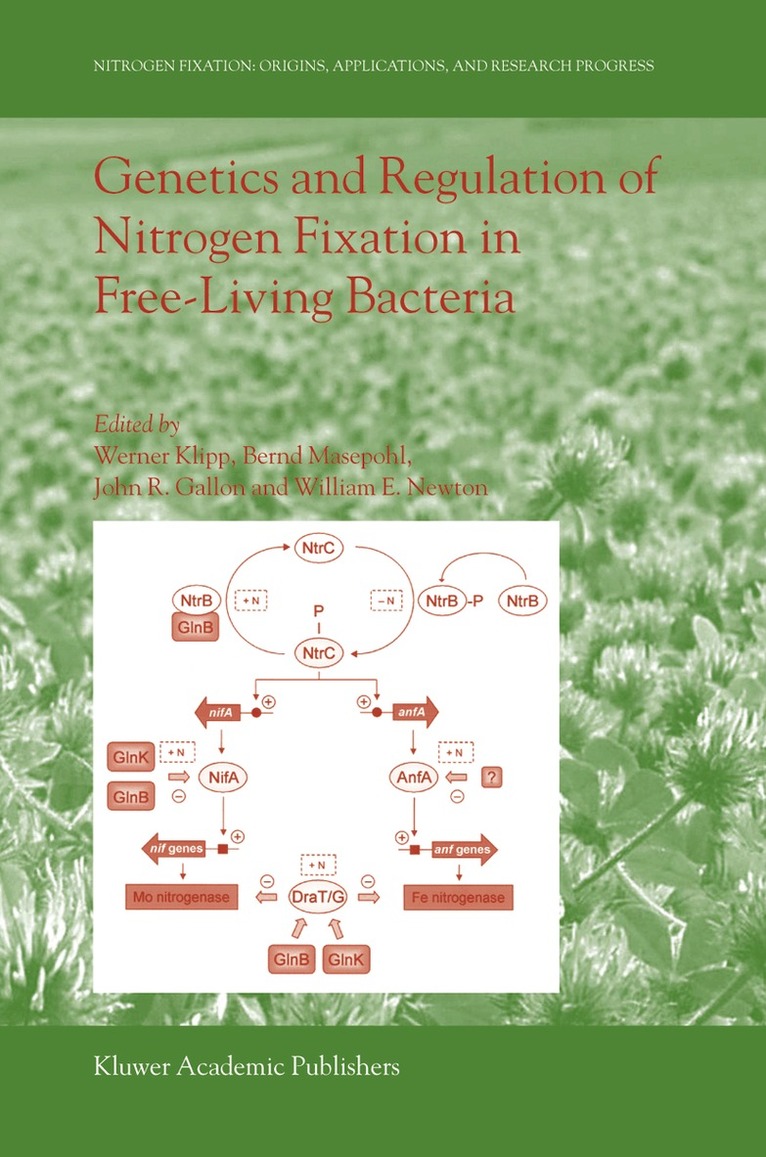
This book provides a comprehensive and detailed source of information on the genetic and regulatory aspects of biological nitrogen fixation in free-living (non-symbiotic) prokaryotes. Biological nitrogen fixation is represented in a diverse range of microorganisms, among which Klebsiella pneumoniae serves as a paradigm for the genetic analysis of diazotrophy, which is the ability to grow with N as sole nitrogen source. The volume uses two major complementary approaches to the subject matter. The initial chapters use an organismic-based approach by concentrating on the well-characterized diazotrophic proteobacteria, cyanobacteria, Gram-positive clostridia, and Archea. The later chapters use a comparative process-based approach and serve as overviews dealing with different regulatory aspects, electron transport to nitrogenase, and molybdenum metabolism, across the range of organisms. Whenever appropriate, historical aspects and agricultural and ecological impacts have been taken into consideration. Each chapter contains an extensive list of references. This book is the self-contained second volume of a comprehensive seven-volume series.No other available work provides the up-to-date and in-depth coverage of this series and this volume. This book is intended to serve as an indispensable reference work for all scientists working in this and closely related fields, to assist students to enter this challenging area of research, and to provide science administrators easy access to vital relevant information.
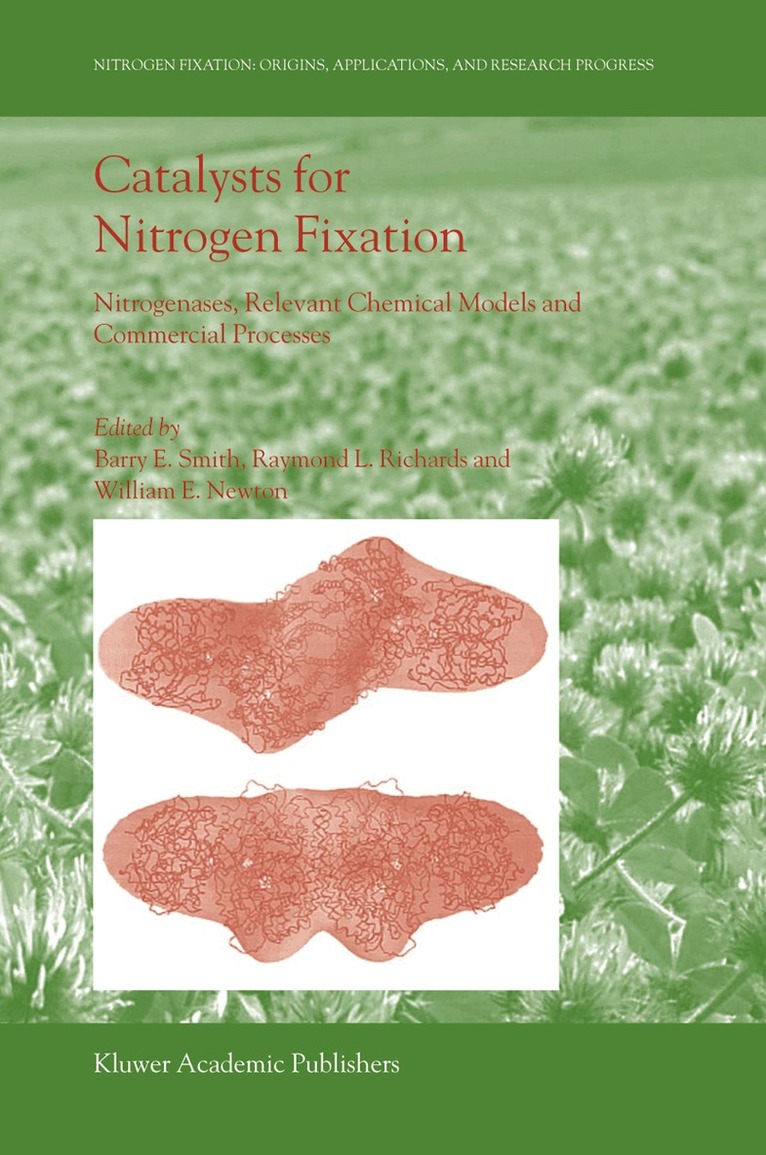
Catalysts for Nitrogen Fixation
Nitrogenases, Relevant Chemical Models and Commercial Processes
Inbunden, Engelska, 2004
1 589 kr
Skickas inom 10-15 vardagar
Biological nitrogen fixation provides more than 50% of the total annual input of the essential element nitrogen to world agriculture. Thus, it is of immense agronomic importance and critical to food supplies, particularly in developing countries. This book, with chapters authored by internationally renowned experts, provides a comprehensive and detailed account of the fascinating history of the process - including the surprising discoveries of molybdenum-independent nitrogenases and superoxide-dependent nitrogenase; a review of Man's attempts to emulate the biological process - most successfully with the commercially dominant Haber-Bosch process; and the current state of the understanding art with respect to the enzymes - called nitrogenases - responsible for biological nitrogen fixation. The initial chapters use a historical approach to the biological and industrial processes, followed by an overview of assay methodologies. The next set of chapters focuses on the classical enzyme, the molybdenum nitrogenase, and details its biosynthesis, structure, composition, and mechanism of action as well as detailing both how variants of its two component proteins are constructed by recombinant DNA technology and how computational techniques are being applied. The sophisticated chemical modelling of the metal-containing clusters in the enzyme is reviewed next, followed by a description of the two molybdenum-independent nitrogenases - first, the vanadium-containing enzyme and then the iron-only nitrogenase - together with some thoughts as to why they exist! Then follows an up-to-date treatment of the clearly "non-classical" properties of the superoxide-dependent nitrogenase, which more closely resembles molybdenum-containing hydroxylases and related enzymes, like nitrate reductase, that it does the other nitrogenases. Each chapter contains an extensive list of references. This book is the self-contained first volume of a comprehensive seven-volumeseries. No other available work provides the up-to-date and in-depth coverage of this series and this volume. This book is intended to serve as an indispensable reference work for all scientists working in this area, including agriculture and the closely related metals-in-biology area; to assist students to enter this challenging area of research; and to provide science administrators easy access to vital relevant information.
1 589 kr
Skickas inom 10-15 vardagar
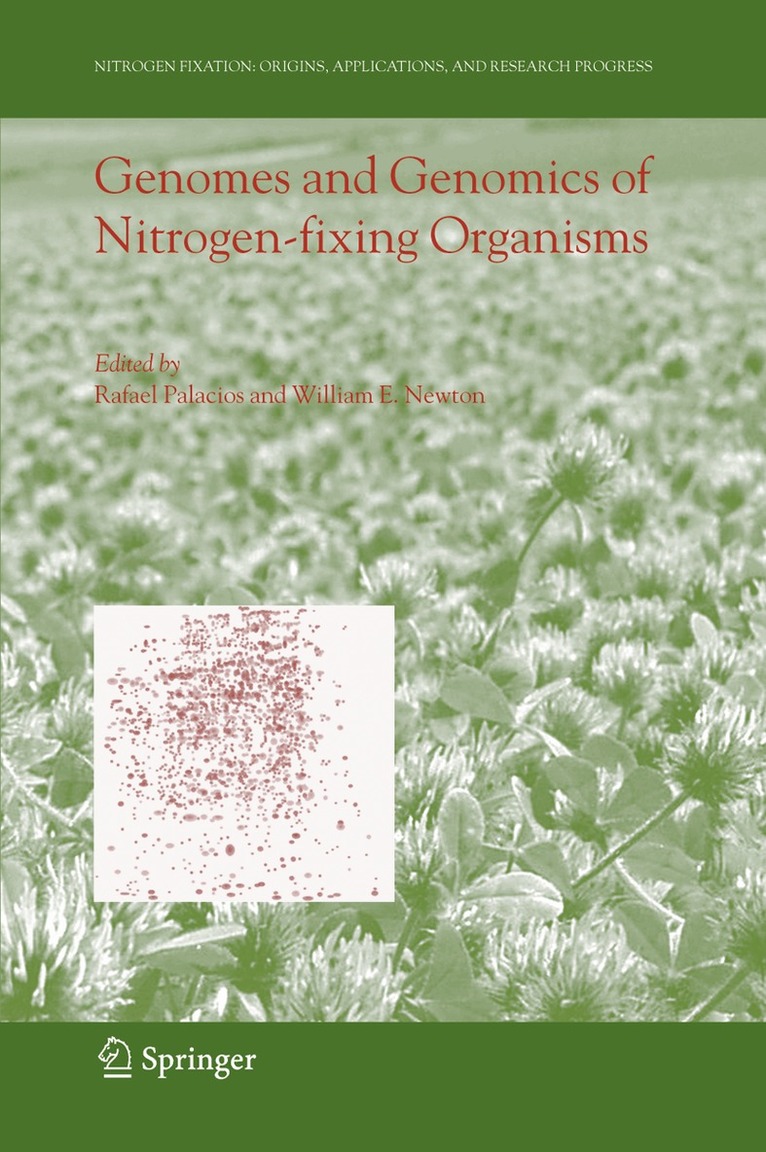
Genomes and Genomics of Nitrogen-fixing Organisms This is Volume 3 of a seven-volume series on all aspects of Nitrogen Fixation. The series aims to be the definitive authority in the field and to act as a benchmark for some years to come. Rather than attempting to cram the whole field into a single volume, the subject matter is divided among seven volumes to allow authors the luxury of writing in depth with a comprehensive reference base. All authors are recognized practicing scientists in the area of their contribution, which ensures the high quality, relevance, and readability of the chapters. In establishing the rationale for, and the organization of, this book, we realized the need to divide it into two sections. The first section should be organism based and should review our current knowledge of the genomes of nitrogen-fixing organisms and what these nucleotide sequences tell us. The second section should then be technology based. It should review what technologies are available to mine the data inherent in the nucleotide sequences and how they are now being used to produce gene-function data from differential gene expression.
1 589 kr
Skickas inom 10-15 vardagar
Nitrogen-fixing Actinorhizal Symbioses This book is part of a seven-volume series that was launched in 2004 and covers all aspects of nitrogen fixation from the biological systems to the industrial processes. Volume 6 covers nitrogen-fixing actinorhizal symbioses, which occur between soil actinomycetes of the genus Frankia and a diverse group of dicotyledonous plants, collectively called actinorhizal plants. These symbioses play vital roles in native ecosystems as well as important components in both forestry and land reclamation. The volume is divided into 11 chapters, all authored by well-known scientists in the field. As in previous volumes of this series, the first chapter presents an historical perspective and describes the development of actinorhizal research with its focus on the period after the first reproducible isolation of the responsible microorganism by John Torrey’s group in 1978. Very early on, the initial attempts to characterize the bacterium taxonomically had considered this endosymbiont as an obligate symbiotic bacterium and used its ability to form root nodules and its morphological characteristics within root-nodule cells as discriminative criteria to distinguish it from other actinomycetes. These efforts led to the emendation of the family Frankiaceae with the type genus Frankia and also to the definition of host-specificity groups based on inoculation experiments using crushed nodules. However, after Frankia strains were isolated from nodules and pure cultures became available, many of these early results had to be discarded. Chapter 2 describes the techniques used to obtain phenotypic, genotypic and phylogenetic information on the members of the genus Frankia.
Associative and Endophytic Nitrogen-fixing Bacteria and Cyanobacterial Associations
Inbunden, Engelska, 2006
1 589 kr
Skickas inom 10-15 vardagar
This self-contained volume covers fundamental and applied aspects of nitrogen-fixation research. The book describes milestones in the discovery of the associative and endophytic nitrogen-fixing bacteria found involved with cereal crops, forage grasses, and sugar cane.
2 116 kr
Skickas inom 10-15 vardagar
Sustainability has a major part to play in the global challenge of continued development of regions, countries, and continents all around the World and biological nitrogen fixation has a key role in this process.
2 116 kr
Skickas inom 10-15 vardagar
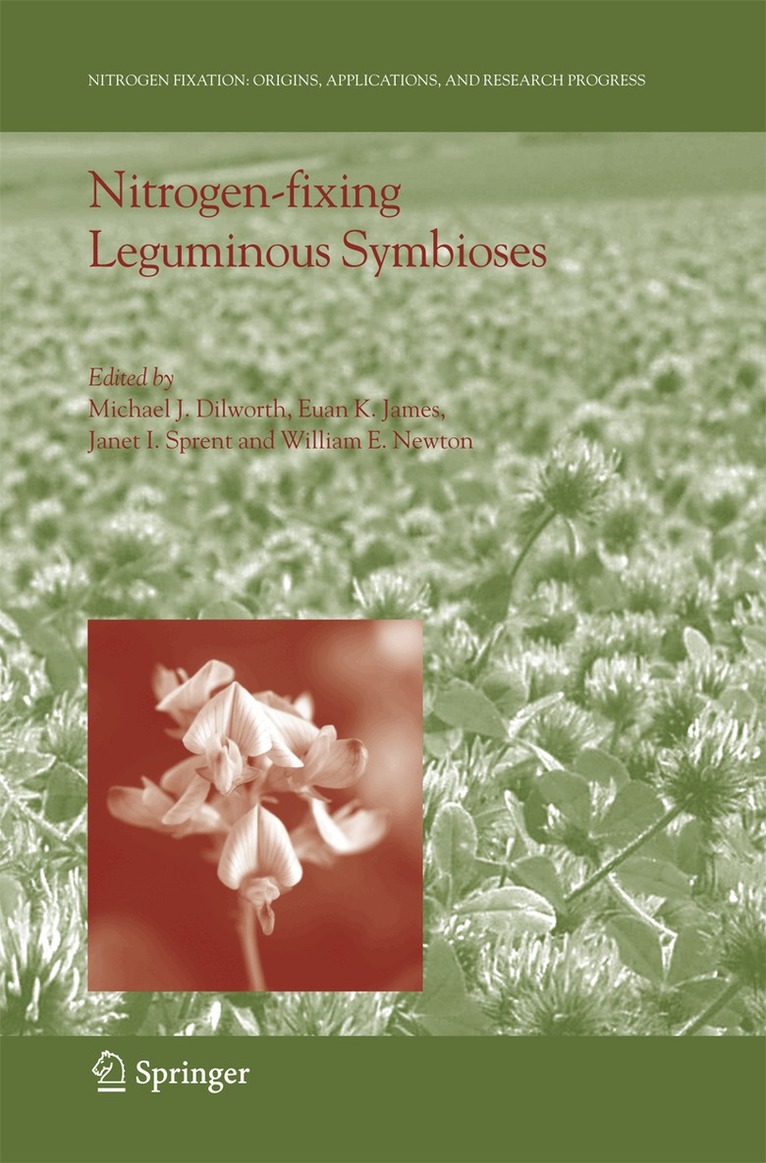
Nodules produced on legume roots by root-nodule bacteria provide the major nitrogenous input into natural and agricultural systems worldwide. It also reviews the physiology of the root-nodule bacteria themselves, their ecology in both natural and agricultural systems, and how we go about introducing new legumes and the bactria they require.
2 116 kr
Skickas inom 10-15 vardagar
This book provides a comprehensive and detailed source of information on the genetic and regulatory aspects of biological nitrogen fixation in free-living (non-symbiotic) prokaryotes. Biological nitrogen fixation is represented in a diverse range of microorganisms, among which Klebsiella pneumoniae serves as a paradigm for the genetic analysis of diazotrophy, which is the ability to grow with N2 as sole nitrogen source. The volume uses two major complementary approaches to the subject matter. The initial chapters use an organismic-based approach by concentrating on the well-characterized diazotrophic proteobacteria, cyanobacteria, Gram-positive clostridia, and Archea. The later chapters use a comparative process-based approach and serve as overviews dealing with different regulatory aspects, electron transport to nitrogenase, and molybdenum metabolism, across the range of organisms. Whenever appropriate, historical aspects and agricultural and ecological impacts have been taken into consideration. Each chapter contains an extensive list of references. This book is the self-contained second volume of a comprehensive seven-volume series.No other available work provides the up-to-date and in-depth coverage of this series and this volume. This book is intended to serve as an indispensable reference work for all scientists working in this and closely related fields, to assist students to enter this challenging area of research, and to provide science administrators easy access to vital relevant information.
Catalysts for Nitrogen Fixation
Nitrogenases, Relevant Chemical Models and Commercial Processes
Häftad, Engelska, 2010
1 589 kr
Skickas inom 10-15 vardagar
Biological nitrogen fixation provides more than 50% of the total annual input of the essential element nitrogen to world agriculture. Thus, it is of immense agronomic importance and critical to food supplies, particularly in developing countries. This book, with chapters authored by internationally renowned experts, provides a comprehensive and detailed account of the fascinating history of the process - including the surprising discoveries of molybdenum-independent nitrogenases and superoxide-dependent nitrogenase; a review of Man's attempts to emulate the biological process - most successfully with the commercially dominant Haber-Bosch process; and the current state of the understanding art with respect to the enzymes - called nitrogenases - responsible for biological nitrogen fixation. The initial chapters use a historical approach to the biological and industrial processes, followed by an overview of assay methodologies. The next set of chapters focuses on the classical enzyme, the molybdenum nitrogenase, and details its biosynthesis, structure, composition, and mechanism of action as well as detailing both how variants of its two component proteins are constructed by recombinant DNA technology and how computational techniques are being applied. The sophisticated chemical modelling of the metal-containing clusters in the enzyme is reviewed next, followed by a description of the two molybdenum-independent nitrogenases - first, the vanadium-containing enzyme and then the iron-only nitrogenase - together with some thoughts as to why they exist! Then follows an up-to-date treatment of the clearly "non-classical" properties of the superoxide-dependent nitrogenase, which more closely resembles molybdenum-containing hydroxylases and related enzymes, like nitrate reductase, that it does the other nitrogenases. Each chapter contains an extensive list of references. This book is the self-contained first volume of a comprehensive seven-volumeseries. No other available work provides the up-to-date and in-depth coverage of this series and this volume. This book is intended to serve as an indispensable reference work for all scientists working in this area, including agriculture and the closely related metals-in-biology area; to assist students to enter this challenging area of research; and to provide science administrators easy access to vital relevant information.
1 589 kr
Skickas inom 10-15 vardagar
This book is the self-contained third volume of a comprehensive series on nitrogen fixation. It presents the state-of-the-art in regards to genomic sciences applied to nitrogen-fixation research. The advent of genomic sciences represents a new era for biology. The classic paradigm based on the gene has now changed to a paradigm that is based on the genome. The knowledge of the complete nucleotide sequence of a genome and its consequences with regard to both transcription and translation lead to an integral and comprehensive view of the biochemistry and physiology of an organism. Moreover, comparative genomic studies provide new insights for a better understanding of the evolutionary process. Nitrogen-fixation research has fully entered the genomics era since the first complete nucleotide sequences of a rhizobial symbiotic plasmid and a methanogenic archaeon were first reported in 1997. Now, the complete nucleotide sequences of many genomes of nitrogen-fixing organism from different taxonomic groups are available.This volume includes chapters devoted to the genomes of specific organisms as well as chapters that cross organismal lines and analyse general aspects centred on functional genomics, genome dynamics, taxonomy, and evolution. No other available work provides the up-to-date and in-depth coverage of this volume, which is intended to serve as an indispensable reference work for academic, governmental, and industrial scientists working in the areas of genomics, transcriptomics, and proteomics, including those studying evolution and taxonomy; to assist students to enter this challenging area of research; and to provide science administrators with ready access to vital relevant information.
1 589 kr
Skickas inom 10-15 vardagar
Nitrogen-fixing Actinorhizal Symbioses This book is part of a seven-volume series that was launched in 2004 and covers all aspects of nitrogen fixation from the biological systems to the industrial processes. Volume 6 covers nitrogen-fixing actinorhizal symbioses, which occur between soil actinomycetes of the genus Frankia and a diverse group of dicotyledonous plants, collectively called actinorhizal plants. These symbioses play vital roles in native ecosystems as well as important components in both forestry and land reclamation. The volume is divided into 11 chapters, all authored by well-known scientists in the field. As in previous volumes of this series, the first chapter presents an historical perspective and describes the development of actinorhizal research with its focus on the period after the first reproducible isolation of the responsible microorganism by John Torrey’s group in 1978. Very early on, the initial attempts to characterize the bacterium taxonomically had considered this endosymbiont as an obligate symbiotic bacterium and used its ability to form root nodules and its morphological characteristics within root-nodule cells as discriminative criteria to distinguish it from other actinomycetes. These efforts led to the emendation of the family Frankiaceae with the type genus Frankia and also to the definition of host-specificity groups based on inoculation experiments using crushed nodules. However, after Frankia strains were isolated from nodules and pure cultures became available, many of these early results had to be discarded. Chapter 2 describes the techniques used to obtain phenotypic, genotypic and phylogenetic information on the members of the genus Frankia.
Associative and Endophytic Nitrogen-fixing Bacteria and Cyanobacterial Associations
Häftad, Engelska, 2010
1 589 kr
Skickas inom 10-15 vardagar
Associative and Endophytic Nitrogen-fixing Bacteria and Cyanobacterial Associations This book is part of the seven-volume series that was launched a few years ago with the ambitious objectives of reviewing the field of nitrogen fixation from its earliest beginnings through the millennium change and of consolidating the relevant information - from fundamental to agricultural and environmental aspects – all in one place. Volume 5 covers the biology of bacteria that associate with n- leguminous plants. The subject matter includes a wide range of associations; it covers the bacterial species that associate either with the surface or within the tissues of grasses (often referred as plant growth-promoting rhizobacteria) and also the symbiotic associations that cyanobacteria form with fungi, algae, and both lower and higher plants. This volume does not deal with the Frankia-actinorhizal plant associations, which is the topic of Volume 6. The book is divided in 13 chapters, each of which is the work of well-known scientists in the field. Just like in the other volumes of this series, the first chapter is th an historical perspective. It describes how, as early as the end of the 19 century, it was shown that plant exudation favoured the proliferation of soil bacteria in the rhizosphere, and how the first nitrogen-fixing bacteria, including cyanobacteria were isolated. The chapter covers the landmarks and scientific concepts that arose from more than one century of research in this area.
2 116 kr
Skickas inom 10-15 vardagar
Sustainability has a major part to play in the global challenge of continued development of regions, countries, and continents all around the World and biological nitrogen fixation has a key role in this process. This volume begins with chapters specifically addressing crops of major global importance, such as soybeans, rice, and sugar cane. It continues with a second important focus, agroforestry, and describes the use and promise of both legume trees with their rhizobial symbionts and other nitrogen-fixing trees with their actinorhizal colonization. An over-arching theme of all chapters is the interaction of the plants and trees with microbes and this theme allows other aspects of soil microbiology, such as interactions with arbuscular mycorrhizal fungi and the impact of soil-stress factors on biological nitrogen fixation, to be addressed. Furthermore, a link to basic science occurs through the inclusion of chapters describing the biogeochemically important nitrogen cycle and its key relationships among nitrogen fixation, nitrification, and denitrification. The volume then provides an up-to-date view of the production of microbial inocula, especially those for legume crops.
2 116 kr
Skickas inom 10-15 vardagar
Nodules produced on legume roots by root-nodule bacteria provide the major nitrogenous input into natural and agricultural systems worldwide. It also reviews the physiology of the root-nodule bacteria themselves, their ecology in both natural and agricultural systems, and how we go about introducing new legumes and the bactria they require.