Animal Lives – serie
Visar alla böcker i serien Animal Lives. Handla med fri frakt och snabb leverans.
20 produkter
20 produkter
Inbunden, Engelska, 2016
821 kr
Skickas inom 5-8 vardagar
The number of ways in which humans interact with animals is almost incalculable. From beloved household pets to the steak on our dinner tables, the fur in our closets to the Babar books on our shelves, taxidermy exhibits to local zoos, humans have complex, deep, and dependent relationships with the animals in our ecosystems. In Displaying Death and Animating Life, Jane C. Desmond puts those human-animal relationships under a multidisciplinary lens, focusing on the less obvious, and revealing the individualities and subjectivities of the real animals in our everyday lives. Desmond, a pioneer in the field of animal studies, builds the book on a number of case studies. She conducts research on-site at major museums, taxidermy conventions, pet cemeteries, and even at a professional conference for writers of obituaries. She goes behind the scenes at zoos, wildlife clinics, and meetings of pet cemetery professionals. We journey with her as she meets Kanzi, the bonobo artist, and a host of other animal-artists all of whom are preparing their artwork for auction.Throughout, Desmond moves from a consideration of the visual display of unindividuated animals, to mourning for known animals, and finally to the marketing of artwork by individual animals. The first book in the new Animal Lives series, Displaying Death and Animating Life is a landmark study, bridging disciplines and reaching across divisions from the humanities and social sciences to chart new territories of investigation.
Häftad, Engelska, 2016
270 kr
Skickas inom 5-8 vardagar
The number of ways in which humans interact with animals is almost incalculable. From beloved household pets to the steak on our dinner tables, the fur in our closets to the Babar books on our shelves, taxidermy exhibits to local zoos, humans have complex, deep, and dependent relationships with the animals in our ecosystems. In Displaying Death and Animating Life, Jane C. Desmond puts those human-animal relationships under a multidisciplinary lens, focusing on the less obvious, and revealing the individualities and subjectivities of the real animals in our everyday lives. Desmond, a pioneer in the field of animal studies, builds the book on a number of case studies. She conducts research on-site at major museums, taxidermy conventions, pet cemeteries, and even at a professional conference for writers of obituaries. She goes behind the scenes at zoos, wildlife clinics, and meetings of pet cemetery professionals. We journey with her as she meets Kanzi, the bonobo artist, and a host of other animal-artists all of whom are preparing their artwork for auction.Throughout, Desmond moves from a consideration of the visual display of unindividuated animals, to mourning for known animals, and finally to the marketing of artwork by individual animals. The first book in the new Animal Lives series, Displaying Death and Animating Life is a landmark study, bridging disciplines and reaching across divisions from the humanities and social sciences to chart new territories of investigation.
Inbunden, Engelska, 2017
845 kr
Skickas inom 5-8 vardagar
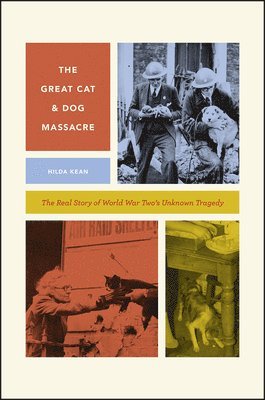
The tragedies of World War II are well known. But at least one has been forgotten: in September 1939, four hundred thousand cats and dogs were massacred in Britain. The government, vets, and animal charities all advised against this killing. So why would thousands of British citizens line up to voluntarily euthanize household pets? In The Great Cat and Dog Massacre, Hilda Kean unearths the history, piecing together the compelling story of the life and death of Britain's wartime animal companions. She explains that fear of imminent Nazi bombing and the desire to do something to prepare for war led Britons to sew blackout curtains, dig up flower beds for vegetable patches, send their children away to the countryside and kill the family pet, in theory sparing them the suffering of a bombing raid. Kean's narrative is gripping, unfolding through stories of shared experiences of bombing, food restrictions, sheltering, and mutual support. Soon pets became key to the war effort, providing emotional assistance and helping people to survive a contribution for which the animals gained government recognition.Drawing extensively on new research from animal charities, state archives, diaries, and family stories, Kean does more than tell a virtually forgotten story. She complicates our understanding of World War II as a "good war" fought by a nation of "good" people. Accessibly written and generously illustrated, Kean's account of this forgotten aspect of British history moves animals to center stage forcing us to rethink our assumptions about ourselves and the animals with whom we share our homes.
Inbunden, Engelska, 2016
351 kr
Skickas inom 11-20 vardagar
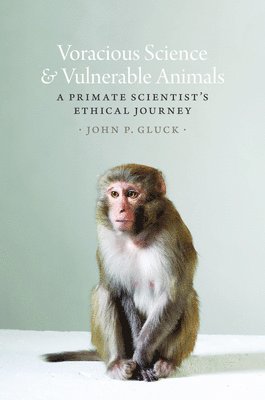
The National Institute of Health recently announced its plan to retire the fifty remaining chimpanzees held in national research facilities and place them in sanctuaries. This significant decision comes after a lengthy process of examination and debate about the ethics of animal research. For decades, proponents of such research have argued that the discoveries and benefits for humans far outweigh the costs of the traumatic effects on the animals; but today, even the researchers themselves have come to question the practice. John P. Gluck has been one of the scientists at the forefront of the movement to end research on primates, and in Voracious Science and Vulnerable Animals he tells a vivid, heart-rending, personal story of how he became a vocal activist for animal protection. Gluck begins by taking us inside the laboratory of Harry F. Harlow at the University of Wisconsin, where Gluck worked as a graduate student in the 1960s. Harlow's primate lab became famous for his behavioral experiments in maternal-deprivation and social isolation of rhesus macaques.Though trained as a behavioral scientist, Gluck finds himself unable to overlook the intense psychological and physical damage these experiments wrought on the macaques. Gluck's sobering and moving account reveals how in this and other labs, including his own, he came to grapple with the uncomfortable justifications that many researchers were offering for their work. As his sense of conflict grows, we're right alongside him, developing a deep empathy for the often smart and always vulnerable animals used for these experiments. At a time of unprecedented recognition of the intellectual cognition and emotional intelligence of animals, Voracious Science and Vulnerable Animals is a powerful appeal for our respect and compassion for those creatures who have unwillingly dedicated their lives to science. Through the words of someone who has inflicted pain in the name of science and come to abhor it, it's important to know what has led this far to progress and where further inroads in animal research ethics are needed.
Häftad, Engelska, 2018
253 kr
Skickas inom 5-8 vardagar
The tragedies of World War II are well known. But at least one has been forgotten: in September 1939, four hundred thousand cats and dogs were massacred in Britain. The government, vets, and animal charities all advised against this killing. So why would thousands of British citizens line up to voluntarily euthanize household pets?In The Great Cat and Dog Massacre, Hilda Kean unearths the history, piecing together the compelling story of the life—and death—of Britain’s wartime animal companions. She explains that fear of imminent Nazi bombing and the desire to do something to prepare for war led Britons to sew blackout curtains, dig up flower beds for vegetable patches, send their children away to the countryside—and kill the family pet, in theory sparing them the suffering of a bombing raid. Kean’s narrative is gripping, unfolding through stories of shared experiences of bombing, food restrictions, sheltering, and mutual support. Soon pets became key to the war effort, providing emotional assistance and helping people to survive—a contribution for which the animals gained government recognition.Drawing extensively on new research from animal charities, state archives, diaries, and family stories, Kean does more than tell a virtually forgotten story. She complicates our understanding of World War II as a “good war” fought by a nation of “good” people. Accessibly written and generously illustrated, Kean’s account of this forgotten aspect of British history moves animals to center stage—forcing us to rethink our assumptions about ourselves and the animals with whom we share our homes.
Inbunden, Engelska, 2018
944 kr
Skickas inom 5-8 vardagar
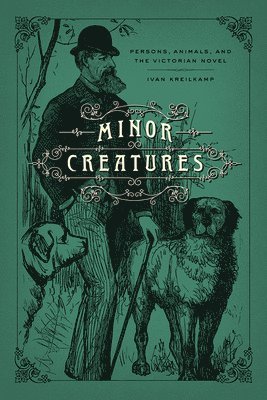
In the nineteenth century, richly-drawn social fiction became one of England’s major cultural exports. At the same time, a surprising companion came to stand alongside the novel as a key embodiment of British identity: the domesticated pet. In works by authors from the Brontës to Eliot, from Dickens to Hardy, animals appeared as markers of domestic coziness and familial kindness. Yet for all their supposed significance, the animals in nineteenth-century fiction were never granted the same fullness of character or consciousness as their human masters: they remain secondary figures. Minor Creatures re-examines a slew of literary classics to show how Victorian notions of domesticity, sympathy, and individuality were shaped in response to the burgeoning pet class. The presence of beloved animals in the home led to a number of welfare-minded political movements, inspired in part by the Darwinian thought that began to sprout at the time. Nineteenth-century animals may not have been the heroes of their own lives but, as Kreilkamp shows, the history of domestic pets deeply influenced the history of the English novel.
Häftad, Engelska, 2018
436 kr
Skickas inom 11-20 vardagar
In the nineteenth century, richly-drawn social fiction became one of England’s major cultural exports. At the same time, a surprising companion came to stand alongside the novel as a key embodiment of British identity: the domesticated pet. In works by authors from the Brontës to Eliot, from Dickens to Hardy, animals appeared as markers of domestic coziness and familial kindness. Yet for all their supposed significance, the animals in nineteenth-century fiction were never granted the same fullness of character or consciousness as their human masters: they remain secondary figures. Minor Creatures re-examines a slew of literary classics to show how Victorian notions of domesticity, sympathy, and individuality were shaped in response to the burgeoning pet class. The presence of beloved animals in the home led to a number of welfare-minded political movements, inspired in part by the Darwinian thought that began to sprout at the time. Nineteenth-century animals may not have been the heroes of their own lives but, as Kreilkamp shows, the history of domestic pets deeply influenced the history of the English novel.
Häftad, Engelska, 2019
310 kr
Skickas inom 5-8 vardagar
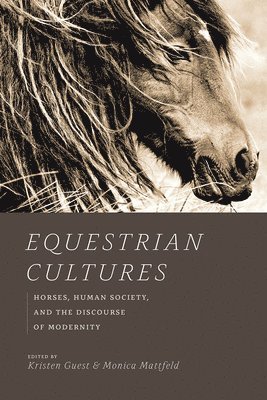
As much as dogs, cats, or any domestic animal, horses exemplify the vast range of human-animal interactions. Horses have long been deployed to help with a variety of human activities—from racing and riding to police work, farming, warfare, and therapy—and have figured heavily in the history of natural sciences, social sciences, and the humanities. Most accounts of the equine-human relationship, however, fail to address the last few centuries of Western history, focusing instead on pre-1700 interactions. Equestrian Cultures fills in the gap, telling the story of how prominently horses continue to figure in our lives, up to the present day. Kristen Guest and Monica Mattfeld place the modern period front and center in this collection, illuminating the largely untold story of how the horse has responded to the accelerated pace of modernity. The book’s contributors explore equine cultures across the globe, drawing from numerous interdisciplinary sources to show how horses have unexpectedly influenced such distinctively modern fields as photography, anthropology, and feminist theory. Equestrian Cultures boldly steps forward to redefine our view of the most recent developments in our long history of equine partnership and sets the course for future examinations of this still-strong bond.
Inbunden, Engelska, 2020
925 kr
Skickas inom 5-8 vardagar
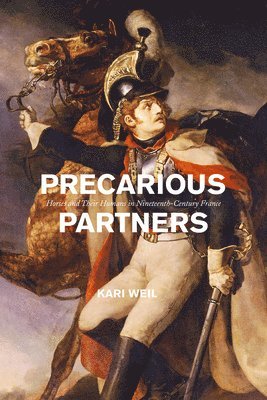
From the recent spate of equine deaths on racetracks to protests demanding the removal of mounted Confederate soldier statues to the success and appeal of War Horse, there is no question that horses still play a role in our lives--though fewer and fewer of us actually interact with them. In Precarious Partners, Kari Weil takes readers back to a time in France when horses were an inescapable part of daily life. This was a time when horse ownership became an attainable dream not just for soldiers, but also for middle class children; when natural historians argued about animal intelligence; when the prevalence of horse beatings inspired the first animal protection laws; and when the combined magnificence and abuse of these animals inspired artists, writers, and riders alike. Weil traces the evolving partnerships established between French citizens and their horses through this era. She considers the newly designed "races" of workhorses who carried men from the battlefield to the hippodrome, lugged heavy loads through the boulevards, or who paraded women riders, "amazones," in the parks or circus halls--as well as with those unfortunate horses who found their fate on a dinner plate. Moving between literature, painting, natural philosophy, popular cartoons, sport manuals, and tracts of public hygiene, Precarious Partners traces the changing social, political, and emotional relations with these charismatic creatures who straddled conceptions of pet and livestock in nineteenth-century France.
Häftad, Engelska, 2020
310 kr
Skickas inom 5-8 vardagar
From the recent spate of equine deaths on racetracks to protests demanding the removal of mounted Confederate soldier statues to the success and appeal of War Horse, there is no question that horses still play a role in our lives--though fewer and fewer of us actually interact with them. In Precarious Partners, Kari Weil takes readers back to a time in France when horses were an inescapable part of daily life. This was a time when horse ownership became an attainable dream not just for soldiers, but also for middle class children; when natural historians argued about animal intelligence; when the prevalence of horse beatings inspired the first animal protection laws; and when the combined magnificence and abuse of these animals inspired artists, writers, and riders alike. Weil traces the evolving partnerships established between French citizens and their horses through this era. She considers the newly designed "races" of workhorses who carried men from the battlefield to the hippodrome, lugged heavy loads through the boulevards, or who paraded women riders, "amazones," in the parks or circus halls--as well as with those unfortunate horses who found their fate on a dinner plate. Moving between literature, painting, natural philosophy, popular cartoons, sport manuals, and tracts of public hygiene, Precarious Partners traces the changing social, political, and emotional relations with these charismatic creatures who straddled conceptions of pet and livestock in nineteenth-century France.
Inbunden, Engelska, 2021
761 kr
Skickas inom 5-8 vardagar
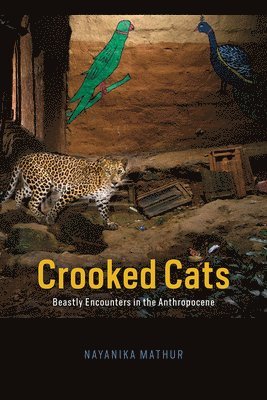
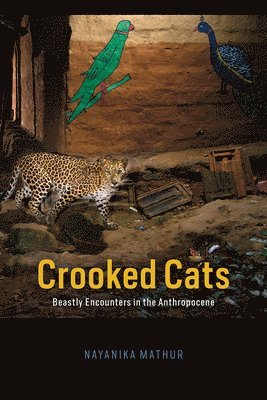
Big cats—tigers, leopards, and lions—that make prey of humans are commonly known as “man-eaters.” Anthropologist Nayanika Mathur reconceptualizes them as cats that have gone off the straight path to become “crooked.” Building upon fifteen years of research in India, this groundbreaking work moves beyond both colonial and conservationist accounts to place crooked cats at the center of the question of how we are to comprehend a planet in crisis.There are many theories on why and how a big cat comes to prey on humans, with the ecological collapse emerging as a central explanatory factor. Yet, uncertainty over the precise cause of crookedness persists. Crooked Cats explores in vivid detail the many lived complexities that arise from this absence of certain knowledge to offer startling new insights into both the governance of nonhuman animals and their intimate entanglements with humans. Through creative ethnographic storytelling, Crooked Cats illuminates the Anthropocene in three critical ways: as method, as a way of reframing human-nonhuman relations on the planet, and as a political tool indicating the urgency of academic engagement. Weaving together “beastly tales” spun from encounters with big cats, Mathur deepens our understanding of the causes, consequences, and conceptualization of the climate crisis.
Häftad, Engelska, 2021
261 kr
Skickas inom 5-8 vardagar
Big cats—tigers, leopards, and lions—that make prey of humans are commonly known as “man-eaters.” Anthropologist Nayanika Mathur reconceptualizes them as cats that have gone off the straight path to become “crooked.” Building upon fifteen years of research in India, this groundbreaking work moves beyond both colonial and conservationist accounts to place crooked cats at the center of the question of how we are to comprehend a planet in crisis.There are many theories on why and how a big cat comes to prey on humans, with the ecological collapse emerging as a central explanatory factor. Yet, uncertainty over the precise cause of crookedness persists. Crooked Cats explores in vivid detail the many lived complexities that arise from this absence of certain knowledge to offer startling new insights into both the governance of nonhuman animals and their intimate entanglements with humans. Through creative ethnographic storytelling, Crooked Cats illuminates the Anthropocene in three critical ways: as method, as a way of reframing human-nonhuman relations on the planet, and as a political tool indicating the urgency of academic engagement. Weaving together “beastly tales” spun from encounters with big cats, Mathur deepens our understanding of the causes, consequences, and conceptualization of the climate crisis.
Inbunden, Engelska, 2021
879 kr
Skickas inom 5-8 vardagar
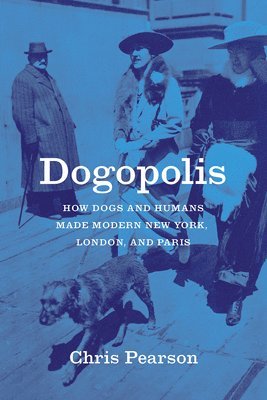
Stroll through any American or European city today and you probably won’t get far before seeing a dog being taken for a walk. It’s expected that these domesticated animals can easily navigate sidewalks, streets, and other foundational elements of our built environment. But what if our cities were actually shaped in response to dogs more than we ever realized?Chris Pearson’s Dogopolis boldly and convincingly asserts that human-canine relations were a crucial factor in the formation of modern urban living. Focusing on New York, London, and Paris from the early nineteenth century into the 1930s, Pearson shows that human reactions to dogs significantly remolded them and other contemporary western cities. It’s an unalterable fact that dogs—often filthy, bellicose, and sometimes off-putting—run away, spread rabies, defecate, and breed wherever they like, so as dogs became a more and more common in nineteenth-century middle-class life, cities had to respond to people’s fear of them and revulsion at their least desirable traits. The gradual integration of dogs into city life centered on disgust at dirt, fear of crime and vagrancy, and the promotion of humanitarian sentiments. On the other hand, dogs are some people’s most beloved animal companions, and human compassion and affection for pets and strays were equally powerful forces in shaping urban modernity. Dogopolis details the complex interrelations among emotions, sentiment, and the ways we manifest our feelings toward what we love—showing that together they can actually reshape society.
Häftad, Engelska, 2021
244 kr
Skickas inom 5-8 vardagar
Stroll through any American or European city today and you probably won’t get far before seeing a dog being taken for a walk. It’s expected that these domesticated animals can easily navigate sidewalks, streets, and other foundational elements of our built environment. But what if our cities were actually shaped in response to dogs more than we ever realized?Chris Pearson’s Dogopolis boldly and convincingly asserts that human-canine relations were a crucial factor in the formation of modern urban living. Focusing on New York, London, and Paris from the early nineteenth century into the 1930s, Pearson shows that human reactions to dogs significantly remolded them and other contemporary western cities. It’s an unalterable fact that dogs—often filthy, bellicose, and sometimes off-putting—run away, spread rabies, defecate, and breed wherever they like, so as dogs became a more and more common in nineteenth-century middle-class life, cities had to respond to people’s fear of them and revulsion at their least desirable traits. The gradual integration of dogs into city life centered on disgust at dirt, fear of crime and vagrancy, and the promotion of humanitarian sentiments. On the other hand, dogs are some people’s most beloved animal companions, and human compassion and affection for pets and strays were equally powerful forces in shaping urban modernity. Dogopolis details the complex interrelations among emotions, sentiment, and the ways we manifest our feelings toward what we love—showing that together they can actually reshape society.
Inbunden, Engelska, 2024
1 487 kr
Skickas inom 3-6 vardagar
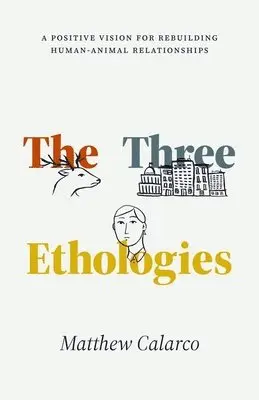
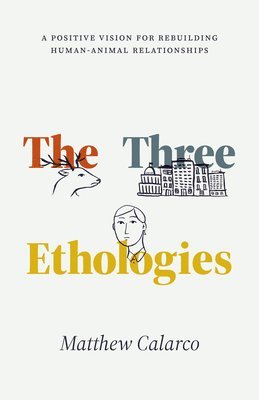
A transformative vision for human-animal relations on personal, social, and environmental levels.The Three Ethologies offers a fresh, affirmative vision for rebuilding human-animal relations. Venturing beyond the usual scholarly and activist emphasis on restricting harm, Matthew Calarco develops a new philosophy for understanding animal behavior—a practice known as ethology—through three distinct but interrelated lenses: mental ethology, which rebuilds individual subjectivity; social ethology, which rethinks our communal relations; and environmental ethology, which reconfigures our relationship to the land we co-inhabit with our animal kin. Drawing on developments in philosophy, (eco)feminist theory, critical geography, Indigenous studies, and the environmental humanities, Calarco casts an inspiring vision of how ethological living can help us to reimagine our ideas about goodness, truth, and beauty.
Häftad, Engelska, 2024
204 kr
Skickas inom 5-8 vardagar
A transformative vision for human-animal relations on personal, social, and environmental levels.The Three Ethologies offers a fresh, affirmative vision for rebuilding human-animal relations. Venturing beyond the usual scholarly and activist emphasis on restricting harm, Matthew Calarco develops a new philosophy for understanding animal behavior—a practice known as ethology—through three distinct but interrelated lenses: mental ethology, which rebuilds individual subjectivity; social ethology, which rethinks our communal relations; and environmental ethology, which reconfigures our relationship to the land we co-inhabit with our animal kin. Drawing on developments in philosophy, (eco)feminist theory, critical geography, Indigenous studies, and the environmental humanities, Calarco casts an inspiring vision of how ethological living can help us to reimagine our ideas about goodness, truth, and beauty.
Inbunden, Engelska, 2024
981 kr
Skickas inom 5-8 vardagar
Reconceptualizes human-animal relationships and their political significance in ancient and modern societies. In Live Stock and Dead Things, Hannah Chazin combines zooarchaeology and anthropology to challenge familiar narratives about the role of nonhuman animals in the rise of modern societies. Conventional views of this process tend to see a mostly linear development from hunter-gatherer societies, to horticultural and pastoral ones, to large-scale agricultural ones, and then industrial ones. Along the way, traditional accounts argue that owning livestock as property, along with land and other valuable commodities, introduced social inequality and stratification. Against this, Chazin raises a provocative question: What if domestication wasn’t the origin of instrumentalizing nonhuman animals after all? Chazin argues that these conventional narratives are inherited from conjectural histories and ignore the archaeological data. In her view, the category of “domestication” flattens the more complex dimensions of humans’ relationship to herd animals. In the book’s first half, Chazin offers a new understanding of the political possibilities of pastoralism, one that recognizes the powerful role herd animals have played in shaping human notions of power and authority. In the second half, she takes readers into her archaeological fieldwork in the South Caucasus, which sheds further light on herd animals’ transformative effect on the economy, social life, and ritual. Appealing to anthropologists and archaeologists alike, this daring book offers a reconceptualization of human-animal relationships and their political significance.
Häftad, Engelska, 2024
304 kr
Skickas inom 5-8 vardagar
Reconceptualizes human-animal relationships and their political significance in ancient and modern societies. In Live Stock and Dead Things, Hannah Chazin combines zooarchaeology and anthropology to challenge familiar narratives about the role of nonhuman animals in the rise of modern societies. Conventional views of this process tend to see a mostly linear development from hunter-gatherer societies, to horticultural and pastoral ones, to large-scale agricultural ones, and then industrial ones. Along the way, traditional accounts argue that owning livestock as property, along with land and other valuable commodities, introduced social inequality and stratification. Against this, Chazin raises a provocative question: What if domestication wasn’t the origin of instrumentalizing nonhuman animals after all? Chazin argues that these conventional narratives are inherited from conjectural histories and ignore the archaeological data. In her view, the category of “domestication” flattens the more complex dimensions of humans’ relationship to herd animals. In the book’s first half, Chazin offers a new understanding of the political possibilities of pastoralism, one that recognizes the powerful role herd animals have played in shaping human notions of power and authority. In the second half, she takes readers into her archaeological fieldwork in the South Caucasus, which sheds further light on herd animals’ transformative effect on the economy, social life, and ritual. Appealing to anthropologists and archaeologists alike, this daring book offers a reconceptualization of human-animal relationships and their political significance.
Häftad, Engelska, 2025
226 kr
Skickas inom 5-8 vardagar
A moving story of survival and an eye-opening introduction to an extraordinary community of chimps and people. Fongoli chimpanzees are unique for many reasons. Their female hunters are the only apes that regularly hunt with tools, seeking out tiny bush babies with wooden spears. Unlike most other chimps, these apes fear neither water nor fire, using shallow pools to cool off in the Senegalese heat. Up to 90 percent of their home range burns annually—the result of human hunting or clearing for gold mining—and Fongoli chimpanzees have learned to predict the movement of such fires and to avoid them. The study of Fongoli chimps is also unique. While most primate research occurs in isolated reserves, Fongoli chimpanzees live alongside humans, and as primatologist and anthropologist Jill Pruetz reports, this shared habitat creates both challenges and opportunities. The issues faced by Fongoli chimpanzees—particularly food scarcity and environmental degradation—are also issues faced by their human neighbors. This connection is one reason Pruetz, who has studied Fongoli apes for over two decades, created the nonprofit Neighbor Ape in 2008 to provide for the welfare of the humans who share their landscape with apes. It is also why Pruetz decided to write this book, the first to offer readers a view of these chimps’ lives and to explain the specific conservation efforts needed to help them. Incorporating stories from Pruetz’s time in the field, including the compelling rescue of a young chimp from poachers, Apes on the Edge opens a fascinating window into primate research, conservation, and the inner workings of a very special population of our closest nonhuman relatives.
Inbunden, Engelska, 2025
1 011 kr
Skickas inom 5-8 vardagar
A moving story of survival and an eye-opening introduction to an extraordinary community of chimps and people. Fongoli chimpanzees are unique for many reasons. Their female hunters are the only apes that regularly hunt with tools, seeking out tiny bush babies with wooden spears. Unlike most other chimps, these apes fear neither water nor fire, using shallow pools to cool off in the Senegalese heat. Up to 90 percent of their home range burns annually—the result of human hunting or clearing for gold mining—and Fongoli chimpanzees have learned to predict the movement of such fires and to avoid them. The study of Fongoli chimps is also unique. While most primate research occurs in isolated reserves, Fongoli chimpanzees live alongside humans, and as primatologist and anthropologist Jill Pruetz reports, this shared habitat creates both challenges and opportunities. The issues faced by Fongoli chimpanzees—particularly food scarcity and environmental degradation—are also issues faced by their human neighbors. This connection is one reason Pruetz, who has studied Fongoli apes for over two decades, created the nonprofit Neighbor Ape in 2008 to provide for the welfare of the humans who share their landscape with apes. It is also why Pruetz decided to write this book, the first to offer readers a view of these chimps’ lives and to explain the specific conservation efforts needed to help them. Incorporating stories from Pruetz’s time in the field, including the compelling rescue of a young chimp from poachers, Apes on the Edge opens a fascinating window into primate research, conservation, and the inner workings of a very special population of our closest nonhuman relatives.