Architectural Design Primer - Böcker
Visar alla böcker i serien Architectural Design Primer. Handla med fri frakt och snabb leverans.
13 produkter
13 produkter
Del 3 - Architectural Design Primer
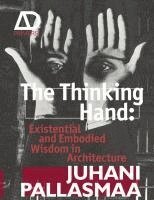
Thinking Hand
Existential and Embodied Wisdom in Architecture
Häftad, Engelska, 2009
452 kr
Skickas inom 7-10 vardagar
In our current global networked culture that puts so much emphasis on the virtual and the visual, the mind and the body have become detached and ultimately disconnected. Though physical appearance is idolised for its sexual appeal and its social identity, the role of the body in developing a full understanding of the physical world and the human condition has become neglected. The potential of the human body as a knowing entity – with all our senses as well as our entire bodily functions being structured to produce and maintain silent knowledge together – fails to be recognised. It is only through the unity of mind and body that craftsmanship and artistic work can be fully realised. Even those endeavours that are generally regarded as solely intellectual, such as writing and thinking, depend on this union of mental and manual skills.In The Thinking Hand, Juhani Pallasmaa reveals the miraculous potential of the human hand. He shows how the pencil in the hand of the artist or architect becomes the bridge between the imagining mind and the emerging image. The book surveys the multiple essences of the hand, its biological evolution and its role in the shaping of culture, highlighting how the hand–tool union and eye–hand–mind fusion are essential for dexterity and how ultimately the body and the senses play a crucial role in memory and creative work. Pallasmaa here continues the exploration begun in his classic work The Eyes of the Skin by further investigating the interplay of emotion and imagination, intelligence and making, theory and life, once again redefining the task of art and architecture through well-grounded human truths.
458 kr
Skickas inom 7-10 vardagar
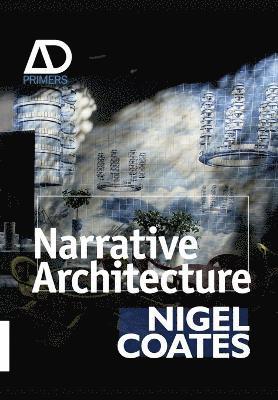
The first book to look architectural narrative in the eye Since the early eighties, many architects have used the term "narrative" to describe their work. To architects the enduring attraction of narrative is that it offers a way of engaging with the way a city feels and works. Rather than reducing architecture to mere style or an overt emphasis on technology, it foregrounds the experiential dimension of architecture. Narrative Architecture explores the potential for narrative as a way of interpreting buildings from ancient history through to the present, deals with architectural background, analysis and practice as well as its future development. Authored by Nigel Coates, a foremost figure in the field of narrative architecture, the book is one of the first to address this subject directlyFeatures architects as diverse as William Kent, Antoni Gaudí, Eero Saarinen, Ettore Sottsass, Superstudio, Rem Koolhaas, and FAT to provide an overview of the work of NATO and Coates, as well as chapters on other contemporary designersIncludes over 120 colour photographsSignposting narrative's significance as a design approach that can aid architecture to remain relevant in this complex, multi-disciplinary and multi-everything age, Narrative Architecture is a must-read for anyone with an interest in architectural history and theory.
418 kr
Skickas inom 7-10 vardagar
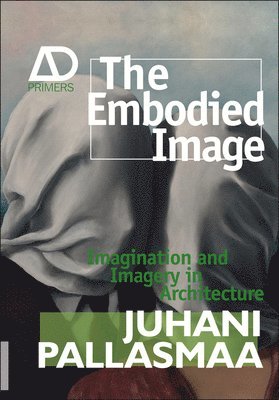
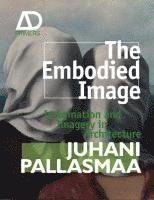
The Embodied Image The Embodied Image: Imagination and Imagery in Architecture Juhani Pallasmaa All artistic and architectural effects are evoked, mediated and experienced through poeticised images. These images are embodied and lived experiences that take place in ‘the flesh of the world’, becoming part of us, at the same time that we unconsciously project aspects of ourselves on to a conceived space, object or event. Artistic images have a life and reality of their own and they develop through unexpected associations rather than rational and causal logic. Images are usually thought of as retinal pictures but profound poetic images are multi-sensory and they address us in an embodied and emotive manner. Architecture is usually analysed and taught as a discipline that articulates space and geometry, but the mental impact of architecture arises significantly from its image quality that integrates the various aspects and dimensions of experience into a singular, internalised and remembered entity. The material reality is fused with our mental and imaginative realm. The book is organised into five main parts that look at in turn: the image in contemporary culture; language, thought and the image; the many faces of the image; the poetic image; and finally the architectural image. The Embodied Image is illustrated with over sixty images in pairs, which are diverse in subject. They range from scientific images to historic artistic and architectural masterpieces. Artworks span Michelangelo and Vermeer to Gordon Matta- Clark and architecture takes in Modern Masters such as Mies van der Rohe, Le Corbusier and Alvar Aalto, as well as significant contemporary works by Steven Holl and Daniel Libeskind.
1 067 kr
Skickas
The Embodied Image The Embodied Image: Imagination and Imagery in Architecture Juhani Pallasmaa All artistic and architectural effects are evoked, mediated and experienced through poeticised images. These images are embodied and lived experiences that take place in ‘the flesh of the world’, becoming part of us, at the same time that we unconsciously project aspects of ourselves on to a conceived space, object or event. Artistic images have a life and reality of their own and they develop through unexpected associations rather than rational and causal logic. Images are usually thought of as retinal pictures but profound poetic images are multi-sensory and they address us in an embodied and emotive manner. Architecture is usually analysed and taught as a discipline that articulates space and geometry, but the mental impact of architecture arises significantly from its image quality that integrates the various aspects and dimensions of experience into a singular, internalised and remembered entity. The material reality is fused with our mental and imaginative realm. The book is organised into five main parts that look at in turn: the image in contemporary culture; language, thought and the image; the many faces of the image; the poetic image; and finally the architectural image. The Embodied Image is illustrated with over sixty images in pairs, which are diverse in subject. They range from scientific images to historic artistic and architectural masterpieces. Artworks span Michelangelo and Vermeer to Gordon Matta- Clark and architecture takes in Modern Masters such as Mies van der Rohe, Le Corbusier and Alvar Aalto, as well as significant contemporary works by Steven Holl and Daniel Libeskind.
453 kr
Tillfälligt slut
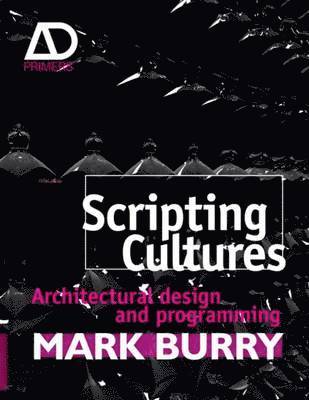
Scripting Cultures: Architectural Design and ProgrammingWith scripting, computer programming becomes integral to the digital design process. It provides unique opportunities for innovation, enabling the designer to customise the software around their own predilections and modes of working. It liberates the designer by automating many routine aspects and repetitive activities of the design process, freeing-up the designer to spend more time on design thinking. Software that is modified through scripting offers a range of speculations that are not possible using the software only as the manufacturers intended it to be used. There are also significant economic benefits to automating routines and coupling them with emerging digital fabrication technologies, as time is saved at the front-end and new file-to-factory protocols can be taken advantage of. Most significantly perhaps, scripting as a computing program overlay enables the tool user (designer) to become the new tool maker (software engineer). Though scripting is not new to design, it is only recently that it has started to be regarded as integral to the designer's skill set rather than a technical speciality. Many designers are now aware of its potential, but remain hesitant. This book treats scripting not only as a technical challenge, requiring clear description, guidance and training, but also, and more crucially, answers the question as to why designers should script in the first place, and what the cultural and theoretical implications are.This book: Investigates the application of scripting for productivity, experimentation and design speculation.Offers detailed exploration of the scripting of Gaudí's final realised design for the Sagrada Família, leading to file-to-factory digital fabrication.Features projects and commentary from over 30 contemporary scripting leaders, including Evan Douglis, Marc Fornes, Sawako Kaijima, Achim Menges, Neri Oxman, Casey Reas and Hugh Whitehead of Foster + Partners.
1 061 kr
Tillfälligt slut
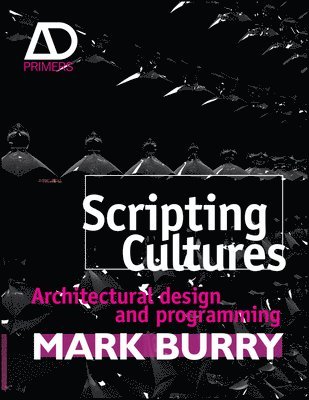
Scripting Cultures: Architectural Design and ProgrammingWith scripting, computer programming becomes integral to the digital design process. It provides unique opportunities for innovation, enabling the designer to customise the software around their own predilections and modes of working. It liberates the designer by automating many routine aspects and repetitive activities of the design process, freeing-up the designer to spend more time on design thinking. Software that is modified through scripting offers a range of speculations that are not possible using the software only as the manufacturers intended it to be used. There are also significant economic benefits to automating routines and coupling them with emerging digital fabrication technologies, as time is saved at the front-end and new file-to-factory protocols can be taken advantage of. Most significantly perhaps, scripting as a computing program overlay enables the tool user (designer) to become the new tool maker (software engineer). Though scripting is not new to design, it is only recently that it has started to be regarded as integral to the designer's skill set rather than a technical speciality. Many designers are now aware of its potential, but remain hesitant. This book treats scripting not only as a technical challenge, requiring clear description, guidance and training, but also, and more crucially, answers the question as to why designers should script in the first place, and what the cultural and theoretical implications are.This book: Investigates the application of scripting for productivity, experimentation and design speculation.Offers detailed exploration of the scripting of Gaudí's final realised design for the Sagrada Família, leading to file-to-factory digital fabrication.Features projects and commentary from over 30 contemporary scripting leaders, including Evan Douglis, Marc Fornes, Sawako Kaijima, Achim Menges, Neri Oxman, Casey Reas and Hugh Whitehead of Foster + Partners.
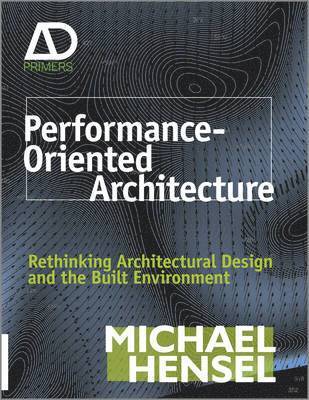
Performance-Oriented Architecture
Rethinking Architectural Design and the Built Environment
Häftad, Engelska, 2013
368 kr
Skickas inom 7-10 vardagar
Architecture is on the brink. It is a discipline in crisis. Over the last two decades, architectural debate has diversified to the point of fragmentation and exhaustion. What is called for is an overarching argument or set of criteria on which to approach the design and construction of the built environment. Here, the internationally renowned architect and educator Michael Hensel advocates an entirely different way of thinking about architecture. By favouring a new focus on performance, he rejects longstanding conventions in design and the built environment. This not only bridges the gap between academia and practice, but, even more significantly, the treatment of form and function in design. It also has a far-reaching impact on knowledge production and development, placing an important emphasis on design research in architecture and the value of an interdisciplinary approach.Though ‘performance’ first evolved as a concept in the humanities in the 1940s and 1950s, it has never previously been systematically applied in architecture in an inclusive manner. Here Michael Hensel offers Performance-Orientated Architecture as an integrative approach to architectural design, the built environment and questions of sustainability. He highlights how core concepts and specific traits, such as climate, material performance and settlement patterns, can put architecture in the service of the natural environment. A wide range of examples are cited to support his argument, from traditional sustainable buildings, such as the Kahju Bridge in Isfahan and the Topkapí Palace in Istanbul to more contemporary works by Cloud 9, Foreign Office Architects, Steven Holl and OCEAN.
411 kr
Skickas inom 10-15 vardagar
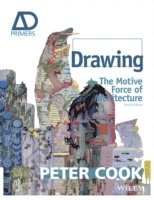
DrawingThe Motive Force of Architecture Focusing on the creative and inventive significance of drawing for architecture, this book by one of its greatest proponents, Peter Cook, is an established classic. It exudes Cook’s delight and his wide-ranging, catholic tastes for the architectural. Readers are provided with perceptive insights at every turn. The book features some of the greatest and most intriguing drawings by architects, ranging from Frank Lloyd Wright, William Heath Robinson, Le Corbusier and Otto Wagner to Frank Gehry, Zaha Hadid, Coop Himmelb(l)au, Arata Isozaki, Eric Owen Moss, Bernard Tschumi and Lebbeus Woods; as well as key works by Cook and other members of the original Archigram group. For this new edition, Cook provides a substantial new chapter that charts the speed at which the trajectory of drawing is moving. It reflects the increasing sophistication of available software and also the ways in which ‘hand drawing’ and the ‘digital’ are being eclipsed by new hybrids – injecting drawing with a fresh momentum. These ‘crossovers’ provide a whole new territory as attempts are made to release drawing from the boundaries of a solitary moment, a single-viewing position or a single referential language. Featuring the likes of Toyo Ito, Perry Kulper, Izaskun Chinchilla, Kenny Kinugasa-Tsui, Ali Rahim, John Berglund and Lorène Faure, it leads to fascinating insights into the effect that medium has upon intention and definition of an idea or a place. Is a pencil drawing more attuned to a certain architecture than an ink drawing, or is a particular colour evocative of a certain atmosphere? In a world where a Maya® drawing is creatively contributing something different from a Rhinoceros® drawing, there is much to demand of future techniques.
267 kr
Tillfälligt slut
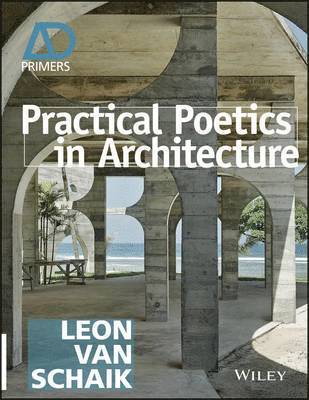
Integrate poetics into real-world spaces by bringing theory down to earth Practical Poetics in Architecture takes poetics out of the theory class and into the design studio, showing architects how the atmospheric and experiential qualities of built structures can be intentionally considered and planned. With an emphasis on analysing and explaining the sensibility of poetics at work in designing and constructing architecture, this book features projects from architects around the world that demonstrate the principles of poetics come to life. The rich illustration of two hundred colour images, including analytical diagrams, plans, sections, and photos, make this insightful guide a highly visual foray into a topic that has thus far remained more theoretical than practical. The text is matter-of-fact and concrete, yet remains richly connected to its forbears and the writings of William Lethaby, Gaston Bachelard, and Steen Eiler Rasmussen. The perspective is contemporary in its examples and its connections to the evolving science of perception.An established seminar topic in theory classes around the world, poetics tends to rely heavily on classic philosophic texts — until now. Practical Poetics in Architecture brings theory down to earth to show architects how to invoke poetics when designing real projects. Integrate poetics principles into real-world designsConsider atmosphere in terms of form, space, and acousticsStudy actual projects that bring poetics into real spacesTake cues from analytical diagrams of projects accounting for contextPoetics — the accumulated experience of place, space, and culture — has become more critical in recent years as the atmospheric and experiential qualities of built spaces have become more elusive in the virtual age. Practical Poetics in Architecture provides real guidance for real projects, and brings poetics out of the mind and onto the plans.
399 kr
Skickas inom 7-10 vardagar
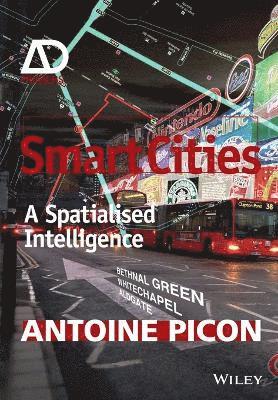
As cities compete globally, the Smart City has been touted as the important new strategic driver for regeneration and growth. Smart Cities are employing information and communication technologies in the quest for sustainable economic development and the fostering of new forms of collective life. This has made the Smart City an essential focus for engineers, architects, urban designers, urban planners, and politicians, as well as businesses such as CISCO, IBM and Siemens. Despite its broad appeal, few comprehensive books have been devoted to the subject so far, and even fewer have tried to relate it to cultural issues and to assume a truly critical stance by trying to decipher its consequences on urban space and experience. This cultural and critical lens is all the more important as the Smart City is as much an ideal permeated by Utopian beliefs as a concrete process of urban transformation. This ideal possesses a strong self-fulfilling character: our cities will become 'Smart' because we want them to.This book opens with an examination of the technological reality on which Smart Cities are built, from the chips and sensors that enable us to monitor what happens within the infrastructure to the smartphones that connect individuals. Through these technologies, the urban space appears as activated, almost sentient. This activation generates two contrasting visions: on the one hand, a neo-cybernetic ambition to steer the city in the most efficient way; and on the other, a more bottom-up, participative approach in which empowered individuals invent new modes of cooperation. A thorough analysis of these two trends reveals them to be complementary. The Smart City of the near future will result from their mutual adjustment. In this process, urban space plays a decisive role. Smart Cities are contemporary with a 'spatial turn' of the digital. Based on key technological developments like geo-localisation and augmented reality, the rising importance of space explains the strategic role of mapping in the evolution of the urban experience. Throughout this exploration of some of the key dimensions of the Smart City, this book constantly moves from the technological to the spatial as well as from a critical assessment of existing experiments to speculations on the rise of a new form of collective intelligence. In the future, cities will become smarter in a much more literal way than what is often currently assumed.
379 kr
Tillfälligt slut
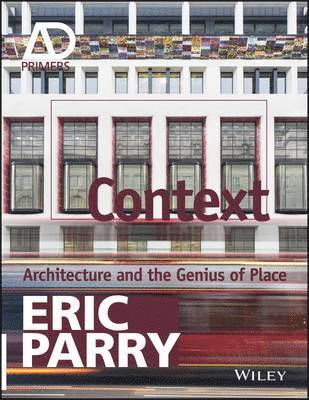
Demonstrates how a building's setting should inform and inspire rather than constrain architectural design Context-Architecture and the Genius of Place is a highly engaging, informative discussion of context in architectural theory and practice. Eric Parry, one of the UK's most highly regarded architects — whose work has been widely lauded for its innovative response to its setting — addresses the contemporary definition of context and its importance for sustainable everyday living and urban design. Looking beyond the formal agenda to explore the fundamentals that give new social and cultural perspective to this vital point of departure for designers, this book turns the urban statistician's telescopic focus on global trends inside out for a better understanding of the cultural and physical conditions that make archetypes like the Parisian Café, the London High Street, the Baltic City Square, and the Mumbai Market part of the architect's lexicon. From pavement to landscape, readers will examine how context must be taken into account at every stage in the design process.This book draws on the author's extensive experience within complex urban settings to show how the existing fabric and social conditions can provide an essential starting point for new design, offering a framework for thinking about design responses and their relationship to cultural origins of place. Discover the importance of orientationDevelop a sequential understanding of urban spaceHear the dialogue between parts within a wholeDifferentiate the uses of formal and informalWhereas existing urban settings, particularly historic city centers, are generally regarded as limiting to architectural creativity, this book presents context as grounds for inspiration rather than constraint. When used correctly, these techniques create the feeling that a new building has always been there, simply because it "fits". Context explains the methods behind brilliant architecture, helping designers create buildings that not only belong, but can provide a catalyst to urban life.
418 kr
Skickas inom 7-10 vardagar
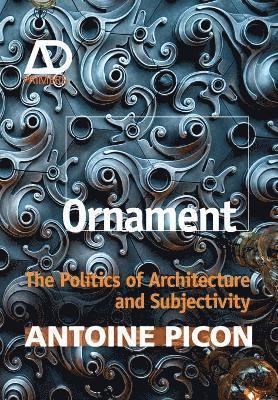
Once condemned by Modernism and compared to a ‘crime’ by Adolf Loos, ornament has made a spectacular return in contemporary architecture. This is typified by the works of well-known architects such as Herzog & de Meuron, Sauerbruch Hutton, Farshid Moussavi Architecture and OMA. There is no doubt that these new ornamental tendencies are inseparable from innovations in computer technology. The proliferation of developments in design software has enabled architects to experiment afresh with texture, colour, pattern and topology.Though inextricably linked with digital tools and culture, Antoine Picon argues that some significant traits in ornament persist from earlier Western architectural traditions. These he defines as the ‘subjective’ – the human interaction that ornament requires in both its production and its reception – and the political. Contrary to the message conveyed by the founding fathers of modern architecture, traditional ornament was not meant only for pleasure. It conveyed vital information about the designation of buildings as well as about the rank of their owners. As such, it participated in the expression of social values, hierarchies and order. By bringing previous traditions in ornament under scrutiny, Picon makes us question the political issues at stake in today’s ornamental revival. What does it tell us about present-day culture? Why are we presently so fearful of meaning in architecture? Could it be that by steering so vehemently away from symbolism, contemporary architecture is evading any explicit contribution to collective values?
453 kr
Skickas inom 11-20 vardagar
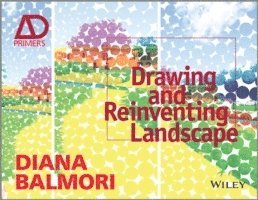
How to tackle representation in landscape design Representation is a hot topic in landscape architecture. While computerization has been a catalyst for change across many fields in design, no other design field has experienced such drastic reinvention as has landscape architecture. As the world urbanizes rapidly and our relationship with nature changes, it is vitally important that landscape designers adopt innovative forms of representation—whether digital, analog, or hybrid.In this book, author Diana Balmori explores notions of representation in the discipline at large and across time. She takes readers from landscape design's roots in seventeenth-century France and eighteenth-century England through to modern attempts at representation made by contemporary landscape artists. Addresses a central topic in the discipline of landscape architectureFeatures historic works and those by leading contemporary practitioners, such as Bernard Lassus, Richard Haag, Stig L Andersson, Lawrence Halprin, and Patricia JohansonWritten by a renowned practitioner and educatorFeatures 150 full-color imagesDrawing and Reinventing Landscape, AD Primer is an informative investigation of beauty in landscape design, offering inspiring creative perspectives for students and professionals.