Astrobiology Perspectives on Life in the Universe – serie
Visar alla böcker i serien Astrobiology Perspectives on Life in the Universe. Handla med fri frakt och snabb leverans.
9 produkter
9 produkter
Planet Formation and Panspermia
New Prospects for the Movement of Life Through Space
Inbunden, Engelska, 2021
2 091 kr
Skickas
An in-depth view of the panspermia hypothesis examined against the latest knowledge of planetary formation and related processes. Panspermia is the concept that life can be passively transported through space on various bodies and seed, habitable planets and moons, which we are beginning to learn may exist in large numbers. It is an old idea, but not popular with those who prefer that life on Earth started on Earth, an alternative, also unproven hypothesis. This book updates the concept of panspermia in the light of new evidence on planet formation, molecular clouds, solar system motions, supernovae ejection mechanisms, etc. Thus, it is to be a book about newly understood prospects for the movement of life through space. The novel approach presented in this book gives new insights into the panspermia theory and its connection with planetary formation and the evolution of galaxies. This offers a good starting point for future research proposals about exolife and a better perspective for empirical scrutiny of panspermia theory. Also, the key to understanding life in the universe is to understand that the planetary formation process is convolved with the evolution of stellar systems in their galactic environment. The book provides the synthesis of all these elements and gives the readers an up-to-date insight on how panspermia might fit into the big picture. AudienceGiven the intrinsic interdisciplinary nature of the panspermia hypothesis the book will have a wide audience across various scientific disciplines covering astronomy, biology, physics and chemistry. Apart from scientists, the book will appeal to engineers who are involved in planning and realization of future space missions.
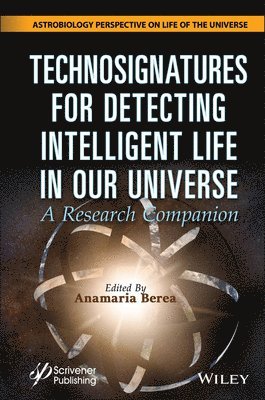
Technosignatures for Detecting Intelligent Life in Our Universe
A Research Companion
Inbunden, Engelska, 2022
1 916 kr
Skickas inom 7-10 vardagar
TECHNOSIGNATURES FOR DETECTING INTELLIGENT LIFE IN OUR UNIVERSE This book shows the current state of the research in the field of technosignatures, presenting novel ideas from economics, forecasting, and data sciences, making it an ideal research compendium for scientists. The book summarizes the multiple interdisciplinary efforts that have contributed to the field of technosignatures. The technosignatures represent any signals that can be collected from the Universe, such as radio wavelengths, optical signals, and many more, that can be potential candidates as signals emitted intentionally from another part of the Universe that is not Earth. It shows how current advances in science, technology, and social sciences can support this effort and can be used as both a resource for the scientists in the field and as a reference for the public at large interested in the topic. It includes novel research work from economics, forecasting, and data sciences fields, as well as a deeper understanding of the role mass media and popular fiction has played in the evolution of this field. AudienceThe book will interest both natural scientists (astronomers and astrophysicists) and social scientists (economists), as well as the new emerging data scientists. Amateur astronomers will be attracted to the book as well.
2 072 kr
Skickas inom 7-10 vardagar
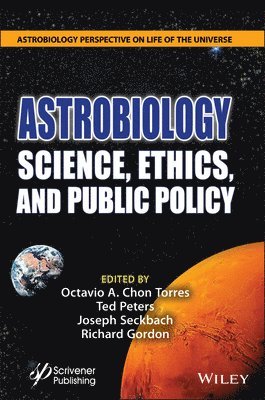
ASTROBIOLOGY This unique book advances the frontier discussion of a wide spectrum of astrobiological issues on scientific advances, space ethics, social impact, religious meaning, and public policy formulation. Astrobiology is an exploding discipline in which not only the natural sciences, but also the social sciences and humanities converge. Astrobiology: Science, Ethics, and Public Policy is a multidisciplinary book that presents different perspectives and points of view by its contributing specialists. Epistemological, moral and political issues arising from astrobiology, convey the complexity of challenges posed by the search for life elsewhere in the universe. We ask: if a convoy of colonists from Earth make the trip to Mars, should their genomes be edited to adapt to the Red Planet’s environment? If scientists discover a biosphere with microbial life within our solar system, will it possess intrinsic value or merely utilitarian value? If astronomers discover an intelligent civilization on an exoplanet elsewhere in the Milky Way, what would be humanity’s moral responsibility: to protect Earth from an existential threat? To treat other intelligences with dignity? To exploit through interstellar commerce? To conquer? AudienceThe book will attract readers from a wide range of interests including astronomers, astrobiologists, chemists, biologists, space engineers, ethicists, theologians and philosophers.
2 484 kr
Skickas inom 7-10 vardagar
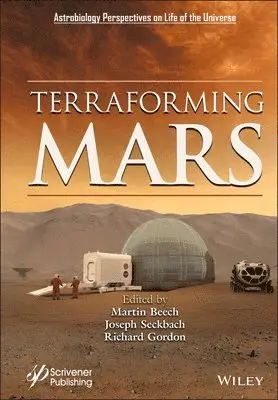
TERRAFORMING MARS This book provides a thorough scientific review of how Mars might eventually be colonized, industrialized, and transformed into a world better suited to human habitation. The idea of terraforming Mars has, in recent times, become a topic of intense scientific interest and great public debate. Stimulated in part by the contemporary imperative to begin geoengineering Earth, as a means to combat global climate change, the terraforming of Mars will work to make its presently hostile environment more suitable to life—especially human life. Geoengineering and terraforming, at their core, have the same goal—that is to enhance (or revive) the ability of a specific environment to support human life, society, and industry. The chapters in this text, written by experts in their respective fields, are accordingly in resonance with the important, and ongoing discussions concerning the human stewardship of global climate systems. In this sense, the text is both timely and relevant and will cover issues relating to topics that will only grow in their relevance in future decades. The notion of terraforming Mars is not a new one, as such, and it has long played as the background narrative in many science fiction novels. This book, however, deals exclusively with what is physically possible, and what might conceivably be put into actual practice within the next several human generations. Audience Researchers in planetary science, astronomy, astrobiology, space engineering, architecture, ethics, as well as members of the space industry.
2 445 kr
Skickas inom 7-10 vardagar
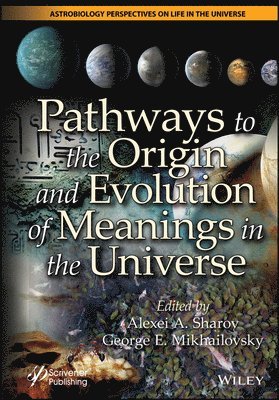
Pathways to the Origin and Evolition of Meanings in the Universe The book explains why meaning is a part of the universe populated by life, and how organisms generate meanings and then use them for creative transformation of the environment and themselves. This book focuses on interdisciplinary research at the intersection of biology, semiotics, philosophy, ethology, information theory, and the theory of evolution. Such a broad approach provides a rich context for the study of organisms and other semiotic agents in their environments. This methodology can be applied to robotics and artificial intelligence for developing robust, adaptable learning devices. In this book, leading interdisciplinary scholars reveal their vision on how to integrate natural sciences with semiotics, a theory of meaning-making and signification. Developments in biology indicate that the capacity to create and understand signs is not limited to humans or vertebrate animals, but exists in all living organisms - the fact that inspired the integration of biology and semiotics into biosemiotics. The authors discuss the nature of semiotic agents (organisms and other autonomous goal-directed units), meaning, signs, information, memory, evolution, and consciousness. Also discussed are issues including the origin of life, potential meaning and its actualization, top-down causality in physics and biology, capacity of organisms to encode their functions, the strategy of organisms to combine homeostasis with direct adaptation to new life-cycle phases or new environments, multi-level memory systems, increase of freedom via enabling constraints, creative modeling in evolution and learning, communication in animals and humans, the origin and function of language, and the distribution and transfer of life in space. This is the first book on biosemiotics in its global conceptual and spatial scope. Biosemiotics is presented using the language of natural sciences, which supports the scientific grounding of semiotic terms. Finally, the cosmic dimension of life and meaning-making leads to a reconsideration of ethical principles and ecological mentality here on earth and in space exploration. Audience Theoretical biologists, ethologists, astrobiologists, ecologists, evolutionary biologists, philosophers, phenomenologists, semioticians, biosemioticians, molecular biologists, linguists, system scientists and engineers.
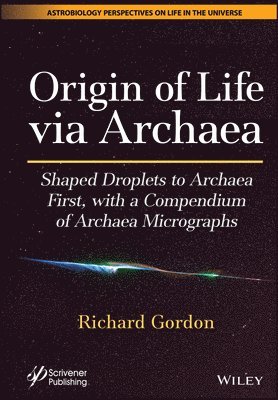
Origin of Life via Archaea
Shaped Droplets to Archaea First, with a Compendium of Archaea Micrographs
Inbunden, Engelska, 2024
3 536 kr
Skickas inom 7-10 vardagar
This book surveys the models for the origin of life and presents a new model starting with shaped droplets and ending with life as polygonal Archaea; it collects the most published micrographs of Archaea (discovered only in 1977), which support this conclusion, and thus provides the first visual survey of Archaea. Origin of Life via Archaea’s purpose is to add a new hypothesis on what are called “shaped droplets”, as the starting point, for flat, polygonal Archaea, supporting the Vesicles First hypothesis. The book contains over 6000 distinct references and micrographs of 440 extant species of Archaea, 41% of which exhibit polygonal phenotypes. It surveys the intellectual battleground of the many ideas of the origin of life on earth, chemical equilibrium, autocatalysis, and biotic polymers. This book contains 17 chapters, some coauthored, on a wide range of topics on the origin of life, including Archaea’s origin, patterns, and species. It shows how various aspects of the origin of life may have occurred at chemical equilibrium, not requiring an energy source, contrary to the general assumption. For the reader’s value, its compendium of Archaea micrographs might also serve many other interesting questions about Archaea. One chapter presents a theory for the shape of flat, polygonal Archaea in terms of the energetics at the surface, edges and corners of the S-layer. Another shows how membrane peptides may have originated. The book also includes a large table of most extant Archaea, that is searchable in the electronic version. It ends with a chapter on problems needing further research. Audience This book will be used by astrobiologists, origin of life biologists, physicists of small systems, geologists, biochemists, theoretical and vesicle chemists.
2 210 kr
Skickas inom 7-10 vardagar
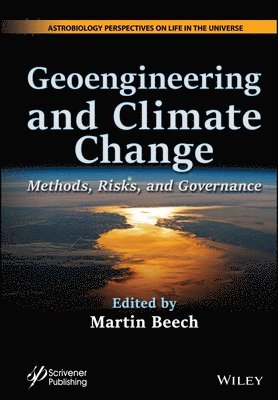
This important and timely book assembles expert scientists from both sides of the debate to discuss Earth-based and space-based climate intervention technologies including the scale, deployment, risk management, and moral philosophy behind these technologies. The role that geoengineering might play, within the context of global warming amelioration, has long been contentious. For all this, geoengineering is about getting down and dirty with respect to the issue of climate intervention. Often dismissed as an option of last resort, geoengineering is now emerging as a key component in humanity’s drive to bring the impacts of global warming under some form of mitigation and control. While geoengineering does not solve the fundamental problem of continued anthropomorphic carbon dioxide emissions, the root cause of global warming, it is an option that can effectively buy humanity some much-needed time. Time, that is, to act positively, and time to introduce meaningful emission reductions, and deploy large-scale sequestration technologies. Indeed, the failure to meaningfully corral greenhouse gas emission levels, and the slow development of large-scale carbon capture technologies, will, by the close of the 21st century, likely see global temperatures increase by at least 2 or 3 degrees above pre-industrial levels. What geoengineering can potentially do for us is to offset the more extreme climate change scenarios that are presently projected to come about. An integrated geoengineering program to cool Earth’s atmosphere, running in parallel with the development of sequestration technologies, and substantial emission reductions, can work to limit the worst effects of climate change that will, without geoengineering, surely come about. Geoengineering is not a neutral or benign action, however, and if it is to be deployed, then much more research, and field testing of ideas and technologies is urgently needed. The authors in this book present a cross-section of philosophies, engineering approaches, and reactions to the idea of geoengineering. Through their words, the reader is introduced to the historical and contemporary debate concerning the potential deployment of geoengineering actions. Indeed, there are many ways in which geoengineering, as a grand worldwide initiative, or as a combined set of independent actions, might proceed in both the near, and the deep future, and here the reader is introduced to these topics by experts in their field. AudienceThis book will be of interest to engineers, chemists, geologists, physicists, biologists, environmentalists, meteorologists, philosophers, mathematicians, computer modelers, and policy managers. General readers interested in geoengineering will find the book very readable and scientifically reliable.
2 419 kr
Kommande
2 419 kr
Kommande