Biological Sciences Series - Böcker
Visar alla böcker i serien Biological Sciences Series. Handla med fri frakt och snabb leverans.
12 produkter
12 produkter
3 100 kr
Skickas inom 7-10 vardagar
This is the first volume to provide comprehensive coverage of the biology of water use efficiency at molecular, cellular, whole plant and community levels. While several works have included the phenomenon of water use efficiency, and others have concentrated on an agronomic framework, this book represents the first detailed treatment with a biological focus. The volume sets out the definitions applicable to water use efficiency, the fundamental physiology and biochemistry governing the efficiency of carbon vs water loss, the environmental regulation of this process and the detailed physiological basis by which the plant exerts control over such efficiency. It is aimed at researchers and professionals in plant physiology, biochemistry, molecular biology, developmental biology and agriculture. It will also inform those involved in formulating research and development policy in this topic around the world.
3 304 kr
Skickas inom 7-10 vardagar
New research tools have revealed many surprising aspects of the dynamic nature of lipids and their participation in processes such as recognition, intra- and inter-cellular signalling, deterrence and defence against pathogens, membrane trafficking and protein function. This is in addition to new information on the more established roles of plant lipids as structural components of membranes and as long-term storage products. Plant lipids are also increasingly being seen as sources of a new generation of environmentally friendly, biodegradable and renewable industrial products, including biopolymers and high grade lubricants. This volume provides a broad overview of plant lipid research and its many applications, linking the various disciplines and providing an interesting and wide-ranging perspective on this fast-moving field. Extensive lists of references are provided, totalling well over two thousand non-redundant citations and offering a point of entry to the detailed literature. This is a book for researchers and professionals in plant biochemistry, molecular biology, biotechnology and genetics, in both the academic and industrial sectors.
3 401 kr
Skickas inom 7-10 vardagar
A ‘textbook’ plant typically comprises about 85% water and 13.5% carbohydrates. The remaining fraction contains at least 14 mineral elements, without which plants would be unable to complete their life cycles. Understanding plant nutrition and applying this knowledge to practical use is important for several reasons. First, an understanding of plant nutrition allows fertilisers to be used more wisely. Second, the nutritional composition of crops must be tailored to meet the health of humans and livestock. Third, many regions of the world are currently unsuitable for crop production, and an understanding of plant nutrition can be used to develop strategies either for the remediation of this land or for the cultivation of novel crops. That application of knowledge of plant nutrition can be achieved through genotypic or agronomic approaches. Genotypic approaches, based on crop selection and / or breeding (conventional or GM), have recently begun to benefit from technological advances, including the completion of plant genome sequencing projects. This book provides an overview of how plant nutritional genomics, defined as the interaction between a plant's genome and its nutritional characteristics, has developed in the light of these technological advances, and how this new knowledge might usefully be applied. This is a book for researchers and professionals in plant molecular genetics, biochemistry and physiology, in both the academic and industrial sectors.
2 711 kr
Skickas inom 7-10 vardagar
Gene flow is not unique to genetically modified (GM) crops, but the possibility of the spread of transgenic DNA to wild and domesticated relatives raises a new set of issues for scientists and policymakers to consider. Unfortunately, we are still too often unable to quantify the risks of ecological damage associated with gene flow. This is due partly to the huge breadth of knowledge required to assemble a comprehensive risk assessment. For example, many scientists active in research on the mechanics of gene flow nevertheless lack a deep understanding of what is required to identify, characterise and assess ecological risk, and many of those who are aware of the risk assessment process and the framework used for legislation have insufficient knowledge of the reproductive biology, agricultural systems, modelling and ecological literature required to compile a balanced risk assessment. This book, set in the context of gene flow in general, considers the assessment, measurement and management of the risks of gene flow from GM plants, combining the expertise of all the various stakeholders. It is directed at researchers and professionals in plant molecular genetics and plant ecology, in both the academic and industrial sectors.
Del 17 - Biological Sciences Series
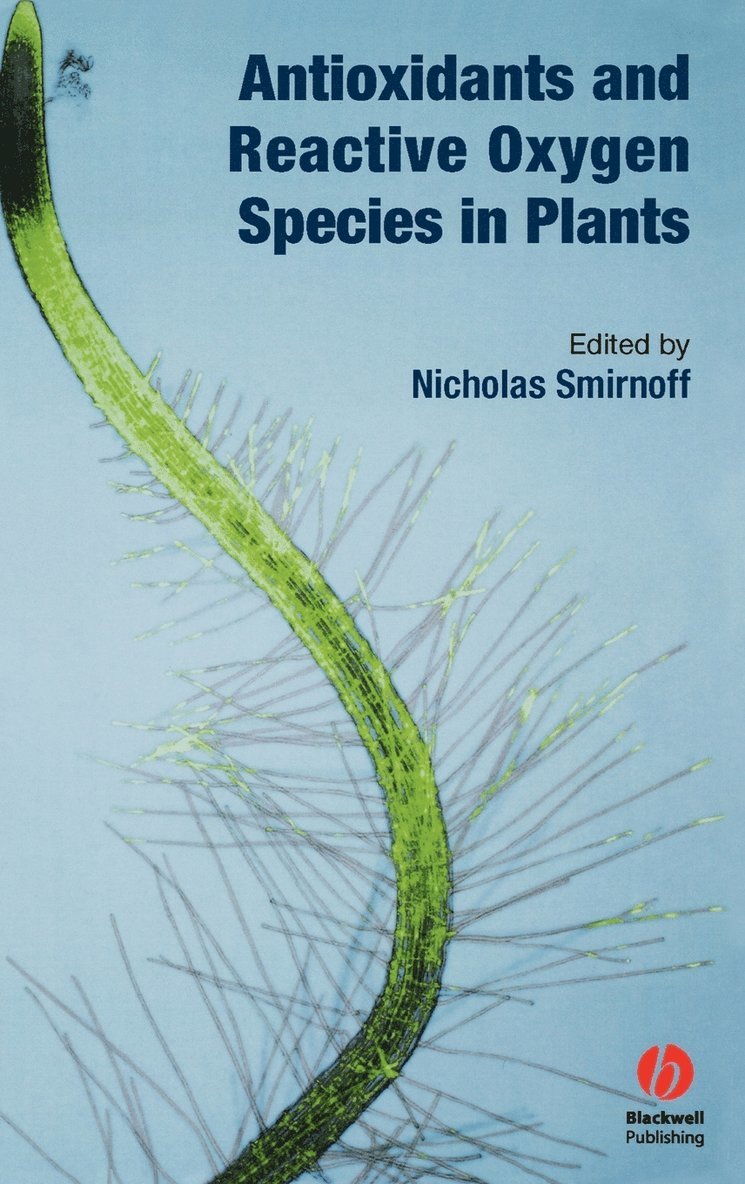
Antioxidants and Reactive Oxygen Species in Plants
Inbunden, Engelska, 2005
2 711 kr
Skickas inom 7-10 vardagar
Reactive oxygen species (ROS) are produced during the interaction of metabolism with oxygen. As ROS have the potential to cause oxidative damage by reacting with biomolecules, research on ROS has concentrated on the oxidative damage that results from exposure to environmental stresses and on the role of ROS in defence against pathogens. However, more recently, it has become apparent that ROS also have important roles as signalling molecules. A complex network of enzymatic and small molecule antioxidants controls the concentration of ROS and repairs oxidative damage, and research is revealing the complex and subtle interplay between ROS and antioxidants in controlling plant growth, development and response to the environment.This book covers these new developments, generally focussing on molecular and biochemical details and providing a point of entry to the detailed literature. It is directed at researchers and professionals in plant molecular biology, biochemistry and cell biology, in both the academic and industrial sectors.
2 998 kr
Skickas inom 7-10 vardagar
Evidence grows daily of the changing climate and its impact on plants and animals. Plant function is inextricably linked to climate and atmospheric carbon dioxide concentration. On the shortest and smallest scales, the climate affects the plant’s immediate environment and so directly influences physiological processes. At larger scales, the climate influences species distribution and community composition, as well as the viability of different crops in managed ecosystems. Plant growth also influences the local, regional and global climate, through the exchanges of energy and gases between the plants and the air around them. Plant Growth and Climate Change examines the major aspects of how anthropogenic climate change affects plants, focusing on several key determinants of plant growth: atmospheric CO2, temperature, water availability and the interactions between these factors. The book demonstrates the variety of techniques used across plant science: detailed physiology in controlled environments; observational studies based on long-term data sets; field manipulation experiments and modelling. It is directed at advanced-level university students, researchers and professionals across the range of plant science disciplines, including plant physiology, plant ecology and crop science. It will also be of interest to earth system scientists.
1 524 kr
Tillfälligt slut
Cell division is a critical process in plant growth, and an understanding of how it is regulated is of both inherent scientific interest and commercial application. This volume provides an overview of the factors that influence the timing of the plant cell cycle and considers how these events may be controlled at the molecular level. The volume is directed at academic and industrial researchers in plant cell biology, genetics, developmental biology, biochemistry and molecular biology.
2 717 kr
Skickas inom 11-20 vardagar
Whereas the adult body plan of an animal is established largely during embryogenesis, the body plan of a plant is elaborated throughout its life, through the activity of meristematic tissues. Although many of the patterning mechanisms that operate during embryogenesis in animal systems are becoming understood in molecular terms, the extent to which analogous mechanisms underpin the formation and function of meristematic tissues in plants remains unclear. This volume takes a fresh look at the essential nature of meristematic tissues and the manner in which they contribute to the growth and development of the plant. Authors pay special attention to the molecular mechanisms underlying meristem formation and maintenance, while at the same time integrating them with existing physiological and anatomical information.The volume is directed at researchers and professionals in plant genetics, developmental biology, molecular biology and physiology.
1 910 kr
Tillfälligt slut
Pectins are the most structurally complex polysaccharides in plant cell walls and determining their chemical structure and precise biological roles still provides a significant challenge. However, in the last decade, the information available on pectin structure has increased considerably, and our understanding of the structure-function relationships of pectins in the context of plant cell walls is beginning to derive a major impetus from the development of new methodologies and the molecular and genetic dissection of the biological basis of plant growth. This book sets out to provide state-of-the-art reviews of key areas relating to the structure and function of pectins in both foods and developing plant systems. The book covers not only the chemical structure, biosynthesis and degradation of these important biopolymers in plants, but also their biophysical properties, their links to other wall components and their cell and developmental biology.
2 514 kr
Skickas inom 11-20 vardagar
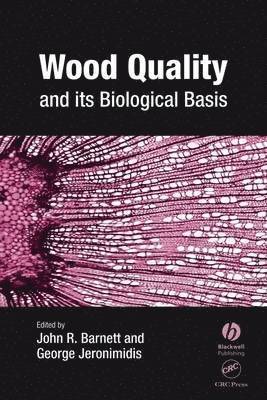
Wood is the most versatile raw material available to man. It is burned as fuel, shaped into utensils, used as a structural engineering material, converted into fibres for paper production, and put to newer uses as a source of industrial chemicals. Its quality results largely from the chemical and physical structure of the cell walls of its component fibres, which can be modified in nature as the tree responds to physical environmental stresses. Internal stresses can accumulate, which are released catastrophically when the tree is felled, often rendering the timber useless. The quality of timber as an engineering material also depends on the structure of the wood and the way in which it has developed in the living tree. Tree improvement for quality cannot be carried out without an understanding of the biological basis underlying wood formation and structure. This volume brings together the viewpoints of both biologists and physical scientists, covering the spectrum from the formation of wood to its structure and properties, and relating these properties to industrial use. This is a volume for researchers and professionals in plant physiology, molecular biology and biochemistry.
2 604 kr
Skickas inom 7-10 vardagar
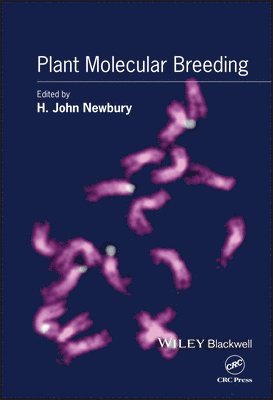
Plant Molecular Breeding Plant Molecular Breeding Edited by H. John Newbury The last few years have seen an explosion of new information and resources in the areas of plant molecular genetics and genomics. As a result of developments such as high throughput sequencing, we now have available huge amounts of information on plant genes. But how does this help people charged with the task of improving crop species to create products with altered functions or improved characteristics? This volume considers ways in which the new information, resources and technology can be exploited by the plant breeder. Examples in current use are quoted wherever possible. The volume is directed at researchers and professionals in plant genetics, molecular biology, cell biology and biochemistry. Also available in the same series Plant ReproductionEdited by S.D. O’Neill and J.A. RobertsHardback (ISBN 1-84127-226-4) 314 pages
1 999 kr
Tillfälligt slut
The recognition of cell death as an active process has changed the way in which biologists view living things. Geneticists re-evaluate long known mutants, research strategies are redesigned, and new model systems are sought. This volume reviews our new understanding of programmed cell death as it applies to plants. The book draws comparisons with programmed cell death in animals and unicellular organisms. The book is directed at researchers and professionals in plant cell biology, biochemistry, physiology, developmental biology and genetics.