British Academy Original Paperbacks - Böcker
Visar alla böcker i serien British Academy Original Paperbacks. Handla med fri frakt och snabb leverans.
8 produkter
8 produkter
Creating the AHRC
An Arts and Humanities Research Council for the United Kingdom in the Twenty-first Century
Häftad, Engelska, 2008
226 kr
Skickas inom 7-10 vardagar
This is the first complete account of the establishment of the Arts and Humanities Research Council among the Research Councils of the United Kingdom in 2005. It focuses on the campaign carried forward from the 1997 Dearing Report to the 2004 Higher Education Act to establish a public agency investing in humanities and arts research that would be equivalent to those funding natural and social science research - a campaign that can be emulated in other countries.Built on interviews with leading participants, regional and national press coverage, and analysis of influential national studies, Creating the AHRC shows how engagement with contemporary issues - the knowledge economy, devolution, and the expansion of higher education - as well as a long tradition of scholarly excellence led to fashioning a new model funding agency: an agency poised to address such frontier issues in the arts and humanities as increasing the scale of research, substantive collaboration with scientific fields, and explicit consideration of the results of research.Creating the AHRC will provide an enduring point of reference for those involved with the AHRC, the humanities, research policy, and the learning society.
416 kr
Skickas inom 7-10 vardagar
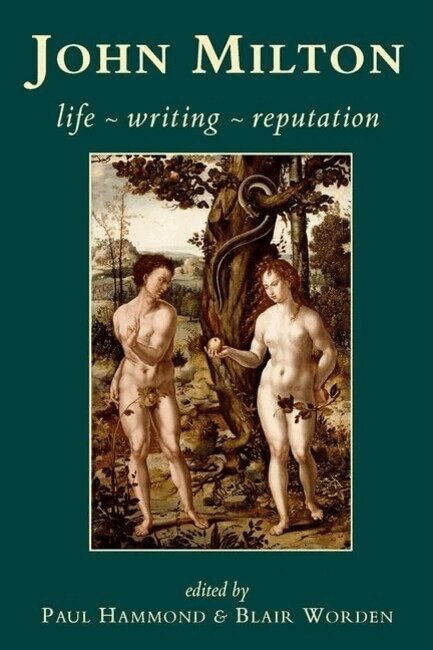
This volume offers a series of fresh explorations of the life, writing, and reputation of John Milton. The ten papers take us inside Milton's verse and prose, into the context of the events and the intellectual debates within which they were written, and into the later worlds within which his reputation evolved and fluctuated. Key topics discussed include: his political beliefs and career; the characteristics of his poetry - especially Paradise Lost; the literary influences upon his verse; his perception of women; and the ways he has been seen since his death. John Milton: Life, Writing, Reputation will be essential reading not only for scholars and students of literature, but for all those interested in Milton's work and reputation over the last four centuries.
270 kr
Skickas inom 7-10 vardagar
In May 2010, Britain's new Coalition government embarked on its journey to the Big Society. But how did we reach this point? Politicians and commentators have long bemoaned the supposed decline of civic life, fretting about its health and its future. In fact, the real story of voluntarism over the last hundred years has not been decline, but constant evolution and change. Whether we use the terms charity, philanthropy, civil society, non-governmental organisations, the third sector or the Big Society, voluntary endeavour is one of the most vibrant and dynamic areas of British public life. The senior, established and exciting new scholars featured in this collection show how the voluntary sector's role in society, and its relationship with the state, has constantly adapted to its surroundings. They have raised new agendas, tackled old problems in new ways, acted as alternatives to statutory provision and as catalysts for further government action. Voluntary groups have emerged out of citizens' concerns, independent of government and yet willing to work with politicians of all persuasions. By surveying the sheer extent and diversity of the sector since the start of the First World War, this volume demonstrates that voluntarism not only continues to thrive, but is also far larger than any political agenda that may be imposed upon it.
291 kr
Skickas inom 7-10 vardagar
Do humans have a free choice of which actions to perform? Three recent developments of modern science can help us to answer this question. First, new investigative tools have enabled us to study the processes in our brains which accompanying our decisions. The pioneer work of Benjamin Libet has led many neuroscientists to hold the view that our conscious intentions do not cause our bodily movements but merely accompany them. Then, Quantum Theory suggests that not all physical events are fully determined by their causes, and so opens the possibility that not all brain events may be fully determined by their causes, and so maybe - if neuroscience does not rule this out - there is a role for intentions after all. Finally, a theorem of mathematics, Godel's theory, has been interpreted to suggest that the initial conditions and laws of development of a mathematician's brain could not fully determine which mathematical conjectures he sees to be true. Papers by Patrick Haggard, Tim Bayne, Harald Atmanspacher and Stefan Rotter, Solomon Feferman, and John Lucas investigate these issues.The extent to which human behaviour is determined by brain events may well depend on whether conscious events, such as intentions, are themselves merely brain events, or whether they are separate events which interact with brain events (perhaps in the radical form that intentions are events in our soul, and not in our body). The papers of Frank Jackson, Richard Swinburne, and Howard Robinson investigate these issues. The remaining papers, of Galen Strawson, Helen Steward, and R.A. Duff, consider what kind of free will we need in order to be morally responsible for our actions or to be held guilty in a court of law. Is it sufficient merely that our actions are uncaused by brain events, or what?
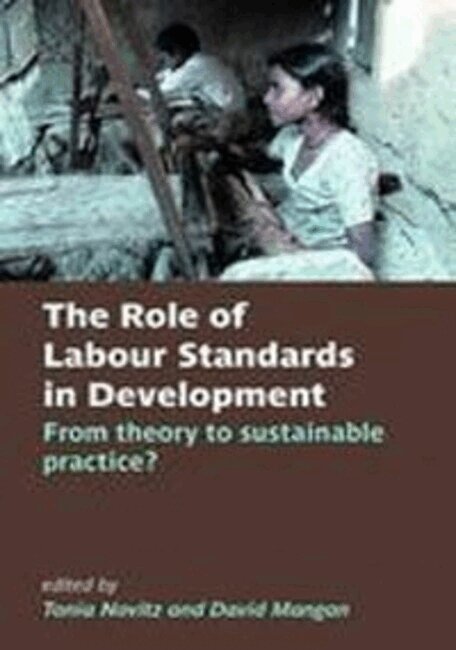
The Role of Labour Standards in Development
From theory to sustainable practice
Häftad, Engelska, 2011
333 kr
Skickas inom 7-10 vardagar
This edited collection examines the multi-faceted ways in which labour standards can play a role in the achievement of development. A variety of critical perspectives are presented here, with contributions from a number of different disciplines, including law, politics, and economics. The book begins by considering potential theoretical connections between work and development, acknowledging controversy over how the latter should be approached, interpreted and rendered 'sustainable'. The remainder of the collection is devoted to an analysis of the part that protection of labour standards can play in developmental terms, with reference to concrete issues: anti-discrimination, child labour, trade relations, and social dialogue. The book concludes with a final chapter, reflecting on how theory has been and could be put into practice. The theme that transcends all the contributions to this collection is that of human agency. The authors are not merely interested in the realisation of an individual person's 'functioning' in society (which development will assist), but also with the ways that people can be engaged in the very process of defining what development aims should and can be. They do not wish to see economic, social and environmental development objectives as being determined by technical experts and implemented according to their prescriptions. Rather, they consider development in procedural as well as substantive terms, and in participatory as well as material terms.
343 kr
Skickas inom 7-10 vardagar
The early part of the twenty-first century has witnessed a profound turn in history writing and museum culture towards global and world history. Historians and curators are rapidly changing what they do: no longer satisfied with traditional national histories and area studies, they are pursuing histories of subjects affected by environmental change, migration, slavery, trade and travel. They face challenges of writing about individuals and families in the world, and of political cultures and ideas that have transformed as they have moved between different regions of the world. They are 'going beyond borders' and pursuing wider concepts of connectedness and of cosmopolitanism as these have developed in social theory. Where has all this come from, and where is it taking us as historians? Writing The History of the Global brings together a number of the major historians now entering the field and re-thinking the way they write their histories. We read the reflections of China experts, historians of India and Japan, of Latin America, Africa and Europe on their past writing, and the new directions in which global history is taking them. It shows the rapid advances in the field from early and inspiring accounts of encounters between East and West, of the wealth and poverty of nations and the crisis of empires, to new thinking on global material cultures, on composite zones and East Asian development paths.It presents historians at a crossroads: enjoying the great excitement of moving out of national borders and reconnecting parts of the world once studied separately, but also facing the huge challenge of new methodologies of comparison, collaboration and interdisciplinarity and the problems of rapidly disappearing tools of foreign languages.
432 kr
Skickas inom 7-10 vardagar
This is an open access title available under the terms of a CC BY-NC-ND 4.0 International licence. It is free to read at British Academy Scholarship Online and offered as a free PDF download from OUP and selected open access locations. Tipping points are zones or thresholds of profound changes in natural or social conditions with very considerable and largely unforecastable consequences. Tipping points may be dangerous for societies and economies, especially if the prevailing governing arrangements are not designed either to anticipate them or adapt to their arrival. Tipping points can also be transformational of cultures and behaviours so that societies can learn to adapt and to alter their outlooks and mores in favour of accommodating to more sustainable ways of living.This volume examines scientific, economic and social analyses of tipping points, and the spiritual and creative approaches to identifying and anticipating them. The authors focus on climate change, ice melt, tropical forest drying and alterations in oceanic and atmospheric circulations. They also look closely at various aspects of human use of the planet, especially food production, and at the loss of biodiversity, where alterations to natural cycles may be creating convulsive couplings of tipping points. They survey the various institutional aspects of politics, economics, culture and religion to see why such dangers persist.
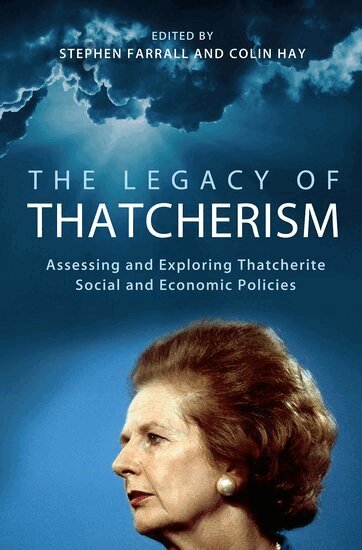
The Legacy of Thatcherism
Assessing and Exploring Thatcherite Social and Economic Policies
Häftad, Engelska, 2014
416 kr
Skickas inom 7-10 vardagar
Three decades after the election of Margaret Thatcher as Prime Minister, it is perhaps time to take stock of the concept of 'Thatcherism' and the prominent role it has played in the history of post-war Britain. Of course, there is much debate about what Thatcherism actually was or is. Some commentators argue that Thatcherism was more noteworthy for its rhetoric than for its achievements. The welfare state, for example, emerged little changed after eleven years of Thatcherism. Some historians additionally suggest that other social forces that existed prior to Thatcher will outlast her. Yet, whichever way one looks at it, the Thatcherite project of the 1980s brought about a fundamental reorganisation of much of the UK's social and economic life. Did Thatcherite policies dramatically alter the trajectory of the country's development? Can even long-term and seemingly enduring path dependencies be altered as dramatically as claimed?. Ought Thatcher's period in office be seen as a 'critical juncture' for the UK? This book brings together a range of experts in housing, economics, law and order, education, welfare, families, geography and politics to discuss the enduring legacy of those social and economic policies initiated by the first of the UK's New Right governments (1979-1990).