229 kr
Kommande
229 kr
Kommande
124 kr
Skickas
136 kr
Skickas
175 kr
Skickas
122 kr
Skickas
136 kr
Skickas
124 kr
Skickas
122 kr
Skickas inom 11-20 vardagar
149 kr
Skickas inom 11-20 vardagar
210 kr
Skickas
149 kr
Skickas
122 kr
Skickas
95 kr
Skickas
279 kr
Skickas inom 3-6 vardagar
246 kr
Skickas
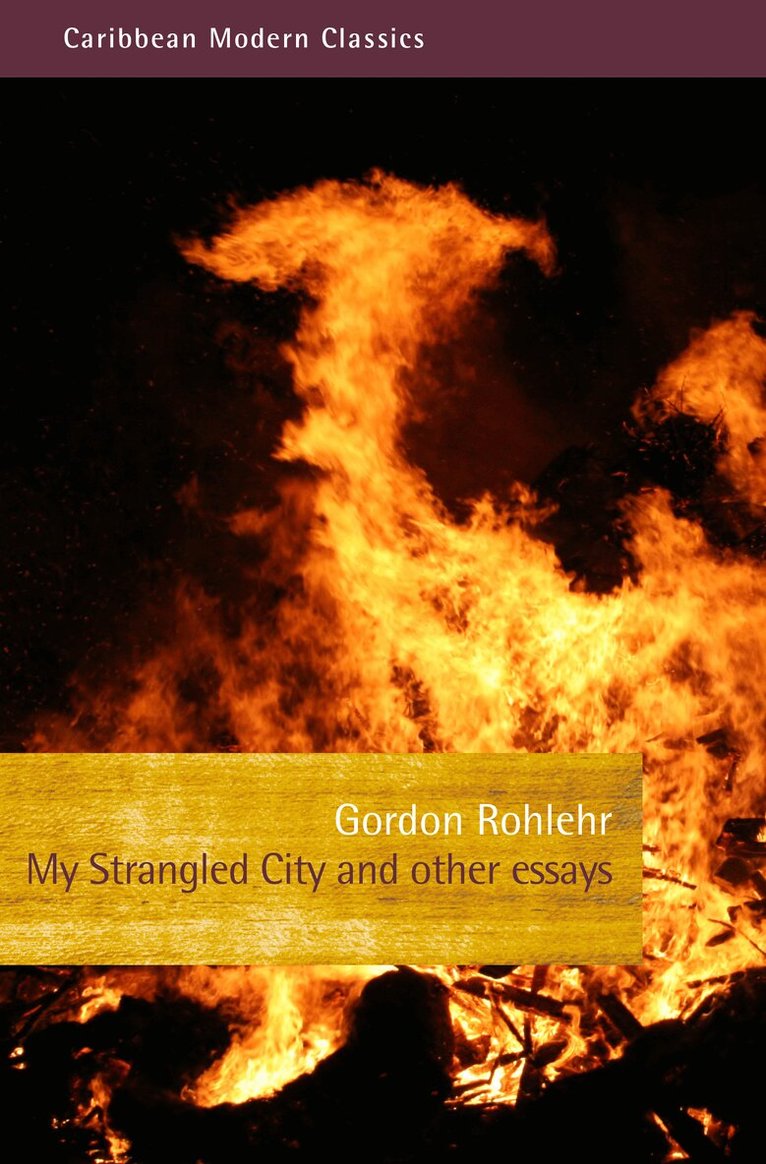
Gordon Rohlehr’s critical work is outstanding in the balance it achieves between its particularity and its breadth – from the detailed unpacking of a poem’s inner workings, to locating Caribbean writing in the sweep of political and cultural history – and the equal respect he pays to literary and to popular cultural forms. His “Articulating a Caribbean Aesthetic” remains a stunningly pertinent and concise account of the historical formation of the cultural shifts that framed Caribbean writing as a distinctive body of work. Indeed, along with Kamau Brathwaite, Sylvia Wynter and Kenneth Ramchand, no critic has done more to establish the subject of Caribbean writing and its distinctive aesthetics.
These essays, written between 1969 to 1986, first published in radical campaigning newspapers such as Tapia and Moko, and first collected in 1992, were the work of a young academic who was both changing the university curriculum, and deeply engaged with the less privileged world outside the campus. Rohlehr catches Caribbean writing at the point when it leaves behind its nationalist hopes and begins to challenge the complex realities of independence. Few critics have written as clearly about how deeply the colonial has remained embedded in the postcolonial.
What shines in Rohlehr’s work is not merely its depth, acuity and humanity, but its courage. He writes when his subject is still emergent, without waiting for the credibility of metropolitan endorsements as a guide to the canon. “My Strangled City”, a record of how Trinidad’s poets responded to the upsurge of revolutionary hopes, radical shams, repressions and disappointed dreams of 1964-1975 is an indispensable account of those times and the diversity of literary response that continues to speak to the present. And if in these essays Trinidad is Rohlehr’s primary focus, his perspective is genuinely regional. His native Guyana is always present in his thoughts and several essays show his deep interest in the cultural productions of a “dread” Jamaica, and in making insightful comparisons between, for instance, reggae and calypso.
175 kr
Kommande
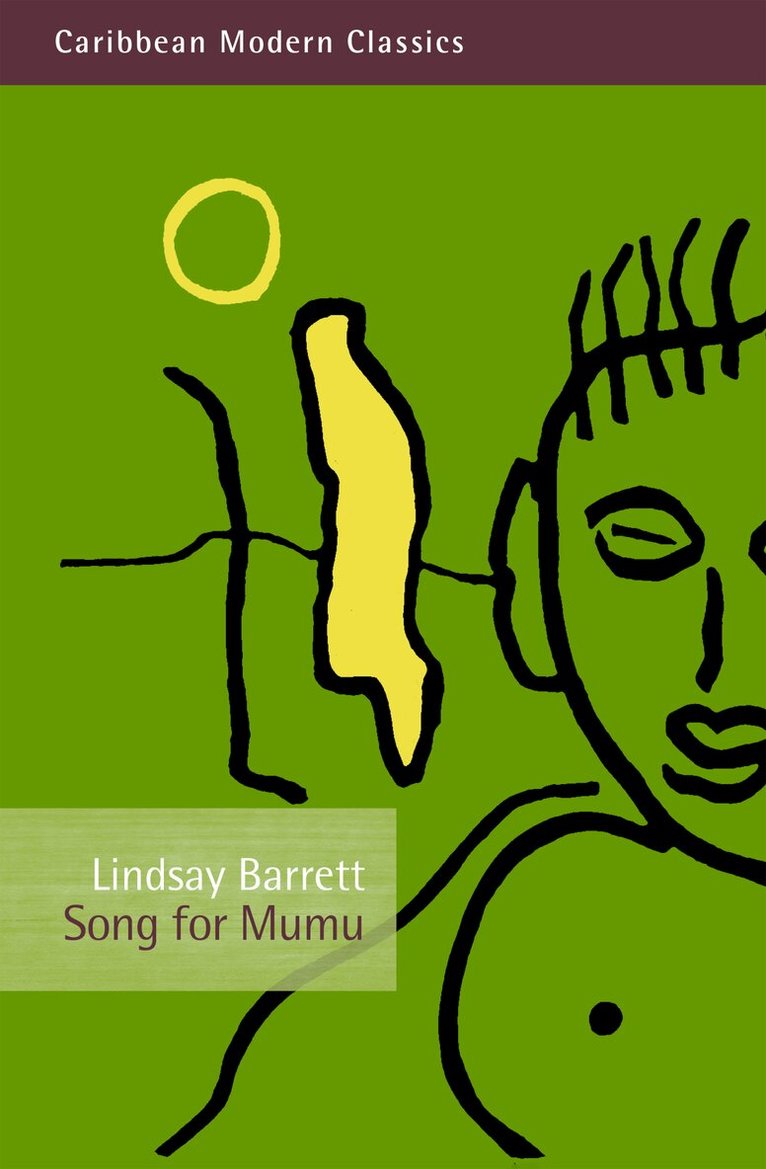
Song for Mumu is a haunting, poetic debut from Jamaican-born writer Lindsay Barrett—an allegorical tale of desire, love, and loss set on an unnamed Caribbean island.
Written across cities - Frankfurt, Paris, Accra - during Barrett’s early years of creative exile, the novel is rich with the rhythms of diaspora, myth, and ritual. First published in London in 1967, Song for Mumu was immediately hailed as “remarkable” and “significant” by critics such as Edward Baugh. Its prose - lyrical, image-rich, and emotionally raw - was praised for conveying “sensuality that is innocent and tragedy that is no less frightening for being unsought.”
Barrett’s vision evokes the spiritual urgency of Jean Toomer and the mythic depth of Alejo Carpentier, yet remains singular in its voice. Described as “a stylistic masterpiece of modern Black fiction,” the novel explores madness, poverty, and liberation through song, dance, and ancestral memory. It has been championed as one of the most vital literary reflections on the Black experience and continues to resonate across generations.
Now considered a Caribbean classic, Song for Mumu features among "100 Caribbean Books That Made Us" by the Bocas Lit Fest - a work of passion and poetic force that refuses to be forgotten.
210 kr
Skickas
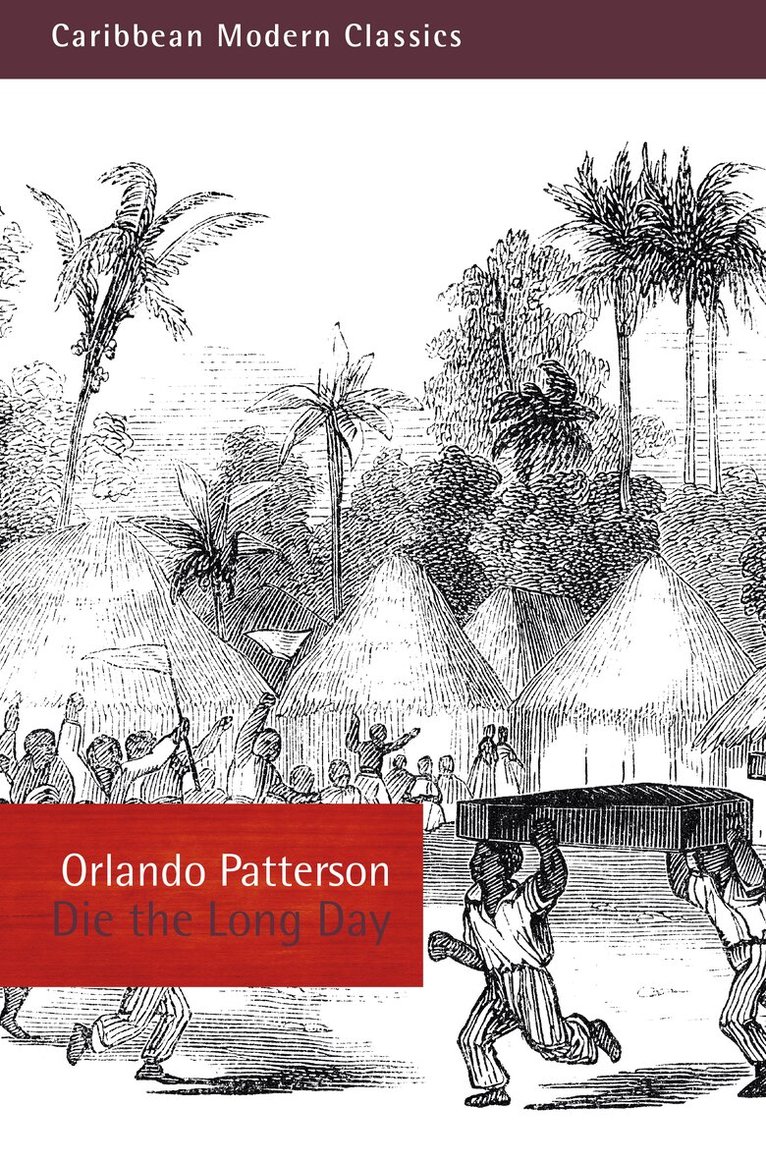
Written by the New York Times, on publication of Die the Long Day:
Institutions, in West Indian society, were created by slavery and colonialism, for a small elite. When a new Elite, however, began to emerge, the peasant majority began to understand their former white rulers through the black imitators who succeeded them. The peasant at this stage also recognized that the institutions sustaining the black elite were even more vulnerable than the ones that had upheld the white one; that these borrowed institutions could be co‐opted, transformed and finally destroyed if necessary. A mass demonstration, an election or a coup d'etat can topple one ruling element and bring another into being. It is not that the people are unstable so much as the institutions they inherited.
Orlando Patterson in “Die the Long Day,” a novel set on a Jamaican sugar plantation in the 18th century, throws new light on this unstable situation and on the subtleties of the master‐slave relationship. In so doing, he gives a better understanding of contemporary West Indian society. For it is as if this society is bent on proving that those who ignore the past will be forced to relive it; as if the passing of two centuries has only deepened the conflicts, by presenting them over and over again in different guises.
The novel begins with a muted, sensuous description of the landscape around the plant‐, tion, and then Quasheba, a slave appears. She is running for her life. She had tried to prevent her daughter Polly from being hired out to a plantation owner. “Don't make him touch you,” she had warned, “even if you have to kill ‘im.... Make then do what they want after. You will be just as good as dead if ‘im touch you anyway.” The owner was known to have syphilis, and Quasheba “dreaded the disease.... for her own mother had died of it and she had to look after her during her last days.”
188 kr
Tillfälligt slut
139 kr
Tillfälligt slut
136 kr
Tillfälligt slut
160 kr
Tillfälligt slut
149 kr
Tillfälligt slut
124 kr
Tillfälligt slut
124 kr
Tillfälligt slut
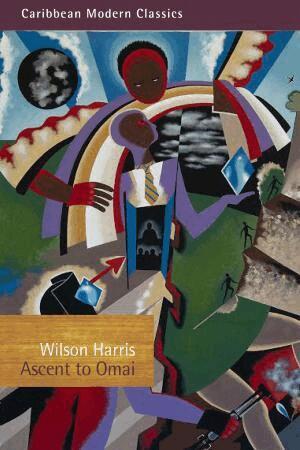
In Ascent to Omai time and space are truly elastic, so that events in recent time become part of remote geological time and the boundaries between events and remembering, individual persons and different locations are fluid and permeable. Victor is in search of his father, Adam, once a revolutionary worker who was sent to prison many years ago for burning down the factory he works in. Since then Victor has lost touch with him, but suspects he is living as a pork-knocker (gold prospector) in the remote Cuyuni-Mazaruni district of Guyana – now the site of one of the largest open-cast goldmines in the world and the site of immense environmental degradation. Prophetically, the clash between the material/technological and the primordial/spiritual is one of the intercutting themes of the novel, connecting to the El Doradean myth so central to the Guyanese imagining.As he climbs in search of his father, Victor both revisits his past relationship with him and replays his father’s trial, which also becomes his own, in a way that echoes the "Nighttown" episode of Ulysses, though unlike Bloom’s. Victor’s offences are not sexual, but represent blockages in the openness of his thinking. Victor’s search is for spiritual grace, for the compensations of love and the glimmerings of a true understanding of the world he exists in, though Harris refuses to “impose a false coherency upon material one had to digest” and the reader is invited to share in Victor’s struggling ascent to consciousness, knowing that it can never be other than provisional.
157 kr
Tillfälligt slut
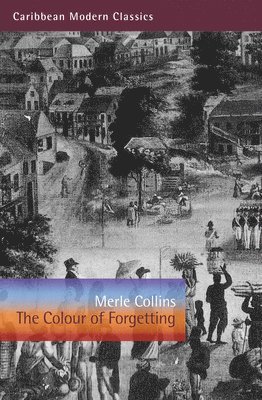
Set on the Caribbean island of Paz (not a million miles from Grenada), this is a book that creates a space between epic poetry and the novel in the way its sequence of interludes bring into focus the lives of family and community through time – and in the confinements of space. It moves from the days of slavery through to the 1980s, through the difficult inheritance of one family – or rather the disinheritance of those in the family born illegitimate. Throughout, the novel conveys a powerful sense of place, of both attachment and confinement, of the meaning of land in relation to the island’s smallness, and the ever-present danger of the communal violence that can spring from those pressures. Through the generations comes the voice of three generations of the women the islanders know as Carib, warner women, whose prophecies of disaster are dismissed as madness, but who have an unerring sense of what is to come. Signalled in her title, Merle Collins has much to say about the nature of memory and the fatal nature of amnesia when it comes to the lessons of the past. Whilst the book is written in the continuing shadow of Grenada’s catastrophe of 1983, it signals hope in small things: the courage of women like Mamag who will not be silenced, the reconciliation between father and son that crosses the incomprehension between generations, the capacity of a young man to confront his innermost fears.
229 kr
Kommande
124 kr
Skickas
136 kr
Skickas
175 kr
Skickas
122 kr
Skickas
136 kr
Skickas
124 kr
Skickas
122 kr
Skickas inom 11-20 vardagar
149 kr
Skickas inom 11-20 vardagar
210 kr
Skickas
149 kr
Skickas
122 kr
Skickas
95 kr
Skickas
279 kr
Skickas inom 3-6 vardagar
246 kr
Skickas
Gordon Rohlehr’s critical work is outstanding in the balance it achieves between its particularity and its breadth – from the detailed unpacking of a poem’s inner workings, to locating Caribbean writing in the sweep of political and cultural history – and the equal respect he pays to literary and to popular cultural forms. His “Articulating a Caribbean Aesthetic” remains a stunningly pertinent and concise account of the historical formation of the cultural shifts that framed Caribbean writing as a distinctive body of work. Indeed, along with Kamau Brathwaite, Sylvia Wynter and Kenneth Ramchand, no critic has done more to establish the subject of Caribbean writing and its distinctive aesthetics.
These essays, written between 1969 to 1986, first published in radical campaigning newspapers such as Tapia and Moko, and first collected in 1992, were the work of a young academic who was both changing the university curriculum, and deeply engaged with the less privileged world outside the campus. Rohlehr catches Caribbean writing at the point when it leaves behind its nationalist hopes and begins to challenge the complex realities of independence. Few critics have written as clearly about how deeply the colonial has remained embedded in the postcolonial.
What shines in Rohlehr’s work is not merely its depth, acuity and humanity, but its courage. He writes when his subject is still emergent, without waiting for the credibility of metropolitan endorsements as a guide to the canon. “My Strangled City”, a record of how Trinidad’s poets responded to the upsurge of revolutionary hopes, radical shams, repressions and disappointed dreams of 1964-1975 is an indispensable account of those times and the diversity of literary response that continues to speak to the present. And if in these essays Trinidad is Rohlehr’s primary focus, his perspective is genuinely regional. His native Guyana is always present in his thoughts and several essays show his deep interest in the cultural productions of a “dread” Jamaica, and in making insightful comparisons between, for instance, reggae and calypso.
175 kr
Kommande
Song for Mumu is a haunting, poetic debut from Jamaican-born writer Lindsay Barrett—an allegorical tale of desire, love, and loss set on an unnamed Caribbean island.
Written across cities - Frankfurt, Paris, Accra - during Barrett’s early years of creative exile, the novel is rich with the rhythms of diaspora, myth, and ritual. First published in London in 1967, Song for Mumu was immediately hailed as “remarkable” and “significant” by critics such as Edward Baugh. Its prose - lyrical, image-rich, and emotionally raw - was praised for conveying “sensuality that is innocent and tragedy that is no less frightening for being unsought.”
Barrett’s vision evokes the spiritual urgency of Jean Toomer and the mythic depth of Alejo Carpentier, yet remains singular in its voice. Described as “a stylistic masterpiece of modern Black fiction,” the novel explores madness, poverty, and liberation through song, dance, and ancestral memory. It has been championed as one of the most vital literary reflections on the Black experience and continues to resonate across generations.
Now considered a Caribbean classic, Song for Mumu features among "100 Caribbean Books That Made Us" by the Bocas Lit Fest - a work of passion and poetic force that refuses to be forgotten.
210 kr
Skickas
Written by the New York Times, on publication of Die the Long Day:
Institutions, in West Indian society, were created by slavery and colonialism, for a small elite. When a new Elite, however, began to emerge, the peasant majority began to understand their former white rulers through the black imitators who succeeded them. The peasant at this stage also recognized that the institutions sustaining the black elite were even more vulnerable than the ones that had upheld the white one; that these borrowed institutions could be co‐opted, transformed and finally destroyed if necessary. A mass demonstration, an election or a coup d'etat can topple one ruling element and bring another into being. It is not that the people are unstable so much as the institutions they inherited.
Orlando Patterson in “Die the Long Day,” a novel set on a Jamaican sugar plantation in the 18th century, throws new light on this unstable situation and on the subtleties of the master‐slave relationship. In so doing, he gives a better understanding of contemporary West Indian society. For it is as if this society is bent on proving that those who ignore the past will be forced to relive it; as if the passing of two centuries has only deepened the conflicts, by presenting them over and over again in different guises.
The novel begins with a muted, sensuous description of the landscape around the plant‐, tion, and then Quasheba, a slave appears. She is running for her life. She had tried to prevent her daughter Polly from being hired out to a plantation owner. “Don't make him touch you,” she had warned, “even if you have to kill ‘im.... Make then do what they want after. You will be just as good as dead if ‘im touch you anyway.” The owner was known to have syphilis, and Quasheba “dreaded the disease.... for her own mother had died of it and she had to look after her during her last days.”
188 kr
Tillfälligt slut
139 kr
Tillfälligt slut
136 kr
Tillfälligt slut
160 kr
Tillfälligt slut
149 kr
Tillfälligt slut
124 kr
Tillfälligt slut
124 kr
Tillfälligt slut
In Ascent to Omai time and space are truly elastic, so that events in recent time become part of remote geological time and the boundaries between events and remembering, individual persons and different locations are fluid and permeable. Victor is in search of his father, Adam, once a revolutionary worker who was sent to prison many years ago for burning down the factory he works in. Since then Victor has lost touch with him, but suspects he is living as a pork-knocker (gold prospector) in the remote Cuyuni-Mazaruni district of Guyana – now the site of one of the largest open-cast goldmines in the world and the site of immense environmental degradation. Prophetically, the clash between the material/technological and the primordial/spiritual is one of the intercutting themes of the novel, connecting to the El Doradean myth so central to the Guyanese imagining.As he climbs in search of his father, Victor both revisits his past relationship with him and replays his father’s trial, which also becomes his own, in a way that echoes the "Nighttown" episode of Ulysses, though unlike Bloom’s. Victor’s offences are not sexual, but represent blockages in the openness of his thinking. Victor’s search is for spiritual grace, for the compensations of love and the glimmerings of a true understanding of the world he exists in, though Harris refuses to “impose a false coherency upon material one had to digest” and the reader is invited to share in Victor’s struggling ascent to consciousness, knowing that it can never be other than provisional.
157 kr
Tillfälligt slut
Set on the Caribbean island of Paz (not a million miles from Grenada), this is a book that creates a space between epic poetry and the novel in the way its sequence of interludes bring into focus the lives of family and community through time – and in the confinements of space. It moves from the days of slavery through to the 1980s, through the difficult inheritance of one family – or rather the disinheritance of those in the family born illegitimate. Throughout, the novel conveys a powerful sense of place, of both attachment and confinement, of the meaning of land in relation to the island’s smallness, and the ever-present danger of the communal violence that can spring from those pressures. Through the generations comes the voice of three generations of the women the islanders know as Carib, warner women, whose prophecies of disaster are dismissed as madness, but who have an unerring sense of what is to come. Signalled in her title, Merle Collins has much to say about the nature of memory and the fatal nature of amnesia when it comes to the lessons of the past. Whilst the book is written in the continuing shadow of Grenada’s catastrophe of 1983, it signals hope in small things: the courage of women like Mamag who will not be silenced, the reconciliation between father and son that crosses the incomprehension between generations, the capacity of a young man to confront his innermost fears.