Chicago Architecture and Urbanism – serie
Visar alla böcker i serien Chicago Architecture and Urbanism. Handla med fri frakt och snabb leverans.
4 produkter
4 produkter
420 kr
Skickas inom 3-6 vardagar
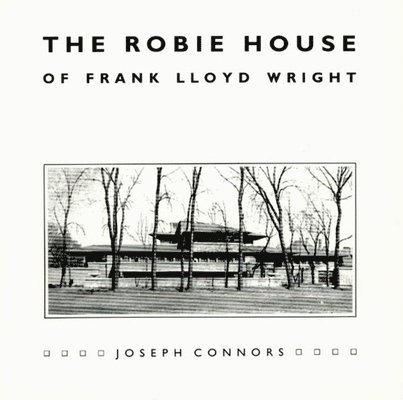
The Robie House in Chicago is one of the world's most famous houses, a masterpiece from the end of Frank Lloyd Wright's early period and a classic example of the Prairie House. This book is intended as a companion for the visitor to the house, but it also probes beneath the surface to see how the design took shape in the mind of the architect. Wright's own writings, rare working drawings from the period, and previously unpublished photographs of the house in construction help the reader look over the shoulder of the architect at work. Beautiful new photographs of the Robie House and related Wright houses have been specially taken to illustrate the author's points, and a bibliography on Wright is provided.
324 kr
Skickas inom 5-8 vardagar
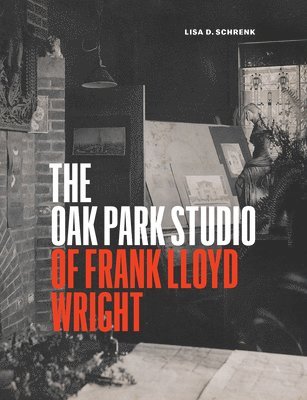
Between 1898 and 1909, Frank Lloyd Wright's residential studio in the idyllic Chicago suburb of Oak Park served as a nontraditional work setting as he matured into a leader in his field and formulized his iconic design ideology. Here, architecture historian Lisa D. Schrenk breaks the myth of Wright as the lone genius and reveals new insights into his early career. With a rich narrative voice and meticulous detail, Schrenk tracks the practice's evolution: addressing how the studio fit into the Chicago-area design scene; identifying the other architects working there and their contributions; and exploring how the suburban setting and the nearby presence of family influenced office life. Built as an addition to his 1889 shingle-style home, Wright's studio was a core site for the ideological development of the prairie house, one of the first truly American forms of residential architecture. Schrenk documents the educational atmosphere of Wright's office in the context of his developing design ideology, revealing three phases as he transitioned from colleague to leader. This heavily illustrated book includes a detailed discussion of the physical changes Wright made to the building and how they informed his architectural thinking and educational practices. Schrenk also addresses the later transformations of the building, including into an art center in the 1930s, its restoration in the 1970s and 80s, and its current use as a historic house museum. Based on significant archival research, including interviews with Wright's family and 180 images, The Oak Park Studio of Frank Lloyd Wright offers the first comprehensive look at the early independent office of one of the world's most influential architects.
1 028 kr
Tillfälligt slut
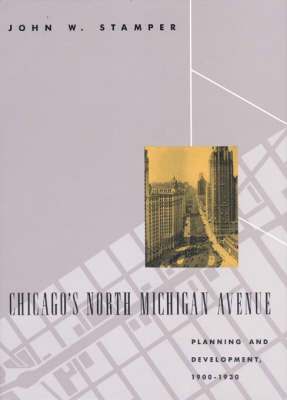
Since its opening in the 1920s, Chicago's North Michigan Avenue has been one of the city's most prestigious commerical corridors, lined by some of its most architecturally distinctive business, residential, and hotel buildings. Planned by Daniel Burnham in 1909, the avenue became the principal connecting link between downtown and the wealthy, residential "Gold Coast" north of the Loop. Some thirty buildings were constructed along its path in the ten-year period before the Depression, an urban expansion comparable in significance to that of Pennsylvania and Park Avenues. John W. Stamper traces the complex development of North Michigan Avenue from the 1880s to the 1920s building boom that solidified its character and economic base, describing the initiation of the planning process by private interests to its execution aided by the city's powerful condemnation and taxation proceedings. He focuses on individual buildings constructed on the avenue, including the Renaissance- and Gothic-inspired Wrigley Building, Tribune Tower, and Drake Hotel, and places them within the context of factors governing their construction—property ownership, financing, zoning laws, design theory, and advertising. Stamper compares this stylistically diverse mixture of low- and high-rise structures with earlier, rejected planning proposals, all of which had prescribed a uniformly designed, European-like avenue of continuous cornice heights, consistent facade widths, and complementary stylistic features. He analyzes the drastically different character the avenue took by 1930, with high-rise towers reaching thirty stories and beyond, in terms of the clash among economic, political, and architectural interests. His argument—that the discrepancies between the rejected plans and reality illustrate the developers' choice of economic return on their investment over aesthetic community—is extended through to the present avenue and the virtual disregard of the urban qualities proposed at its inception. Generously illustrated, with an epilogue condensing the avenue's history between the end of World War II and the present, this is an exhaustive account of an important topic in the history of modern architecture and city planning.
524 kr
Skickas inom 5-8 vardagar
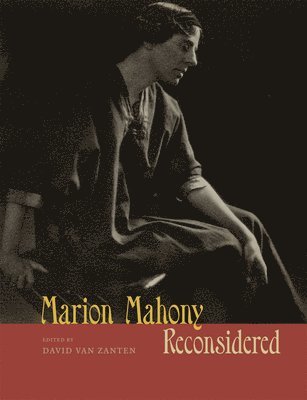
Marion Mahony Griffin (1871-1961) was an American architect and artist, one of the first licensed female architects in the world, designer for Frank Lloyd Wright's Chicago studio, and an original member of the Prairie School of architecture. Largely heralded for her exquisite presentation drawings for both Wright and her husband, Walter Burley Griffin, Mahony was an adventurous designer in her own right, whose independent and highly original work attracted attention at a moment when architectural drawing and graphic illustration were becoming integral to the design process. This book examines new research into Mahony's life and paints a vivid portrait of a woman's place among the lives and productions of some of our most noted American architects. The essays included take us on an ambitious journey from Mahony's origins in the Chicago suburbs, through her years as Wright's right-hand woman and her bohemian life with her husband in Australia - whose new capital city, Canberra, she helped to plan - up until her golden years in the middle of the twentieth century.Filled with richly detailed analyses of Mahony's works and populated by an international cast of characters, "Marion Mahony Reconsidered" greatly expands our knowledge of this talented, complex, and enigmatic modern architect.