Citizen Guides to Politics and Public Affairs – serie
Visar alla böcker i serien Citizen Guides to Politics and Public Affairs. Handla med fri frakt och snabb leverans.
17 produkter
17 produkter
Häftad, Engelska, 2020
557 kr
Skickas inom 10-15 vardagar
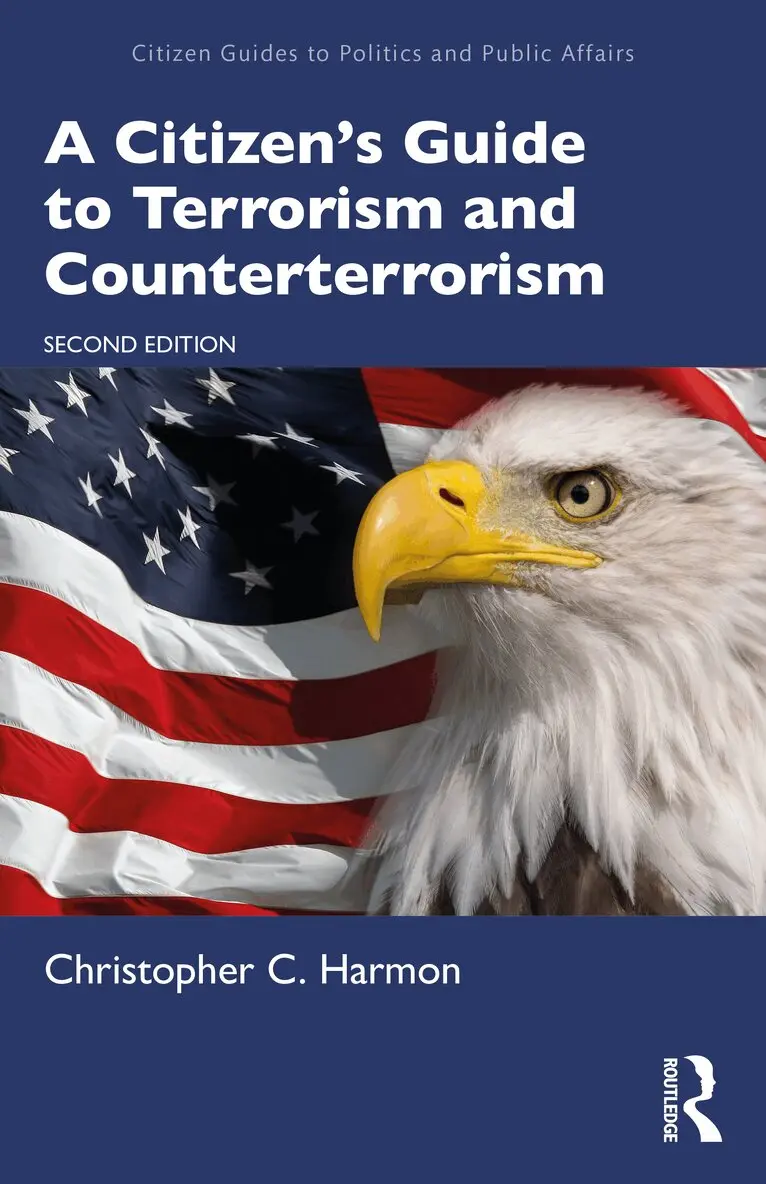
This Citizen’s Guide addresses the public policy issues of terrorism and counterterrorism in the United States. Written for the thinking citizen and student alike, this succinct and up-to-date book takes a “grand strategy” approach toward terrorism and uses examples and issues drawn from present-day perpetrators and actors.Christopher C. Harmon, a veteran academic of military theory who has also instructed U.S. and foreign military officers, organizes his book into three sections. He first introduces the problem of America’s continued vulnerability to terrorist attack. Part II examines the varied ways in which the U.S. is fighting terrorism, highlighting the labors of diverse experts, government offices, intelligence and military personnel, and foreign allies. The book outlines the various aspects of the U.S. strategy, including intelligence, diplomacy, public diplomacy, economic counterterrorism, and law and law-making. In Part III, Harmon sketches the prospects for further action, steering clear of simple partisanship and instead listing recommendations with pros and cons and also including factual stories of how individual citizens have made a difference in the national effort against terrorism.New to the Second Edition• Adds coverage of the Islamic State, explained in terms of its character, rise, and relative collapse under coalition pressures.• Focuses on the growing right-wing terrorist threat, domestically as well as internationally.• Covers additional schools of militancy including anarchism; variants of communism and especially Maoist insurgency; and the Iranian/Shia terrorist threat throughout the Middle East and Europe, among others.• Analyzes the current published White House strategy for countering terrorism.
Inbunden, Engelska, 2020
2 137 kr
Skickas inom 10-15 vardagar
This Citizen’s Guide addresses the public policy issues of terrorism and counterterrorism in the United States. Written for the thinking citizen and student alike, this succinct and up-to-date book takes a “grand strategy” approach toward terrorism and uses examples and issues drawn from present-day perpetrators and actors.Christopher C. Harmon, a veteran academic of military theory who has also instructed U.S. and foreign military officers, organizes his book into three sections. He first introduces the problem of America’s continued vulnerability to terrorist attack. Part II examines the varied ways in which the U.S. is fighting terrorism, highlighting the labors of diverse experts, government offices, intelligence and military personnel, and foreign allies. The book outlines the various aspects of the U.S. strategy, including intelligence, diplomacy, public diplomacy, economic counterterrorism, and law and law-making. In Part III, Harmon sketches the prospects for further action, steering clear of simple partisanship and instead listing recommendations with pros and cons and also including factual stories of how individual citizens have made a difference in the national effort against terrorism.New to the Second Edition• Adds coverage of the Islamic State, explained in terms of its character, rise, and relative collapse under coalition pressures.• Focuses on the growing right-wing terrorist threat, domestically as well as internationally.• Covers additional schools of militancy including anarchism; variants of communism and especially Maoist insurgency; and the Iranian/Shia terrorist threat throughout the Middle East and Europe, among others.• Analyzes the current published White House strategy for countering terrorism.
Inbunden, Engelska, 2013
1 312 kr
Skickas inom 10-15 vardagar
America is currently involved in one of the worst economic crises of modern times. As alarm increases over how the government will balance the budget, handle the debt, and maintain prosperity for the future, the minutia of debts and deficits remains incomprehensible to many. Why is it so hard to find ways to resolve the fiscal crisis? This brief and intelligible book is a guide to understanding both the difficulties involved in managing the federal budget and why the on-going fiscal crisis is so significant for America’s future.In order to introduce the reader to the basic composition of federal spending and to the ways that the government raises revenue, Hudson begins his guide with a "map" clarifying how to navigate the federal budget. He defines basic financial vocabulary and outlines concepts by using clear charts and diagrams that both provide basis for discussion and illustrate key points. With this budget map in mind, the second part of the book lays out how the partisan divide in America helps explain the fiscal crisis. Hudson analyzes the debate on the extent of the fiscal crisis, the ways that political parties have tried to solve it, and the political events and institutions that have surrounded the crisis. This citizen’s guide reveals how differing views of America inform the arguments over deficits and debt. By the time readers finish the book, they will understand that the conflict over deficits and debt is not simply about where to cut or add spending, but instead is a struggle over national priorities and visions for the future.
Häftad, Engelska, 2013
350 kr
Skickas inom 10-15 vardagar
America is currently involved in one of the worst economic crises of modern times. As alarm increases over how the government will balance the budget, handle the debt, and maintain prosperity for the future, the minutia of debts and deficits remains incomprehensible to many. Why is it so hard to find ways to resolve the fiscal crisis? This brief and intelligible book is a guide to understanding both the difficulties involved in managing the federal budget and why the on-going fiscal crisis is so significant for America’s future.In order to introduce the reader to the basic composition of federal spending and to the ways that the government raises revenue, Hudson begins his guide with a "map" clarifying how to navigate the federal budget. He defines basic financial vocabulary and outlines concepts by using clear charts and diagrams that both provide basis for discussion and illustrate key points. With this budget map in mind, the second part of the book lays out how the partisan divide in America helps explain the fiscal crisis. Hudson analyzes the debate on the extent of the fiscal crisis, the ways that political parties have tried to solve it, and the political events and institutions that have surrounded the crisis. This citizen’s guide reveals how differing views of America inform the arguments over deficits and debt. By the time readers finish the book, they will understand that the conflict over deficits and debt is not simply about where to cut or add spending, but instead is a struggle over national priorities and visions for the future.
Inbunden, Engelska, 2015
1 239 kr
Skickas inom 3-6 vardagar
Presidential nominations in the United States can sometimes seem like a media circus, over-hyped and overly speculative. Even informed citizens might be tempted to tune them out. Yet understanding the process, one distinct to American politics, is crucial for civic participation. If presidential elections are about who will lead the nation, presidential nominations are about who appears on the ballot. This concise and coherent Citizen’s Guide examines who has power in presidential nominations and how this affects who we as citizens choose to nominate, and ultimately to sit in the Oval Office.Political scientist Wayne Steger defines the nominating system as a tension between an "insider game" and an "outsider game." He explains how candidates must appeal to a broad spectrum of elected and party officials, political activists, and aligned groups in order to form a winning coalition within their party, which changes over time. Either these party insiders unify early behind a candidate, effectively deciding the nominee before anyone casts a vote, or they are divided and the nomination is determined by citizens voting in the caucuses and primaries. Steger portrays how shifts in party unity and the participation of core party constituencies affect the options presented to voters. Amidst all this, the candidate still matters. Primaries with one strong candidate look much different than those with a field of weaker ones. By clearly addressing the key issues, past and present, of presidential nominations, Steger’s guide will be informative, relevant, and accessible for students and general readers alike.
Häftad, Engelska, 2015
350 kr
Skickas inom 10-15 vardagar
Presidential nominations in the United States can sometimes seem like a media circus, over-hyped and overly speculative. Even informed citizens might be tempted to tune them out. Yet understanding the process, one distinct to American politics, is crucial for civic participation. If presidential elections are about who will lead the nation, presidential nominations are about who appears on the ballot. This concise and coherent Citizen’s Guide examines who has power in presidential nominations and how this affects who we as citizens choose to nominate, and ultimately to sit in the Oval Office.Political scientist Wayne Steger defines the nominating system as a tension between an "insider game" and an "outsider game." He explains how candidates must appeal to a broad spectrum of elected and party officials, political activists, and aligned groups in order to form a winning coalition within their party, which changes over time. Either these party insiders unify early behind a candidate, effectively deciding the nominee before anyone casts a vote, or they are divided and the nomination is determined by citizens voting in the caucuses and primaries. Steger portrays how shifts in party unity and the participation of core party constituencies affect the options presented to voters. Amidst all this, the candidate still matters. Primaries with one strong candidate look much different than those with a field of weaker ones. By clearly addressing the key issues, past and present, of presidential nominations, Steger’s guide will be informative, relevant, and accessible for students and general readers alike.
Inbunden, Engelska, 2013
1 966 kr
Skickas inom 10-15 vardagar
The U.S. Constitution is a blueprint for a free society as well as a source of enduring conflict over how that society must be governed. The competing ways of reading our founding document shape the decisions of the Supreme Court, which acts as the final voice on constitutional questions. This breezy, concise guide explains the central conflicts that frame our constitutional controversies, written in clear non-academic language to serve as a resource for engaged citizens, both inside and outside of an academic setting. After covering the main points of conflict in constitutional law, Marietta gives readers an overview of the perspectives from the leading schools of constititional interpretation--textualism, common law constitutionalism, originalism, and living constitutionalism. He then walks through the points of conflict and competing schools of thought in the context of several landmark cases and ends with advice to readers on how to interpret constitutional issues ourselves.
Häftad, Engelska, 2013
499 kr
Skickas inom 10-15 vardagar
The U.S. Constitution is a blueprint for a free society as well as a source of enduring conflict over how that society must be governed. The competing ways of reading our founding document shape the decisions of the Supreme Court, which acts as the final voice on constitutional questions. This breezy, concise guide explains the central conflicts that frame our constitutional controversies, written in clear non-academic language to serve as a resource for engaged citizens, both inside and outside of an academic setting. After covering the main points of conflict in constitutional law, Marietta gives readers an overview of the perspectives from the leading schools of constititional interpretation--textualism, common law constitutionalism, originalism, and living constitutionalism. He then walks through the points of conflict and competing schools of thought in the context of several landmark cases and ends with advice to readers on how to interpret constitutional issues ourselves.
Inbunden, Engelska, 2013
1 846 kr
Skickas inom 3-6 vardagar
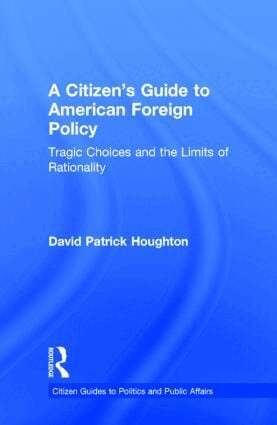
American foreign policy often looks like a trail of man-made debris and disaster. Of course, the explanations for many poorly-made decisions are rather complex. In this brief and cogent analysis, Houghton shows us that understanding American foreign policy often comes down to recognizing the cognitive limitations of the decision-makers, which affects the foreign policy process. Then there is the nature of the decisions themselves. Quite a few decisions in American foreign policy involve ‘tragic’ choices, where leaders are effectively confronted with a series of progressively bad or uncomfortable options. And it is equally clear that some policies are not the product of any one individual’s preferences, but emerge as a consequence of the way in which complex modern governments with large bureaucracies operate.Written with the interested layperson in mind, as well as students of international affairs, this Citizen’s Guide to American Foreign Policy asks questions like, "Why do presidents so often do things which seem to be directly against the national interests of the United States – not just in retrospect, but even at the time?" "Why do there seem to be so many fiascoes in US foreign policy?" "Why does Congress sometimes tie the hands of the president in foreign affairs?" "Why do presidents seem to respond more to opinion polls or to what’s on CNN and Fox News than they do to the core interests of the United States?" Houghton’s overview helps us see past the partisan in-fighting that too often obscures the central issues in foreign affairs. This is vital, required reading for all readers who wish to better understand America’s involvement in the world.
Häftad, Engelska, 2013
528 kr
Skickas inom 10-15 vardagar
American foreign policy often looks like a trail of man-made debris and disaster. Of course, the explanations for many poorly-made decisions are rather complex. In this brief and cogent analysis, Houghton shows us that understanding American foreign policy often comes down to recognizing the cognitive limitations of the decision-makers, which affects the foreign policy process. Then there is the nature of the decisions themselves. Quite a few decisions in American foreign policy involve ‘tragic’ choices, where leaders are effectively confronted with a series of progressively bad or uncomfortable options. And it is equally clear that some policies are not the product of any one individual’s preferences, but emerge as a consequence of the way in which complex modern governments with large bureaucracies operate.Written with the interested layperson in mind, as well as students of international affairs, this Citizen’s Guide to American Foreign Policy asks questions like, "Why do presidents so often do things which seem to be directly against the national interests of the United States – not just in retrospect, but even at the time?" "Why do there seem to be so many fiascoes in US foreign policy?" "Why does Congress sometimes tie the hands of the president in foreign affairs?" "Why do presidents seem to respond more to opinion polls or to what’s on CNN and Fox News than they do to the core interests of the United States?" Houghton’s overview helps us see past the partisan in-fighting that too often obscures the central issues in foreign affairs. This is vital, required reading for all readers who wish to better understand America’s involvement in the world.
Inbunden, Engelska, 2011
2 137 kr
Skickas inom 10-15 vardagar
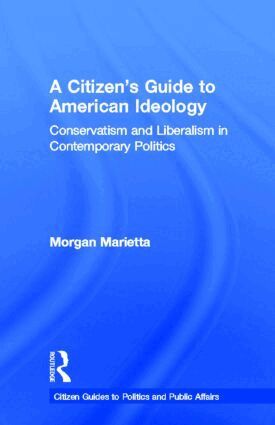
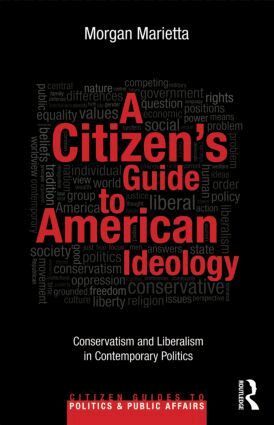
Conservatives and Liberals often resort to cartoon images of the opposing ideology, relying on broadly defined caricatures to illustrate their opposition. To help us get past these stereotypes, this short, punchy book explains the two dominant political ideologies in America today, providing a thorough and fair analysis of each as well as insight into their respective branches.To help us understand the differences between the two contrasting ideologies, Morgan Marietta employs an innovative metaphor of a tree—growth from ideological roots to a core value, expanding into a problem that creates the competing branches of the ideology. This approach suggests a clear way to explain and compare the two ideologies in an effort to enhance democratic debate. A Citizen’s Guide to American Political Ideologies is a brief, non-technical and conversational overview of one of the most important means of understanding political rhetoric and policy debates in America today.
Häftad, Engelska, 2011
543 kr
Skickas inom 10-15 vardagar
Conservatives and Liberals often resort to cartoon images of the opposing ideology, relying on broadly defined caricatures to illustrate their opposition. To help us get past these stereotypes, this short, punchy book explains the two dominant political ideologies in America today, providing a thorough and fair analysis of each as well as insight into their respective branches.To help us understand the differences between the two contrasting ideologies, Morgan Marietta employs an innovative metaphor of a tree—growth from ideological roots to a core value, expanding into a problem that creates the competing branches of the ideology. This approach suggests a clear way to explain and compare the two ideologies in an effort to enhance democratic debate. A Citizen’s Guide to American Political Ideologies is a brief, non-technical and conversational overview of one of the most important means of understanding political rhetoric and policy debates in America today.
Inbunden, Engelska, 2020
2 137 kr
Skickas inom 10-15 vardagar
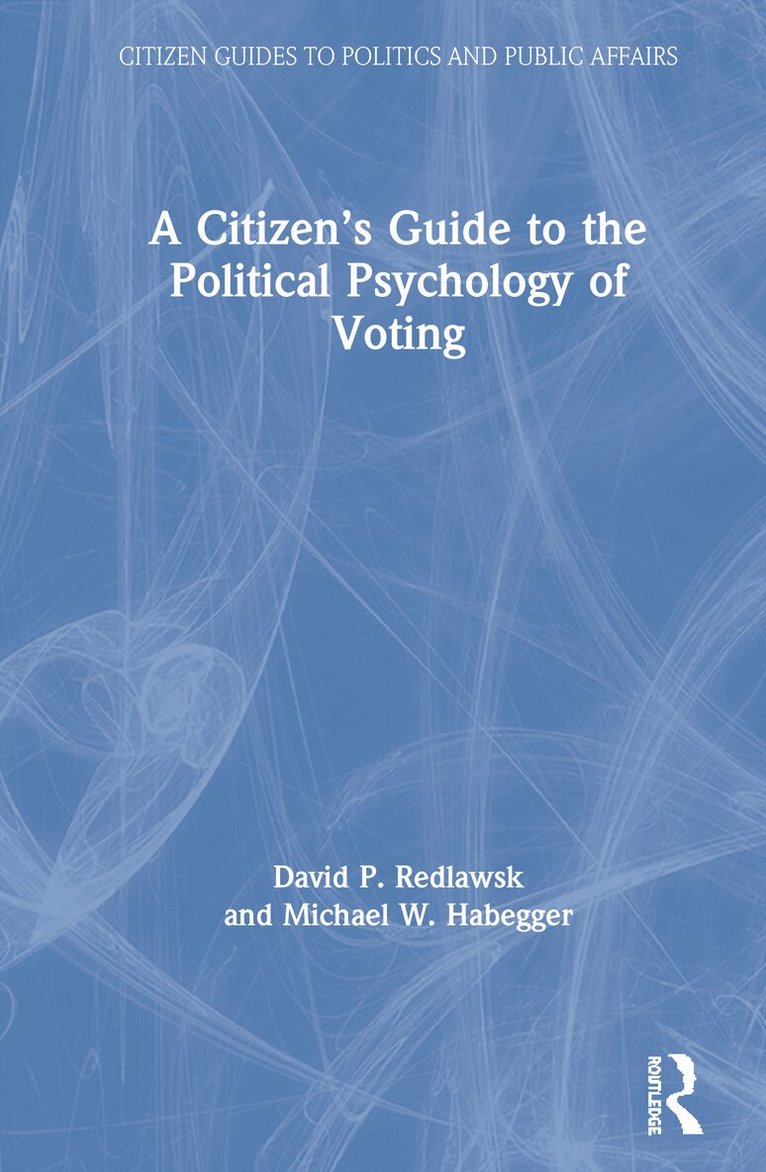
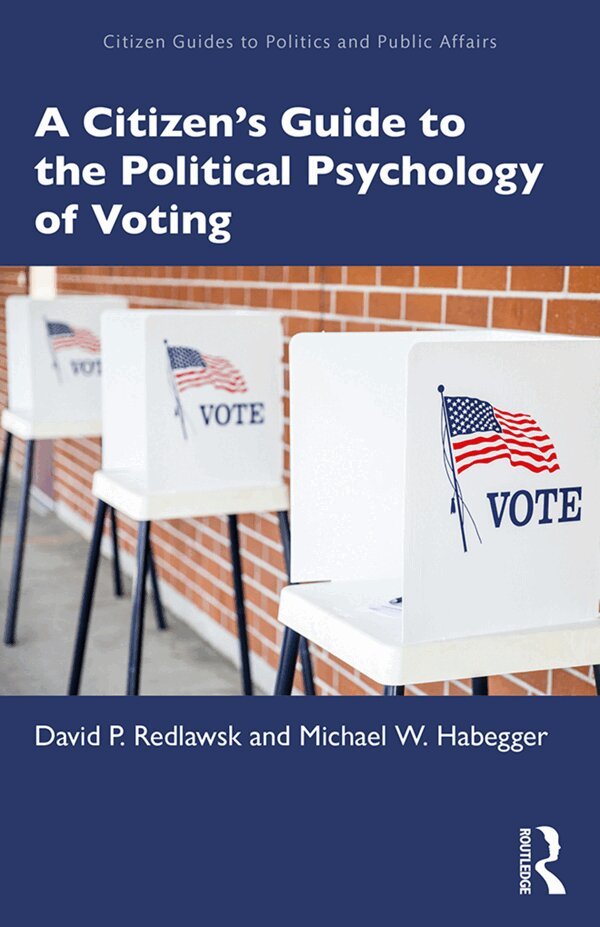
In the run-up to a contentious 2020 presidential election, the much-maligned American voter may indeed be wondering, “How did we get here?” A Citizen’s Guide to the Political Psychology of Voting offers a way of thinking about how voters make decisions that provides both hope and concern. In many ways, voters may be able to effectively process vast amounts of information in order to decide which candidates to vote for in concert with their ideas, values, and priorities. But human limitations in information processing must give us pause. While we all might think we want to be rational information processors, political psychologists recognize that most of the time we do not have the time or the motivation to do so. The question is, can voters do a “good enough” job even if they fail to account for everything during the campaign? Evidence suggests that they can, but it isn’t easy. Here, Redlawsk and Habegger portray a wide variety of voter styles and approaches—from the most motivated and engaged to the farthest removed and disenchanted—in vignettes that connect the long tradition of voter survey research to real life voting challenges. They explore how voters search for political information and make use of it in evaluating candidates and their positions. Ultimately, they find that American voters are reasonably competent in making well-enough informed vote choices efficiently and responsibly. For citizen voters as well as students and scholars, these results should encourage regular turnout for elections now and in the future.
Häftad, Engelska, 2020
557 kr
Skickas inom 10-15 vardagar
In the run-up to a contentious 2020 presidential election, the much-maligned American voter may indeed be wondering, “How did we get here?” A Citizen’s Guide to the Political Psychology of Voting offers a way of thinking about how voters make decisions that provides both hope and concern. In many ways, voters may be able to effectively process vast amounts of information in order to decide which candidates to vote for in concert with their ideas, values, and priorities. But human limitations in information processing must give us pause. While we all might think we want to be rational information processors, political psychologists recognize that most of the time we do not have the time or the motivation to do so. The question is, can voters do a “good enough” job even if they fail to account for everything during the campaign? Evidence suggests that they can, but it isn’t easy. Here, Redlawsk and Habegger portray a wide variety of voter styles and approaches—from the most motivated and engaged to the farthest removed and disenchanted—in vignettes that connect the long tradition of voter survey research to real life voting challenges. They explore how voters search for political information and make use of it in evaluating candidates and their positions. Ultimately, they find that American voters are reasonably competent in making well-enough informed vote choices efficiently and responsibly. For citizen voters as well as students and scholars, these results should encourage regular turnout for elections now and in the future.
Inbunden, Engelska, 2015
2 137 kr
Skickas inom 10-15 vardagar
Political observers routinely lament that American democracy is broken, and many of them blame electoral malfunction. But is the system really broken? Panagopoulos and Weinschenk make the case that citizens are empowered to fix what’s wrong with electoral politics and renew democracy in America, all within the institutional setup and framework of the existing system. Put simply, much of what is broken can be fixed if people stop throwing up their arms and start rolling up their sleeves to do the hard work of building our democracy. This book provides an overview of the basic features that characterize contemporary elections in the United States and includes discussions about voter participation and decision-making patterns, money in elections, and the role of parties and the media in presidential, congressional and state and local races. It also outlines some of the most important trends and challenges in the current system. As a call to action, each chapter features potential solutions to the challenges that exist in U.S. elections.
Häftad, Engelska, 2015
557 kr
Skickas inom 10-15 vardagar
Political observers routinely lament that American democracy is broken, and many of them blame electoral malfunction. But is the system really broken? Panagopoulos and Weinschenk make the case that citizens are empowered to fix what’s wrong with electoral politics and renew democracy in America, all within the institutional setup and framework of the existing system. Put simply, much of what is broken can be fixed if people stop throwing up their arms and start rolling up their sleeves to do the hard work of building our democracy. This book provides an overview of the basic features that characterize contemporary elections in the United States and includes discussions about voter participation and decision-making patterns, money in elections, and the role of parties and the media in presidential, congressional and state and local races. It also outlines some of the most important trends and challenges in the current system. As a call to action, each chapter features potential solutions to the challenges that exist in U.S. elections.
Inbunden, Engelska, 2026
1 230 kr
Tillfälligt slut
In clear, direct, and accessible language, this concise guide provides for a broad non-specialist audience an overview of the diverse array of future military operations that are likely to become questions in American politics.