Building and operating cutting-edge, custom-designed research facilities presents unique challenges, where prior designs and experience may not be a reliable guide and unprecedented modes of failure can never be fully anticipated. In 2020, the National Science Foundation's telescope at the Arecibo Observatory in Puerto Rico collapsed, impacting the work of the National Astronomy and Ionosphere Center. Failure Analysis of the Arecibo Observatory 305-Meter Telescope Collapse analyzes the causes of the collapse through extensive review of prior forensic investigations, information gathering from employees at Arecibo Observatory, study of relevant research, consultations with other experts, and examination of structural analyses, engineering plans, inspection reports, photographs, and repair proposals. This report presents lessons learned and makes recommendations to help ensure the safe operation of other unique, critical science facilities.
Since its formation more than 60 years ago, the National Aeronautics and Space Administration (NASA) has served as a global leader in science, aeronautics, and exploration, propelled technological innovation, and inspired youth to pursue careers in science and engineering, while often accomplishing the seemingly impossible. However, despite its critical and transformative role, NASA faces an uncertain future due to declining national investment as a percentage of gross domestic product and systemic issues that compromise its infrastructure, workforce, and capacity for technological innovation.As requested by Congress in the CHIPS and Science Act of 2022, the National Academies of Sciences, Engineering, and Medicine convened an independent expert committee to evaluate whether NASA's current workforce, infrastructure, technological capabilities, and their interfaces can meet its strategic goals. NASA at a Crossroads: Maintaining Workforce, Infrastructure, and Technology Preeminence in the Coming Decades considers the critical facilities and emerging technologies necessary to fulfill NASA's mission, as well as the workforce skills and organizational structure required to perform and support the work of the mission directorates, both now and in the future.
Myopia, commonly called nearsightedness, has been increasing globally. If current trends continue, there will be 5 billion near-sighted individuals globally by 2050. The understanding of myopia has been enhanced by advances in genetics, investigations employing animal models, understanding of physiology, ocular imaging, epidemiology, environmental research, and clinical trials of interventional strategies. To further develop the knowledge base related to myopia and to reduce the incidence and negative consequences of the disease, eye care professionals, federal agencies, and funding agencies need to make improvements to standardize care, increase funding to study treatments, encourage outdoor time, and overall facilitate the standardization of assessments and diagnostics. Progress in these areas is imperative to address the current increase in myopia across the country.Myopia: Causes, Prevention, and Treatment of an Increasingly Common Disease identifies and assesses the current mechanistic understanding of myopia pathogenesis and the causes of its increased prevalence. This report also examines knowledge gaps and barriers to progress and develops a research agenda aimed at better understanding the biological and environmental factors that could explain the increasing incidence of myopia.
Rare diseases, such as sickle cell disease and thalassemia, affect up to 30 million people in the United States and at least 300 million across the globe. Congress called on the U.S. Food and Drug Administration (FDA) to sponsor a National Academies study on processes for evaluating the safety and efficacy of drugs for rare diseases or conditions in the United States and the European Union. The resulting report provides recommendations for enhancing and promoting rare disease drug development by improving engagement with people affected by a rare disease, advancing regulatory science, and fostering collaboration between FDA and the European Medicines Agency.
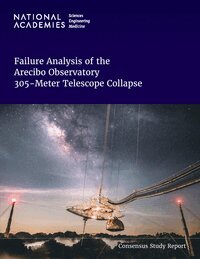
Building and operating cutting-edge, custom-designed research facilities presents unique challenges, where prior designs and experience may not be a reliable guide and unprecedented modes of failure can never be fully anticipated. In 2020, the National Science Foundation's telescope at the Arecibo Observatory in Puerto Rico collapsed, impacting the work of the National Astronomy and Ionosphere Center. Failure Analysis of the Arecibo Observatory 305-Meter Telescope Collapse analyzes the causes of the collapse through extensive review of prior forensic investigations, information gathering from employees at Arecibo Observatory, study of relevant research, consultations with other experts, and examination of structural analyses, engineering plans, inspection reports, photographs, and repair proposals. This report presents lessons learned and makes recommendations to help ensure the safe operation of other unique, critical science facilities.
Since its formation more than 60 years ago, the National Aeronautics and Space Administration (NASA) has served as a global leader in science, aeronautics, and exploration, propelled technological innovation, and inspired youth to pursue careers in science and engineering, while often accomplishing the seemingly impossible. However, despite its critical and transformative role, NASA faces an uncertain future due to declining national investment as a percentage of gross domestic product and systemic issues that compromise its infrastructure, workforce, and capacity for technological innovation.As requested by Congress in the CHIPS and Science Act of 2022, the National Academies of Sciences, Engineering, and Medicine convened an independent expert committee to evaluate whether NASA's current workforce, infrastructure, technological capabilities, and their interfaces can meet its strategic goals. NASA at a Crossroads: Maintaining Workforce, Infrastructure, and Technology Preeminence in the Coming Decades considers the critical facilities and emerging technologies necessary to fulfill NASA's mission, as well as the workforce skills and organizational structure required to perform and support the work of the mission directorates, both now and in the future.
Myopia, commonly called nearsightedness, has been increasing globally. If current trends continue, there will be 5 billion near-sighted individuals globally by 2050. The understanding of myopia has been enhanced by advances in genetics, investigations employing animal models, understanding of physiology, ocular imaging, epidemiology, environmental research, and clinical trials of interventional strategies. To further develop the knowledge base related to myopia and to reduce the incidence and negative consequences of the disease, eye care professionals, federal agencies, and funding agencies need to make improvements to standardize care, increase funding to study treatments, encourage outdoor time, and overall facilitate the standardization of assessments and diagnostics. Progress in these areas is imperative to address the current increase in myopia across the country.Myopia: Causes, Prevention, and Treatment of an Increasingly Common Disease identifies and assesses the current mechanistic understanding of myopia pathogenesis and the causes of its increased prevalence. This report also examines knowledge gaps and barriers to progress and develops a research agenda aimed at better understanding the biological and environmental factors that could explain the increasing incidence of myopia.
Rare diseases, such as sickle cell disease and thalassemia, affect up to 30 million people in the United States and at least 300 million across the globe. Congress called on the U.S. Food and Drug Administration (FDA) to sponsor a National Academies study on processes for evaluating the safety and efficacy of drugs for rare diseases or conditions in the United States and the European Union. The resulting report provides recommendations for enhancing and promoting rare disease drug development by improving engagement with people affected by a rare disease, advancing regulatory science, and fostering collaboration between FDA and the European Medicines Agency.