Creative Therapies in Practice series - Böcker
2 649 kr
Skickas inom 3-6 vardagar
`As with all Paul Wilkins writings the book is thorough and well-researched, with a wealth of information arising from wide readership and personal communication.... My own view is that the book fulfils its aim as an introduction to psychodrama for the audience it addresses. It also is packed with information about areas which experienced psychodramatists and sociodramatists will wish to debate' - British Psychodrama Association Journal
The text unfolds in such a way that the central feature of psychodrama as an action therapy is spontaneously made manifest. The book is good for students of this method and would be a challenging refresher for practitioners in the field. All the special terms used by psychodramatists are defined in a succinct glossary so that the uninitiated will not be bewildered on first encountering "auxilliary egos", "surplus reality", "social atoms" or even the titillating idea of "act hunger"! The "Guide to further reading" and the section on psychodrama and the internet ensure that old-fashioned book- and journal-worms are as well catered for as cybersleuths' -New Therapist
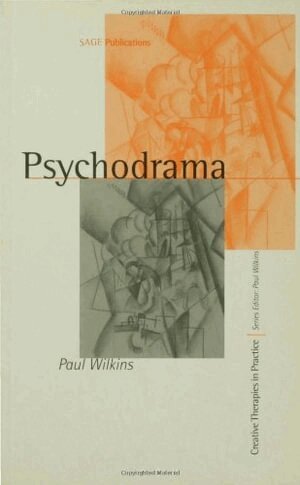
This fascinating book introduces the rationale, theory and psychotherapeutic practice of psychodrama. It provides an insight into its origins, outlining its techniques and bringing to life the dynamic interrelationships that form the core of the practice.
Following the theatrical process that lies at the heart of psychodrama, the book shows how the enactment of scenes from the past, present or future, real or imagined, can benefit the group of individuals involved, leading to unexpected insight and growth through creativity and spontaneity. Psychodramatic terms and processes are explained and illustrated using numerous examples from practice.
935 kr
Skickas inom 3-6 vardagar
`As with all Paul Wilkins writings the book is thorough and well-researched, with a wealth of information arising from wide readership and personal communication.... My own view is that the book fulfils its aim as an introduction to psychodrama for the audience it addresses. It also is packed with information about areas which experienced psychodramatists and sociodramatists will wish to debate' - British Psychodrama Association Journal
The text unfolds in such a way that the central feature of psychodrama as an action therapy is spontaneously made manifest. The book is good for students of this method and would be a challenging refresher for practitioners in the field. All the special terms used by psychodramatists are defined in a succinct glossary so that the uninitiated will not be bewildered on first encountering "auxilliary egos", "surplus reality", "social atoms" or even the titillating idea of "act hunger"! The "Guide to further reading" and the section on psychodrama and the internet ensure that old-fashioned book- and journal-worms are as well catered for as cybersleuths' -New Therapist
This fascinating book introduces the rationale, theory and psychotherapeutic practice of psychodrama. It provides an insight into its origins, outlining its techniques and bringing to life the dynamic interrelationships that form the core of the practice.
Following the theatrical process that lies at the heart of psychodrama, the book shows how the enactment of scenes from the past, present or future, real or imagined, can benefit the group of individuals involved, leading to unexpected insight and growth through creativity and spontaneity. Psychodramatic terms and processes are explained and illustrated using numerous examples from practice.
717 kr
Kommande
An ongoing, in-depth case study of the healing journey of a child is studied throughout the book, demystifying the therapeutic relationship and process of change that occurs. Particular attention is given to defining this approach as person-centred rather than child-centred in recognition of the therapist's own process of change and its effect upon the child. The supervision of a play therapist is included, illustrating the need for transparency, humility and enquiry in this professional endeavour. Finally, the authors look to the future of play therapy, its wider potential for improving the quality of children's lives and the areas ripe for research and development.
This is an inspiring introduction to play therapy. Its clarity makes it accessible and highly relevant to all professionals and trainees concerned with the well-being of children. It also has much offer the experienced play therapist or child psychotherapist in its respectful provocation of current practice.
243 kr
Kommande
An ongoing, in-depth case study of the healing journey of a child is studied throughout the book, demystifying the therapeutic relationship and process of change that occurs. Particular attention is given to defining this approach as person-centred rather than child-centred in recognition of the therapist's own process of change and its effect upon the child. The supervision of a play therapist is included, illustrating the need for transparency, humility and enquiry in this professional endeavour. Finally, the authors look to the future of play therapy, its wider potential for improving the quality of children's lives and the areas ripe for research and development.
This is an inspiring introduction to play therapy. Its clarity makes it accessible and highly relevant to all professionals and trainees concerned with the well-being of children. It also has much offer the experienced play therapist or child psychotherapist in its respectful provocation of current practice.
2 671 kr
Skickas inom 3-6 vardagar
`Along with the "how" and "why" of psychotherapy, Bonnie Meekums provides realistic examples of people whose lives have benefited from dance movement therapy. It is my honour to recommend this book' - Dianne Dulicai, President of the American Dance Therapy Association
`It is a very accessible book - it's an introduction to Dance Movement Therapy, ideal for students who have started DMT training, people who work in related fields (eg other arts therapies) or anyone who is interested in DMT. However, the book goes beyond the introduction in Bonnie's attempt to develop a new framework. It encourages practising DMTs to question their own approach introducing a different terminology to describe the creative process…. It is food for thought and for discussions in supervision' - e-motion
`Dr Meekums surpasses her goal of contributing to the development of DMT; her book serves as a catalyzing guide for all health care professionals who seek creative processes in healing…. Meekums provides an innovative framework for DMT, and offers adequate references and recommendations for further study, research and evidence-based practice. I enthusiastically recommend this book to creative arts therapists, allied practitioners and especially to practicing and interning dance movement therapists as a professional resource and guide' - Maria Brignola Lee, The Arts in Psychotherapy
Dance Movement Therapy is a concise, practical introduction to a form of therapy, which has the body-mind relationship at its centre. Movement, with both its physical and metaphorical potential, provides a unique medium through which clients can find expression, reach new interpretations and ultimately achieve a greater integration of their emotional and physical experience.
In the book, Bonnie Meekums maps the origins of Dance Movement Therapy (DMT) and its relationship to other more traditional forms of therapy. Outlining a new model for DMT, she describes the creative process, which develops in cycles throughout each session and over the course of therapy. The stages in this creative, psychotherapeutic process are described as:
- preparation
- incubation
- illumination
- and evaluation
Illustrated throughout with vivid case examples, the book defines the role of the therapist in working with clients to bring about change.
This is a practical and accessible guide, which will help new trainees become orientated within the field of DMT. It also has much to offer practising psychotherapists who wish to develop more holistic and creative ways of meeting their clients' needs.
916 kr
Skickas
`Along with the "how" and "why" of psychotherapy, Bonnie Meekums provides realistic examples of people whose lives have benefited from dance movement therapy. It is my honour to recommend this book' - Dianne Dulicai, President of the American Dance Therapy Association
`It is a very accessible book - it's an introduction to Dance Movement Therapy, ideal for students who have started DMT training, people who work in related fields (eg other arts therapies) or anyone who is interested in DMT. However, the book goes beyond the introduction in Bonnie's attempt to develop a new framework. It encourages practising DMTs to question their own approach introducing a different terminology to describe the creative process…. It is food for thought and for discussions in supervision' - e-motion
`Dr Meekums surpasses her goal of contributing to the development of DMT; her book serves as a catalyzing guide for all health care professionals who seek creative processes in healing…. Meekums provides an innovative framework for DMT, and offers adequate references and recommendations for further study, research and evidence-based practice. I enthusiastically recommend this book to creative arts therapists, allied practitioners and especially to practicing and interning dance movement therapists as a professional resource and guide' - Maria Brignola Lee, The Arts in Psychotherapy
Dance Movement Therapy is a concise, practical introduction to a form of therapy, which has the body-mind relationship at its centre. Movement, with both its physical and metaphorical potential, provides a unique medium through which clients can find expression, reach new interpretations and ultimately achieve a greater integration of their emotional and physical experience.
In the book, Bonnie Meekums maps the origins of Dance Movement Therapy (DMT) and its relationship to other more traditional forms of therapy. Outlining a new model for DMT, she describes the creative process, which develops in cycles throughout each session and over the course of therapy. The stages in this creative, psychotherapeutic process are described as:
- preparation
- incubation
- illumination
- and evaluation
Illustrated throughout with vivid case examples, the book defines the role of the therapist in working with clients to bring about change.
This is a practical and accessible guide, which will help new trainees become orientated within the field of DMT. It also has much to offer practising psychotherapists who wish to develop more holistic and creative ways of meeting their clients' needs.
2 151 kr
Tillfälligt slut
`I found this a useful book in terms of its clarity and carefully thought out structure. It is a rich source of information and of ideas which are extremely important for the potential music therapy trainee to think about; it also makes valuable reading for more experienced therapists, bringing our minds back to some central questions about the nature of our work…. Whatever stage you may be at in your life as a music therapist, it will refresh your mind and your practice' - Eleanor Richards, Nordic Journal of Music Therapy
From the Foreword:
`Rachel Darnley-Smith and Helen M Patey have managed so well to tell their story of music therapy offering the framework of theory, training and professional practice, and the complimentary value of Analytical Music Therapy and Creative Music Therapy within improvization. The authors devote a whole chapter to promoting a wider understanding of improvisation, describing its value as a form of play, free association, with more or less structure depending on the form of intervention and the client's needs. There is really a valuable resource of meaningful and relevant examples from their own clinical work. These examples clearly validate and illustrate the seminal theoretical concept of the first great pioneer of music therapy in the United Kingdom, Juliette Alvin, who taught us that music is a creation of people, and therefore we can see people in their music' - Professor Tony Wigram
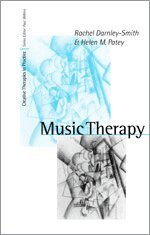
Music Therapy is an introduction to contemporary training and practice. Written in a clear, jargon-free style, the book provides a lively source of information and ideas for all who are new to music therapy.
Written by highly experienced practitioners, the book examines improvization, the principal method for music therapy, and points to the underlying assumptions about music, which shape this way of working. Two of the main music therapy approaches - Analytic Music Therapy and Nordoff- Robbins Music Therapy - are also outlined.
Drawing on their own experience, the authors examine a range of clinical situations and give examples of working with children and adults with a range of needs, including autism, learning disabilities and mental health problems. They highlight the many issues which arise from day-to-day practice and explore other aspects of professional life, such as personal therapy and supervision.
For anyone training or thinking of training to be a music therapist, this book provides an ideal place to start. As a guide to contemporary music therapy, it also has much to offer those already in practice.
999 kr
Skickas inom 3-6 vardagar
`I found this a useful book in terms of its clarity and carefully thought out structure. It is a rich source of information and of ideas which are extremely important for the potential music therapy trainee to think about; it also makes valuable reading for more experienced therapists, bringing our minds back to some central questions about the nature of our work…. Whatever stage you may be at in your life as a music therapist, it will refresh your mind and your practice' - Eleanor Richards, Nordic Journal of Music Therapy
From the Foreword:
`Rachel Darnley-Smith and Helen M Patey have managed so well to tell their story of music therapy offering the framework of theory, training and professional practice, and the complimentary value of Analytical Music Therapy and Creative Music Therapy within improvization. The authors devote a whole chapter to promoting a wider understanding of improvisation, describing its value as a form of play, free association, with more or less structure depending on the form of intervention and the client's needs. There is really a valuable resource of meaningful and relevant examples from their own clinical work. These examples clearly validate and illustrate the seminal theoretical concept of the first great pioneer of music therapy in the United Kingdom, Juliette Alvin, who taught us that music is a creation of people, and therefore we can see people in their music' - Professor Tony Wigram
Music Therapy is an introduction to contemporary training and practice. Written in a clear, jargon-free style, the book provides a lively source of information and ideas for all who are new to music therapy.
Written by highly experienced practitioners, the book examines improvization, the principal method for music therapy, and points to the underlying assumptions about music, which shape this way of working. Two of the main music therapy approaches - Analytic Music Therapy and Nordoff- Robbins Music Therapy - are also outlined.
Drawing on their own experience, the authors examine a range of clinical situations and give examples of working with children and adults with a range of needs, including autism, learning disabilities and mental health problems. They highlight the many issues which arise from day-to-day practice and explore other aspects of professional life, such as personal therapy and supervision.
For anyone training or thinking of training to be a music therapist, this book provides an ideal place to start. As a guide to contemporary music therapy, it also has much to offer those already in practice.
2 324 kr
Skickas inom 11-20 vardagar
`Dorothy Langley's book offers a valuable overview of dramatherapy in all its applications. It provides evidence of many years' work as a teacher and practitioner. It is both clear and readable, and will serve as a useful introduction to this unique therapeutic approach for people in other healing professions, particularly psychiatry, as well as for the general reader' - Roger Grainger, Senior Practitioner on the Register of Psychologists Specialising in Psychotherapy, and State Registered Arts Therapist, Drama
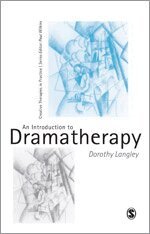
An Introduction to Dramatherapy is a concise introduction to the background, theory and practice of a method of therapy which uses the dramatic process to help people during times of stress, emotional upheaval, illness or disability.
Illustrated throughout with vivid examples from dramatherapy sessions, the book shows how drama can be used in an intentional and directional way to achieve constructive change with individuals or groups. In particular, the book highlights the power of drama as a therapeutic medium because of its foundations in metaphor, power which can be harnessed through the use of techniques such as role play, enactment, story-telling and the use of puppets and masks.
An Introduction to Dramatherapy provides a welcome overview for readers who are new to the field and an excellent starting point for further study.
842 kr
Skickas inom 3-6 vardagar
`Dorothy Langley's book offers a valuable overview of dramatherapy in all its applications. It provides evidence of many years' work as a teacher and practitioner. It is both clear and readable, and will serve as a useful introduction to this unique therapeutic approach for people in other healing professions, particularly psychiatry, as well as for the general reader' - Roger Grainger, Senior Practitioner on the Register of Psychologists Specialising in Psychotherapy, and State Registered Arts Therapist, Drama
An Introduction to Dramatherapy is a concise introduction to the background, theory and practice of a method of therapy which uses the dramatic process to help people during times of stress, emotional upheaval, illness or disability.
Illustrated throughout with vivid examples from dramatherapy sessions, the book shows how drama can be used in an intentional and directional way to achieve constructive change with individuals or groups. In particular, the book highlights the power of drama as a therapeutic medium because of its foundations in metaphor, power which can be harnessed through the use of techniques such as role play, enactment, story-telling and the use of puppets and masks.
An Introduction to Dramatherapy provides a welcome overview for readers who are new to the field and an excellent starting point for further study.
2 294 kr
Skickas inom 11-20 vardagar
- assessing clients
- establishing and maintaining boundaries
- ending therapy
- private practice.
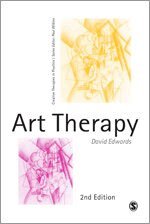
Now even more practical and accessible, this fully updated Second Edition includes a glossary, chapter summaries and other learning features. Case studies from a variety of settings shillustrate the application of art therapy in real-life scenarios.
This book offers an excellent foundation on which to build future knowledge and skills and should be on the shelf of every art therapy trainee and new practitioner. David Edwards is an experienced HCPC registered art therapist who lives and works in Sheffield, UK.
757 kr
Skickas
- assessing clients
- establishing and maintaining boundaries
- ending therapy
- private practice.
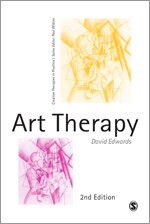
Now even more practical and accessible, this fully updated Second Edition includes a glossary, chapter summaries and other learning features. Case studies from a variety of settings shillustrate the application of art therapy in real-life scenarios.
This book offers an excellent foundation on which to build future knowledge and skills and should be on the shelf of every art therapy trainee and new practitioner. David Edwards is an experienced HCPC registered art therapist who lives and works in Sheffield, UK.