Critical Moments and Perspectives in Earth History and Paleobiology - Böcker
Visar alla böcker i serien Critical Moments and Perspectives in Earth History and Paleobiology. Handla med fri frakt och snabb leverans.
21 produkter
21 produkter
556 kr
Skickas
The authors explore the late Precambrian and earliest Cambrian fossil record to explain the Cambrian phenomenon and discuss the possibility of a major turnover in marine ecology at the beginning of the Cambrian period or whether a new, improved type of animal appeared at this time. They support their often controversial conclusions with photos and illustrations of fossils, some never before published.
885 kr
Skickas inom 3-6 vardagar
In order to understand the state of the oceans, researchers turn to the origins of global waters, 90 million years ago. This study explores the subject of sea-level change in the Phanerozoic era, a topic which has much relevance to current issues of climatic shifts and the greenhouse effect.
2 201 kr
Skickas inom 3-6 vardagar
-- Quarterly Review of Biology
812 kr
Skickas inom 3-6 vardagar
-- Quarterly Review of Biology
404 kr
Skickas inom 7-10 vardagar
The first book to approach the Cretaceous extinction-the period during which dinosaurs disappeared from Earth-from the perspective of the fossil record.
885 kr
Skickas inom 3-6 vardagar
Describes the Eocene-Oligocene extinctions, an important turning-point in Earth history approximately 40 million years ago, when the first signs of Antarctic glaciation appeared. The text relates how, during a period of global cooling, the planet's climate and vegetation changed dramatically.
416 kr
Skickas inom 7-10 vardagar
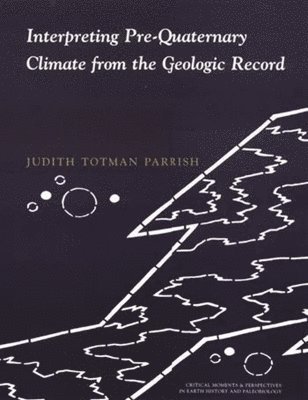
Within the geological science of paleoclimatology, the earth's pre-Quaternary period--more than two million years ago-has been studied systematically only since the 1960's, when geologists started to take seriously the concept that the continents have changed position on the earth's surface. In the decades since, the study of pre-Quaternary paleoclimatology has expanded greatly. A wide variety of methods have been developed to study pre-Quaternary climates, but until now, no single text has sought to synthesize those methods. Judith Totman Parrish's text offers a much-needed entry point into the literature. While a number of previous books have dealt with climate models and paleoclimate, this is the first to offer a sustained exploration of the methods that are the foundation of any interpretation of earth processes. Focusing primarily on the description and analysis of paleoclimatic indicators-signals of a particular climate--this valuable reference work offers detailed explanations of biotic and lithologic indicators in the marine and terrestrial realms and includes case histories of paleoclimatic studies.The most up-to-date and comprehensive volume on the subject, Interpreting Pre-Quaternary Climatefrom the Geologic Record will be an important resource for students and scientists alike. Parrish's focus on the established, underexploited, and controversial methods bring to light a spectrum of potential new avenues of research in this field.
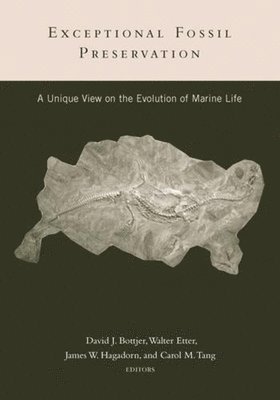
Exceptional Fossil Preservation
A Unique View on the Evolution of Marine Life
Inbunden, Engelska, 2002
3 005 kr
Skickas inom 3-6 vardagar
Most nonscientists are usually aware of fossils, and it is commonly believed that they are extremely rare. In fact, fossils are exceptionally common in many sedimentary rocks and are used extensively in geology for age dating, interpretation of ancient environments, and the discovery of natural resources. However, there is another type of fossil deposit that is truly rare. These rare fossil deposits, called Lagerstatten, preserve the remains of the soft tissues or the articulated skeletal remains of ancient creatures in truly astonishing fine detail. Some of these deposits are world-famous, such as the Burgess Shale, or Solnhofen but there are others dating from many different geological eras from the Paleozoic, up to the Eocene. Recently, a concerted effort has been made to understand the overall significance of these rare fossil deposits. Whereas in the past these deposits were considered novelties, modern researchers are trying to understand what they can tell us about ancient life and environments.New sophisticated techniques (including image and geochemical analyses) are providing enormous new contributions to our knowledge of Lagerstatten sites and to paleobiology in general. This volume describes many of the most famous Lagerstatten locations worldwide and is complete with over 70 superb halftones showing some of these exotic fossils in all their glory. Paleontologists are beginning to understand why such deposits occur, how they have varied since the advent of marine metazoan life, and how their presence effects our understanding of the evolution of life in the Earth's oceans. In this way, the study of Lagerstatten continues to move towards the mainstream of paleobiological, biological, and geological research, and away from its former status as the examination of mere curiosities. All those interested in these beautiful and sometimes enigmatic deposits will want to own this book.
1 031 kr
Skickas inom 3-6 vardagar
Most nonscientists are usually aware of fossils, and it is commonly believed that they are extremely rare. In fact, fossils are exceptionally common in many sedimentary rocks and are used extensively in geology for age dating, interpretation of ancient environments, and the discovery of natural resources. However, there is another type of fossil deposit that is truly rare. These rare fossil deposits, called Lagerstatten, preserve the remains of the soft tissues or the articulated skeletal remains of ancient creatures in truly astonishing fine detail. Some of these deposits are world-famous, such as the Burgess Shale, or Solnhofen but there are others dating from many different geological eras from the Paleozoic, up to the Eocene. Recently, a concerted effort has been made to understand the overall significance of these rare fossil deposits. Whereas in the past these deposits were considered novelties, modern researchers are trying to understand what they can tell us about ancient life and environments.New sophisticated techniques (including image and geochemical analyses) are providing enormous new contributions to our knowledge of Lagerstatten sites and to paleobiology in general. This volume describes many of the most famous Lagerstatten locations worldwide and is complete with over 70 superb halftones showing some of these exotic fossils in all their glory. Paleontologists are beginning to understand why such deposits occur, how they have varied since the advent of marine metazoan life, and how their presence effects our understanding of the evolution of life in the Earth's oceans. In this way, the study of Lagerstatten continues to move towards the mainstream of paleobiological, biological, and geological research, and away from its former status as the examination of mere curiosities. All those interested in these beautiful and sometimes enigmatic deposits will want to own this book.
678 kr
Skickas
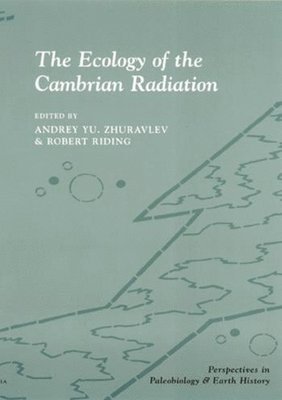
The Cambrian radiation was the explosive evolution of marine life that started 550,000,000 years ago. It ranks as one of the most important episodes in Earth history. This key event in the history of life on our planet changed the marine biosphere and its sedimentary environment forever, requiring a complex interplay of wide-ranging biologic and nonbiologic processes. The Ecology of the Cambrian Radiation offers a comprehensive and surprising picture of the Earth at that ancient time. The book contains contributions from thirty-three authors hailing from ten countries and will be of interest to paleontologists, geologists, biologists, and other researchers interested in the global Earth-life system.
958 kr
Skickas inom 3-6 vardagar
Theoretical morphology--which seeks to sketch the range of forms that biological entities could take, with the ultimate goal of discovering why certain forms exist but others do not--is among paleontology's most significant contributions to the understanding of evolution. Today, with the aid of computers in developing conceivable morphologies, the discipline has been able to advance into a remarkable tool for the study of evolution. Yet despite these advances, the field remains largely untapped and ripe with research potential. In this volume, paleontologist George McGhee presents the first complete overview of the field, its advancements in recent years, and the challenges ahead. Theoretical Morphology provides readers with the background they need to launch their own research. McGhee describes the steps involved in defining the geometric parameters (theoretical morphospaces) for an organic form in order to generate a spectrum of other possible forms that have never actually appeared. He also addresses the simulation of actual processes of morphogenesis, with the goal of attaining a more nuanced comprehension of how evolutionary processes work.Theoretical Morphology takes readers through a variety of theoretical morphospaces including those for univalved, bivalved, discrete, and branching growth systems. With a glossary of terms and a comprehensive list of references on the subject, this is an excellent handbook for graduate students or professional scientists interested in employing these cutting-edge techniques in their own research.
1 118 kr
Skickas inom 7-10 vardagar
Addressing the history of the earth in terms of geological process and the resolution of the fossil record, Ronald Martin presents a report on the current state of knowledge on a group of interconnected themes - process, scale and hierarchy, and the methodologies of historical sciences. He examines several questions about geological history: What is the evidence for processes that occur over long periods of geologic history? Why are these long term earth processes significant to the human race? How does one test hypotheses using the fossil record? And what, at the present rate of knowledge, are the limits of that record? As Martin explains, the project of the geologist is to interpret natural phenomena by integrating data into large contexts and constructing a historical narrative. Through the critical examination of these narratives, geologists can determine how the earth evolved into its present state. However, the scale employed in measurement can cause wide variations in the results of any inquiry into geologic process. Martin addresses a wide range of topics, including taphonomy, bioturbation, cycles of carbon dioxide, global cooling, and extinction.He supplements the theatrical framework with explanations of concepts and definitions of key terminology.
285 kr
Skickas inom 7-10 vardagar
Addressing the history of the earth in terms of geological process and the resolution of the fossil record, Ronald Martin presents a report on the current state of knowledge on a group of interconnected themes - process, scale and hierarchy, and the methodologies of historical sciences. He examines several questions about geological history: What is the evidence for processes that occur over long periods of geologic history? Why are these long term earth processes significant to the human race? How does one test hypotheses using the fossil record? And what, at the present rate of knowledge, are the limits of that record? As Martin explains, the project of the geologist is to interpret natural phenomena by integrating data into large contexts and constructing a historical narrative. Through the critical examination of these narratives, geologists can determine how the earth evolved into its present state. However, the scale employed in measurement can cause wide variations in the results of any inquiry into geologic process. Martin addresses a wide range of topics, including taphonomy, bioturbation, cycles of carbon dioxide, global cooling, and extinction.He supplements the theatrical framework with explanations of concepts and definitions of key terminology.
3 005 kr
Skickas inom 3-6 vardagar
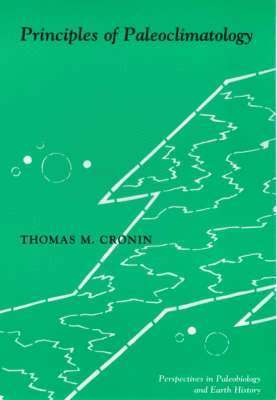
Greenhouse gases, global warming, thinning ozone layers-understanding the Earth's climatic changes is one of today's most pressing international concerns. How fast has the climate changed? Where and why is it changing? What is the impact of climate change on our ecosystems, coastal regions, glaciers, forests, and lakes, and even on the evolution of our own species? This introduction to the rapidly emerging field of paleoclimatology explains the patterns and processes in the history of the Earth's climate to answer such essential questions. Using the geologic records of ocean and lake sediment, ice cores, corals, and other natural archives, Principles of Paleoclimatology describes the history of the Earth's climate-the ice age cycles, sea level changes, volcanic activity, changes in atmosphere and solar radiation-and the resulting, sometimes catastrophic, biotic responses. These paleoclimate records provide a baseline against which we can compare modern climate trends.Designed to give a fundamental background-including both history and methodology-to the discipline of paleoclimatology, this book is the first to advance our understanding of how climate change develops, how those changes are detected, and how the climate of the past can shape the climate of the future.
1 031 kr
Skickas inom 3-6 vardagar
Greenhouse gases, global warming, thinning ozone layers-understanding the Earth's climatic changes is one of today's most pressing international concerns. How fast has the climate changed? Where and why is it changing? What is the impact of climate change on our ecosystems, coastal regions, glaciers, forests, and lakes, and even on the evolution of our own species? This introduction to the rapidly emerging field of paleoclimatology explains the patterns and processes in the history of the Earth's climate to answer such essential questions. Using the geologic records of ocean and lake sediment, ice cores, corals, and other natural archives, Principles of Paleoclimatology describes the history of the Earth's climate-the ice age cycles, sea level changes, volcanic activity, changes in atmosphere and solar radiation-and the resulting, sometimes catastrophic, biotic responses. These paleoclimate records provide a baseline against which we can compare modern climate trends.Designed to give a fundamental background-including both history and methodology-to the discipline of paleoclimatology, this book is the first to advance our understanding of how climate change develops, how those changes are detected, and how the climate of the past can shape the climate of the future.
885 kr
Skickas inom 3-6 vardagar
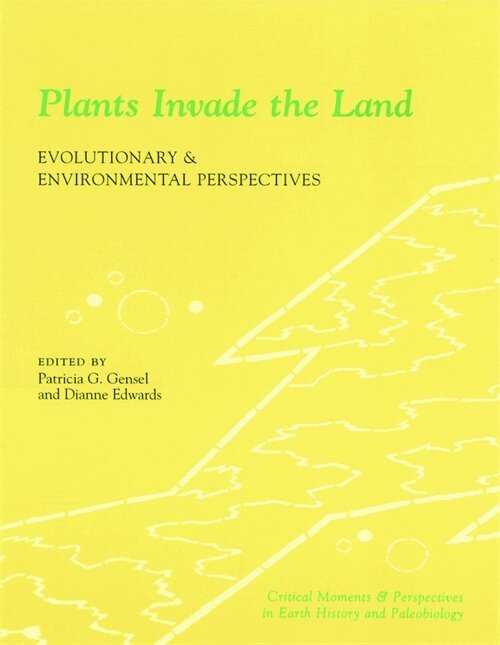
What do we now know about the origins of plants on land, from an evolutionary and an environmental perspective? The essays in this collection present a synthesis of our present state of knowledge, integrating current information in paleobotany with physical, chemical, and geological data.
1 559 kr
Skickas
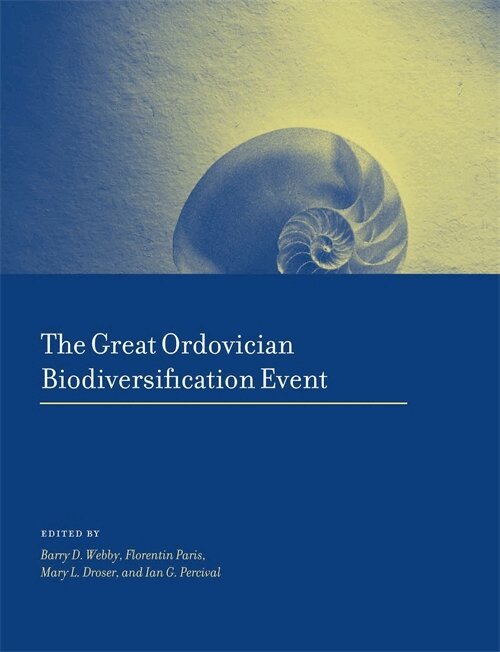
Two of the greatest evolutionary events in the history of life on Earth occurred during Early Paleozoic time. The first was the Cambrian explosion of skeletonized marine animals about 540 million years ago. The second was the "Great Ordovician Biodiversification Event," which is the focus of this book. During the 46-million-year Ordovician Period (489-443 m.y.), a bewildering array of adaptive radiations of "Paleozoic- and Modern-type" biotas appeared in marine habitats, the first animals (arthropods) walked on land, and the first non-vascular bryophyte-like plants (based on their cryptospore record) colonized terrestrial areas with damp environments. This book represents a compilation by a large team of Ordovician specialists from around the world, who have enthusiastically cooperated to produce this first globally orientated, internationally sponsored IGCP (International Geological Correlation Program) project on Ordovician biotas. The major part is an assembly of genus- and species-level diversity data for the many Ordovician fossil groups.The book also presents an evaluation of how each group diversified through Ordovician time, with assessments of patterns of change and rates of origination and extinction. As such, it will become the standard work and data source for biotic studies on the Ordovician Period.
1 323 kr
Skickas inom 3-6 vardagar
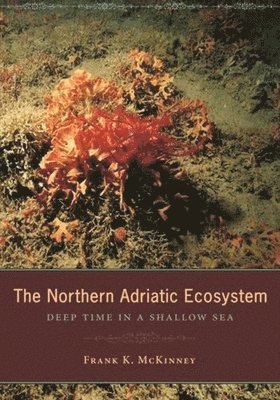
The northern Adriatic Sea is transient, most recently flooded between 18,000 to 6,000 years ago following the last glacial maximum, and it will drain again with the onset of the next glacial period. Despite its youth, uniformly shallow depth, and flat sediment floor, it hosts a broad range of bottom-dwelling sea life ecologically resembling communities that have existed in the shallow sea since the Ordovician Period, some 500 million years ago. The northern Adriatic is a natural laboratory in which to test hypotheses concerning the shift from the Paleozoic prevalence of stationary suspension-feeders living on the surface of the sediment and feeding from the overlying waters to, more recently, bottom-dwelling animals living dominantly in or actively seeking temporary refuge within the sediments of the sea floor, regardless of where they feed. Across the northern Adriatic Sea there is an ecological gradient from Paleozoic-style surface-dwelling communities in the east to "modern" communities living almost exclusively within the sediments in the west.Therefore, within the relatively small area of the northern Adriatic, there is an existing gradient similar to the profound ecological change from Paleozoic to more modern marine life. During the early twentieth century, life at the bottom of the Adriatic was systematically sampled from the east to the west coasts, revealing the most common animals and their distribution. In this book Frank K. McKinney combines these findings with more recent, local studies to understand better the ecological structure of the Adriatic's floor. Specifically, he uses the predation, sediment textures and deposition rates, currents, and nutrients of northern Adriatic bottom communities to evaluate hypotheses concerning the conditions that drove surface-dwelling animals to seek long-term refuge within sea floor sediment. Though the northern Adriatic has been well studied since the advent of the marine sciences, it is not widely known by paleontologists. With this volume, McKinney illuminates what this "living laboratory" can tell us about the evolution of multicellular life on Earth.
1 323 kr
Skickas inom 3-6 vardagar
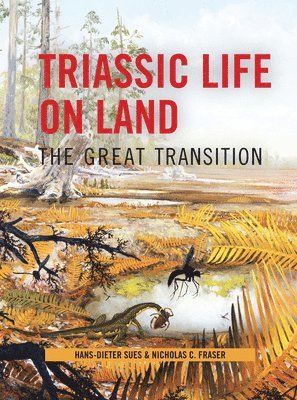
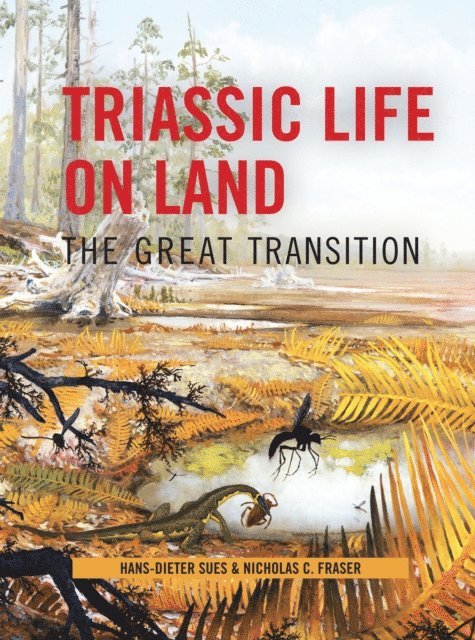
The Triassic period is generally viewed as the beginning of the Age of Dinosaurs. For paleontologists, however, it also marks the rise of the world's first modern land ecosystems. Over the past three decades, extensive, worldwide fieldwork has led to the discovery of many new species of Triassic animals and plants, suggesting that faunal and floral changes already began in the Middle Triassic and were more protracted than previously thought. The Late Triassic is a pivotal time in the evolution of life on land, with many of the major groups of present-day vertebrates and insects first appearing in the fossil record. This book provides the first detailed overview of life on land during the Triassic period for advanced students and researchers. Noted vertebrate paleontologists Hans-Dieter Sues and Nicholas C. Fraser also review the biotic changes of this period and their possible causes.
3 005 kr
Skickas inom 3-6 vardagar
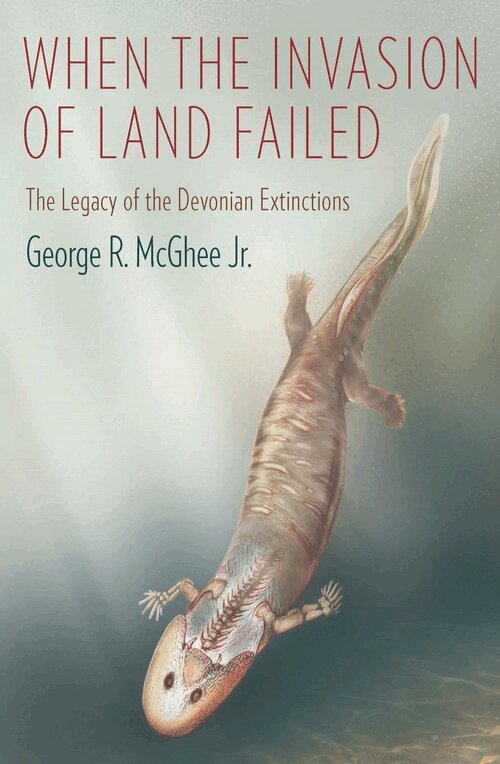
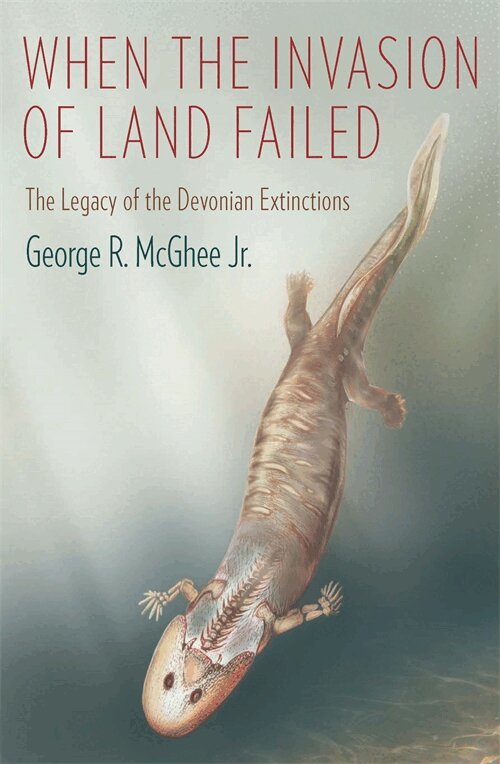
The invasion of land by ocean-dwelling plants and animals was one of the most revolutionary events in the evolution of life on Earth, yet the animal invasion almost failed-twice-because of the twin mass extinctions of the Late Devonian Epoch. Some 359 to 375 million years ago, these catastrophic events dealt our ancestors a blow that almost drove them back into the sea. If those extinctions had been just a bit more severe, spiders and insects-instead of vertebrates-might have become the ecologically dominant forms of animal life on land. This book examines the profound evolutionary consequences of the Late Devonian extinctions and the various theories proposed to explain their occurrence. Only one group of four-limbed vertebrates exists on Earth, while other tetrapod-like fishes are extinct. This gap is why the idea of "fish with feet" seems so peculiar to us, yet such animals were once a vital part of our world, and if the Devonian extinctions had not happened, members of these species, like the famous Acanthostega and Ichthyostega, might have continued to live in our rivers and lakes.Synthesizing decades of research and including a wealth of new discoveries, this accessible, comprehensive text explores the causes of the Devonian extinctions, the reasons vertebrates were so severely affected, and the potential evolution of the modern world if the extinctions had never taken place.
885 kr
Skickas inom 3-6 vardagar
The invasion of land by ocean-dwelling plants and animals was one of the most revolutionary events in the evolution of life on Earth, yet the animal invasion almost failed-twice-because of the twin mass extinctions of the Late Devonian Epoch. Some 359 to 375 million years ago, these catastrophic events dealt our ancestors a blow that almost drove them back into the sea. If those extinctions had been just a bit more severe, spiders and insects-instead of vertebrates-might have become the ecologically dominant forms of animal life on land. This book examines the profound evolutionary consequences of the Late Devonian extinctions and the various theories proposed to explain their occurrence. Only one group of four-limbed vertebrates exists on Earth, while other tetrapod-like fishes are extinct. This gap is why the idea of "fish with feet" seems so peculiar to us, yet such animals were once a vital part of our world, and if the Devonian extinctions had not happened, members of these species, like the famous Acanthostega and Ichthyostega, might have continued to live in our rivers and lakes.Synthesizing decades of research and including a wealth of new discoveries, this accessible, comprehensive text explores the causes of the Devonian extinctions, the reasons vertebrates were so severely affected, and the potential evolution of the modern world if the extinctions had never taken place.