Developments in Forensic Science - Böcker
Visar alla böcker i serien Developments in Forensic Science. Handla med fri frakt och snabb leverans.
6 produkter
6 produkter
744 kr
Skickas inom 7-10 vardagar
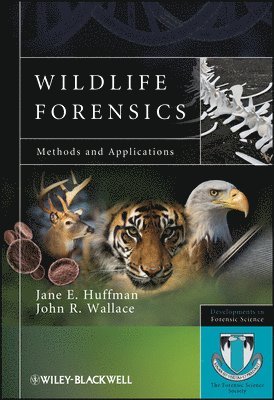
Wildlife Forensics: Methods and Applications provides an accessible and practical approach to the key areas involved in this developing subject. The book contains case studies throughout the text that take the reader from the field, to the lab analysis to the court room, giving a complete insight into the path of forensic evidence and demonstrating how current techniques can be applied to wildlife forensics. The book contains approaches that wildlife forensic investigators and laboratory technicians can employ in investigations and provides the direction and practical advice required by legal and police professionals seeking to gain the evidence needed to prosecute wildlife crimes.The book will bring together in one text various aspects of wildlife forensics, including statistics, toxicology, pathology, entomology, morphological identification, and DNA analysis.This book will be an invaluable reference and will provide investigators, laboratory technicians and students in forensic Science/conservation biology classes with practical guidance and best methods for criminal investigations applied to wildlife crime. Includes practical techniques that wildlife forensic investigators and laboratory technicians can employ in investigations.Includes case studies to illustrate various key methods and applications.Brings together diverse areas of forensic science and demonstrates their application specifically to the field of wildlife crime.Contains methodology boxes to lead readers through the processes of individual techniques.Takes an applied approach to the subject to appeal to both students of the subject and practitioners in the field.Includes a broad introduction to what is meant by 'wildlife crime', how to approach a crime scene and collect evidence and includes chapters dedicated to the key techniques utilized in wildlife investigations.Includes chapters on wildlife forensic pathology; zooanthropological techniques; biological trace evidence analysis; the importance of bitemark evidence; plant and wildlife forensics; best practices and law enforcement.
Handbook of Firearms and Ballistics
Examining and Interpreting Forensic Evidence
Inbunden, Engelska, 2008
972 kr
Skickas inom 7-10 vardagar
The updated second edition of Handbook of Firearms and Ballistics includes recent developed analytical techniques and methodologies with a more comprehensive glossary, additional material, and new case studies. With a new chapter on the determination of bullet caliber via x-ray photography, this edition includes revised material on muzzle attachments, proof marks, non-toxic bullets, and gunshot residues. Essential reading for forensic scientists, firearms examiners, defense and prosecution practitioners, the judiciary, and police force, this book is also a helpful reference guide for undergraduate and graduate forensic science students.
Stable Isotope Forensics
Methods and Forensic Applications of Stable Isotope Analysis
Inbunden, Engelska, 2017
1 637 kr
Skickas inom 7-10 vardagar
The number-one guide, internationally, to all aspects of forensic isotope analysis, thoroughly updated and revised and featuring many new case studiesThis edition of the internationally acclaimed guide to forensic stable isotope analysis uses real-world examples to bridge discussions of the basic science, instrumentation and analytical techniques underlying forensic isotope profiling and its various technical applications. Case studies describe an array of applications, many of which were developed by the author himself. They include cases in which isotope profiling was used in murder, and drugs-related crime investigations, as well as for pharmaceutical and food authenticity control studies.Updated with coverage of exciting advances occurring in the field since the publication of the 1st edition, this 2nd edition explores innovative new techniques and applications in forensic isotope profiling, as well as key findings from original research. More than a simple update, though, this edition has been significantly revised in order to address serious problems that can arise from non-comparable and unfit-for-purpose stable isotope data. To that end, Part II has been virtually rewritten with greater emphasis now being placed on important quality control issues in stable isotope analysis in general and forensic stable isotope analysis in particular. Written in a highly accessible style that will appeal to practitioners, researchers and students alikeIllustrates the many strengths and potential pitfalls of forensic stable isotope analysisUses recent case examples to bridge underlying principles with technical applicationsPresents hands-on applications that let experienced researchers and forensic practitioners match problems with success stories Includes new chapters devoted to aspects of quality control and quality assurance, including scale normalisation, the identical treatment principle, hydrogen exchange and accreditationStable Isotope Forensics, 2nd Edition is an important professional resource for forensic scientists, law enforcement officials, public prosecutors, defence attorneys, forensic anthropologists and others for whom isotope profiling has become an indispensable tool of the trade. It is also an excellent introduction to the field for senior undergraduate and graduate forensic science students."All students of forensic criminology, and all law enforcement officers responsible for the investigation of serious crime , will want to study this book. Wolfram highlights the value, and future potential, of Stable Isotope Forensics as an emerging powerful tool in the investigation of crime."—Roy McComb, Deputy Director, Specialist Investigations, National Crime Agency (NCA), UK“A single author text in these days is rare and the value of this book lies in the dedication and experience of the author which is evident in the clarity of prose, the honest illustration of evidence and the realistic practical application of the subject - it makes this a text of genuine scientific value.”— Prof Dame Sue Black, PhD, DBE, OBE, FRSE, Leverhulme Research Centre for Forensic Science, University of Dundee, UKThe book provides an excellent, vivid and comprehensible introduction into the world of stable isotope science and analytics. Compared to the first edition, the aspects of quality control and assurance in the analysis of stable isotopes in general, and forensic application in particular, are now taking much more room. This allows the book to serve the target groups: students, academic professionals and practitioners, and serves as a solid resource of basic and applicable information about the strengths and potential pitfalls of the application of stable isotope signatures. The present high-quality book shows the great potential of stable isotopes and is a must for everyone interested in isotope forensics.M.E. Böttcher & U. Flenker, Isotopes in Environmental and Health Studies, January 2018.A list of errata is available at http://booksupport.wiley.com
870 kr
Skickas inom 7-10 vardagar
The analysis of plants, insects, soil and other particulates from scenes of crime can be vital in proving or excluding contact between a suspect and a scene, targeting search areas, and establishing a time and place of death. Forensic Ecology: A Practitioner’s Guide provides a complete handbook covering all aspects of forensic ecology. Bringing together the forensic applications of anthropology, archaeology, entomology, palynology and sedimentology in one volume, this book provides an essential resource for practitioners in the field of forensic science, whether crime scene investigators, forensic science students or academics involved in the recovery and analysis of evidence from crime scenes.Forensic Ecology: A Practitioner’s Guide includes information not only on the search, location, recovery and analysis of evidence, but includes sampling strategies for diatom analysis, pollen and soils samples and entomology and provides guides for good practice. Each chapter provides background information on each discipline and is structured according to pre-scene attendance (what questions should the scientist ask when receiving a call? What sort of preparation is required?), scene attendance (including protocols at the scene, sampling strategies, recording), scientific examination of analysis of the evidence up to the stages and guidelines for witness statement and presenting evidence in court.The book is written by specialists in all fields with a wealth of experience who are current forensic practitioners around the world. It provides an essential and accessible resource for students, academics, forensic practitioners and police officers everywhere.
801 kr
Skickas inom 7-10 vardagar
Biomechanics is the application of mechanical principles to living organisms, and it is one of the most exciting and fastest growing research areas. In forensic science, it is biomechanics that explains trauma to the body at a crime scene or the fracture of fibers and textiles, and helps interpret blood spatter. Forensic Biomechanics is a comprehensive overview of the role of biomechanics in forensics. Well-illustrated with real-life case studies, and using a multidisciplinary approach, this unique book is an invaluable reference for practicing forensic scientists, lawyers, and researchers.
1 306 kr
Skickas inom 7-10 vardagar
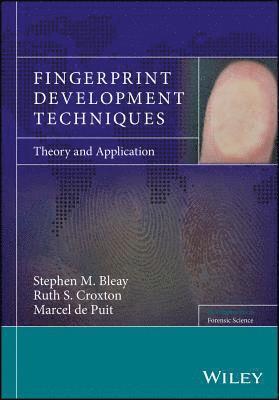
A comprehensive review of the latest fingerprint development and imaging techniquesWith contributions from leading experts in the field, Fingerprint Development Techniques offers a comprehensive review of the key techniques used in the development and imaging of fingerprints. It includes a review of the properties of fingerprints, the surfaces that fingerprints are deposited on, and the interactions that can occur between fingerprints, surfaces and environments. Comprehensive in scope, the text explores the history of each process, the theory behind the way fingerprints are either developed or imaged, and information about the role of each of the chemical constituents in recommended formulations. The authors explain the methodology employed for carrying out comparisons of effectiveness of various development techniques that clearly demonstrate how to select the most effective approaches. The text also explores how techniques can be used in sequence and with techniques for recovering other forms of forensic evidence. In addition, the book offers a guide for the selection of fingerprint development techniques and includes information on the influence of surface contamination and exposure conditions.This important resource: Provides clear methodologies for conducting comparisons of fingerprint development technique effectivenessContains in-depth assessment of fingerprint constituents and how they are utilized by development and imaging processesIncludes background information on fingerprint chemistryOffers a comprehensive history, the theory, and the applications for a broader range of processes, including the roles of each constituent in reagent formulationsFingerprint Development Techniques offers a comprehensive guide to fingerprint development and imaging, building on much of the previously unpublished research of the Home Office Centre for Applied Science and Technology.