Dialog-on-Freud - Böcker
Visar alla böcker i serien Dialog-on-Freud. Handla med fri frakt och snabb leverans.
9 produkter
9 produkter
1 108 kr
Skickas inom 10-15 vardagar
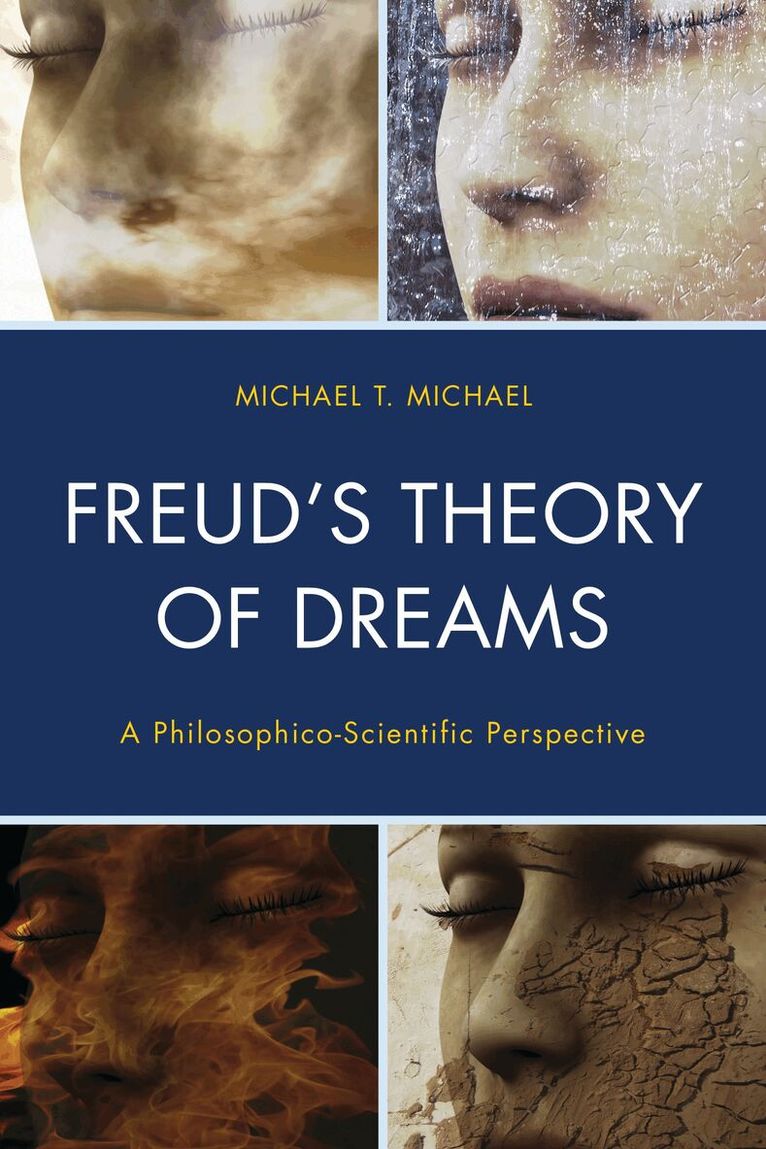
Freud’s Theory of Dreams: A Philosophico-Scientific Perspective evaluates Freud’s theory of dreams in light of the many philosophical and scientific criticisms that have been brought against it. Michael T. Michael addresses the validity of Freud’s method of dream interpretation, the scientific nature of the theory, and how Freud’s ideas bear up to modern research on dreams, engaging on the way with critics such as Ludwig Wittgenstein, Clark Glymour, Karl Popper, Adolf Grünbaum, and J. Allan Hobson. Michael reaches beyond the traditional “for” and “against” polarity to offer a more balanced perspective on Freud’s theory. He argues that reports of the demise of Freud’s theory have been greatly exaggerated, and instead the theory is a live hypothesis fully deserving of continued scientific exploration.
1 314 kr
Skickas inom 10-15 vardagar
During the first ten years of his career in psychological medicine, Sigmund Freud espoused a theory of unconsciousness which predated his own. As Rosemarie Sand describes in The Unconscious without Freud, he would evolve this theory over the course of his career and eventually apply it to his own psychological practice. Once Freud's hypothesis of unconscious mental functioning was published, the same professionals who had valued the traditional concept turned against what they considered to be a catastrophic, logically indefensible revision. The scientific investigation of unconscious influences was retarded for decades as a war zone opened between implacable opponents and intransigent defenders of the Freudian concept of unconscious mind. In the din of this battle, the traditional theory, free of the features which Freud's foes could not accept, was forgotten. Sand argues that a return to this original theory, which psychotherapists and experimenters might both espouse, could contribute to a cessation of hostilities and lead to the peaceful development of a theory of the unconscious—one that is free from the stigma that is currently attached to Freudian theory.
1 039 kr
Skickas inom 10-15 vardagar
Sigmund Freud repeatedly revised his understanding of how our minds work, how to understand mental illness, and how to relieve emotional, psychological suffering. With each revision, however, he did not methodically integrate previous ideas with newer ones. In How Talking Cures: Revealing Freud's Contributions to All Psychotherapies, a careful review of his concepts at each stage of his thinking reveals six different ways that talking cures—six distinct generic modes of therapeutic action by which all present-day psychotherapies work. Lee Jaffe demonstrates how these therapeutic actions can link treatment recommendations to individual diagnoses, and how they function during treatment itself. Different views of how psychoanalytic treatments work are analyzed according to their emphasis or de-emphasis of these six modes of therapeutic action. As a result, comparisons of all approaches to talking cures, and decisions about the choice of treatment for a given patient can be grounded in an understanding of the essential ways that each therapeutic procedure works, rather than an allegiance to what providers happened to be taught during their training.
1 391 kr
Skickas inom 10-15 vardagar
In Nabokov’s Mimicry of Freud: Art as Science, Teckyoung Kwon examines the manner in which Nabokov invited his readers to engage in his ongoing battle against psychoanalysis. Kwon looks at Nabokov’s use of literary devices that draw upon psychology and biology, characters that either imitate Freud or Nabokov in behavior or thought, and Jamesian concepts of time, memory, and consciousness in The Defense, Despair, Lolita, Pale Fire, and Ada. As Kwon notes, the transfiguration of biological mimicry and memory into an artistic form involves numerous components, including resemblance with a difference, contingency, the double, riddles, games, play, theatricality, transgression, metamorphosis, and combinational concoction. Nabokov, as a mimic, functions as a poet who is also a scientist, while his model, Freud, operates as a scientist who is also a poet. Both writers were gifted humorists, regarding art as a formidable vehicle for the repudiation of all forms of totality. This book is recommended for scholars of psychology, literary studies, film studies, and philosophy.
622 kr
Skickas inom 10-15 vardagar
In Nabokov’s Mimicry of Freud: Art as Science, Teckyoung Kwon examines the manner in which Nabokov invited his readers to engage in his ongoing battle against psychoanalysis. Kwon looks at Nabokov’s use of literary devices that draw upon psychology and biology, characters that either imitate Freud or Nabokov in behavior or thought, and Jamesian concepts of time, memory, and consciousness in The Defense, Despair, Lolita, Pale Fire, and Ada. As Kwon notes, the transfiguration of biological mimicry and memory into an artistic form involves numerous components, including resemblance with a difference, contingency, the double, riddles, games, play, theatricality, transgression, metamorphosis, and combinational concoction. Nabokov, as a mimic, functions as a poet who is also a scientist, while his model, Freud, operates as a scientist who is also a poet. Both writers were gifted humorists, regarding art as a formidable vehicle for the repudiation of all forms of totality. This book is recommended for scholars of psychology, literary studies, film studies, and philosophy.
557 kr
Skickas inom 10-15 vardagar
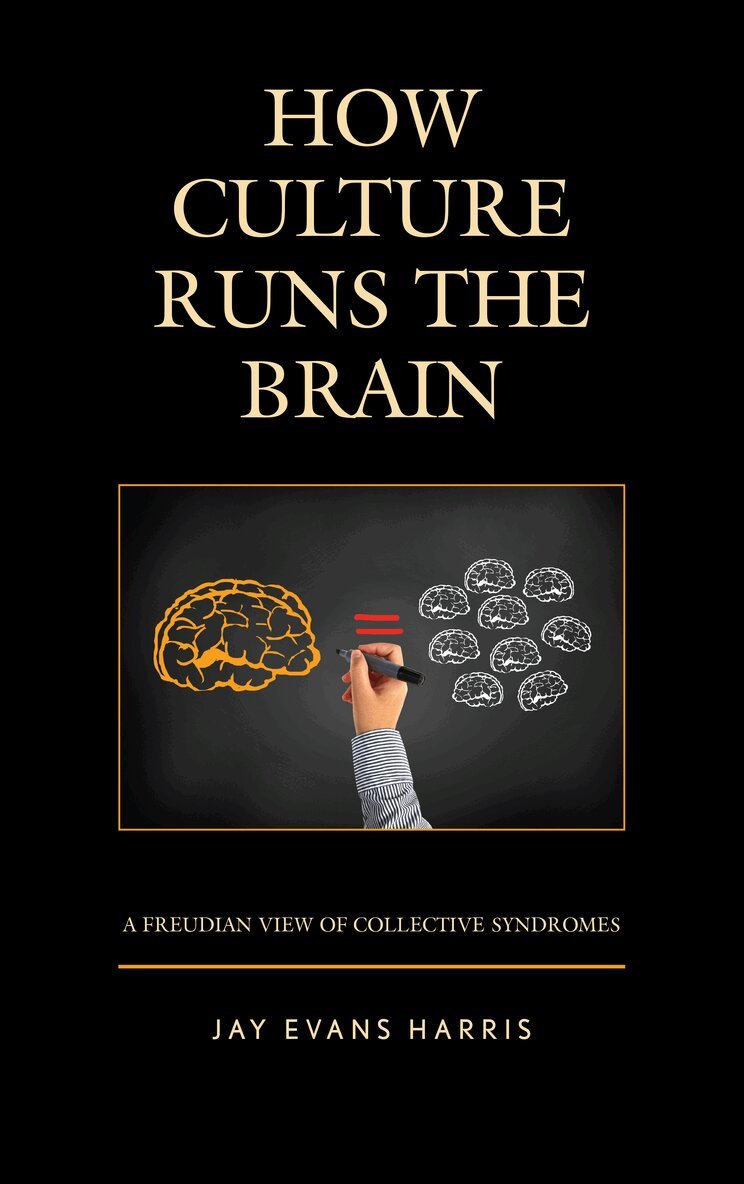
Freud was right: mind and brain evolved together, adapting progressively to cultural change; responding regressively to wars, genocides, and forced migrations. Freud traced innate conflicts between pleasure and aggression in each stage of individual development to corresponding development in cultural stages. Cultural trauma that induces PTSD with a loss of secure identity in one generation induces collective phantasies (mythologies) among succeeding generations, and this may form cultural syndromes of revenge and restitution. Families, tribes, clans, and religious communities can regress together to infant and childhood stages. They may breed heroes, sociopaths, revolutionaries—or potential terrorists vulnerable to the siren call of internet shamans. How Culture Runs (and sometimes ruins) the Brain presents neuroscience findings, revealing fantasy as the brain’s default mode, as it alters identity during unbearable trauma or loss. The book presents case histories of cultural conflicts among individuals, tribes, and nations, using the examples of the Boston Marathon Bombers, Bowe Bergdahl’s iconic trial, the Orlando Shooter, and regressive American players in the election of 2016. Conflicting forms of cultural narcissism determine economic survival: the immature narcissism of Trump and his followers challenges the mature narcissism that hid Hillary Clinton’s hubris. Immature narcissistic oligarchs can act out their economic dominance to deal with the fear of extinction of their own identity. Some terrorists groups use mature global technology in the service of immature fundamentalist identity.
1 177 kr
Skickas inom 10-15 vardagar
In The Mythology Surrounding Freud and Klein, Charlotte Schwartz challenges the current misperceptions and theoretical ideas surrounding Sigmund Freud and Melanie Klein through a systematic review of their respective theoretical work and clinical studies. Specifically, Schwartz argues against the current perception that Klein was the originator of object relations theory and that Freud’s metapsychology was a drive-centered theory with little regard for the object and object relations. Schwartz further examines the development of drive and object relations through a review of key theorists who influenced psychoanalytic training and treatment methodology in this area, including Ferenczi, Abraham, Jones, Fairbairn, Guntrip, and Winnicott. This book is recommended for scholars of psychology and history.
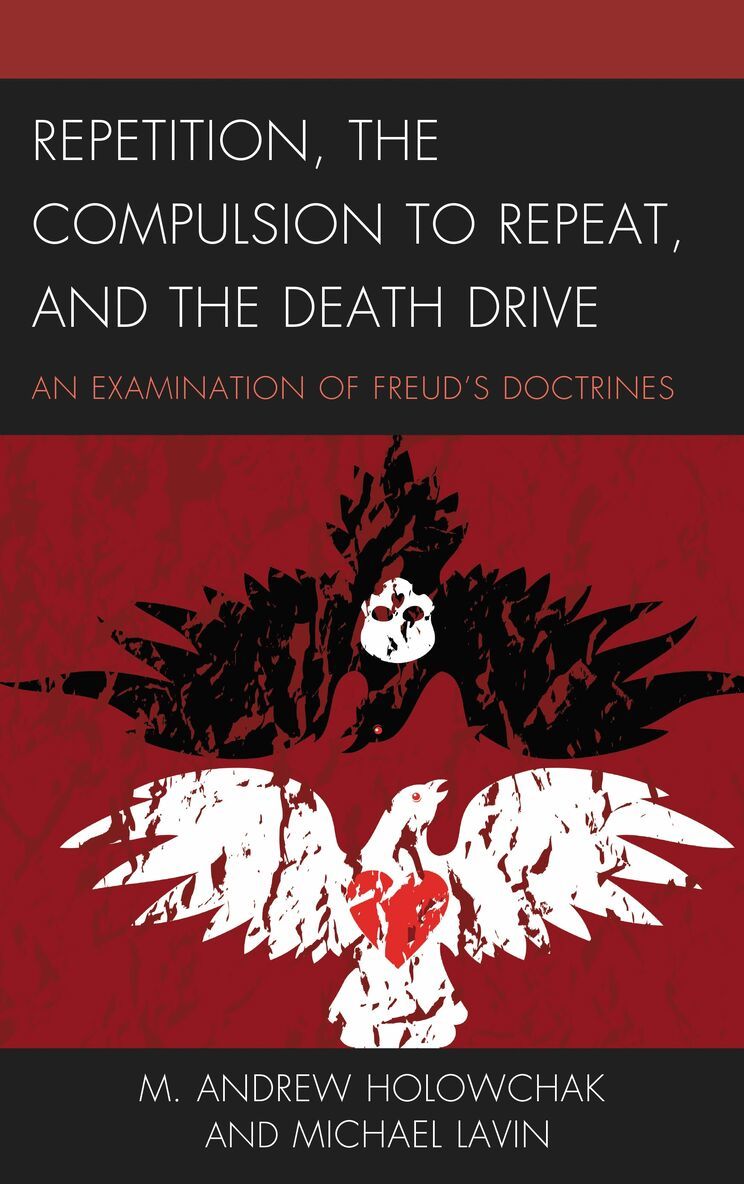
Repetition, the Compulsion to Repeat, and the Death Drive
An Examination of Freud's Doctrines
Inbunden, Engelska, 2017
1 110 kr
Skickas inom 10-15 vardagar
Repetition, the Compulsion to Repeat, and the Death Drive is a critical examination of Freud’s uses of repetition as they lead to the compulsion to repeat and his infamous death drive. Like perhaps no other concept, repetition drove Freud to an understanding of human behavior through development of models of the human mind and a method of treating neurotic behavior.This book comprises three parts. Part I, “Some Early Uses of ‘Repetition’ in Psychoanalysis,” examines repetition both in clinical therapy and in Freud’s use of phylogenetic explanation. Part II, composed of three chapters, outlines Freud’s journey to his vaunted death drive, examines Beyond the Pleasure Principle, and analyzes Freud’s use of compulsion to repeat and the death drive post 1920. Last, Part III is a critical analysis of Freud on repetition and the death drive, discusses why Freud was so wedded to his controversial death drive, and what can be salvaged from Freud’s observations and speculations. Here readers will find that Holowchak, qua philosopher, and Lavin, qua clinician, have different answers when it comes to the death drive.
1 209 kr
Skickas inom 10-15 vardagar
In The Myth of Desire: Sexuality, Love, and the Self, Carlos Domínguez-Morano draws on psychoanalysis to explore the broad and complex reality of the affective-sexual realm encompassed by the term desire, a concept that propels individual aspirations, pursuits, and life endeavors. Domínguez-Morano takes a global perspective in order to introduce a methodology, examine the present sociocultural determinations affecting desire, review the main stages in the evolution of desire, and reflect on affective maturity. Domínguez-Morano further explores the five basic expressions of desire: falling in love and being a couple, homosexuality, narcissism and self-esteem, friendship, and the derivative of desire by way of sublimation. Scholars of psychology, philosophy, and sociology will find this book particularly useful.