Critical, Digital and Social Media – serie
Visar alla böcker i serien Critical, Digital and Social Media. Handla med fri frakt och snabb leverans.
16 produkter
16 produkter
Häftad, Engelska, 2017
339 kr
Skickas inom 5-8 vardagar
The United States presents the greatest source of global geo-political violence and instability. Guided by the radical political economy tradition, this book offers an analysis of the USA’s historical impulse to weaponize communication technologies.Scott Timcke explores the foundations of this impulse and how the militarization of digital society creates structural injustices and social inequalities. He analyses how new digital communication technologies support American paramountcy and conditions for worldwide capital accumulation. Identifying selected features of contemporary American society, Capital, State, Empire undertakes a materialist critique of this digital society and of the New American Way of War. At the same time it demonstrates how the American security state represses activists—such as Black Lives Matter—who resist this emerging security leviathan. The book also critiques the digital positivism behind the algorithmic regulation used to control labour and further diminish prospects for human flourishing for the ‘99%’.Capital, State, Empire contributes to a broader understanding of the dynamics of global capitalism and political power in the early 21st century.
Häftad, Engelska, 2017
358 kr
Skickas inom 5-8 vardagar
“Necessary reading for scholars interested in theorising the spectacle's relation to the labour theory of value, commodity fetishism and subjectivity under post-Fordism.” - https://www.triple-c.at/index.php/tripleC/article/view/1015/1176Spectacle 2.0 recasts Debord's theory of spectacle within the frame of 21st century digital capitalism. It offers a reassessment of Debord’s original notion of Spectacle from the late 1960s, of its posterior revisitation in the 1990s, and it presents a reinterpretation of the concept within the scenario of contemporary informational capitalism and more specifically of digital and media labour. It is argued that the Spectacle 2.0 form operates as the interactive network that links through one singular (but contradictory) language and various imaginaries, uniting diverse productive contexts such as logistics, finance, new media and urbanism. Spectacle 2.0 thus colonizes most spheres of social life by processes of commodification, exploitation and reification. Diverse contributors consider the topic within the book’s two main sections: Part I conceptualizes and historicizes the Spectacle in the context of informational capitalism; contributions in Part II offer empirical cases that historicise the Spectacle in relation to the present (and recent past) showing how a Spectacle 2.0 approach can illuminate and deconstruct specific aspects of contemporary social reality. All contributions included in this book rework the category of the Spectacle to present a stimulating compendium of theoretical critical literature in the fields of media and labour studies. In the era of the gig-economy, highly mediated content and President Trump, Debord’s concept is arguably more relevant than ever.
Häftad, Engelska, 2018
329 kr
Skickas inom 5-8 vardagar
What is ‘social capital’? The enormous positivity surrounding it conceals the instrumental economic rationality underpinning the notion as corporations silently sell consumer data for profit. Status chasing is just one aspect of a process of transforming qualitative aspects of social interactions into quantifiable metrics for easier processing, prediction, and behavioural shaping.A work of critical media studies, Social Capital Online examines the idea within the new ‘network spectacle’ of digital capitalism via the ideas of Marx, Veblen, Debord, Baudrillard and Deleuze. Explaining how such phenomena as online narcissism and aggression arise, Faucher offers a new theoretical understanding of how the spectacularisation of online activity perfectly aligns with the value system of neoliberalism and its data worship. Even so, at the centre of all, lie familiar ideas – alienation and accumulation – new conceptions of which he argues are vital for understanding today’s digital society.
Häftad, Engelska, 2019
241 kr
Skickas inom 5-8 vardagar
Not since Marx identified the manufacturing plants of Manchester as the blueprint for the new capitalist society has there been a more profound transformation of the fundamentals of our social life. As capitalism faces a series of structural crises, a new social, political and economic dynamic is emerging: peer to peer.What is peer to peer? Why is it essential for building a commons-centric future? How could this happen? These are the questions this book tries to answer. Peer to peer is a type of social relations in human networks, as well as a technological infrastructure that makes the generalization and scaling up of such relations possible. Thus, peer to peer enables a new mode of production and creates the potential for a transition to a commons-oriented economy.
Häftad, Engelska, 2018
388 kr
Skickas inom 5-8 vardagar
While the individual elements of the propaganda system (or filters) identified by the Propaganda Model (PM) – ownership, advertising, sources, flak and anti-communism – have previously been the focus of much scholarly attention, their systematisation in a model, empirical corroboration and historicisation have made the PM a useful tool for media analysis across cultural and geographical boundaries.Despite the wealth of scholarly research Herman and Chomsky’s work has set into motion over the past decades, the PM has been subjected to marginalisation, poorly informed critiques and misrepresentations. Interestingly, while the PM enables researchers to form discerning predictions as regards corporate media performance, Herman and Chomsky had further predicted that the PM itself would meet with such marginalisation and contempt.In current theoretical and empirical studies of mass media performance, uses of the PM continue, nonetheless, to yield important insights into the workings of political and economic power in society, due in large measure to the model’s considerable explanatory power.
Häftad, Engelska, 2019
339 kr
Skickas inom 5-8 vardagar
This new book analyses the strategies, usages and wider implications of crowdsourcing and crowdfunding platforms in the culture and communication industries that are reshaping economic, organizational and social logics. Platforms are the object of considerable hype with a growing global presence. Relying on individual contributions coordinated by social media to finance cultural production (and carry out promotional tasks) is a significant shift, especially when supported by morphing public policies, supposedly enhancing cultural diversity and accessibility.The aim of this book is to propose a critical analysis of these phenomena by questioning what follows from decisions to outsource modes of creation and funding to consumers. Drawing on research carried out within the ‘Collab’ programme backed by the French National Research Agency, the book considers how platforms are used to organize cultural labour and/or to control usages, following a logic of suggestion rather than overt injunction. Four key areas are considered: the history of crowdfunding as a system; whose interests crowdfunding may serve; the implications for digital labour and lastly crowdfunding’s interface with globalization and contemporary capitalism. The book concludes with an assessment of claims that crowdfunding can democratize culture.
Häftad, Engelska, 2020
475 kr
Skickas inom 5-8 vardagar
‘An authoritative analysis of the role of communication in contemporary capitalism and an important contribution to debates about the forms of domination and potentials for liberation in today’s capitalist society.’ — Professor Michael Hardt, Duke University, co-author of the tetralogy Empire, Commonwealth, Multitude, and Assembly‘A comprehensive approach to understanding and transcending the deepening crisis of communicative capitalism. It is a major work of synthesis and essential reading for anyone wanting to know what critical analysis is and why we need it now more than ever.’ — Professor Graham Murdock, Emeritus Professor, University of Loughborough and co-editor of The Handbook of Political Economy of CommunicationsCommunication and Capitalism outlines foundations of a critical theory of communication. Going beyond Jürgen Habermas’ theory of communicative action, Christian Fuchs outlines a communicative materialism that is a critical, dialectical, humanist approach to theorising communication in society and in capitalism. The book renews Marxist Humanism as a critical theory perspective on communication and society.The author theorises communication and society by engaging with the dialectic, materialism, society, work, labour, technology, the means of communication as means of production, capitalism, class, the public sphere, alienation, ideology, nationalism, racism, authoritarianism, fascism, patriarchy, globalisation, the new imperialism, the commons, love, death, metaphysics, religion, critique, social and class struggles, praxis, and socialism.Fuchs renews the engagement with the questions of what it means to be a human and a humanist today and what dangers humanity faces today.
Häftad, Engelska, 2020
329 kr
Skickas inom 5-8 vardagar
“Healy closes his marvellous book by saying that ‘alienation is a constant feature and is experienced as a norm rather than as an aberration’.” - https://marxandphilosophy.org.uk/reviews/19718_marx-and-digital-machines-alienation-technology-capitalism-by-mike-healy-reviewed-by-thomas-klikauer/This book explores the fundamental contradiction at the heart of the digital environment: technology offers all manner of promises, yet habitually fails to deliver. This failure often arises from numerous problems: the proficiency of the technology or end-user, policy failure at various levels, or a combination of these. Solutions such as better technology and more effective end-user education are often put into place to solve these failures. Mike Healy argues that such approaches are inherently faulty drawing upon qualitative research informed by Marx’s theory of alienation. Using Marx’s theory, he considers participants in three distinct settings: the workplace of information and communications technology (ICT) professionals; university scholars researching the ethical and societal implications of our digital environment; and a group of pensioners living in South London, UK, undertaking ICT training. By delving beneath the surface of how digital technologies are created, researched and experienced, this study illustrates the contradictory nature of our digital lives, as they directly arise from the needs of capitalism. The book also places Marx’s theory in contrast to the mainstream approaches derived from Seaman and Blauner. In researching and comprehending ICT, this book reaffirms the superior explanatory power of Marx’s theory of alienation.
Häftad, Engelska, 2020
417 kr
Skickas inom 5-8 vardagar
This book explores the potential creation of a broader collaborative economy through commons-based peer production (P2P) and the emergent role of information and communication technologies (ICTs). The book seeks to critically engage in the political discussion of commons-based peer production, which can be classified into three basic arguments: the liberal, the reformist and the anti-capitalist. This book categorises the liberal argument as being in favour of the coexistence of the commons with the market and the state. Reformists, on the other hand, advocate for the gradual adjustment of the state and of capitalism to the commons, while anti-capitalists situate the commons against capitalism and the state. By discussing these three viewpoints, the book contributes to contemporary debates concerning the future of commons-based peer production. Further, the author argues that for the commons to become a fully operational mode of peer production, it needs to reach critical mass arguing that the liberal argument underestimates the reformist insight that technology has the potential to decentralise production, thereby forcing capitalism to transition to post-capitalism. Surveying the three main strands of commons-based peer production, this book makes the case for a post-capitalist commons-orientated transition that moves beyond neoliberalism.
Häftad, Engelska, 2020
383 kr
Skickas inom 5-8 vardagar
‘With clarity and sophistication, Antonios Broumas presents a bold new theory of intellectual commons and powerful arguments for a new body of supportive law. This book not only reveals the misleading logic of intellectual property law in our time; it reveals the rich possibilities for constructive change that legally protected commoning can bring. Highly recommended!’ — David Bollier, Director, Reinventing the Commons Program, Schumacher Center for a New Economics. ‘Liberating the Intellectual Commons from the fetters of capital accumulation and appropriation, would give us a renaissance of creative energies and empowered communities: exactly what the world needs to move away from the social and ecological devastations of our times. This book is a thoughtful and compelling argument for making this possible through the works of the law and the redesign of public domain as a common space.’ — Massimo De Angelis, Professor of Political Economy and Social Change, Co-director of the Centre for Social Justice and Change, University of East London.‘In this pioneering book, Antonios Broumas argues that philosophically, morally, politically and economically we are in urgent need of a new legal regime that recognizes the intellectual commons, peer production and sharing as the primary practices of intellectual production, distribution and consumption. I cannot imagine a more urgent task today. A legally protected intellectual commons will lead to greater scientific and cultural innovation and creativity and will lead to an urgently needed second Enlightenment. This book should be read by lawyers, critical theorists, economists and the many professionals of science, culture and the academy.’ — Costas Douzinas, Professor of Law, Birkbeck, University of London.‘Antonios Broumas’ book is an excellent critical analysis of the cultural commons and a must-read for everyone interested in understanding what the commons, the cultural commons, and the digital commons are all about. This work brilliantly outlines the foundations of an empirically grounded critical theory of the commons and the cultural commons in the context of the interactions of law and society.’ — Christian Fuchs, Professor of Media and Communication Studies, author of Communication and Capitalism: A Critical Theory (2020). ‘Broumas takes us on a spellbinding tour of how and why the law could and should change to accommodate the creative multitude, which engages into an emerging mode of production. He tells a vibrant story that makes us shout: “Lawmakers of the world, unite!”’ — Vasilis Kostakis, Professor of P2P Governance, Tallinn University of Technology, Faculty Associate at Harvard Law School. At the cutting edge of contemporary wealth creation people form self-governed communities of collaborative innovation in conditions of relative equipotency and produce resources with free access to all. The emergent intellectual commons have the potential to commonify intellectual production and distribution, unleash human creativity through collaboration and democratise innovation with wider positive effects for our societies. Contemporary intellectual property laws fail to address this potential. We are, therefore, in pressing need of an institutional alternative beyond the inherent limitations of intellectual property law. This book offers an overall analysis of the moral significance of the intellectual commons and outlines appropriate modes for their regulation. Its principal thesis is that our legal systems are in need of an independent body of law for the protection and promotion of the intellectual commons, in parallel to intellectual property law. In this context, the author of the book proposes the reconstruction of the doctrine of the public domain and the exceptions and limitations of exclusive intellectual property rights into an intellectual commons law, which will underpin a vibrant non-commercial zone of creativity and innovation in intellectual production, distribution and consumption alongside commodity markets enabled by intellectual property law.
Häftad, Engelska, 2022
607 kr
Skickas inom 5-8 vardagar
Algorithms are a form of productive power – so how may we conceptualise the newly merged terrains of social life, economy and self in a world of digital platforms? How do multiple self-quantifying practices interact with questions of class, race and gender? This edited collection considers algorithms at work – for what purposes encoded data about behaviour, attitudes, dispositions, relationships and preferences are deployed – and black box control, platform society theory and the formation of subjectivities. It details technological structures and lived experience of algorithms and the operation of platforms in areas such as crypto-finance, production, surveillance, welfare, activism in pandemic times. Finally, it asks if platform cooperativism, collaborative design and neomutualism offer new visions. Even as problems with labour and in society mount, subjectivities and counter subjectivities here produced appear as conscious participants of change and not so much the servants of algorithmic control and dominant platforms.
Häftad, Engelska, 2021
475 kr
Skickas inom 5-8 vardagar
We are entering a new era of technological determinism and solutionism in which governments and business actors are seeking data-driven change, assuming that Artificial Intelligence is now inevitable and ubiquitous. But we have not even started asking the right questions, let alone developed an understanding of the consequences. Urgently needed is debate that asks and answers fundamental questions about power. This book brings together critical interrogations of what constitutes AI, its impact and its inequalities in order to offer an analysis of what it means for AI to deliver benefits for everyone. The book is structured in three parts: Part 1, AI: Humans vs. Machines, presents critical perspectives on human-machine dualism. Part 2, Discourses and Myths About AI, excavates metaphors and policies to ask normative questions about what is ‘desirable’ AI and what conditions make this possible. Part 3, AI Power and Inequalities, discusses how the implementation of AI creates important challenges that urgently need to be addressed. Bringing together scholars from diverse disciplinary backgrounds and regional contexts, this book offers a vital intervention on one of the most hyped concepts of our times.
Häftad, Engelska, 2021
417 kr
Skickas inom 5-8 vardagar
This book explores how the Internet is connected to the global crisis of liberal democracy. Today, self-promotion is at the heart of many human relationships. The selfie is not just a social media gesture people love to hate. It is also a symbol of social reality in the age of the Internet. Through social media people have new ways of rating and judging themselves and one another, via metrics such as likes, shares, followers and friends. There are new thirsts for authenticity, outlets for verbal aggression, and social problems. Social media culture and neoliberalism dovetail and amplify one another, feeding social estrangement. With neoliberalism, psychosocial wounds are agitated and authoritarianism is provoked. Yet this new sociality also inspires resistance and political mobilisation. Illustrating ideas and trends with examples from news and popular culture, the book outlines and applies theories from Debord, Foucault, Fromm, Goffman, and Giddens, among others. Topics covered include the global history of communication technologies, personal branding, echo chamber effects, alienation and fear of abnormality. Information technologies provide channels for public engagement where extreme ideas reach farther and faster than ever before, and political differences are widened and inflamed. They also provide new opportunities for protest and resistance.
Häftad, Engelska, 2022
388 kr
Skickas inom 5-8 vardagar
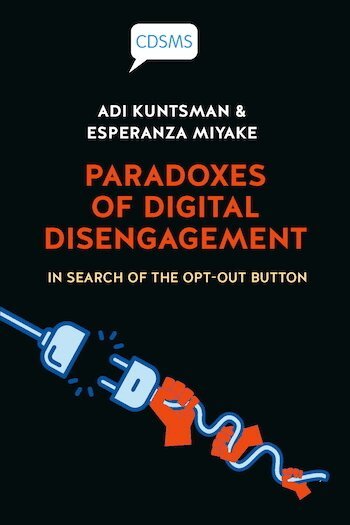
Listen to authors Adi Kuntsman and Esperanza Miyake discuss collective data justice, the rights, refusals and ethics of digital (dis)engagement in this latest podcast from Lateral, the Journal of the Cultural Studies Association.https://csalateral.org/podcasts/positions/for-the-moment-i-am-not-scrolling-culp-skinner-kuntsman-miyake-karppi/“The digital now thoroughly saturates our everyday lives to the point where it seems we are drowning. But is it possible to swim on our terms? This book thoughtfully examines this question, critically teasing apart the structures of power that permeate digital relations and charting pathways to a more just digital world. Essential reading for those who want to move beyond personal digital detoxes to challenge and transform our digital society and economy.” - Professor Rob Kitchin, author of The Data Revolution and Data Lives“The seductions of tech have ushered in the encroachment of technological solutions into policing, law enforcement and ever-widening systems of social regulation across the UK and Europe. This book marks a critical intervention – by conceptualising our understanding of the ways in which data and digital harms are systemically expended against the powerless. It is a must read for those of us who are concerned to resist the (digital) exclusion of the marginalised, and the (digital) banishment of the vulnerable.” - Dr Patrick Williams, author of Data-Driven Policing: The Hardwiring of Discriminatory Policing Practices Across Europe“While imaginaries of techno futures constructed by the Digital Lords of contemporary societies become self-fulfilling prophecies, we struggle to imagine a present and future free from digital coercion and exclusion. In their powerful interdisciplinary analysis, Adi Kuntsman and Esperanza Miyake delve into the personal, social, political and environmental costs of compulsory digitality. Rejecting a self-defeating naturalisation of digitality and digital inevitability Paradoxes of Digital Disengagement compellingly shows how collective digital justice is imperative in this future/present where the machine rules and people can become marginalized and excluded. A much-needed scholarly intervention that can inspire our collective thinking, research and praxis.” - Dr Benedetta Brevini, author of Is AI Good for the Planet?“Kuntsman and Miyake have written an engaging book. It offers a readable critique of enforced digitality and broadens the scope of disconnection studies. The detailed analyses of complicated documents are elegantly structured and thought-provoking.” - https://blogs.lse.ac.uk/lsereviewofbooks/2022/11/16/book-review-paradoxes-of-digital-disengagement-in-search-of-the-opt-out-button-by-adi-kuntsman-and-esperanza-miyake/Life is increasingly governed and mediated through digital and smart technologies, platforms, big data and algorithms. However, the reasons, practices and impact of how the digital is used by different institutions are often deeply linked to social oppression and injustice. Similarly, the ability to resist these digital impositions is based on inequality and privilege. Challenging the ways in which we are increasingly dependent on the digital, this book raises a set of provocative and urgent questions: in a world of compulsory digitality is there an opt out button? Where, when, how, why and to whom is it available? Answering these questions has become even more relevant since the COVID-19 pandemic. In response, the book puts forward the concept of ‘digital disengagement’ which is explored across six key areas of digitisation: health; citizenship; education; consumer culture; labour; and the environment. Part I examines the difficulty of opting out of compulsory digitality in a world where most things are digital by default. From health apps, algorithmic decision-making to learning analytics, opting out comes with a set of troubling consequences. Part II turns to several examples of disconnection and disengagement. The chapters reveal how phenomena like digital detoxes, time-management apps and online ‘green’ spaces are co-opted by the very digital systems one is trying to resist. The book critiques issues relating to digital surveillance, algorithmic discrimination and biased tech, corporatisation and monetisation of data, exploitative digital labour, digitalised self-discipline and destruction of the environment. As an interdisciplinary piece of work, the book will be useful to any scholar and activist in Digital, Internet and Social Media Studies; Digital Sociology and Social Policy; Digital Health; Media, Popular and Communication Studies; Consumer culture; and Environment Studies.
Häftad, Engelska, 2025
294 kr
Skickas inom 3-6 vardagar
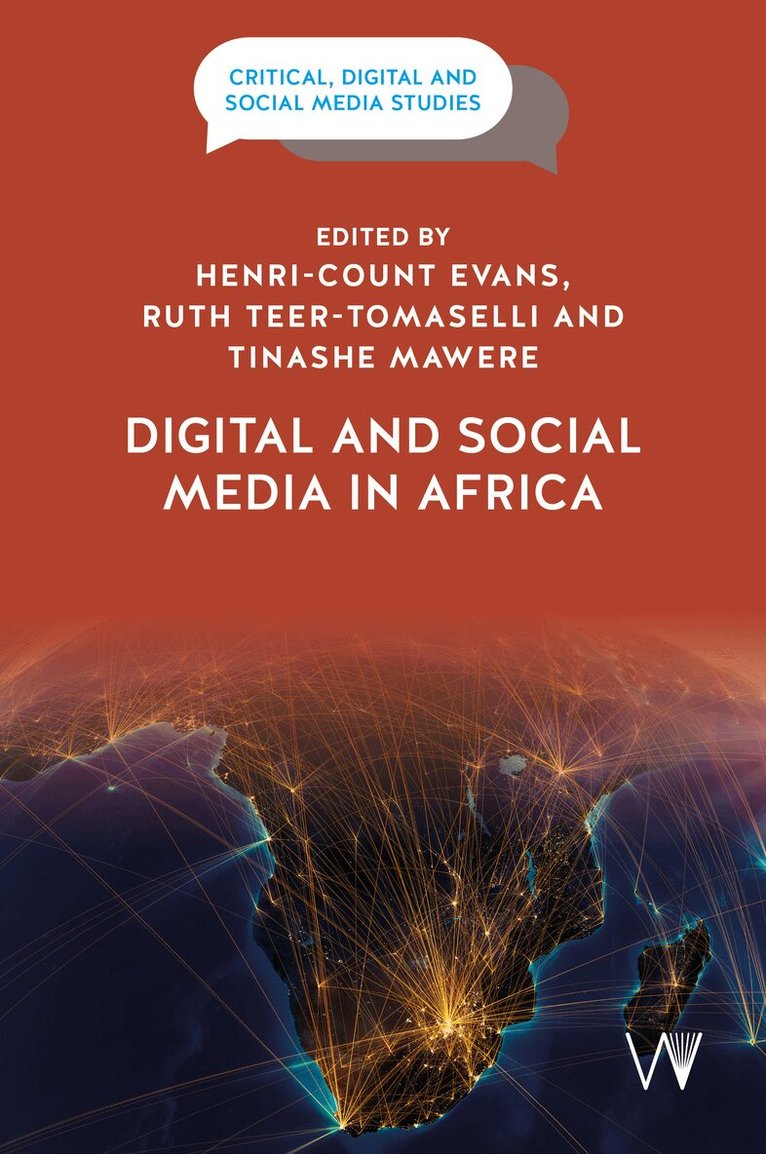
This book provides case studies on the strategies used by African governments in monitoring and controlling digital and social media, as well as the implications of such actions for claims about media freedom and freedom of expression.Further, the book examines the human rights challenges posed by state control and monitoring of digital and social media forms of communication. In the context of a digital surveillance state, it questions how digital and social media can possibly enhance the democratisation of both the communicative and political spaces. The book focuses on questions of censorship and control of digital and social media in ‘supposedly’ democratic societies. It discusses regulation and how governments have imposed their state power by ‘switching off’ the internet and blocking social media sites under the guise of national security and order maintenance.
Häftad, Engelska, 2025
368 kr
Skickas inom 3-6 vardagar
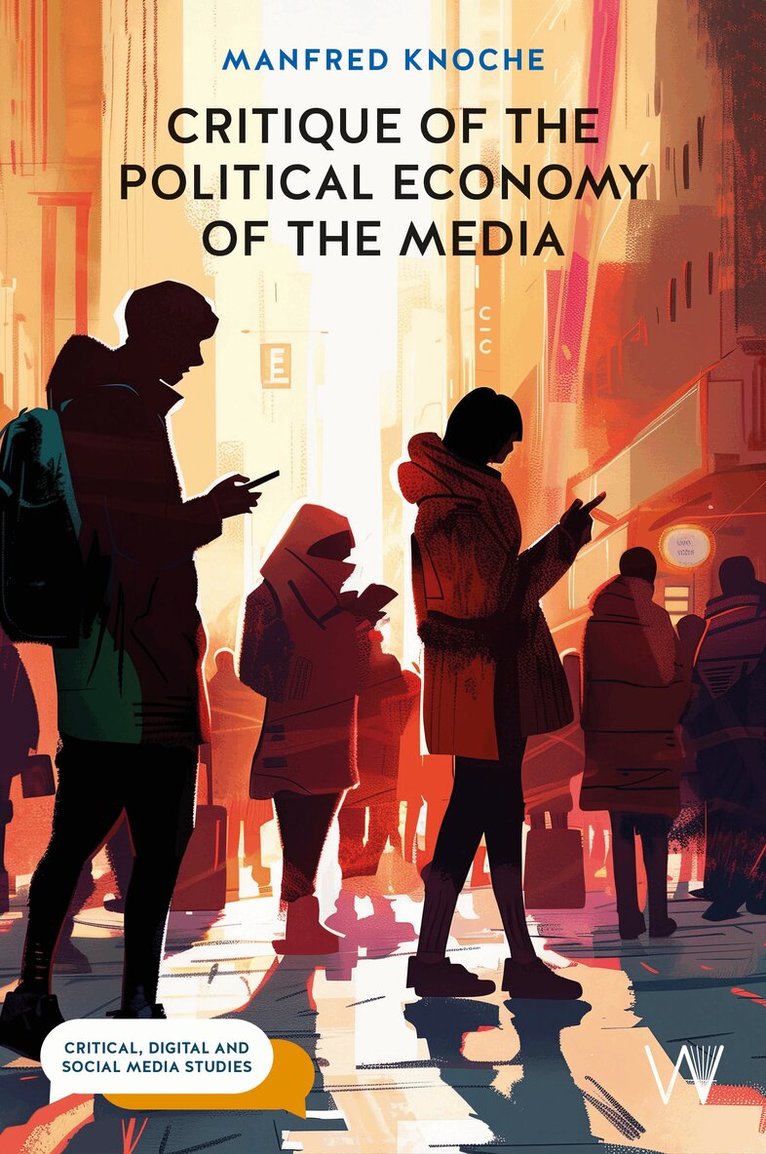
Critique of the Political Economy of the Media is an approach to the critical analysis of the media’s role in contemporary society. It is based on Karl Marx’s theory of capitalism, using a combination of critical social theory and empirical social research for studying what role the media has in capitalism.It introduces a theoretical framework that engages with important themes including the crisis-ridden structural transformation of the media industry, media economics in the age of digital communications, media concentration, science communication and open access publishing, media technologies, the role of advertising in capitalism, and the contradictions of alternative media in capitalism.