Economy and Society - Böcker
Visar alla böcker i serien Economy and Society. Handla med fri frakt och snabb leverans.
18 produkter
18 produkter
789 kr
Skickas inom 5-8 vardagar
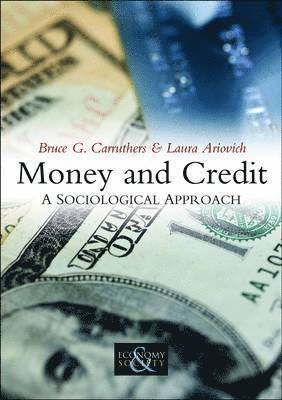
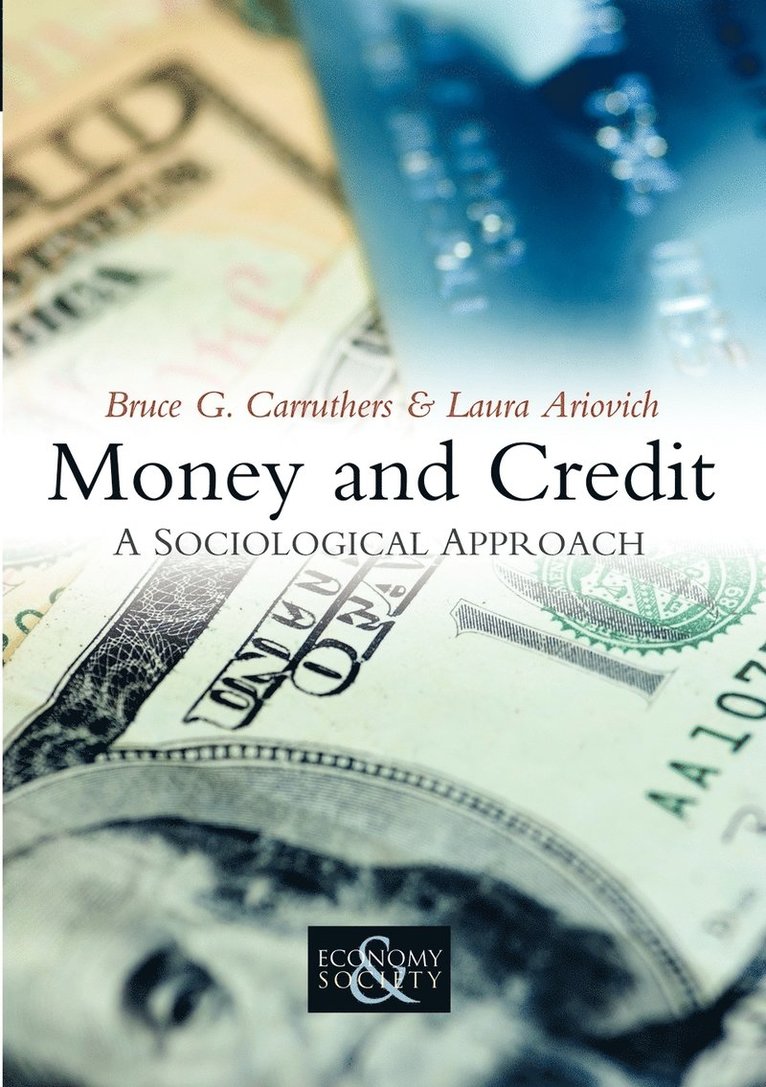
This book offers a fresh and uniquely sociological perspective on money and credit. As basic economic institutions, money and credit are easy to overlook when they work well. When they malfunction, as they did in the new millennium’s global financial crisis, their importance becomes obvious and demands further investigation. Bruce Carruthers and Laura Ariovich examine the social dimensions of money and credit at both the individual and corporate levels, from the development of personal credit and a consumer society, to the role of government in the creation of money. In clear prose, they illustrate how the overall future of the economy is governed by the financial system and the flow of capital into, and out of, firms operating in particular industrial sectors, as well as the social meanings money itself acquires and the ways people distinguish between “dirty” and “clean” money. This accessible and engaging book will be essential reading for upper-level students of economic sociology, and those interested in how the bills, coins and plastic in our pockets shape the world we live in.
278 kr
Skickas inom 5-8 vardagar
This book offers a fresh and uniquely sociological perspective on money and credit. As basic economic institutions, money and credit are easy to overlook when they work well. When they malfunction, as they did in the new millennium’s global financial crisis, their importance becomes obvious and demands further investigation. Bruce Carruthers and Laura Ariovich examine the social dimensions of money and credit at both the individual and corporate levels, from the development of personal credit and a consumer society, to the role of government in the creation of money. In clear prose, they illustrate how the overall future of the economy is governed by the financial system and the flow of capital into, and out of, firms operating in particular industrial sectors, as well as the social meanings money itself acquires and the ways people distinguish between “dirty” and “clean” money. This accessible and engaging book will be essential reading for upper-level students of economic sociology, and those interested in how the bills, coins and plastic in our pockets shape the world we live in.
741 kr
Skickas inom 7-10 vardagar
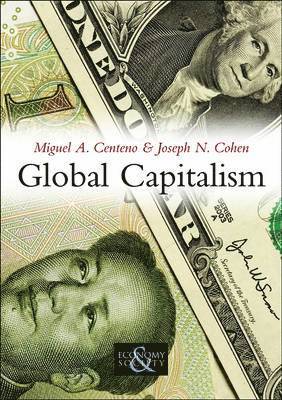
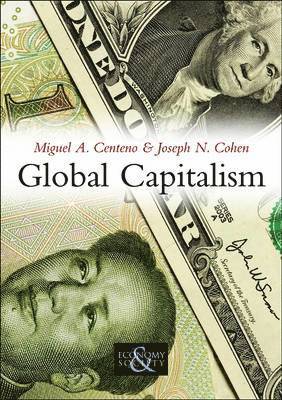
The global financial crisis has challenged many of our most authoritative economic ideologies and policies. After thirty years of reshaping the world to conform to the market, governments and societies are now calling for a retreat to a yet undefined new economic order. In order to provide a guide to what the twenty-first-century economy might look like, this book revisits the great project of Global Capitalism. What did it actually entail? How far did it go? What were its strengths and failings? By deconstructing its core ideas and examining its empirical record, can we gain clues about how to move forward after the crisis? Miguel Centeno and Joseph Cohen define capitalism as a historically-evolving and socially-constructed institution, rooted in three core economic activities trade, finance and marketing and identify the three key challenges that any new economic system will need to surmount inequality, governance, and environmental sustainability.This accessible and engaging book will be essential reading for students of economic sociology, and all those interested in the construction of our economic future.
251 kr
Skickas inom 7-10 vardagar
The global financial crisis has challenged many of our most authoritative economic ideologies and policies. After thirty years of reshaping the world to conform to the market, governments and societies are now calling for a retreat to a yet undefined new economic order. In order to provide a guide to what the twenty-first-century economy might look like, this book revisits the great project of Global Capitalism. What did it actually entail? How far did it go? What were its strengths and failings? By deconstructing its core ideas and examining its empirical record, can we gain clues about how to move forward after the crisis? Miguel Centeno and Joseph Cohen define capitalism as a historically-evolving and socially-constructed institution, rooted in three core economic activities trade, finance and marketing and identify the three key challenges that any new economic system will need to surmount inequality, governance, and environmental sustainability.This accessible and engaging book will be essential reading for students of economic sociology, and all those interested in the construction of our economic future.
643 kr
Skickas inom 7-10 vardagar
Should governments be involved in economic affairs? Challenging prevailing wisdom about the benefits of self-regulating markets, Nina Bandelj and Elizabeth Sowers offer a uniquely sociological perspective to emphasize that states can never be divorced from economy. From defining property rights and regulating commodification of labor to setting corporate governance standards and international exchange rules, the state continuously manages the functioning of markets and influences economic outcomes for individuals, firms and nations. The authors bring together classical interventions and cutting-edge contemporary research in economic sociology to discuss six broad areas of economy/state connection: property, money, labor, firms, national economic growth, and global economic exchange. A wealth of empirical examples and illustrations reveals that even if the nature of state influence on economy varies across contexts, it is always dependent on social forces.This accessible and engaging book will be essential reading for upper-level students of economic sociology, and those interested in the major economic dilemmas of our times..
244 kr
Skickas inom 7-10 vardagar
Should governments be involved in economic affairs? Challenging prevailing wisdom about the benefits of self-regulating markets, Nina Bandelj and Elizabeth Sowers offer a uniquely sociological perspective to emphasize that states can never be divorced from economy. From defining property rights and regulating commodification of labor to setting corporate governance standards and international exchange rules, the state continuously manages the functioning of markets and influences economic outcomes for individuals, firms and nations. The authors bring together classical interventions and cutting-edge contemporary research in economic sociology to discuss six broad areas of economy/state connection: property, money, labor, firms, national economic growth, and global economic exchange. A wealth of empirical examples and illustrations reveals that even if the nature of state influence on economy varies across contexts, it is always dependent on social forces.This accessible and engaging book will be essential reading for upper-level students of economic sociology, and those interested in the major economic dilemmas of our times..
643 kr
Skickas inom 7-10 vardagar
Our lives have gradually become dominated by markets. They are not only at the heart of capitalistic economies all over the world, but also central in public debates. This insightful book brings together existing knowledge on markets from sociology, economics and anthropology, and systematically investigates the different forms of markets we encounter daily in our social lives. Aspers starts by defining what a market actually is, analyzing its essential elements as well as its necessary preconditions and varied consequences. An important theme in the book is that a whole host of markets are embedded within one other and in social life at large, and Aspers discusses these in the context of other forms of economic coordination, such as networks and organizations. Combining theory with empirical examples, the book cuts to the core of understanding how different markets function, the role they have played in history, and how they come into being.This accessible and theoretically rich book will be essential reading for upper-level students seeking to make sense of markets and their complex role in social life.
263 kr
Skickas inom 5-8 vardagar
Our lives have gradually become dominated by markets. They are not only at the heart of capitalistic economies all over the world, but also central in public debates. This insightful book brings together existing knowledge on markets from sociology, economics and anthropology, and systematically investigates the different forms of markets we encounter daily in our social lives. Aspers starts by defining what a market actually is, analyzing its essential elements as well as its necessary preconditions and varied consequences. An important theme in the book is that a whole host of markets are embedded within one other and in social life at large, and Aspers discusses these in the context of other forms of economic coordination, such as networks and organizations. Combining theory with empirical examples, the book cuts to the core of understanding how different markets function, the role they have played in history, and how they come into being.This accessible and theoretically rich book will be essential reading for upper-level students seeking to make sense of markets and their complex role in social life.
643 kr
Skickas inom 7-10 vardagar
Institutions are central to economic life. They have a major impact on consumer preferences, the actions and processes of firms, levels of wealth and poverty in countries, the growth of international trade, and much more. Indeed, none of the preconditions for economic activity - such as the existence of buyers and sellers, recognizable goods and services, and the information we need to make choices - would be in place without institutions. Institutions, then, do more than support economic life: they enable and shape it. These insights challenge some of the most basic postulates on modern economic theory and are at the heart of many of the most exciting works in economic sociology. This book examines the role of institutions - defined as the formal and informal rules and practices that surround us as we go about our daily lives - in the economy. Illuminating complex ideas with carefully selected, vivid examples, the investigation focuses on economic activity as it unfolds at the individual, organizational, national, and international levels.This accessible and engaging book will be essential reading for students of economic sociology, and all those interested in the intimate relationship between institutions and the economy.
218 kr
Skickas inom 7-10 vardagar
Institutions are central to economic life. They have a major impact on consumer preferences, the actions and processes of firms, levels of wealth and poverty in countries, the growth of international trade, and much more. Indeed, none of the preconditions for economic activity - such as the existence of buyers and sellers, recognizable goods and services, and the information we need to make choices - would be in place without institutions. Institutions, then, do more than support economic life: they enable and shape it. These insights challenge some of the most basic postulates on modern economic theory and are at the heart of many of the most exciting works in economic sociology. This book examines the role of institutions - defined as the formal and informal rules and practices that surround us as we go about our daily lives - in the economy. Illuminating complex ideas with carefully selected, vivid examples, the investigation focuses on economic activity as it unfolds at the individual, organizational, national, and international levels.This accessible and engaging book will be essential reading for students of economic sociology, and all those interested in the intimate relationship between institutions and the economy.
867 kr
Skickas inom 5-8 vardagar
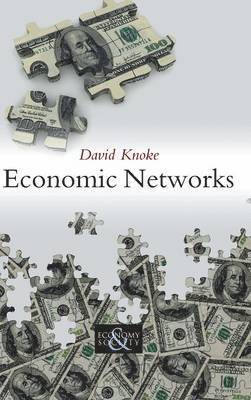
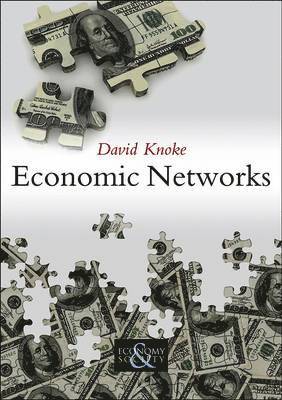
Social relations are crucial for understanding diverse economic actions and a network perspective is central to that explanation. Simple exchanges involving money, labor, and commodities combine into complexly connected systems. Economic networks span many levels of analysis, from persons (consumers, employees), to groups (households, workteams), organizations (corporations, interest groups), populations (industries, markets) and the rapidly expanding global economic system.David Knoke blends network theories from a range of disciplines and empirical studies of domestic and international economies to illuminate how economic activity is embedded in and constrained by social ties among economic actors. Social capital, in the form of connections to others holding valuable resources, is vital for finding a job, buying a car, creating a new industry, or triggering a global financial crisis. In nontechnical terms the author explicates the core network concepts, measures, and analysis methods behind these phenomena. The book also includes many striking network diagrams to provide visual insights into complex structural patterns.This accessible book offers an invaluable critique for both undergraduate and graduate students in economic sociology and social network analysis courses who seek a better understanding of the multifaceted economic webs in which we are all entangled.
257 kr
Skickas inom 7-10 vardagar
Social relations are crucial for understanding diverse economic actions and a network perspective is central to that explanation. Simple exchanges involving money, labor, and commodities combine into complexly connected systems. Economic networks span many levels of analysis, from persons (consumers, employees), to groups (households, workteams), organizations (corporations, interest groups), populations (industries, markets) and the rapidly expanding global economic system.David Knoke blends network theories from a range of disciplines and empirical studies of domestic and international economies to illuminate how economic activity is embedded in and constrained by social ties among economic actors. Social capital, in the form of connections to others holding valuable resources, is vital for finding a job, buying a car, creating a new industry, or triggering a global financial crisis. In nontechnical terms the author explicates the core network concepts, measures, and analysis methods behind these phenomena. The book also includes many striking network diagrams to provide visual insights into complex structural patterns.This accessible book offers an invaluable critique for both undergraduate and graduate students in economic sociology and social network analysis courses who seek a better understanding of the multifaceted economic webs in which we are all entangled.
643 kr
Skickas inom 7-10 vardagar
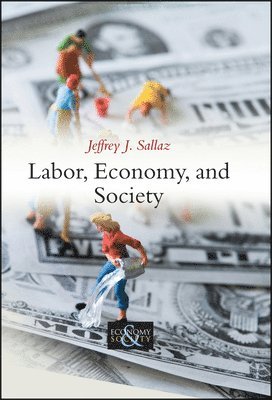
Work is, and always will be, a central institution of society. What makes a capitalist society unique is that it treats the human capacity to engage in labor as a basic commodity. This can be a source of dynamism, as when innovative firms raise wages to attract the best and brightest. But it can also be a source of misery, as when one’s skills are suddenly rendered obsolete by forces beyond one’s control. Jeffrey J. Sallaz asks us to rethink our basic assumptions about work. Drawing on cutting-edge theories within economic sociology and through the use of contemporary examples, he conceptualizes labor as embedded exchange. This draws attention to issues that all too frequently are overlooked in our public discourse and private imaginations: how various forms of work are classified and valued; how markets for labor operate in practice; and how people can challenge the central fiction that their work is simply a commodity to be bought and sold. This readable and engaging book is suitable for both graduate and advanced undergraduate students. It will be of interest to economic sociologists, scholars of labor, and all of those who find themselves working for a living.
231 kr
Skickas inom 7-10 vardagar
Work is, and always will be, a central institution of society. What makes a capitalist society unique is that it treats the human capacity to engage in labor as a basic commodity. This can be a source of dynamism, as when innovative firms raise wages to attract the best and brightest. But it can also be a source of misery, as when one’s skills are suddenly rendered obsolete by forces beyond one’s control. Jeffrey J. Sallaz asks us to rethink our basic assumptions about work. Drawing on cutting-edge theories within economic sociology and through the use of contemporary examples, he conceptualizes labor as embedded exchange. This draws attention to issues that all too frequently are overlooked in our public discourse and private imaginations: how various forms of work are classified and valued; how markets for labor operate in practice; and how people can challenge the central fiction that their work is simply a commodity to be bought and sold. This readable and engaging book is suitable for both graduate and advanced undergraduate students. It will be of interest to economic sociologists, scholars of labor, and all of those who find themselves working for a living.
643 kr
Skickas inom 7-10 vardagar
The pursuit of wealth has captivated people’s attention for centuries. Yet, as a topic of social research, the way in which wealth is accumulated and unequally distributed has largely been neglected, remaining hidden beneath data on income inequality. Wealth aims to address this blind spot in the academic discourse.In accessible prose, Yuval Elmelech explains how personal wealth differs fundamentally from other conventional measures of socioeconomic status and why it has become increasingly important to our understanding of social mobility and stratification. Crucially, Elmelech presents a dynamic sociological framework of wealth attainment that illuminates the effects of cumulative advantages and disadvantages over the course of an individual’s life, and across generations. He describes how these advantages and disadvantages are in turn shaped by a complex interplay of multiple markets, changing demographic landscapes, and persistent inter-group wealth disparities.Blending theoretical approaches with empirical evidence and macro-level contexts with micro-level processes, this book is an astute guide for thinking about wealth as a key determinant of social and economic wellbeing and for interrogating the role of wealth accumulation in social inequality.
218 kr
Skickas inom 7-10 vardagar
The pursuit of wealth has captivated people’s attention for centuries. Yet, as a topic of social research, the way in which wealth is accumulated and unequally distributed has largely been neglected, remaining hidden beneath data on income inequality. Wealth aims to address this blind spot in the academic discourse.In accessible prose, Yuval Elmelech explains how personal wealth differs fundamentally from other conventional measures of socioeconomic status and why it has become increasingly important to our understanding of social mobility and stratification. Crucially, Elmelech presents a dynamic sociological framework of wealth attainment that illuminates the effects of cumulative advantages and disadvantages over the course of an individual’s life, and across generations. He describes how these advantages and disadvantages are in turn shaped by a complex interplay of multiple markets, changing demographic landscapes, and persistent inter-group wealth disparities.Blending theoretical approaches with empirical evidence and macro-level contexts with micro-level processes, this book is an astute guide for thinking about wealth as a key determinant of social and economic wellbeing and for interrogating the role of wealth accumulation in social inequality.
643 kr
Skickas inom 7-10 vardagar
Bringing the study of international inequality back into the core of sociological theory, this book offers a user-friendly introduction to development and underdevelopment. In doing so, it places various approaches to the definition, measurement, and understanding of “development” against the backdrop of broader sociological debates.Schrank draws concrete examples from different regions and epochs to explore sociological thinking about development and underdevelopment informed by the latest currents in economic sociology. Across a series of chapters, he identifies relationships between mainstream and Marxist approaches to the study of international inequality; uses classical and contemporary social theory to develop a parsimonious typology of national development outcomes; addresses cross-border learning and diffusion in light of the latest developments in organization theory; considers the roles of religious, racial, and gender identities in the development process in different places and times; and portrays contemporary global challenges ‒ such as populism, pandemics, and climate change ‒ as distinctly sociological problems in need of multifaceted solutions.Enriched with expository figures, tables, and diagrams, this accessible book simultaneously distills and develops the sociological approach to the study of development and underdevelopment for both undergraduate and graduate students across the social sciences.
218 kr
Skickas inom 7-10 vardagar
Bringing the study of international inequality back into the core of sociological theory, this book offers a user-friendly introduction to development and underdevelopment. In doing so, it places various approaches to the definition, measurement, and understanding of “development” against the backdrop of broader sociological debates.Schrank draws concrete examples from different regions and epochs to explore sociological thinking about development and underdevelopment informed by the latest currents in economic sociology. Across a series of chapters, he identifies relationships between mainstream and Marxist approaches to the study of international inequality; uses classical and contemporary social theory to develop a parsimonious typology of national development outcomes; addresses cross-border learning and diffusion in light of the latest developments in organization theory; considers the roles of religious, racial, and gender identities in the development process in different places and times; and portrays contemporary global challenges ‒ such as populism, pandemics, and climate change ‒ as distinctly sociological problems in need of multifaceted solutions.Enriched with expository figures, tables, and diagrams, this accessible book simultaneously distills and develops the sociological approach to the study of development and underdevelopment for both undergraduate and graduate students across the social sciences.