Studies in Biology, Economy and Society – serie
Visar alla böcker i serien Studies in Biology, Economy and Society. Handla med fri frakt och snabb leverans.
8 produkter
Sir Francis Galton, FRS
The Legacy of His Ideas
Av Milo Keynes
Inbunden, 1993
1740 kr
Lägg i varukorg
'...this is a splendid, first-class book, the definitive book on Francis Galton and his legacy. The editing has been superb...The timing of its publication is excellent in relation to the increasing interest in human genetics in all areas of the biological and behavioural sciences'.R.Plomin, …
Human Reproductive Decisions
Biological and Social Perspectives
Inbunden, 1995
1603 kr
Lägg i varukorg
Reproductive biologists, evolutionary biologists, demographers and social scientists all have a common interest in the business of human reproduction. Their perspectives, however, are very different and have traditionally prevented them from having much to do with each other. The conference on …
Stress
Evolutionary, Biosocial and Clinical Perspectives
Av Alan H. Bittles, Peter A. Parsons
Inbunden, 1996
1128 kr
Lägg i varukorg
The collected papers in this volume cover the effects of environmental stress under a biological and energetic model. Examples are taken from fossil and living animal populations, and from outlier human populations and traditional societies. These examples indicate that stress increases energy …
Political Economy of Health and Welfare
Proceedings of the twenty-second annual symposium of the Eugenics Society, London, 1985
Häftad, 1988
333 kr
Lägg i varukorg
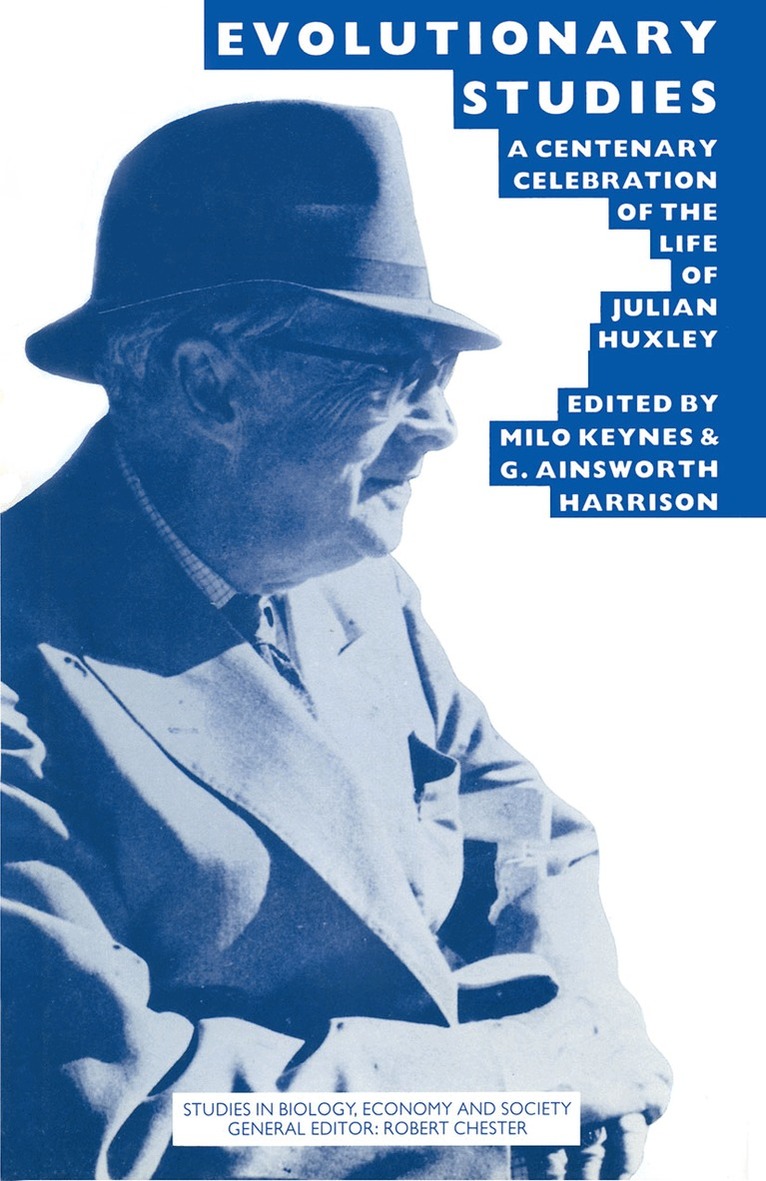
Evolutionary Studies
A Centenary Celebration of the Life of Julian Huxley
Av W.Milo Keynes, G.A. Harrison
Häftad, 1989
551 kr
Lägg i varukorg
This collection of papers is in honour of Julian Huxley, President from 1959 until 1962 of the Eugenics Society, which exists to support research into genetic and social factors of human reproduction with a view to improving problems associated with heredity, human qualities and population.
Minority Populations
Genetics, Demography and Health
Av A.H. Bittles
Häftad, 1992
1450 kr
Lägg i varukorg
The book focuses on the role of both biological and behavioural factors in the fertility, and specific patterns of health and disease, of minority populations living in developed and less developed countries. The importance of marriages contracted between close relatives is stressed, as over 900 …
Issues in Fetal Medicine
Proceedings of the Twenty-Ninth Annual Symposium of the Galton Institute, London 1992
Häftad, 1995
507 kr
Lägg i varukorg
This book explores the emerging speciality of fetal medicine. The new technology for examining DNA is described as a background to later chapters concerned with gene therapy and the examination of the conceptus. An account of laboratory techniques for studying the mouse embryo is illustrated by …
Human Reproductive Decisions
Biological and Social Perspectives
E-bok, 1995
1766 kr
Lägg i varukorg
Reproductive biologists, evolutionary biologists, demographers and social scientists all have a common interest in the business of human reproduction. Their perspectives, however, are very different and have traditionally prevented them from having much to do with each other. The conference on …